Table of Contents >> Show >> Hide
- Who Is Pulltab Design?
- What Makes Pulltab Design Feel So Distinctly New York?
- Signature Pulltab Design Projects in New York
- Why Designers and Homeowners Keep Paying Attention
- Design Lessons from Pulltab Design in New York
- The Experience of an Architect Visit: Pulltab Design in New York
- Final Thoughts
- SEO Tags
New York has a special talent for making people dream big inside very small rectangles. One minute you are picturing a serene, gallery-like apartment with hidden storage, glowing natural light, and enough room to host dinner. The next minute you are standing in a fourth-floor walk-up wondering where, exactly, the table, the desk, the books, the coats, and your sanity are supposed to go. That tension is what makes New York residential architecture so interesting, and it is also why Pulltab Design has earned such a loyal following.
For anyone curious about modern residential design in Manhattan, an architect visit to Pulltab Design in New York is less about flashy form-making and more about watching intelligence become atmosphere. The firm’s work shows that the best spaces do not always shout. Sometimes they slide, fold, glow, tuck away, or simply let the light do the heavy lifting. Pulltab’s projects are modern without feeling cold, disciplined without feeling rigid, and practical without looking like a closet organizer exploded in the living room. In other words, they are very New York, but on their best behavior.
Who Is Pulltab Design?
Pulltab Design is a Manhattan-based architecture studio founded in 2001 by Melissa Baker and Jon Handley. Based in the Flatiron District, the firm has built a reputation around residential work that includes apartment renovations, townhomes, penthouse additions, roof gardens, and custom furniture. That range matters. Pulltab does not treat architecture, interiors, landscape, and furniture as separate planets. In the studio’s world, cabinetry can become architecture, a skylight can become a mood setter, and a rooftop can become an extra room rather than a forgotten patch of city sky.
The firm’s design philosophy is easy to admire because it balances several ideas that do not always get along. Pulltab is modernist in spirit, but not allergic to history. Its projects often respect prewar shells, older urban conditions, and the lived reality of how New Yorkers actually use their homes. The studio is also known for working with natural materials, custom details, concealed storage systems, fold-down tables, built-ins, and tailored hardware. That sounds technical, but the result feels human. These spaces are not trying to impress you with a six-syllable design theory; they are trying to make your morning coffee, your dinner party, and your Tuesday night cleanup feel less chaotic.
What Makes Pulltab Design Feel So Distinctly New York?
Space-saving moves that do not feel gimmicky
Many small-space solutions look clever for five minutes and annoying for five years. Pulltab’s strength is that its multifunctional ideas feel integrated rather than theatrical. A fold-down dining table does not read like a magic trick. Built-in millwork is not just storage for storage’s sake. Cabinets align with walls, circulation feels intentional, and rooms keep a sense of calm even when they are performing multiple jobs at once. In a city where every square foot is expected to earn its keep, that kind of discipline is practically a civic service.
One of the clearest examples is the firm’s compact Manhattan work, where fold-away tables, built-in cabinetry, and carefully planned living zones allow a small apartment to support dining, working, relaxing, and entertaining without collapsing into visual clutter. Pulltab seems to understand a truth many renovation projects miss: people do not want their homes to feel merely efficient. They want them to feel generous. Those are not always the same thing.
Light used like a construction material
Some architects talk about natural light the way people talk about hydration: everybody agrees it is important, yet not everyone is actually doing enough about it. Pulltab clearly is. Across its New York work, light is not treated as a decorative bonus. It is used to define rooms, soften edges, widen perception, and make compact spaces feel emotionally bigger than they are.
That approach appears in projects with large skylights, operable openings, folding walls, and carefully considered transitions between interior and exterior space. In one Tribeca renovation, a dramatic skylight becomes the emotional center of the home while surrounding millwork shapes light, storage, and continuity from room to room. In another apartment near the High Line, folding door walls create flexible living and dining arrangements while maintaining a clean, open feel. Pulltab understands that in New York, light is not just beauty. It is strategy.
Warm modernism instead of sterile minimalism
There is a kind of modern apartment that looks as though nobody is allowed to sit down in it. Pulltab’s work is not that. The studio’s interiors often feature materials such as white oak, American black walnut, bronze, steel, marble, polished concrete, and custom woodwork. The palette tends to stay controlled, but not lifeless. Crisp white walls may frame the space, yet they are usually balanced by wood tones, tactile surfaces, layered lighting, or carefully chosen furniture that brings in softness and character.
This is one reason the firm’s spaces age well in photographs and, more importantly, in real life. Pulltab does not chase novelty for the sake of novelty. The rooms feel edited, not empty; composed, not overdesigned. For homeowners who want modern design without signing up to live inside a laboratory, that is a very appealing middle ground.
Signature Pulltab Design Projects in New York
East Village Residence: cool elegance with actual soul
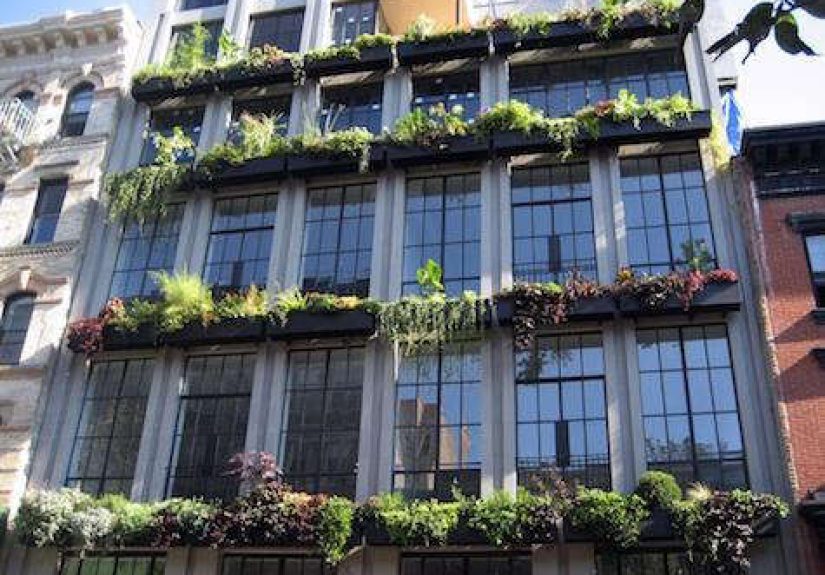
The East Village Residence, often associated with the Flowerbox Building, captures many of Pulltab’s core ideas in one memorable composition. The apartment has been described with features such as a vertical garden, a reflecting pool, polished concrete floors, and a material palette that includes American black walnut, bronze, and steel. That combination could have felt overly precious in the wrong hands. Instead, it reads as refined, urban, and surprisingly grounded.
What stands out here is not just the object selection or the glossy finish work. It is the way Pulltab creates a loft-like environment that still feels intimate. Classic modernist furnishings sit comfortably inside a space that seems designed for both visual pleasure and daily use. It is a reminder that luxury in New York does not always mean more square footage. Sometimes it means better choreography.
East Village Roof Garden and Penthouse: making the roof pull its weight
If New York rooftops are the city’s unofficial fifth wall, Pulltab knows how to turn them into architecture instead of leftover exterior space. The firm’s East Village roof garden and penthouse work has drawn attention for transforming a formerly ordinary rooftop into a private retreat that balances openness, privacy, and weather-ready durability.
These projects are especially interesting because they blur the line between building and landscape. Screens, plantings, walls, and operable enclosures are used to frame views, reduce exposure, and create a sense of refuge above the city. In published coverage, the rooftop spaces are described as maximizing panoramic views while still maintaining privacy. That is harder than it sounds. New York rooftops can be glorious, but they can also feel like you are living on a stage. Pulltab’s solution is not to shut the city out, but to filter it.
There is also a practical elegance in the penthouse work. One renovation created a seamless indoor-outdoor living space designed for entertaining and quiet daily use alike, using a brise-soleil-like enclosure to manage light and openness. It is the kind of design move that sounds smart on paper and then becomes even smarter when you imagine August sun, spring breezes, or one heroic New Yorker trying to read a book outside without being roasted alive.
Highline Residence: flexibility without visual noise
The Highline Residence shows Pulltab operating in a slightly different register: clean, streamlined, and quietly inventive. The project is known for its folding door walls, which allow multiple room configurations while also providing substantial storage. That is classic Pulltab. A wall is never just a wall if it can also improve function, clean up sight lines, and make the plan feel more fluid.
The apartment’s light wood floors and white surfaces keep the overall look crisp, but the design avoids feeling generic thanks to its spatial intelligence. Flexibility here does not mean chaos. It means the home can adapt to changing needs without looking like it is made of spare parts. In a city where many people need one room to behave like three, this kind of adaptable elegance has enormous appeal.
White Street Residence and 5th Avenue Residence: detail as atmosphere
Two other Pulltab projects help explain why the studio continues to resonate with design-minded homeowners. The White Street Residence has been noted for a striking drum skylight and layered architectural lighting that shifts color temperature beautifully at dusk. That detail alone says a lot about Pulltab’s priorities. The firm is not only designing plans and surfaces; it is designing how a home feels as the day changes.
The 5th Avenue Residence, meanwhile, demonstrates the studio’s skill with refinement, custom elements, and strong but understated material choices. Published images point to careful entry sequencing, white oak flooring, and custom lighting developed in collaboration with specialists. The lesson is clear: Pulltab’s work is rarely about one giant gesture. It is about many small decisions adding up to a space that feels precise, calm, and finished in the best possible way.
Why Designers and Homeowners Keep Paying Attention
Part of Pulltab’s appeal is that the firm never seems to confuse complication with sophistication. The studio’s projects often look difficult to design but easy to live in. That is a rare achievement. Plenty of interiors photograph well and function terribly. Others work fine but have all the emotional resonance of airport seating. Pulltab consistently aims for the harder target: homes that are beautiful, rational, and pleasant to inhabit over time.
The firm also benefits from a point of view that feels coherent. Midcentury influences appear in the work, but not as costume. Historical precedent is acknowledged, but not worshiped. Craft matters, yet Pulltab is not afraid of modern construction logic, custom fabrication, or engineered detailing when the project needs it. This balance helps explain why the studio has been featured across design media ranging from shelter publications to architecture outlets and New York-focused lifestyle coverage.
Design Lessons from Pulltab Design in New York
- Make storage part of the architecture. When cabinets, niches, and fold-down elements are integrated from the beginning, a home feels cleaner and calmer.
- Treat light like a plan-making tool. Skylights, reflective surfaces, operable openings, and interior glazing can completely change how a small apartment lives.
- Use fewer materials, but use them better. White oak, walnut, marble, bronze, and painted surfaces can carry a room when proportions and detailing are right.
- Design for multiple modes of living. A New York apartment may need to host work, dinner, lounging, guests, and storage in the same footprint.
- Let restraint do some of the decorating. Not every room needs a grand gesture. Sometimes the smartest move is a clean line, a hidden hinge, or a perfectly placed shelf.
The Experience of an Architect Visit: Pulltab Design in New York
To understand Pulltab Design, imagine walking into one of its New York projects for the first time. The immediate impression is not drama in the obvious sense. You do not get hit with a chandelier the size of a compact car or a staircase trying to become an influencer. Instead, you notice something more difficult to fake: the space feels settled. Quiet. Intentionally calm. Your eyes do not know exactly where to land first because the room is not begging for attention from one loud object. It is the whole arrangement that works on you.
You start to pick up the clues. The millwork lines up so neatly with the walls that storage nearly disappears. A table folds down where you did not expect one. A shelf that looks decorative turns out to be practical. A skylight brings daylight deep into the room and changes tone as the afternoon moves on. The materials are modern, but they are not icy. Wood softens the edges. Metal sharpens them. White walls hold the light rather than flattening it. Even when the palette is restrained, the home does not feel minimal in the sterile sense. It feels edited, which is much nicer and far less stressful.
Then comes the classic New York moment: you realize the apartment is doing more than one thing at once. The dining area is also part of the main living zone. A guest room may also be an office. A rooftop structure may also be a reading room, a breezeway, or a little urban escape hatch from the city below. But none of it feels improvised. That is the impressive part. Pulltab’s spaces can be multitaskers without looking overworked, which is more than most of us can say for ourselves by Wednesday afternoon.
On a roof garden or penthouse addition, the feeling shifts slightly. There is still precision, but now there is also relief. New York can be visually relentless at street level, and Pulltab seems to understand the emotional power of stepping upward into filtered light, plantings, framed views, and controlled privacy. The city is still there, but it arrives edited. A wall blocks the awkward sight line. A screen catches the sun. A planted edge softens the boundary. You feel connected to Manhattan without being swallowed by it.
What lingers after a visit is not one Instagram-friendly detail, though there are certainly plenty of photogenic moments. It is the sense that someone thought very hard about daily life. Where does the light land in the morning? Where do the guests sit? Where do the coats go? Can the room feel open at noon and intimate at dinner? Can a compact apartment still feel like a sanctuary? Pulltab’s answer, project after project, is yes. But that yes arrives through craft, discipline, and a lot of invisible decision-making.
That may be the real lesson of an architect visit to Pulltab Design in New York. Great residential design is not only about style. It is about making the city feel a little less noisy once the front door closes. In a place where people are always negotiating between ambition and square footage, Pulltab offers a compelling idea of home: modern, efficient, warm, and just a bit miraculous in the way only well-resolved New York spaces can be.
Final Thoughts
Pulltab Design has built a strong identity in New York by solving familiar urban problems with unusual grace. The studio’s projects prove that small-space living, rooftop design, penthouse additions, and modern apartment renovations do not have to choose between practicality and beauty. With a design language shaped by natural materials, custom fabrication, historical awareness, and real attention to how people live, Pulltab continues to stand out in the conversation around NYC residential architecture.
If you are searching for examples of smart modern design in Manhattan, Pulltab Design deserves a close look. The firm’s New York work shows that good architecture is not simply what you see in a finished room. It is what the room quietly does for you every day: storing more, glowing better, flexing smarter, and making city life feel a little more breathable. In New York, that is not just design. That is survival with excellent detailing.