Table of Contents >> Show >> Hide
- Tom of Holland’s Blankets: Not “Damaged,” Just Finally Interesting
- Why “Repair Culture” Matters in the U.S. (Yes, Even for Blankets)
- Darning vs. Patching: The Two Superpowers Behind Tom’s Style
- What Makes Tom’s Blankets Feel Like Art (Not Just Repairs)
- Sustainability, But Make It Cozy: Why a Repaired Blanket Is a Big Deal
- How to Start Your Own Darned-and-Patched Blanket (Without Crying)
- Styling a Patched Blanket: Let the Repair Be the Star
- Care Tips: Keep the Wool Happy
- The Bigger Picture: Repair Is Having a Moment (and Maybe a Policy Era)
- Conclusion: A Blanket With a Second Life (and Better Stories)
- Experiences: What People Discover When They Mend a Blanket (About )
Blankets are supposed to be comforting. Soft. Reliable. The kind of household item that doesn’t ask for muchjust a spot on the couch and maybe a gentle wash
once in a blue moon. And then life happens: a moth snack, a frayed edge, a mysterious hole that appears after one particularly enthusiastic movie night.
Most modern stuff responds to damage with the emotional maturity of a soap bubble: pop, done, replace me.
Tom van Deijnenbetter known as Tom of Hollanddoesn’t buy that story. He takes old wool blankets (often vintage Welsh pieces), repairs them
with visible darning and patching, and turns the “flaws” into the most interesting part. The result is a blanket that looks like it has livedbecause it has
and it’s still living. Not a “perfect” object, but a real one. Cozy, functional, and quietly rebellious… like a librarian with a nose ring.
Tom of Holland’s Blankets: Not “Damaged,” Just Finally Interesting
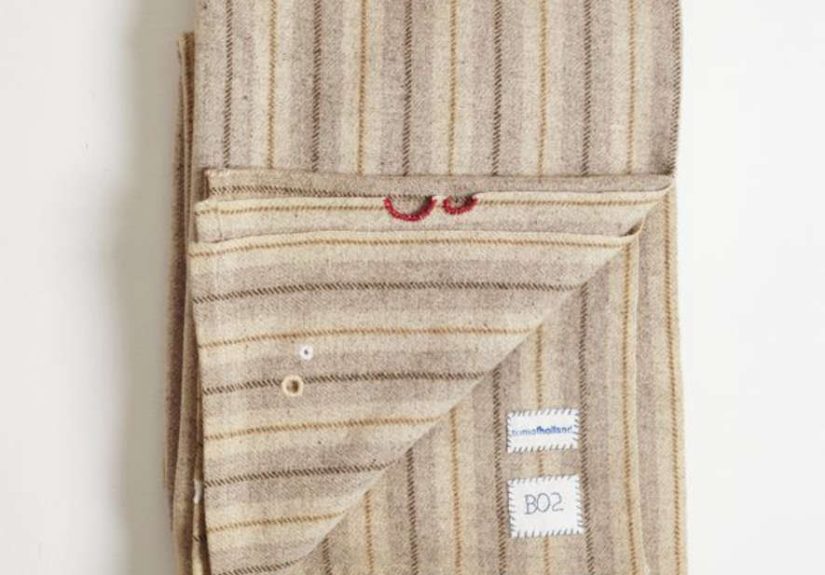
Tom’s repaired blankets have a recognizable signature: careful, contrasting stitches that refuse to pretend the damage never happened. Instead of hiding a repair,
the mend becomes a design choicelike saying, “Yes, my blanket has history, and it would like you to respect it.”
In one feature, his one-of-a-kind blankets are described as painstakingly repaired vintage wooloften Welshsold as individual pieces with distinct patterns and
visible stitchwork. The repairs take time, and that time is part of the point: the process builds intimacy with the material, and the final object feels personal
because it is personal. Each repair is a record of attention.
If fast production is the cultural default, Tom’s work is a polite (but firm) refusal. He’s not just fixing textiles; he’s fixing the relationship we’ve been
trained to have with textileswhere “new” is love and “worn” is failure.
Why “Repair Culture” Matters in the U.S. (Yes, Even for Blankets)
Let’s zoom out for a second, because this isn’t only about aesthetics (though, admittedly, the aesthetics are very good). It’s also about wastespecifically
textile wasteand the U.S. has a lot of it.
EPA data estimates that the U.S. generated about 17 million tons of textiles in 2018. Of that, 11.3 million tons went to landfills,
and the overall textile recycling rate was 14.7%. That’s not a “tiny problem.” That’s a “your landfill has a wardrobe” problem.
A U.S. Government Accountability Office report has also described environmental harms from textile waste, including greenhouse gas emissions and contaminants leaching
as textiles decompose in landfillsplus the practical reality that most used textiles still end up in municipal waste streams.
So when someone repairs a blanket, they’re not single-handedly saving the planet (your blanket is powerful, but it’s not an Avengers-level hero). What they are doing
is extending the useful life of an object that already existsand that’s one of the most practical sustainability moves available to regular humans who don’t have a
decarbonization budget.
Darning vs. Patching: The Two Superpowers Behind Tom’s Style
“Darned and patched” sounds quaintlike something your great-aunt would say while offering you a cookie that could double as a doorstop. But these are real techniques
with real engineering value. And once you understand them, Tom’s blankets make even more sense.
Darning: Reweaving the Missing Thread
Darning is essentially rebuilding the structure of a textile by creating new threads where old ones are worn away or missing. A classic approach lays down parallel rows
of stitches across a weak spot, then weaves new stitches through them at a right anglecreating a grid that acts like new fabric.
Make: Magazine explains darning as “reweaving” the textile, often demonstrating the concept on a wool blanket because the structure is easier to see. That’s a key detail:
blankets are a fantastic darning canvas. They’re large, stable, and generally more forgiving than a stretchy knit.
Patching: Adding Strength (and Sometimes Drama)
Patching adds materialusually fabricover or under an area to reinforce it. A patch can stabilize a tear, protect thinning wool, or cover a hole too large to darn
comfortably. In visible mending, patches aren’t a secret; they’re a feature. You can match them for subtlety or contrast them for that “I meant to do this” energy.
Tom’s blankets often blend both: some areas are rewoven with darns; others are strengthened with patches and anchoring stitches. It’s not “one technique to rule them all.”
It’s the right technique for the right damagelike choosing between duct tape and a screwdriver, except prettier.
What Makes Tom’s Blankets Feel Like Art (Not Just Repairs)
Plenty of people mend. Tom’s work stands out because he treats repair as a design language. Here’s what that looks like in practice.
1) The stitches are honest
Visible mending doesn’t cosplay as factory perfection. Vogue once described visible mending as a hybrid of mending and embroideryproof that repair can be both functional
and expressive. Tom leans into that: the stitching doesn’t whisper, it converses.
2) The repair respects the original textile
A vintage wool blanket isn’t just “fabric.” It has a weave density, a drape, a texture, a temperament. (Yes, textiles have personalities. Some are chill. Some are divas.)
Strong visible mending works with those propertiesmatching weight, managing tension, and reinforcing without distorting.
3) The blanket becomes a document of care
One quote featured about Tom’s philosophy highlights that a repaired piece can celebrate the relationship between an object and its owner over timecreating something unique
because its history is unique. That’s the emotional core of this style: repair doesn’t erase life; it records it.
Sustainability, But Make It Cozy: Why a Repaired Blanket Is a Big Deal
Sustainability talk often turns into abstract math: emissions, supply chains, life-cycle assessments, and charts that look like modern art you’re afraid to comment on.
But a darned blanket brings the idea down to earth.
- It keeps an existing object in use (the most underrated sustainability flex).
- It reduces replacement demand, which reduces manufacturing demand over time.
- It shifts your mindset from “buy” to “maintain,” which is where real change lives.
Patagonia’s Worn Wear program puts it bluntly: a large share of clothing ends up landfilled or incinerated, and one of the best things we can do is keep stuff in use longer
by buying less and repairing more. The same logic applies to household textilesblankets, throws, duvets, and wool layers that quietly serve you for years.
How to Start Your Own Darned-and-Patched Blanket (Without Crying)
You don’t need to be Tom of Holland to borrow the spirit of his work. You just need a blanket, a few tools, and a willingness to do something slowly in a world that
keeps trying to speed-run your attention span.
Step 1: Choose the right blanket (and be honest about the damage)
Wool blankets are ideal: durable, forgiving, and easy to repair in a way that looks intentional. If the blanket is shredded, you can still patch it, but you’re moving
from “repair” into “textile reconstruction,” which is fun if you love puzzles and have opinions about thread tension.
Step 2: Gather a simple toolkit
- Darning needle (large eye helps with thicker yarn)
- Wool yarn or strong thread in a similar weight (or a contrasting color if you want the mend to sing)
- Scissors
- Darning egg/mushroom (optional for blankets, more helpful for knits; you can also use a smooth bowl or cup)
- Patch fabric (wool felt, sturdy woven fabric, or reclaimed textile)
- Pin or basting thread (to hold a patch in place while you stitch)
Step 3: Stabilize first, then mend
If threads are loose and fraying, your first job is to prevent the hole from growing. A quick line of running stitches around the weak area (or a gentle whip stitch
around the edges) can stop the “unraveling drama” before you begin the real work.
Step 4: Darn small holes like you’re weaving a tiny basket
A classic blanket darn is straightforward: lay down parallel stitches across the hole, extending beyond it, then weave perpendicular stitches through those threads to
rebuild structure. Make: Magazine recommends starting slightly before the hole, keeping tension even, and weaving under/over to create the new “fabric” grid.
Step 5: Patch larger holes (and stitch like you mean it)
For big gaps, patches are your friend. Cut a patch with generous overlap, position it, and stitch it down with a durable edge stitch (blanket stitch is a classic for a reason).
Visible mending often uses contrasting thread so the work becomes decorativeyour blanket’s “scar” becomes a pattern.
Step 6: Finish with a comfort check
Blankets touch skin. If your stitches are bulky, scratchy, or sharp at the ends, you’ll feel it. Weave in ends neatly, trim carefully, and consider a softer backing
patch on the underside if you’re sensitive to texture.
Styling a Patched Blanket: Let the Repair Be the Star
One of the best things about Tom of Holland’s approach is that the repair isn’t apologetic. It’s confident. Try these styling ideas:
- Drape it where the mend shows. Yes, really. Let it be the focal point.
- Repeat stitch colors in your room. A mustard darn looks even better when there’s a mustard mug nearby.
- Layer textures. A repaired wool blanket over linen bedding? That’s a cozy dissertation.
Care Tips: Keep the Wool Happy
Vintage wool is tough, but it prefers gentle treatment. Spot clean when possible, air out often, and wash carefully (hand wash or wool cycle, cool water, mild detergent).
If moths are a concern, store clean wool in sealed containers and consider cedar or lavender as a deterrent (not a force field, but helpful).
The Bigger Picture: Repair Is Having a Moment (and Maybe a Policy Era)
Repair feels trendy right nowInstagram hashtags, workshops, visible mending circlesbut it’s also deeply historical. Museums like Cooper Hewitt have highlighted how mending
used to be common household practice, including darning samplers that taught repair skills and “Make Do and Mend” culture that surged during rationing eras.
Meanwhile, policy conversations are catching up to the waste problem. California’s SB 707 (the Responsible Textile Recovery Act of 2024) is one example of an extended producer
responsibility framework aimed at textile recoverymoving beyond “hope consumers recycle” toward systems that make reuse and recycling easier at scale.
Tom of Holland’s blankets live at the intersection of all these currents: history, craft, design, sustainability, and the radical idea that an object can be better
after it’s been cared for.
Conclusion: A Blanket With a Second Life (and Better Stories)
Tom of Holland’s darned and patched blankets aren’t just cozy objectsthey’re arguments. They argue against disposability, against hiding repair, and against the idea that
“new” is the only kind of beautiful.
If you take one lesson from his work, let it be this: repair isn’t a downgrade. It’s an upgrade in meaning. A patched blanket can be warmer in every sensephysically,
emotionally, and ethicallybecause it carries proof that someone bothered to keep it going.
Experiences: What People Discover When They Mend a Blanket (About )
People who try visible mending on blankets often expect a practical chore and end up with an oddly personal experience. The first surprise is how quickly you start noticing
the blanket as a material instead of a background object. Wool has spring. Old woven blankets have rhythm. You can feel where the fabric is strong, where it’s thin, and
where it’s been quietly suffering through years of friction like a polite guest who never complains.
The second surprise is how “slow” the work feelsat first in an annoying way, then in a soothing way. Early stitches tend to be too tight (puckering the fabric) or too loose
(looking like the repair is trying to escape). Many beginners describe a moment where they finally get the tension right and everything clicks: the needle starts moving with
confidence, the grid of darning begins to look like fabric again, and the repair stops being a mess and starts being a pattern.
Another common experience: you begin to care about the colors more than you thought you would. Some people start out trying to “match perfectly,” then realize the repair still
showsand decide to lean into it. A contrasting thread becomes a design choice rather than a compromise. That’s often the turning point where a repair stops feeling like
damage control and starts feeling like creativity. The blanket becomes yours in a new way because you’ve literally added to its structure.
People also talk about the storytelling aspect. A repaired spot becomes a tiny memory marker: “That’s the moth hole from the old apartment,” or “That’s where the dog used
to dig before circling three times like a tiny wolf.” If you mend a family blanket, the experience can feel surprisingly emotionallike you’re preserving something that
doesn’t exist in stores anymore: durability, continuity, evidence of use. It’s not nostalgia for the past; it’s respect for effort.
There’s a social side, too. Many menders say they start noticing repairs in other people’s thingspatched knees, darned socks, embroidered covers on stainsand suddenly feel
part of a quiet community. You might swap tips (“Try a darning mushroom!” “Use a bowl!” “Don’t fight the weave!”) or trade scraps of fabric like you’re in a very wholesome
underground economy. You also become pickier about buying new textiles. Once you’ve repaired a blanket, you can’t unsee flimsy construction; your hands now have standards.
Finally, there’s the deeply satisfying moment of putting the blanket back into use. Not folded away to hide the “ugly spot,” but laid out proudlyrepair visible, texture intact,
function restored. The blanket doesn’t feel ruined. It feels seasoned. Like cast iron. Like a well-loved cookbook. Like a home that’s been lived inbecause perfection is easy,
but cared-for is rare.