Table of Contents >> Show >> Hide
- First, What Actually Is a Dire Wolf?
- So How Did Scientists “Bring Them Back”?
- Internet Reaction: “There Are Literally Six Movies About Why This Is a Bad Idea”
- Wait… Are These Even Real Dire Wolves?
- Why Many Experts Still Call It a “Bad Idea”
- What De-Extinction Could Actually Be Good For
- Humans, Wolves, and Our Obsession With Extinct Things
- 500 Extra Words of Chaos: Imagined Life in the Age of “Dire Wolves”
- So… Is Bringing Back Dire Wolves a Bad Idea?
Somewhere between Jurassic Park, a science fair, and a very expensive dog park, humanity has now apparently arrived at:
“We brought back the dire wolf!” Scientists cheer, cameras flash, and the internet collectively yells, “Have you seen a movie? This is a bad idea.”
In early 2025, Dallas-based biotech company Colossal Biosciences announced that the dire wolf, a giant ice age predator that vanished around 10,000 years ago, had been “de-extincted” thanks to gene editing and ancient DNA.
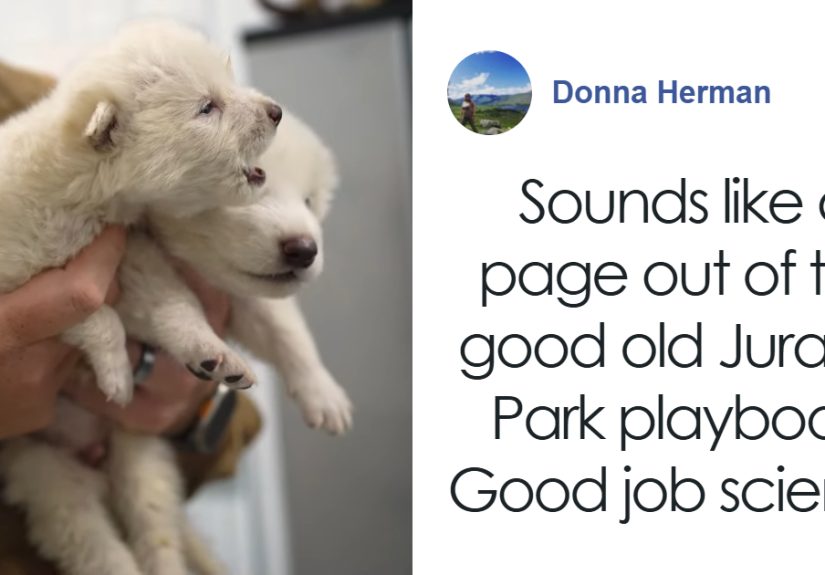
Three pups Romulus, Remus, and Khaleesi were introduced as the first dire wolves anyone has heard howl since mammoths were still walking around.
Headlines screamed about “extinction reversed.” Social media did what social media does best: made memes, asked good questions, and quoted
“Your scientists were so preoccupied with whether or not they could…”
But behind the viral clips and jokes, there’s a serious question: Is bringing back extinct animals a scientific miracle, a conservation distraction, or a very expensive way to reinvent the wolf we already have?
First, What Actually Is a Dire Wolf?
If your only exposure to dire wolves is from Game of Thrones, you might picture a horse-sized murder dog that politely poses for promo photos. The real animal was a bit less magical, but still terrifying in a “please don’t let that chase me” way.
Dire wolves (Aenocyon dirus) were large canids that roamed the Americas during the Late Pleistocene, hunting big prey like ancient horses, bison, and even young mammoths.
They were roughly similar in size to the largest gray wolves today, but with heavier bones, stronger jaws, and teeth built for crunching megafauna instead of kibble.
Fossils from places like the La Brea Tar Pits in Los Angeles show dire wolves lived in packs and thrived across plains, grasslands, and some forested areas until the big Ice Age extinction wave hit roughly 12,700–10,000 years ago.
Then their prey disappeared, the climate changed, humans spread across the continent, and dire wolves joined the long list of “cool but gone forever” species.
So How Did Scientists “Bring Them Back”?
Colossal didn’t dig up a perfectly preserved dire-wolf-cicle and hit copy–paste. Real life is less sci-fi and more spreadsheets.
Researchers sequenced DNA from ancient dire wolf remains including teeth and bones tens of thousands of years old and compared that genetic code to modern gray wolves.
They identified gene regions that likely shaped dire wolf traits: bigger size, different skull shape, thicker coats, and distinctive vocalizations.
Then they:
- Started with gray wolf cells as a base genome.
- Used CRISPR-style gene editing to tweak multiple genes toward dire wolf–like versions (around 20 key edits, depending on the report).
- Created embryos with these edits and implanted them into domestic dog surrogates.
- Waited, worried, and eventually welcomed three pups Romulus, Remus, and Khaleesi in late 2024 and early 2025.
The result: big, pale, very photogenic canids with some traits that lean “dire wolf-esque,” howling on secret preserves with full-time caretakers.
Internet Reaction: “There Are Literally Six Movies About Why This Is a Bad Idea”
As soon as Colossal posted videos of the pups with captions like “first dire wolf howl in 10,000 years,” comment sections detonated.
On Instagram, Facebook, Reddit, and fan groups, people quickly fell into three camps:
1. The Jurassic Park Crowd
A large portion of the internet immediately reacted with some version of:
“We’ve had multiple cinematic documentaries explaining why this is a terrible idea.”
In threads discussing the project, commenters joked that reviving apex predators is basically playing “real-life DLC” on hard mode:
people referenced Jurassic Park, Jurassic World, and every “scientists tamper with nature and get eaten” storyline you can think of.
Memes followed quickly:
“Scientists: We resurrected dire wolves! Nature: *opens notebook titled ‘Consequences.’*”
2. The “Help the Animals We Already Have” People
Another big reaction: frustration. Conservationists and everyday animal lovers pointed out that we’re losing species right now from amphibians to big cats and many populations of gray wolves are still controversial and under pressure.
Critics worry that de-extinction headlines suck up oxygen, attention, and funding that could go to protecting habitats, mitigating climate change, or saving animals that are, you know, still alive.
Some experts interviewed about the dire wolf pups flat-out called the project a “colossal fabrication” and a designer-dog stunt, arguing that conservation resources should focus on existing ecosystems instead of genetic nostalgia projects.
3. The “This Is Amazing Science… But I’m Nervous” Crowd
Not everyone is doomposting. Plenty of people see the project as proof of just how far gene editing and ancient DNA research have come.
Techniques used here sequencing damaged fossils, editing multiple genes at once, and managing complex pregnancies could help genetic rescue projects for endangered species, or improve veterinary medicine.
Even many cautious experts admit the technology itself is impressive; they just want the public to understand that we’re not actually rewinding extinction, and that there are real ethical responsibilities attached to every “wow” moment.
Wait… Are These Even Real Dire Wolves?
Here’s the plot twist: a growing number of scientists and organizations say that calling these animals “dire wolves” is, technically, wrong.
Colossal’s own chief scientist later clarified that Romulus, Remus, and Khaleesi are “gray wolves with 20 edits” not resurrected dire wolves.
Their genomes are still overwhelmingly gray wolf; only a tiny slice of their DNA is based on reconstructed dire wolf sequences.
The IUCN Canid Specialist Group (basically the global wolf-nerd council) went further, stating that the three pups are not dire wolves and not even good “proxies” under conservation guidelines.
From their perspective, you can’t resurrect an extinct species just by editing a few traits into a living relative and slapping an old name on the result.
Other experts note that dire wolves weren’t just big gray wolves genetic studies suggest they were distinct enough that their last common ancestor with gray wolves lived millions of years ago.
So genetically, this is more like turning a human into “Chimp 2.0” with a handful of edits and insisting chimpanzees are back.
Bottom line: these animals are incredible, highly engineered wolves. They are not time travelers from the Ice Age.
Why Many Experts Still Call It a “Bad Idea”
1. Where Do You Put a Not-Quite-Dire Wolf?
Ethicists pointed out a practical issue: if you make an animal that hasn’t existed for 10,000 years, where does it live? The ecosystem that dire wolves evolved in is gone. Climate, prey, and landscapes have all changed.
Right now, the pups reportedly live on a large, secure preserve at a secret location, with dedicated caretakers and strict access rules.
That’s great for their safety, but it also means they’re essentially high-maintenance zoo animals, not a restored wild species.
2. Conservation Optics and the “Shiny Object” Problem
Some ecologists worry that de-extinction is more about public relations than biodiversity. Dire wolves are great for magazine covers and documentaries, but the less glamorous work of protecting wetlands, insects, or small fish rarely gets the same love.
Several commentaries on the dire wolf project argue that using scarce money and attention on resurrecting charismatic “ghost species” could actually harm conservation by shifting focus away from protecting habitats and living animals.
3. Slippery Slope Science
Once you normalize “we edited a wolf into something kind of like an extinct wolf,” what’s next? Mammoths in Siberia? Giant moa stomping around New Zealand? (To be fair, those projects are also on the drawing board.)
Many ethicists aren’t anti-gene-editing; they’re asking for guardrails. Who decides which species we “revive”? How do we ensure local communities, Indigenous groups, and conservationists have a say? What happens if something goes wrong?
What De-Extinction Could Actually Be Good For
Here’s the nuance: calling the dire wolf pups a pure conservation win is overselling it but dismissing all of this as “mad science” misses important benefits.
Techniques developed for de-extinction projects can:
- Improve genetic rescue programs for endangered species by adding lost diversity to inbred populations.
- Help treat diseases in captive and wild animals (for example, work on mammoth genetics overlaps with research on elephant viruses).
- Advance gene-editing tools that may also benefit human medicine and agriculture in the long run.
Even critics who hate the “we resurrected X!” marketing agree that gene editing and ancient DNA work are transforming biology. The argument is less about whether we should use these tools at all, and more about how, when, and for whose benefit.
Humans, Wolves, and Our Obsession With Extinct Things
The reaction to these wolves says a lot about us.
On one hand, we’re clearly fascinated by lost creatures from dinosaurs to dodos. Movies, games, and fantasy worlds are full of them. On the other hand, we’re deeply aware that we’re driving extinctions right now, and the idea of “undoing” that loss hits a nerve.
The dire wolf project sits right at that emotional crossroads:
- Nostalgia: the thrill of seeing something that looks like it walked out of a fossil bed.
- Guilt: the sense that we’re trying to fix a problem we helped create, but maybe in the wrong way.
- Fear: the nagging voice saying, “Nature tends to bill us for our hubris, with interest.”
So when people comment “Bad idea” under a dire wolf howl video, it’s not just a joke. It’s also a gut-level summary of a very real ethical debate.
500 Extra Words of Chaos: Imagined Life in the Age of “Dire Wolves”
To really feel what’s at stake here, it helps to imagine what living in a world with lab-made “dire wolves” actually looks like beyond the glossy press photos and dramatic soundtracks.
A Visit to the Wolf That Shouldn’t Exist
Picture this: you sign a stack of NDAs, surrender your phone at the gate, and ride a dusty ATV across a massive preserve somewhere in the middle of nowhere.
A handler in a sun-faded jacket tells you, “We stay in the vehicle. They’re still wolves.”
When you finally see them, your brain has a tiny meltdown. They look like wolves longer legs, thicker ruff, ghost-pale coats, but wolves all the same.
One lifts its head, fixes you with a yellow stare that feels like it’s seen a few ice ages, and then just… yawns. No cinematic charge. No slow-motion attack. Just a very large canid deciding whether or not you’re interesting.
You feel two things at once:
- Awe: Humans did this. Ancient bones, CRISPR tools, and a ridiculous amount of money produced a living animal in front of you.
- Unease: You can’t shake the feeling that the wolves didn’t ask for any of it.
On the ride back, the team talks about gene-edit counts, coat genetics, and behavioral studies. Someone quietly admits that they’re still not sure what the long-term health of these animals will look like; complex edits don’t always play nicely with biology.
That’s the part the viral clips never show: the uncertainty, the trial-and-error, the caretakers trying to give three experimental animals an actual decent life.
Online, Everyone Has a Take
Back on social media, your feed is a mess:
- One friend posts, “This is the coolest thing humans have ever done.”
- Another writes, “We can’t stop driving species extinct, so now we’re playing LEGO with DNA? Hard pass.”
- Someone else shares a meme of a dire wolf in a lab coat labeled “Consequence.”
Comment sections under news articles and science posts are full of people debating whether this is “a historic conservation milestone” or “the biotech equivalent of lighting a match in a fireworks store.”
If you read long enough, you start to notice a pattern:
- People who care deeply about wildlife worry this is a distraction from habitat protection.
- People who love cutting-edge tech see it as a test run for future genomic medicine and species rescue.
- Almost everyone agrees that marketing it as “resurrecting dire wolves” overshoots reality and sets expectations science can’t meet.
Living With the Aftermath
Fast forward a few years. Maybe there are a dozen of these edited wolves, still living behind fences, still inspiring think pieces and documentaries. Kids grow up thinking “dire wolves” are real animals you can go see if you know someone who knows someone.
Conservation groups, pressured to stay relevant, start debating whether they need their own flashy gene-editing projects to compete for attention and funding. Some quietly resent how hard it is to get donations for bog restoration when everyone wants to talk about ghost wolves.
At the same time, scientists working on less glamorous species endangered birds, small carnivores, obscure plants quietly use spinoffs of dire wolf technology to shore up genetic diversity and study diseases.
The news doesn’t cover those wins as breathlessly, but they may turn out to be the most important legacy of this whole saga.
Living in that world would feel like living with any breakthrough: a mix of genuine progress, questionable branding, and a constant need to ask, “Who is this really for?”
And that’s really what the “Bad idea” comments are doing not rejecting science itself, but throwing up a big, meme-powered reminder that ethics, ecology, and animal welfare have to evolve just as fast as our tools do.
So… Is Bringing Back Dire Wolves a Bad Idea?
If you were hoping for a clean yes or no, sorry this is science, not a multiple-choice quiz.
What we can say is this:
- We did not truly bring dire wolves back from extinction. We created engineered wolves with some dire wolf–like traits.
- The technology behind this is genuinely powerful and could be used to help living species and ecosystems.
- The way it’s marketed as if extinction has been “reversed” risks confusing the public and overshadowing the very real work of protecting the species we still have.
Maybe the best reaction is a mixed one: “Amazing science, questionable branding, and please, for the love of all that is fluffy, let’s not treat extinction as something we can casually undo.”
Because if there’s one lesson from both Ice Age fossils and dinosaur movies, it’s this: nature always gets the last word. We should make sure we’re listening, not just editing.