Table of Contents >> Show >> Hide
For a movie that arrived over 60 years after the original
Bambi, Bambi II has had a surprisingly busy
afterlife. Released in 2006 as a direct-to-video “midquel” that fits
between the death of Bambi’s mother and his transformation into a
full-grown buck, it could have been just another forgettable sequel.
Instead, it’s become one of Disney’s most debated follow-ups, earning
mixed critic scores, warm family reactions, and a surprising place in
many Disney sequel rankings.
So where exactly does Bambi II land in the grand
kingdom of Disney sequels? Is it a hidden gem, an unnecessary add-on,
or something in between? Let’s walk softly through the forest and break
down rankings, reviews, and real-world viewing experiences.
What Is Bambi II, Exactly?
First, a quick refresher. Bambi II isn’t a traditional
sequel that picks up after the original ending. It’s a
midquelthe story takes place in the emotional gap between
Bambi losing his mother and reappearing later as a grown buck. The film
follows young Bambi as he’s taken in by his father, the Great Prince of
the Forest, who suddenly has to figure out how to be both dignified
ruler and single dad.
The movie was released in 2006, went straight to DVD in the United
States, and hit theaters in some international markets. Despite the
direct-to-video label, it sold an impressive 2.6 million DVDs in its
first week and even picked up an Annie Award for Best Animated Home
Entertainment Production.
On paper, that already makes Bambi II unusual: it’s a
late-arriving continuation of a 1942 classic, positioned somewhere
between nostalgic tribute and franchise extension.
How Critics Rank Bambi II
If you go strictly by the numbers, critics were cautious. On Rotten
Tomatoes, Bambi II sits in the middle of the pack
with a modest approval rating, far below the original film’s critical
acclaim but not in disaster territory either.
Critical Consensus: Mixed but Not Merciless
Reviewers often describe the movie as “lightly amusing,” “unremarkable,”
or “pointless but harmless”not exactly pull-quote material for the
front of the Blu-ray box, but also much kinder than what many
direct-to-video sequels received in the 2000s. Variety noted that the
film plays better at home than it would have on the big screen, given
the monumental status of the 1942 original.
On the positive side, several critics praised the visual quality.
Outlets like Plugged In and DVD-focused reviewers pointed out that the
backgrounds are lush and painterly, clearly inspired by the original
film’s forest aesthetic, and that the character animation is far more
refined than the usual bargain-bin sequel.
The story, however, gets more mixed marks. Some critics feel it doesn’t
fully justify revisiting this chapter of Bambi’s life. It’s sweet,
they say, but relatively small in scope: more intimate family drama
than sweeping epic.
Family-Focused Reviews: Emotional but Safe
Family-centered review sites tend to view the film more favorably.
Common Sense Media highlights that Bambi II is suited
to kids around five and up, with some emotional intensity and scenes
involving hunters and danger, plus bullying from a rival fawn named
Ronno. Still, they emphasize that the themes of courage, growth, and
father–child bonding come through clearly.
In other words, from a parent’s perspective, this is a solid pick for a
family movie nightas long as you’re ready to talk about loss,
bravery, and why forest royalty sometimes has no idea how to comfort a
crying child.
Audience Opinions: Warmer Than the Scores Suggest
Now here’s where things get interesting. While the critic scores hover
in the “it’s fine” territory, audience reactions are often
noticeably warmer. On platforms like Rotten Tomatoes, IMDb, and
Letterboxd, you’ll find plenty of viewers who describe
Bambi II as surprisingly charming, deeply emotional,
and even underrated.
Some viewers appreciate how the movie turns what felt like a missing
chapter in the original into a complete story about grief and
connection. Others love that the film finally gives the Great Prince
more personality than “distant deer with great cheekbones.” Fans often
call out the father–son relationship as the emotional core that makes
the movie feel fresh rather than purely nostalgic.
On fan forums and social platforms, you’ll even find people who say
they prefer Bambi II to the original because it moves
at a faster pace and focuses more on character interaction than on
lyrical, almost wordless nature sequences.
Where Bambi II Ranks Among Disney Direct-to-Video Sequels
When fans and critics create ranked lists of Disney direct-to-video or
straight-to-DVD sequels, Bambi II routinely lands in
the “surprisingly good” category. On fan-made lists and video
breakdowns that sort sequels from “great” to “insufferable,” Bambi’s
midquel often appears in the upper middle or even top tier, alongside
titles like The Lion King II: Simba’s Pride and
The Return of Jafar, and well above notorious low-ranking
entries such as some of the later Little Mermaid or
Cinderella follow-ups.
That doesn’t mean it’s universally adored, but in the crowded field of
Disney sequels that exist mainly to populate the bargain bin,
Bambi II has earned a reputation as one of the more
thoughtful efforts.
Ranking the Story: A Gentle, Focused Midquel
Story-wise, fans tend to rank Bambi II in the
“emotionally solid but not groundbreaking” zone. The plot centers on
Bambi trying to live up to his father’s expectations while still
being, well, a clumsy fawn. The Great Prince starts the film reserved
and stern, determined to maintain his dignified image, but gradually
becomes more nurturing and emotionally available.
Some modern viewers even read the movie as a kid-friendly exploration
of strict parenting, unrealistic expectations, and what we now call
“toxic masculinity”especially in scenes where Bambi is told that a
“prince doesn’t” cry, trip, or show fear. Over time, the film
quietly undercuts that idea by rewarding empathy, vulnerability, and
connection.
If you’re ranking Disney sequels by emotional depth, that places
Bambi II above many of the more slapstick-focused
follow-ups, even if it never quite hits the mythic weight of the 1942
original.
Animation and Music: High Marks for Visuals
Where Bambi II consistently scores high is animation.
The film had a larger budget and more artistic attention than many
Disneytoon projects, and you can see it on-screen. Animators drew
inspiration from the original’s watercolor-style backgrounds, crafting
a forest that feels soft, misty, and alive with light beams and
seasonal shifts.
The character animation is fluid and expressive, especially in the
Great Prince’s subtle facial changes and Bambi’s gawky, fawn-like
movements. While the pop-style songs don’t quite match the timeless
musical atmosphere of the original, many viewers find them catchy
enough and appreciate the orchestral score that ties scenes together.
If you were to rank Disney sequels solely on animation quality,
Bambi II would sit near the top of the direct-to-video
group and arguably compete with some theatrical releases from the same
era.
Characters and New Additions
In terms of characters, fans often praise the way the movie deepens the
Great Prince. Instead of remaining a distant authority figure, he
becomes a fully realized parentunsure, awkward, proud, and secretly
terrified of messing up. That emotional arc is a big reason many
viewers rank the movie higher than its raw review scores might suggest.
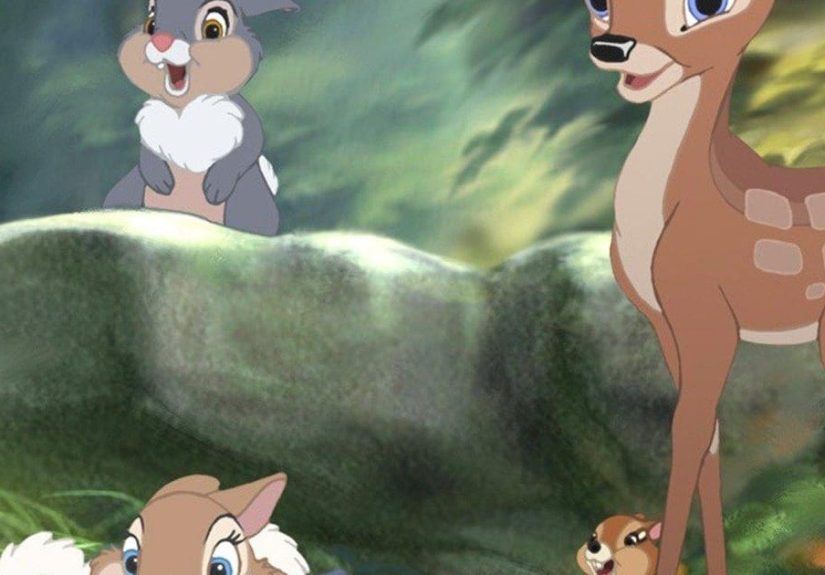
New characters like Ronno, the bullying rival fawn, give Bambi a
chance to show courage and loyalty, while returning favorites like
Thumper and Flower add gentle comic relief. Together, they keep the
story grounded in the relationships that made the original memorable.
Who Will Actually Enjoy Bambi II?
If you’re trying to decide whether Bambi II is worth
a watchor a rewatchhere’s how opinions tend to break down:
- Families with young kids: Often very positive.
Parents appreciate the emotional lessons, and kids enjoy the cute
animals, forest adventures, and clear good-versus-bad dynamics. - Disney animation fans: Generally see it as a
well-crafted “bonus chapter” with strong artistry, even if they may
debate whether it needed to exist. - Nostalgic adults: Mixed. Some love revisiting the
world of Bambi with more developed characters; others feel too
protective of the original to fully embrace a midquel.
Overall, Bambi II tends to outperform expectations.
If you go in assuming it’s just a quick cash-in, you may be pleasantly
surprised by how much heartand how much visual beautyit delivers.
Final Thoughts: So, Where Does Bambi II Really Rank?
When you add everything upcritic scores, fan reactions, animation,
story, and emotional impactBambi II lands in a
comfortable “better than you’d think” zone. It’s not a replacement for
the 1942 classic, but it doesn’t need to be. Instead, it fills in an
emotional chapter that many viewers didn’t realize they were missing:
how a grieving child and a distant parent learn to become a family.
In the vast ecosystem of Disney sequels, Bambi II is
less of a towering oak and more of a graceful sapling that grew in the
shadow of a legendand that’s okay. For many viewers, that small,
focused story is exactly what makes it special.
Experiences and Rewatches: Living With Bambi II Over Time
Beyond scores and rankings, one of the most interesting things about
Bambi II is how people’s opinions shift with time.
For a lot of viewers, their first watch happened in childhoodon DVD,
cable, or now on streaming. As kids, they mostly remember the funny
bits, the baby animals, and maybe how scary the hunting dogs looked.
Rewatching it as an adult, though, hits differently. Suddenly the
movie’s center of gravity moves from Bambi to the Great Prince. You
notice how exhausted he looks when he takes on parenting duties, how
stiff he becomes when he doesn’t know what to say, and how proud he is
when Bambi finally stands up for himself. Many adults who revisit the
film after becoming parents themselves say they relate far more to the
Great Prince than they ever expected.
There’s also the grief angle. Kids may sense that Bambi is sad about
his mother, but adults see the full emotional weight of a family trying
to move forward after loss. Small momentslike Bambi wondering if his
mother will come back, or the Great Prince quietly avoiding her
memorycarry a lot of emotional resonance once you’ve lived through
your own losses or seen friends go through them.
Fans who grew up with the original movie sometimes report an
interesting split reaction. On one hand, they feel incredibly loyal to
the 1942 film and don’t want anything to touch its legacy. On the
other hand, they appreciate that Bambi II doesn’t try
to remake or modernize the storyit simply adds detail, like a
footnote written with care.
Some viewers discover the movie much later, working through Disney
sequels as part of a marathon. For them, Bambi II
often stands out as a pleasant surprise sandwiched between weaker,
sillier follow-ups. Compared with some sequels that rely heavily on
recycled animation and slapstick, this one feels deliberate: the
character arcs are clear, the emotional beats are earned, and the
forest still looks magical.
And then there’s the comfort factor. As streaming services make
Disney’s back catalog easier to access, people often put on
Bambi II not to analyze it, but to relaxto have a
soft, gentle movie playing in the background while they fold laundry,
scroll social media, or cuddle up with kids or pets. Over time, that
familiarity can shift opinions. A film that once felt like an
unnecessary sequel turns into a reliable comfort watchsomething you
may not rank as “top tier” art, but still reach for when you need
something cozy and emotionally sincere.
All of this suggests that the real story of Bambi II
isn’t just in the critic scores or the official rankings. It lives in
people’s lived experiences: the parent who watched it with their kids
and cried quietly at the ending, the animation fan who noticed how much
care went into the backgrounds, the adult who finally understood the
Great Prince’s awkward attempts at love. Together, those experiences
explain why this midquel continues to find an audience, long after its
DVD-first debut.