Table of Contents >> Show >> Hide
- Meet the Setting: Old Chaser Farm + Vashon Island Vibes
- From Utility Box to Soak Sanctuary: The Backstory
- The Design Recipe: Vintage Soul, Farm-Proof Materials
- 1) The star of the show: a black clawfoot tub with brass attitude
- 2) Tile that behaves: white subway with a marble border
- 3) Walls with texture: beadboard paneling + vintage mirrors
- 4) Light, but make it private: divided-light windows + burlap
- 5) Floors that tell the truth: polished concrete with a second chance
- 6) Fixtures and lighting: a classic sink + green-glass glow
- 7) The wabi-sabi move: embrace patina, don’t fear it
- What to Steal for Your Own Vintage Bathroom
- Vintage, But Not Moldy: Practical Tips for Making It Last
- Budget + Sourcing: How to Get the Look Without a Treasure-Hunting PhD
- The Takeaway: A Bathroom That Feels Like a Place, Not a Product
- Extra: of Experience The Feel of a Vintage Bath on Vashon
Some bathrooms whisper, “I contain toothpaste.” This one announces, “I contain dramatic soaking.”
Tucked inside the cookhouse at Old Chaser Farm on Vashon Island, this vintage-style bath is the kind of space
that makes you want to light a candle, ignore your phone, and pretend you don’t know what “inbox” means.
It’s equal parts farm-tough and spa-soft: a black clawfoot tub, brass fixtures with a little swagger, beadboard
texture for days, and windows that pour in Pacific Northwest light like it’s being paid by the hour.
Today’s tour is more than a pretty room with good angles. It’s a lesson in how to build a vintage bathroom that
feels authentic (not theme-park), practical (not precious), and charmingly imperfect (in the best way).
And because this is the internet, we’ll also talk about what to steal for your own remodelwithout needing a
20-acre farm or a chef’s schedule.
Meet the Setting: Old Chaser Farm + Vashon Island Vibes
Vashon Island sits in Puget Sound, a short ride from Seattle that feels like a different operating system:
slower, greener, and refreshingly unconcerned with your calendar invites. You get there by boatthink ferries,
water taxis, and the kind of salty air that makes even your “quick weekend trip” feel like a small adventure.
Old Chaser Farm is a working farm that raises and grows food for the community and also hosts gatheringsbecause
on Vashon, “farm” and “hospitality” can happily share a fence line. The cookhouse outbuilding is the Swiss Army
knife of the property: part event space, part work zone, part culinary HQ. That matters, because this bathroom
wasn’t designed as a delicate showpiece. It was designed to survive real lifeboots, guests, chores, and all.
From Utility Box to Soak Sanctuary: The Backstory
The cookhouse wasn’t always camera-ready. Like many outbuildings, it started as something more functional than
flatteringa structure with a concrete floor and “good enough” vibes. But the remodel didn’t try to erase its past.
Instead, the design leaned into the building’s rough edges and made them the point.
The goal was simple: create a bathroom that could feel like a spa (hello, long baths) while still making sense
for a farm outbuilding that hosts everything from events to day-to-day work. That balancing actcomfort plus
durabilityis why this space feels so right.
The Design Recipe: Vintage Soul, Farm-Proof Materials
1) The star of the show: a black clawfoot tub with brass attitude
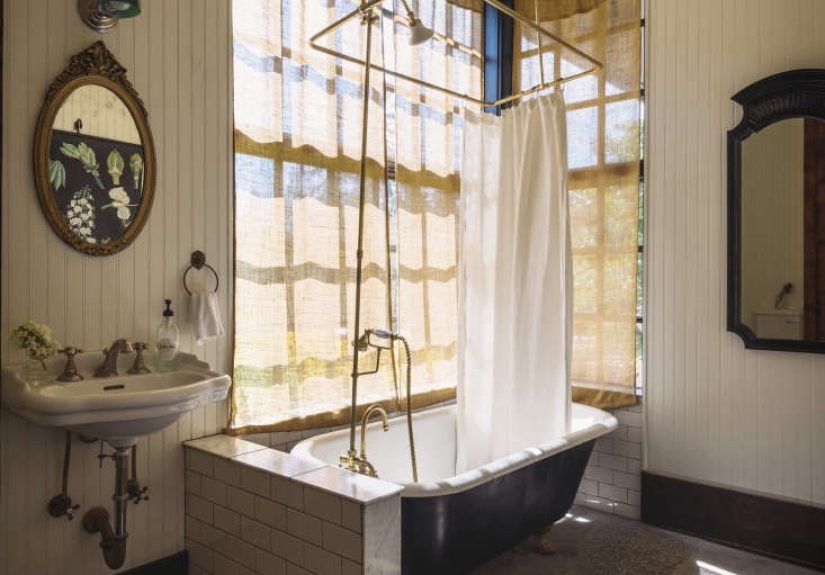
The centerpiece is a clawfoot tub already painted blackbold, graphic, and slightly mischievous. Black tubs can
go “modern editorial” fast, but here it stays grounded because the rest of the room speaks fluent vintage:
brass fittings, classic shapes, and traditional textures. The result reads less “trend” and more “found it,
loved it, kept it.”
If you’re taking notes, here’s the headline: a clawfoot tub is an instant focal point. It’s also a shape that
plays well with both rustic and refined elementsespecially when paired with classic tile and warm metals.
2) Tile that behaves: white subway with a marble border
Around the tub, a surround of white subway tile keeps things crisp and clean. Subway tile is the design equivalent
of a white button-down shirt: it works with almost everything and never tries too hard. The marble border adds
a quiet upgrademore “considered” than “flashy.”
This is also smart planning. White tile bounces light, feels hygienic, and holds up to moisture. In a bathroom
that’s used often (and possibly by people who think a towel rack is decorative), that’s not optional.
3) Walls with texture: beadboard paneling + vintage mirrors
Beadboard brings that cottage-and-farmhouse rhythm: vertical lines, subtle shadow, and a sense of history.
It adds warmth without requiring a single “LIVE LAUGH LATHER” sign (thank you, beadboard).
Vintage mirrors layer in personality. That’s the secret sauce in many great vintage bathrooms: you can keep the
big-ticket items classic, then let smaller piecesmirrors, art, hardwarecarry the patina and charm.
4) Light, but make it private: divided-light windows + burlap
Windows are a big deal hereespecially the divided-light, English-style look that adds instant character.
The solution for privacy is delightfully unfussy: simple burlap fabric. It filters light instead of blocking it,
so the room stays bright even when you’re trying not to wave at a chicken.
If you’ve ever remodeled a bathroom, you know the truth: lighting can make or break the space. Natural light is
the cheat codeespecially in a room filled with white tile, warm metal, and soft neutrals.
5) Floors that tell the truth: polished concrete with a second chance
The concrete floor was already there, which is both a blessing (durable, honest, easy to sweep) and a complication
(plumbing often means cutting and patching). Instead of hiding it, the remodel embraced itpatching, polishing,
and finishing in a way that celebrates the material’s imperfections.
Concrete in a bathroom isn’t for everyone, but it’s perfect for a farm outbuilding: resilient, practical, and
quietly modern. It also plays beautifully with vintage elements because it keeps the room from feeling overly “period.”
6) Fixtures and lighting: a classic sink + green-glass glow
The sink choice lands right in the sweet spot: traditional profile, clean lines, and not too precious. Add a
green-glass-shaded sconce and you get that gentle, old-school glowlike the room is lit for a novel scene where
the protagonist finally relaxes for the first time in three chapters.
The lighting isn’t just pretty; it’s functional. A bathroom needs layered light: flattering enough for real life,
bright enough for tasks, and warm enough to make “Tuesday night bath” feel like an event.
7) The wabi-sabi move: embrace patina, don’t fear it
One of the best ideas in this bath is the willingness to let materials age. Instead of aiming for factory-perfect,
the design leans into a wabi-sabi mindset: character, wear, and small imperfections that make a space feel lived-in.
Even hardware can be encouraged to look a little olderbecause “brand-new everything” isn’t always the goal in a
vintage bath.
What to Steal for Your Own Vintage Bathroom
You don’t need a farm or a chef’s eye to borrow the core ideas. Here are the most copyable wins, with practical
notes so they work in real bathrooms (including the tiny ones where turning around is a three-point maneuver):
- Pick one hero vintage piece. A clawfoot tub, an antique mirror, or a salvaged light can anchor the room.
- Use subway tile as your “calm.” It keeps a vintage mix from getting visually noisy.
- Add beadboard or wainscoting for warmth. It’s texture that reads classic and hides wall sins.
- Choose brass (or aged metal) for softness. It warms up whites, blacks, and cool grays instantly.
- Filter light instead of blocking it. Linen, burlap, or simple shades can keep privacy without gloom.
- Let one “imperfect” material stay imperfect. Concrete, reclaimed wood, or slightly weathered plaster adds soul.
- Mix old with new on purpose. A new sink plus a vintage mirror looks curated, not chaotic.
- Use art like a finishing spice. A botanical print or vintage poster adds story without clutter.
- Keep counters clear. Vintage baths look best when they don’t compete with a dozen bottles.
Vintage, But Not Moldy: Practical Tips for Making It Last
Moisture management is the unglamorous hero
A vintage-style bathroom still needs modern performance. If you’re using beadboard or wood trim, seal and paint
properly and make sure you have good ventilation. Bathrooms are basically steam rooms that pretend they aren’t.
An exhaust fan (properly sized and actually used) is your best friend.
Beadboard options: choose the right material for your reality
Love the look but worry about humidity? You have choices. Some homeowners go with moisture-resistant materials
designed for damp spaces; others use real wood with careful sealing. The key is to plan for waterbecause water
does not care about your aesthetic goals.
Concrete floors: great, but respect them
Concrete is durable, but it’s not invincible. Use bath mats where you stand often, clean with gentle products,
and consider a sealer if you want easier maintenance. The point is to let the floor show characternot become a
science experiment.
Budget + Sourcing: How to Get the Look Without a Treasure-Hunting PhD
The most charming vintage bathrooms usually mix three lanes:
secondhand finds (mirrors, art, maybe even a tub),
new classics (simple sinks, reliable plumbing),
and hardworking basics (tile, lighting, ventilation).
- Start with function. Lay out plumbing, storage, lighting, and ventilation first.
- Then hunt for the personality pieces. Mirrors, art, and hardware are easier to swap than tile.
- Keep the palette tight. Black + white + warm brass + natural textures reads timeless fast.
- Spend where it shows and where it lasts. Good fixtures, good light, good tile work.
The Takeaway: A Bathroom That Feels Like a Place, Not a Product
The genius of this Old Chaser Farm bath is that it’s not trying to be “perfect.” It’s trying to be right:
right for the building, right for the light, right for long soaks, and right for the messy reality of life on a
working farm. That’s why it lands. It feels like it belongslike it’s always been there, just waiting for someone
to notice how good a simple, well-made bath can be.
If you’re remodeling, steal the philosophy as much as the materials: keep it classic, let it breathe, embrace a
little patina, and design for the life you actually live. (And yes, that includes the life where you lock the door
and enjoy ten minutes of silence. Luxury!)
Extra: of Experience The Feel of a Vintage Bath on Vashon
There’s something about a bath that hits differently when you’ve arrived by boat.
On Vashon, the transition is part of the therapy: you leave the city’s fast edges behind and trade them for
shoreline, fir trees, and the kind of quiet that makes you suddenly aware you’ve been clenching your jaw since
Tuesday. Whether you step off a ferry with a coffee or ride over on a quick water taxi hop, the island does what
islands do bestit forces you to downshift.
A farm adds another layer. The air has that clean, outdoorsy honestyearth, wood, and a faint hint of “yes,
something is growing nearby.” You’re not in a glossy hotel spa where everything smells like cucumber marketing.
You’re in a place where work happens, meals happen, people gather, and the land is the real boss.
That’s exactly why the idea of a vintage bath here feels so delicious: it’s comfort that’s earned.
Picture the bathroom as a pause button inside a busy, multipurpose building.
The beadboard and vintage mirrors make the room feel familiar, like you’ve visited a version of it before
maybe in an old farmhouse, maybe in a movie where everyone has better hair than real humans.
The divided-light windows pull in daylight that changes hour by hour: bright and optimistic in the morning,
silver and soft by late afternoon, moody in the way the Pacific Northwest does so well when clouds roll in.
Burlap at the windows is wonderfully un-fussy. It says, “Privacy matters,” without turning the room into a cave.
Then there’s the tubthe black clawfoot that looks like it has stories.
A deep soak in a clawfoot tub is not the same as a quick shower.
It’s a commitment. It’s also a small rebellion against productivity culture.
You fill it, you settle in, and suddenly time behaves differently.
The brass fixtures feel warm, not sterile; the white tile stays calm and clean; and the concrete floor underfoot
reminds you that this is a real place, not a set.
It’s the wabi-sabi charm in action: the room doesn’t pretend life is flawlessit simply makes room for rest.
The best part of imagining a bath on Vashon is how it reframes “luxury.”
Luxury isn’t always marble and mirrors and a staff member handing you cucumber water.
Sometimes it’s a vintage poster on the wall, good light, and a bath that feels like a reward after a day spent
outdoors. Sometimes it’s the quiet thrill of being somewhere slightly removed from the main rush of things
where you can hear the wind, notice the texture of the room, and remember that a bathroom can be more than
a pit stop. It can be a little sanctuary with a latch on the door and a whole lot of peace inside.