Table of Contents >> Show >> Hide
- What “Bean’s” Usually Means (And Why That’s a Good Thing)
- What’s Inside a Bean’s Croquet Set (And What Each Piece Does)
- Backyard Croquet vs. Regulation Croquet: Same Vibe, Different Details
- How to Set Up a Backyard Croquet Court Without Becoming a Landscape Architect
- Playing Tips: How to Look Calmly Skilled (Even If You’re Learning)
- How to Make Your Bean’s Croquet Set Last for Years
- Who Should Buy Bean’s Croquet Sets?
- FAQ
- My Backyard Field Notes: of Real-Life Bean’s Croquet Set Energy
- Conclusion: The Classic Backyard Game That Actually Earns Its Keep
- SEO Tags
Croquet is the rare backyard game that lets you dress like you’re headed to a garden party, argue about rules like you’re in a courtroom drama, and still
call it “relaxing.” And if you’re going to invite that kind of wholesome chaos onto your lawn, you want equipment that won’t fall apart halfway through
the first “friendly” match.
Enter Bean’s Croquet Sets: classic, durable, and charmingly old-schoollike lemonade in a glass pitcher, but with more competitive
side-eye. In this guide, we’ll break down what “Bean’s” typically means, what’s inside the set, how it compares to regulation play, and how to set up a
backyard course that feels intentional (even if your “court boundaries” are just vibes and a couple of lawn chairs).
What “Bean’s” Usually Means (And Why That’s a Good Thing)
In the world of outdoor gear, “Bean’s” is commonly associated with L.L.Bean-style backyard staples: practical, family-friendly, and built for repeat
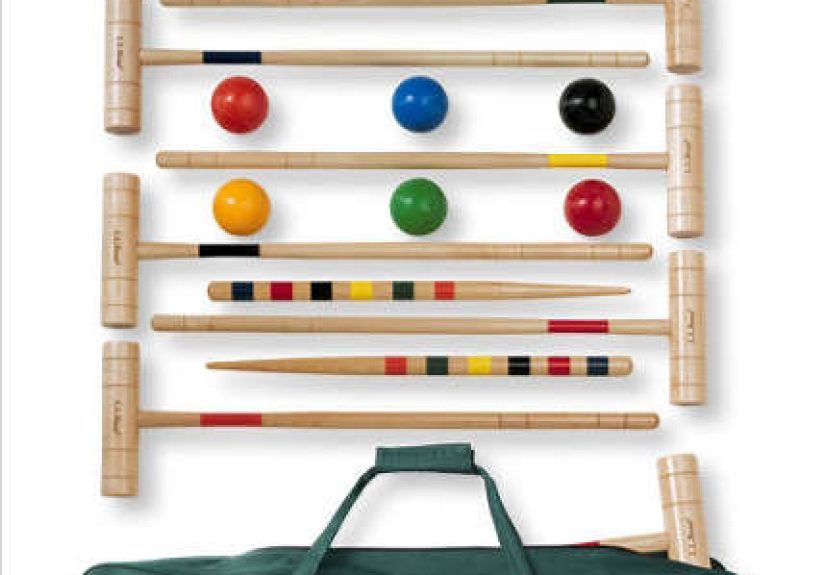
weekendsnot one-and-done party props. A well-known “Bean’s Croquet Set” description highlights a six-person kit designed for backyard play, with sturdy
hardwood mallets and stakes, nine wickets, color-coordinated balls, printed rules, and a tough carrying bag meant for easy storage and transport.
What’s especially appealing is the “whole ecosystem” approach: it’s not just the game pieces. There are also dedicated storage solutionslike a hardwood
croquet stand that neatly holds a full six-player set and a heavy-duty tote-style carry bag inspired by classic utility designs. In other words: the set
can live like a grown-up item in your garage, not a tangled mess of metal hoops and mystery balls haunting a cardboard box.
If you like hostingcookouts, reunions, casual wedding weekends, or “we’re all off our phones for two hours, please don’t panic”Bean’s Croquet Sets fit
that sweet spot: approachable for beginners, satisfying for repeat players, and nice enough to feel giftable.
What’s Inside a Bean’s Croquet Set (And What Each Piece Does)
Mallets: The Main Character
A croquet mallet is basically a polite hammer with better PR. In Bean’s-style sets, you’ll usually see hardwood mallets sized for
adults, often around the low-30-inch range. That length matters: too short and everyone bends like they’re doing sad lawn yoga; too long and shots get
wobbly fast.
Look for smooth handles (splinters are not a fun bonus level), decent head weight (so you’re guiding the ball, not slapping it), and protective end caps
if the set includes them. Hardwood tends to hold up better over seasons, especially when the game gets… spirited.
Balls: Backyard vs. Regulation Reality
Many Bean’s-style recreational sets use durable polymer/resin balls because they’re tough, weather-tolerant, and forgiving on less-than-perfect lawns.
You may also see sets with wooden balls, but those are more sensitive to moisture and dings.
If you’ve ever watched competitive croquet (yes, it’s a thing, and yes, people are wildly good at it), you’ll notice the equipment can get much more
specific. Regulation balls are often heavier and standardized for consistent roll and bounce. For backyard play, though, the best ball is the one that
doesn’t crack, doesn’t chip into confetti, and doesn’t disappear into shrubbery like it owes the hydrangeas money.
Wickets: The Gates of Glory
Backyard sets typically include nine wickets for the traditional nine-wicket game. Quality wickets are sturdy metal, easy to push into
the ground, and consistent in width so one wicket isn’t basically a freeway while another feels like threading a needle during an earthquake.
Pro tip: on very hard or dry ground, don’t force the wickets. Soften the soil with a little water, or start holes with a screwdriver. Bent wickets are
the quickest way to turn your elegant lawn game into “guess the shape.”
Stakes: Start, Finish, and Occasional Villain
Most sets include two stakes, often used as start/finish markers depending on the rule variation you’re playing. Stakes take a beating,
so hardwood is a nice feature here too.
Rules + Storage: The Unsung Heroes
A printed rule sheet sounds basic until your cousin says, “I’m pretty sure I get three extra shots because I felt like it.” A clear rule set
prevents chaosor at least keeps the chaos entertaining.
Storage matters more than people think. A rugged carry bag keeps pieces together, makes travel easy, and reduces “missing wicket syndrome.” A dedicated
croquet stand is even better if you want your set to stay organized and ready to grab on short notice.
Backyard Croquet vs. Regulation Croquet: Same Vibe, Different Details
Here’s the simplest way to think about it: backyard croquet is the fun, flexible version most Americans have played at picnics and family events.
Regulation croquet is the “there are standards and we will be using them” version. Bean’s Croquet Sets are generally designed for the first category,
but they can still feel satisfyingly “real.”
| Feature | Backyard (9-Wicket) Play | Regulation-Oriented Play |
|---|---|---|
| Wickets | Usually 9 wickets; width can vary by set | More standardized wicket widths and placement |
| Balls | Often polymer/resin; sometimes lighter for casual play | Typically standardized size/weight for consistency |
| Rules | House rules are common; easy to learn | Formal rulesets; more strategy and structure |
| Lawn | Any decent grass area works | Flatter, shorter grass is a big advantage |
If you’re buying for family gatherings, casual weekends, and “let’s do something outside,” a Bean’s-style set is exactly what you want. If you’re aiming
to practice tournament-style play, you’ll eventually care about tighter standards for ball size/weight, wicket width, and lawn conditions.
How to Set Up a Backyard Croquet Court Without Becoming a Landscape Architect
Step 1: Pick Your “Court”
Choose the flattest patch of grass you reasonably have. It doesn’t need to be a putting green, but avoid steep slopes unless you enjoy watching balls
roll away like they’re late for a meeting.
Step 2: Decide on Boundaries (Optional, But Helpful)
Backyard courts often skip strict boundaries, but a simple boundary makes play smoother. Use string, chalk, or even four corner markers (small flags,
cones, or the most traditional option: shoes you’re willing to sacrifice to grass stains).
Step 3: Lay Out the Wickets
Traditional nine-wicket croquet uses a specific pattern, but you don’t need to be perfect for casual play. The goal is consistency: keep wickets aligned,
evenly spaced, and facing the same direction where appropriate. If you want the set-up to feel “legit,” take two extra minutes to eyeball straight lines.
Your future self will thank you when you’re not arguing about whether a shot “should count” because the wicket was accidentally angled like a modern art
sculpture.
Step 4: Place the Stakes and Pick a Start Spot
Put stakes firmly into the ground. Then choose a consistent starting pointoften near the first wicket. If you’re playing with kids or beginners, keep
the first few wickets closer together so early wins are easier and morale stays high.
Playing Tips: How to Look Calmly Skilled (Even If You’re Learning)
Use “Smooth” Power, Not “Home Run” Power
Croquet rewards control. A smooth, pendulum-like swing is better than a full-body heave. If your mallet leaves your hands, you’ve invented a new sport
and your insurance company would like a word.
Read the Grass Like It’s a Plot Twist
Longer grass slows the ball; uneven patches deflect it. Before taking a shot, roll a ball gently with your hand to see how true the surface is. You’ll
quickly learn where the lawn is sneaky.
Make the Game Social on Purpose
Backyard croquet shines when it’s friendly. Keep turns moving, use simple scoring, and don’t let rules debates last longer than the actual shot. If a
dispute can’t be resolved in 20 seconds, call it “house rule,” flip a coin, and continue with dignity.
Want to Add Strategy Without Adding Stress?
Try team play (two sides) and a basic “bonus shot” rule: score a wicket, earn an extra swing. It adds excitement without turning your lawn into a legal
drama.
How to Make Your Bean’s Croquet Set Last for Years
Dry Everything Before Storage
Moisture is the enemy of wood and the friend of rust. After play, wipe mallets and wickets, and let everything air-dry before putting it back in the bag
or on the stand.
Use the Bag or Stand Like You Mean It
The fastest way to shorten the life of a croquet set is leaving it in a damp corner or tossing it loose into a bin. A dedicated carry bag keeps the
pieces protected and together; a hardwood stand keeps everything organized and easy to grab for the next game day.
Rotate Wickets if You Play Often
If one side of your wickets gets hit more, rotate them occasionally. It’s like rotating tires, but more charming and with fewer oil changes.
Who Should Buy Bean’s Croquet Sets?
- The “Weekend Host”: You like having people over and prefer activities that don’t require Wi-Fi.
- Families with mixed ages: Croquet can be genuinely fun for adults and still approachable for kids.
- Gift shoppers: It’s a classic, practical, “they’ll actually use this” kind of present.
- People who love outdoor traditions: Croquet looks timeless in photos and feels like a throwback in the best way.
FAQ
How many people can play?
Most Bean’s-style backyard sets are designed for up to six players. You can also play with fewer people (teams or singles). If you have a larger group,
rotate in after each wicket or play a mini-tournament bracket so nobody spends the whole afternoon watching from the snack table.
Do I need a perfectly flat lawn?
Nope. A smoother lawn makes play easier and more predictable, but backyard croquet is famously flexible. Shorter grass is ideal; bumpy grass is just
“hard mode,” which some people accidentally prefer.
Is a Bean’s Croquet Set regulation quality?
Bean’s Croquet Sets are generally built for recreation: sturdy, durable, and friendly for backyard use. Regulation play involves tighter equipment
standards and more structured rules. If your goal is competitive practice, you may eventually want specialized components.
My Backyard Field Notes: of Real-Life Bean’s Croquet Set Energy
The first time I dragged a Bean’s Croquet Set out of a bag, it felt like I was unrolling a tiny red carpet for backyard drama. Not the bad dramathe
kind where someone says, “Oh wow, you’re really going to take that shot?” and everyone laughs because they’re holding lemonade instead of a
grudge.
Setup was suspiciously quick. That’s how you know a lawn game is worth it: you’re playing before anyone can wander off to “just check something” on
their phone. We eyeballed the wicket pattern, used two camp chairs as “boundaries,” and declared the patio step “out of bounds” because nobody wanted to
explain physics to a ball rolling downhill.
The mallets were the surprise hero. With decent hardwood, you don’t feel like you’re swinging a toy. Shots have weight. The ball actually listens (most
of the time). And when someone inevitably tries the “I’m going to hit it like golf” move, the mallet doesn’t explode into sadness. Instead, the group
learns an important lesson: croquet is less “power” and more “precision,” which is a very polite way of saying, “Stop trying to launch the ball into
orbit, Greg.”
The second lesson came from the wickets. On a real lawn, the ground has opinions. Some wickets slid in like butter. Others required gentle persuasion,
a little water, and the kind of patience usually reserved for assembling furniture with missing screws. Once we stopped forcing them (and stopped
pretending the lawn was perfectly flat), everything improved. Suddenly the game became about planning: Do you tap the ball through the wicket now, or do
you set yourself up for the next one? Do you play safe, or do you attempt the risky angle shot that will either make you look brilliant or make you take
a long walk to retrieve a ball from the ornamental grass?
Then came the social partthe real reason croquet survives generations. People who don’t normally compete got invested fast. The quiet friend became
shockingly strategic. The confident friend discovered that grass is not a smooth billiard table. The kids invented side quests (“If you hit the stake,
you get a victory snack”) and honestly, they were onto something.
By the end, we weren’t arguing about rules; we were arguing about rematches. And that’s the magic of a solid Bean’s Croquet Set: it turns “we should
hang out sometime” into “same time next weekend?” The equipment disappears back into its bag or stand cleanly, your lawn returns to normal, and you’re
left with the best kind of proof that you did something fun outsideslightly sore forearms, a few grass stains, and a running joke about Greg’s “golf
swing era.”