Table of Contents >> Show >> Hide
- Why the PINCH Walnut Vanity Feels Different
- Why Walnut Is a Brilliant Choice for a Luxury Bathroom Vanity
- Design Anatomy of the PINCH Bespoke Walnut Sink Vanity
- Planning a Vanity Like This in a Real Bathroom
- How to Style a Walnut Sink Vanity So It Looks Expensive (Not Overdone)
- The Practical Side: Moisture, Maintenance, and Longevity
- Is a Bespoke Walnut Vanity Worth It?
- Experiences from Real-Life Bathroom Living with a Bespoke Walnut Vanity
- Conclusion
Some bathroom upgrades whisper. Others politely clear their throat. And then there are pieces like the bespoke walnut sink vanity by PINCH London that walk into the room and immediately become the main character.
If you’ve ever looked at a bathroom vanity and thought, “Nice… but it still feels like a cabinet that lost a fight with a sink,” this is the antidote. PINCH’s Jargo vanity reads more like heirloom furniture than standard bath hardware. It blends American black walnut, stone, tailored metal details, and smart utility into something that feels both luxurious and deeply livable.
In this guide, we’ll break down what makes this vanity so striking, why walnut works so well in bathrooms, how to plan dimensions and layout like a pro, and what real-life ownership feels like once the photos are over and the toothpaste begins. (Because yes, beauty matters, but so does where the extra hand towels go.)
Why the PINCH Walnut Vanity Feels Different
It’s furniture first, bathroom vanity second
PINCH London has built a reputation around refined proportions, material honesty, and elegant restraint. In plain English: they make things that look calm, expensive, and timeless without screaming for attention. That design philosophy shows up beautifully in the Jargo vanity, which feels closer to a sideboard than a typical bathroom unit.
That “furniture for the bath” quality matters. A vanity usually dominates the visual weight of a bathroom, especially in smaller spaces. When the vanity looks like a crafted piece rather than a box, the whole room feels more intentional.
It balances visual lightness with serious function
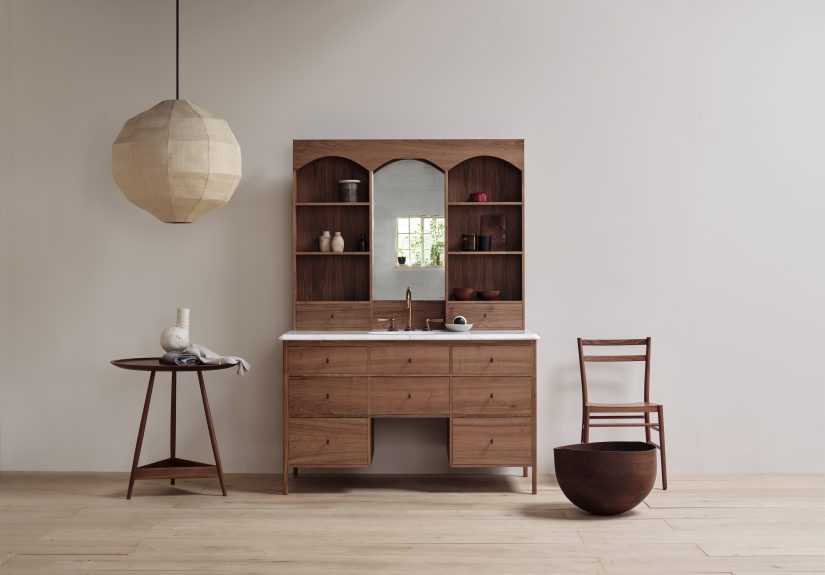
One of the most impressive details in the Jargo is the contradiction it pulls off so well: it looks airy, but it’s hardworking. PINCH and Remodelista descriptions highlight its clean lines, tall arches, delicate legs, anti-fog mirror, recessed lighting, and a generous drawer count. In other words, it’s not just prettyit’s ready for your daily chaos, from skin care bottles to backup toothpaste to that one drawer everyone pretends is “organized.”
The result is a bespoke bathroom vanity that feels visually lighter than most storage-heavy options, yet still solves the storage problem that many “designer” bathrooms conveniently ignore.
Materials are doing the heavy lifting
The signature combination here is American black walnut paired with a marble countertop and an undermount sink. Remodelista’s coverage of the Jargo notes the walnut body, stone top, recessed mirror lighting, and dark bronze-plated hardware details. A separate product listing also describes the unit as drastically elegant and designed around generous storage, including nine drawers and a Lefroy Brooks undermount sink option.
Small note for detail lovers: some published descriptions reference Calcatta marble, while product listings also reference white Carrara marble. That kind of variation is common with bespoke furniture lines because stone options can change, and PINCH also offers custom sizing and finish flexibility.
Why Walnut Is a Brilliant Choice for a Luxury Bathroom Vanity
Walnut brings warmth where bathrooms often feel cold
Bathrooms can easily drift into “beautiful but sterile” territorytoo much white tile, too much hard stone, too much echo. Walnut fixes that fast. American black walnut typically features rich brown tones that instantly warm up a space and soften the clinical look that many bathrooms accidentally end up with.
Design publications have been leaning into this shift for a reason. Architectural Digest has pointed to the growing popularity of wood vanities and even highlighted walnut wood in modern floating vanity designs. HGTV and Better Homes & Gardens also regularly feature wood-toned and walnut-style vanities as a way to add contrast, texture, and character without sacrificing sophistication.
It’s elegant, but not delicate-looking
Walnut has a rare talent: it can look polished enough for a luxury interior and still feel grounded. It doesn’t read flimsy or trendy. It reads substantial. That makes it a strong choice for a custom sink vanity, where you want the piece to anchor the room visually.
Compared with painted vanities, walnut is also forgiving in a different way. Painted surfaces can chip and show wear sharply. Walnut tends to age with more grace, especially when finished well. A little patina can actually make it look better, not worse.
Walnut is workable, durable, and design-friendly
From a craftsmanship standpoint, black walnut is widely appreciated for its workability and stable, high-end appearance. That’s exactly the kind of wood you want in a bespoke piece with fine joinery, custom handles, and a furniture-like silhouette. It also pairs beautifully with bronze, brass, marble, and soft lightingbasically the dream team of elevated bathroom materials.
Design Anatomy of the PINCH Bespoke Walnut Sink Vanity
1) The silhouette does the first impression work
PINCH’s vanity shape is what makes people stop scrolling. The legged form and architectural arches create visual lift, which keeps the vanity from feeling blocky. This is a big deal in bathrooms, where chunky millwork can make the room feel crowded fast.
Think of it like this: the silhouette is doing what a great blazer does. Tailored, structured, clean, and weirdly flattering to the room.
2) The sink and stone top create contrast
An undermount sink keeps the top surface looking clean and continuous. That’s especially important with a statement stone slab. It helps the marble read as a single elegant plane instead of a countertop interrupted by a drop-in rim.
It also supports easier wipe-downs around the sink openingno raised edge, fewer grime traps, less time muttering about water spots.
3) Built-in mirror lighting adds quiet luxury
The anti-fog mirror and recessed lighting are not just flashy extras. They solve real user problems. A foggy mirror after a shower is annoying. Harsh overhead lighting is worse. Integrated lighting around or near the vanity zone can dramatically improve the morning routine, especially for grooming, makeup, and shaving.
This is one reason the Jargo feels so complete: it doesn’t treat the mirror as an afterthought. It treats the whole vanity wall as one composition.
4) The drawer count is the secret weapon
Nine drawers is a “finally, someone gets it” design move. Most bathrooms don’t fail because they lack style. They fail because they lack storage strategy. A vanity with serious drawer capacity lets you organize by function: daily items, backup stock, guest supplies, hair tools, cleaning cloths, and so on.
Better Homes & Gardens frequently emphasizes that vanities act as both focal points and storage engines. PINCH’s walnut vanity nails that balance. It looks editorial, but it behaves like a practical piece of home infrastructure.
Planning a Vanity Like This in a Real Bathroom
Start with size, not vibes
Yes, the vibe is immaculate. But before you fall in love, measure everything.
Across U.S. home improvement guides, standard vanity widths commonly range from roughly 24 inches up to 72 inches, with many popular increments in between. Typical vanity heights land in the 30-to-36-inch range, and depth is often around 17 to 24 inches (with about 21 inches being very common). That means a bespoke walnut vanity can look custom and still be planned around familiar, proven dimensions.
For a one-sink setup, many homeowners choose widths in the 24-to-48-inch range. Double-sink layouts usually need significantly more room, often around 60 to 72 inches. If you’re designing around a statement furniture-style vanity, don’t forget to account for door swing, drawer pull-out clearance, and traffic flow.
Vanity height matters more than people expect
Bathroom vanity height is one of those details people ignore until they use the sink every day and start noticing their back. U.S. guidance generally places vanities in the 30-to-36-inch range, with “comfort height” options on the taller end. Houzz and The Spruce both note that height preferences shift depending on user height and sink style.
If you’re using a vessel sink, remember it adds height above the countertop. That can make a vanity feel unexpectedly tall if you don’t plan for it. An undermount sink, like the one associated with the PINCH vanity, usually makes height planning easier because the basin sits below the counter line.
Give the vanity breathing room
A gorgeous vanity won’t feel gorgeous if you have to sidestep the toilet to brush your teeth. Layout clearance matters.
Design and planning guidance commonly recommends more generous spacing than bare minimum code-style clearances. A frequent rule of thumb is to allow at least 30 inches in front of counters or vanity edges for better usability, even if minimum clearances can be tighter. If you’re planning a high-end custom piece, this is not the place to go stingy.
Luxury is not just materials. Luxury is being able to open a drawer without hip-checking the shower door.
Think about sink type and plumbing early
Sink selection affects everything: countertop cutout, faucet placement, backsplash decisions, and final vanity height. U.S. retailer guides also note there’s no single standard sink size, so don’t assume your “normal” sink will fit a custom vanity layout by default.
If you’re adapting an existing bathroom, compare the new vanity plan with current plumbing rough-ins before finalizing the piece. Custom vanities are flexible, but your wall plumbing is often a stubborn little historian.
How to Style a Walnut Sink Vanity So It Looks Expensive (Not Overdone)
Pair walnut with stone and soft contrast
Walnut plays especially well with light marble, creamy plaster tones, matte white walls, and brushed metals. The contrast keeps the wood from looking heavy, while the wood keeps the room from looking flat.
If your bathroom already has a lot of stone, walnut adds the warmth. If your bathroom already has lots of wood tones, marble or porcelain adds the visual pause. The trick is balance, not competition.
Use hardware and lighting as jewelry
Architectural Digest regularly points out how hardware and vanity lighting can change the personality of a bathroom. On the PINCH vanity, dark bronze-plated handles are a perfect example of subtle contrast. You don’t need loud hardware when the proportions are this good.
For surrounding fixtures, choose finishes that echo the vanity’s moodaged brass, dark bronze, or even polished nickel if you want a brighter look. Just avoid mixing five finishes unless you enjoy explaining your choices to confused houseguests.
Keep the countertop styling minimal
A bespoke walnut vanity already carries a lot of visual interest. Let it breathe. Keep the countertop styling limited to essentials: a soap dispenser, a small tray, a candle, maybe one sculptural object. That’s it.
The goal is “curated spa” not “bathroom gift shop.”
The Practical Side: Moisture, Maintenance, and Longevity
Yes, wood can work in bathroomsif you respect moisture
Let’s settle this: wood in a bathroom is not a bad idea. Unmanaged moisture is a bad idea.
U.S. health and housing guidance consistently emphasizes that moisture control is the key to preventing mold problems. If water sits, mold wins. A walnut vanity can last beautifully, but only if the room is ventilated and splashes are handled quickly.
Ventilation is part of the vanity plan
Bathroom exhaust fans are not the glamorous part of the design story, but they protect your glamorous choices. Better Homes & Gardens notes a common sizing rule of about 1 CFM per square foot of bathroom space, and good ventilation helps remove steam before it settles into cabinetry, paint, and grout lines.
In a bathroom with a premium wood vanity, good airflow is basically insurance.
Control humidity, not just mess
Indoor air guidance often points to a healthy humidity range around 30% to 50%. That’s helpful for comfort, but it’s also helpful for wood. Wood is hygroscopic, meaning it naturally exchanges moisture with the air. In practical terms, it expands and contracts with humidity changes. Big swings can stress finishes, joints, and long-term stability.
That doesn’t mean you need to babysit your vanity with a weather station. It just means the basics matter: run the fan, wipe standing water, and don’t let the bathroom become a steam cave.
Maintenance tips for a walnut vanity
- Wipe splashes promptly: Especially around the sink cutout and faucet base.
- Use mild cleaners: Skip harsh abrasives or bleach-based sprays on wood finishes.
- Protect the stone top: If the vanity uses natural marble, follow sealing and care guidance appropriate for the stone.
- Check ventilation habits: Run the fan during showers and for a bit afterward.
- Use trays inside drawers: This keeps spills and leaky bottles from becoming surprise science experiments.
Is a Bespoke Walnut Vanity Worth It?
It depends on what you want the bathroom to do
If you just need a sink and storage, plenty of off-the-shelf vanities will work. But if you want the bathroom to feel designedlike truly designeda bespoke walnut sink vanity can transform the entire space.
The value is not only in the materials. It’s in the fit, the proportions, the storage planning, and the visual calm. PINCH’s approach to cabinetry and furniture-making is especially compelling because it treats storage as part of the beauty, not the thing you hide behind beauty.
It’s an investment piece, not a trendy swap
Bespoke pieces make the most sense when you plan to live with them for years. The best custom vanities age with the home, not against it. Walnut, stone, and timeless lines give you a better chance of loving it in year ten than a trend-heavy finish that looked exciting for six months and then started to feel like a design dare.
If your goal is a bathroom that feels collected, warm, and quietly luxurious, the PINCH walnut vanity is a strong blueprint for what “high-end” should look like in 2026 and beyond.
Experiences from Real-Life Bathroom Living with a Bespoke Walnut Vanity
Here’s the part glossy design photos usually skip: what it actually feels like to live with a vanity like this every day.
The first thing people tend to notice is how the room changes emotionally. A bathroom with a bespoke walnut vanity doesn’t feel like a utility zone anymore. It feels like part of the home. That sounds dramatic for a place where you keep floss, but it’s true. Morning routines feel calmer because the vanity reads like furniture, not a plastic-coated storage block. The texture of real wood changes the tone of the space before you even turn on the faucet.
Another common experience is that organization gets easiermostly because good drawers make you behave better. When a vanity includes thoughtful storage, especially multiple drawers, people naturally sort things by routine. One drawer for daily skin care, one for grooming tools, one for backups, one for guest items. Suddenly the countertop stays cleaner because the storage is actually usable, not just technically present.
Households sharing a bathroom also tend to appreciate furniture-style vanities more than expected. The reason isn’t just looks. It’s workflow. A well-designed vanity creates distinct zones, even when the room is compact. One person can use the mirror while the other grabs a drawer item without the usual cabinet-door shuffle. That sounds small until you live it on a busy weekday morning.
There’s also a subtle “aging well” effect. Walnut tends to look better once it has been lived withassuming basic care is in place. Unlike some painted finishes that show every bump as a bright chip, walnut often develops a softer, more settled appearance over time. It starts to feel established, like it belongs there. In design terms, that’s patina. In real-life terms, it means you stop panicking every time someone sets down a toiletry bag too quickly.
Of course, ownership comes with a learning curve. People quickly realize that ventilation is not optional in a bathroom with premium wood and stone. The exhaust fan gets used more consistently. Towels are actually hung to dry instead of becoming decorative floor art. Water around the sink gets wiped sooner. Not because the vanity is fussy, but because it’s worth protecting. A bespoke piece tends to inspire better habits.
Guests notice it too. A statement vanity often becomes the one feature people comment on, especially if the rest of the bathroom is understated. The most common reactions are some version of: “Wait, this is a bathroom vanity?” or “This looks like custom furniture.” That reaction is exactly the point. The vanity blurs the line between utility and craftsmanship.
In smaller bathrooms, the experience is a little different but just as rewarding. A furniture-like vanity can make a compact space feel more curated and less cramped, especially when the legs and proportions create visual lift. Even when the footprint isn’t huge, the room feels less dense. It’s one of those design tricks that feels almost unfair.
And finally, there’s the long-term satisfaction factor. Trendy bathrooms often peak on day one. A well-made walnut vanity tends to grow on you. The grain, the hardware, the stone, the lightingthose details reveal themselves over time. It becomes part of the rhythm of the home. Not flashy. Not disposable. Just deeply good design doing what it should do every day.
Conclusion
The bespoke walnut sink vanity by PINCH London is a standout example of how bathroom design can be both beautiful and practical. It combines furniture-grade craftsmanship, warm natural materials, integrated function, and timeless proportions in a way that elevates the entire room. Whether you’re planning a full remodel or simply collecting ideas for a future dream bath, this style of vanity is a reminder that the most memorable spaces are built on smart details, not just expensive finishes.
If you want your bathroom to feel calmer, richer, and better organized, start with the vanity. In many cases, it’s the design move that changes everything.