Table of Contents >> Show >> Hide
- Why the 1990s Were the Golden Age of Shooting Guards
- How We Ranked the Best 90s Shooting Guards
- Top NBA Shooting Guards of the 1990s
- Other Notable 90s Shooting Guards
- How 90s Shooting Guards Compare to Other Eras
- Fan Memories: Experiencing the Best 90s Shooting Guards
- Conclusion: A Decade Defined by Elite Two-Guards
If you grew up on grainy VHS highlight tapes, starter jackets, and NBA on NBC theme music, you already know:
the 1990s were shooting guard heaven. Before the three-point revolution and pace-and-space offenses,
the league was ruled by smooth midrange assassins, relentless slashers, and big-game killers who lived for the
last shot. At the center of it all was Michael Jordan, but he wasn’t alonean entire generation of elite
2-guards helped define the era.
In this deep dive, we’ll rank the best 90s shooting guards, look at what made them special, and revisit the
rivalries and moments that still get fans arguing today. Lace up your retro Jordanswe’re going back to the
golden age of the two-guard.
Why the 1990s Were the Golden Age of Shooting Guards
The 1990s marked a turning point in how the perimeter game worked. Teams still relied on dominant big men, but
the league’s identity was shifting toward dynamic wing scorers. Michael Jordan’s rise with the Chicago Bulls
showed that a shooting guard could be the engine of a dynastyscoring titles, MVPs, and championships piled up
while he also hounded opponents on defense.
Inspired by that blueprint, an entire class of 2-guards emerged: high-volume shooters like Reggie Miller,
powerful slashers like Clyde Drexler, and inside-out threats like Mitch Richmond. Defenses were more physical,
hand-checking was still allowed, and the lane was crowded, so these players had to master tough pull-ups,
off-ball movement, and crafty footwork instead of just relying on open threes and spread floors.
In short, the 90s shooting guard had to do it all: score in traffic, create shots late in the clock, defend
multiple positions, and step up in postseason wars that often ended 85–82 instead of 130–125.
How We Ranked the Best 90s Shooting Guards
Ranking the top NBA shooting guards of the 1990s is part stats, part accolades, and part “who terrified defenses
when it mattered most.” For this list, we focused on:
- Peak years in the 1990–1999 window (what they did in that decade matters more than career totals).
- Individual production – points, efficiency, playmaking, and defense.
- Accolades – All-Star selections, All-NBA, All-Defensive teams, and major awards.
- Playoff and clutch impact – big series, iconic moments, and how central they were to deep runs.
- Two-way value – not just buckets, but how they held up on the other end of the floor.
With that in mind, here’s a look at the top 90s shooting guards who defined the decade.
Top NBA Shooting Guards of the 1990s
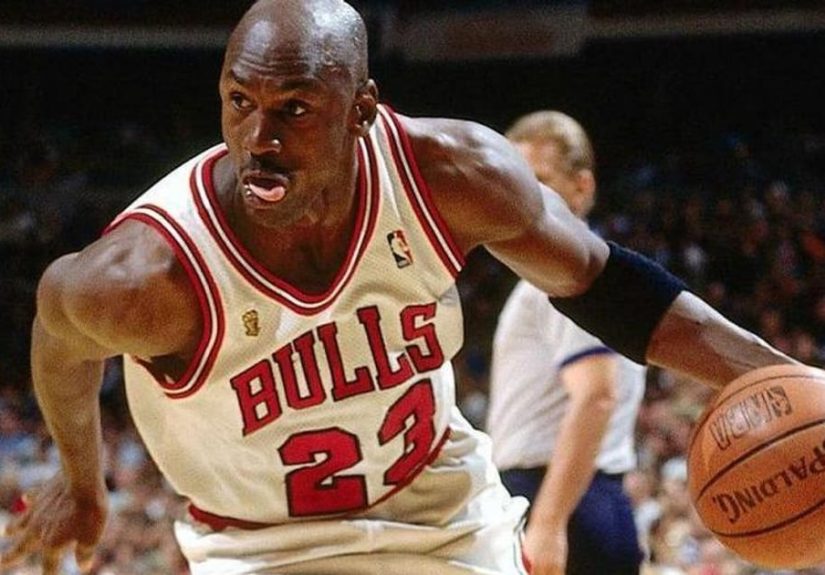
1. Michael Jordan
There’s no suspense here. Michael Jordan wasn’t just the best shooting guard of the 1990she was the most
dominant player in the sport, period. In the 90s alone, he led the Chicago Bulls to six championships
(1991–1993, 1996–1998), collected multiple MVPs and Finals MVPs, and sat atop the scoring charts year after year.
What made Jordan untouchable was his completeness. He scored from everywhere: post-ups on smaller guards,
unstoppable fadeaways, acrobatic drives, and cold-blooded midrange pull-ups in crunch time. He also played
ferocious perimeter defenselocking up stars, jumping passing lanes, and setting the tone for Chicago’s
suffocating schemes.
Beyond the numbers, Jordan’s impact on the position was cultural. Every young guard in the 90s studied his
footwork, copied his fadeaway, or at least tried to. You can’t talk about 90s shooting guards without starting
(and almost ending) with MJ.
2. Clyde Drexler
Clyde “The Glide” Drexler brought a smoother, more fluid style to the position. Splitting most of the decade
between the Portland Trail Blazers and Houston Rockets, Drexler was a do-it-all wing who scored,
rebounded, and facilitated at a high level.
At his peak, Drexler was putting up near triple-double style linesover 20 points per game with strong rebounding
and playmaking from the 2-guard spot. He led Portland to multiple Finals appearances early in the decade, then
finally grabbed a ring in Houston alongside Hakeem Olajuwon. Even late in his career, he remained a steady
20+ point scorer and a key playoff performer.
Drexler’s combination of length, athleticism, and basketball IQ made him one of the most complete shooting
guards of the 90s and the clear #2 of the decade behind Jordan.
3. Reggie Miller
Reggie Miller didn’t look like an intimidating figurethin frame, awkward posturebut he was one of the deadliest
players of the 1990s. As the face of the Indiana Pacers, Miller became the prototype for the modern
off-ball sniper, sprinting around screens, curling into catch-and-shoot threes, and breaking opposing fans’
hearts in the final minutes.
Throughout the decade, Miller consistently ranked among the league leaders in three-point shooting and free
throw percentage. More importantly, he shined in the playoffs: eight points in nine seconds against the Knicks,
big shots in hostile Madison Square Garden, and multiple deep runs in the Eastern Conference.
Before today’s era of spacing, Miller was already playing a modern game. In many ways, he was the
bridge between old-school two-guards and today’s movement shooters.
4. Mitch Richmond
If you didn’t watch a lot of Sacramento Kings games in the 90s, you might underrate Mitch Richmond. That would
be a mistake. Richmond was one of the decade’s most consistent and efficient scorers at the 2-guard spot, often
putting up over 20 points per game while facing constant defensive pressure as his team’s primary option.
Richmond combined a strong, stocky frame with a smooth jumper and underrated handle. He could bully smaller
guards in the post, rise up for threes, or attack the basket and finish through contact. For several seasons,
he was among the league’s high-volume three-point threatslong before that became fashionable.
Without the big-market spotlight or deep playoff runs, Richmond doesn’t get the same mainstream love as
Jordan or Drexler. But within 90s circles, he’s rightly viewed as one of the most complete scorers
at the position.
5. Joe Dumars
Joe Dumars straddled the line between the late-80s “Bad Boys” Pistons and the 1990s era, but his contributions
in the decade are too strong to ignore. Known as a humble star, Dumars was the defensive conscience of Detroit’s
backcourt and a reliable 2-way threat even as the Pistons transitioned out of their championship window.
Dumars brought elite perimeter defense, guarding legends like Jordan as well as any guard could.
On offense, he knocked down threes, operated calmly in the midrange, and served as a steady secondary creator.
Even when his role shifted slightly in the mid-90s, his efficiency and all-around game stood out.
If some 90s lists underestimate him, it’s usually because his game was understated. But measured by impact,
toughness, and versatility, Dumars belongs in the decade’s top tier.
6. Kobe Bryant
Kobe Bryant only played the back half of the decade, entering the league in 1996, but his rapid rise makes him
impossible to leave off any 90s shooting guard rankings. By the end of the decade, he was already an
All-Star, All-NBA selection, and a champion alongside Shaquille O’Neal in Los Angeles.
Early 90s Kobe was a work in progressoccasional airballs in the playoffs, a bit too eager to take tough shots.
But by 1999–2000, he had transformed into a full-fledged superstar: high-level scorer, aggressive defender,
and fearless late-game option. His footwork, fadeaway, and competitive fire drew constant comparisons to Jordan.
While Kobe’s true prime came in the 2000s, the 90s laid the foundation and were strong enough to put him in this
decade’s conversation.
7. Latrell Sprewell
Latrell Sprewell’s career is often overshadowed by off-court controversy, but between the lines, he was a
nightmare matchup. In the mid-90s with the Golden State Warriors, Sprewell blossomed into a high-usage wing
who could score, pass, and defend at a high level. He later took that energy to New York, helping the Knicks
reach the 1999 NBA Finals.
Sprewell was a relentless attacker. He drove hard, finished above the rim, and hounded opponents
on defense. At his peak, he put up All-NBA numbers and showed he could be the best player on a playoff team.
His inconsistency and off-court issues keep him a notch below the very top, but at his best, he was one of the
most explosive 2-guards of the decade.
8. Allan Houston
Allan Houston was the smooth shooter every coach dreams about. Standing 6’6″ with a high release and textbook
form, he became the perfect complement to New York’s physical frontcourt and rugged defense in the late
90s. When the Knicks needed a clutch jumper, Houston was the first option.
Houston’s midrange game was pure artcoming off curls, rising over defenders, and knocking down big shots in
tightly contested Eastern Conference battles. He also stretched the floor from deep, providing crucial spacing
in an era where teams still preferred to pound the paint.
His counting stats weren’t as gaudy as some of his peers, but his efficiency, clutch moments, and postseason
success (including the famous game-winning runner against Miami in 1999) cement his place as one of the best
90s shooting guards.
9. Eddie Jones
Eddie Jones was the prototype of the modern 3-and-D plus player before that label even existed. With the Lakers
and later the Hornets, Jones made multiple All-Star teams and All-Defensive squads thanks to his combination of
shooting, length, and defensive instincts.
Offensively, he could finish in transition, hit threes at an efficient clip, and attack closeouts. Defensively,
he was a steals machinejumping passing lanes, picking pockets, and turning defense into instant offense.
In another era without early-career Kobe pushing for minutes, Jones might have had an even bigger role and
reputation. As it is, he remains one of the most underrated two-way guards of the 1990s.
10. Nick Anderson
Nick Anderson is often remembered for a few painful missed free throws, but that shouldn’t erase how good he
was during the 90s. As a key piece of the Orlando Magic, Anderson formed an inside-out partnership with Shaquille
O’Neal and helped the franchise reach the 1995 NBA Finals.
Anderson could score at all three levels: bullying smaller guards in the post, hitting threes, and attacking the
rim off the dribble. He rebounded well for his position and played solid defense, making him an important
two-way contributor on a contender at a relatively young age.
When you look beyond one infamous moment, you find a tough, productive guard who earned his spot in the decade’s
top 10 conversation.
Other Notable 90s Shooting Guards
The 1990s were so stacked that several excellent guards didn’t quite crack the top 10 but deserve a shout-out:
- John Starks – Emotional heartbeat of the Knicks, fearless defender, and streaky but explosive scorer.
- Jeff Hornacek – Shootin’ and floatin’ alongside Stockton and Malone in Utah, elite shooter and smart playmaker.
- Dan Majerle – Tough defender and three-point threat for the Phoenix Suns.
- Steve Smith – Versatile wing who could play both guard spots and score efficiently.
- Hersey Hawkins – Steady scorer and shooter who fit perfectly next to star bigs.
- Dražen Petrović – Brief but brilliant run before his tragic death; widely regarded as one of the best shooters of his time.
- Reggie Lewis – Another star whose life was cut short, but who showed All-Star level talent and leadership in Boston.
On a deeper list, many of these names would comfortably sit in the top 15 or 20. They helped make the night-in,
night-out guard matchups of the 90s so compelling.
How 90s Shooting Guards Compare to Other Eras
Putting 90s shooting guards in context requires a little time travel. In the 2000s, Kobe Bryant and Dwyane Wade
took the position to new heights with more pick-and-roll, more isolation, and slightly friendlier offensive rules.
In the 2010s, James Harden, Klay Thompson, and others ushered in true three-point era dominance.
What makes the 90s unique is the balance: the best 2-guards weren’t just high-usage scorers; they were expected
to defend at an elite level while working in more cramped spacing. Jordan and Drexler were complete
two-way monsters. Miller and Richmond thrived as shooters even without constant five-out spacing. Dumars and
others had to navigate hand-checking and physical contact that would draw whistles today.
If you dropped many of these 90s stars into today’s spread-floor environment, their numbers might look even
better. The skill level was therethey just had to deploy it under much tougher offensive conditions.
Fan Memories: Experiencing the Best 90s Shooting Guards
Statistics and rankings tell part of the story, but 90s shooting guards really live in memoriesin the way
games felt, the tension of certain moments, and the rituals fans built around watching them.
For many fans, the 90s revolved around carefully planned viewing schedules. You knew when the Bulls were
on national TV, and everything else took a backseat. Watching Michael Jordan in the Finals wasn’t just
entertainmentit felt like tuning in to see history unfold. The jumper over Craig Ehlo, the Game 1 shrug against
Portland, “The Flu Game,” and the shot over Bryon Russell in 1998 all became calendar events that people still
remember where they were for.
The experience was different with someone like Reggie Miller. Pacers–Knicks battles in Madison Square Garden
felt like theater. Fans watched Miller jaw with Spike Lee, come off a maze of screens, and suddenly erase
a lead in just a few possessions. Even if you weren’t a Pacers fan, you knew that when he started skipping
back in transition or holding his follow-through just a second too long, disaster was coming for the home crowd.
Clyde Drexler’s games felt smoother, more lyrical. With Portland, he glided down the floor, extending for
long layups and dunks that seemed to stretch time. When he joined Houston, watching him side-by-side with
Hakeem Olajuwon gave fans a superteam feel before that term was populartwo Hall of Famers dismantling defenses
with poise instead of theatrics.
In New York, the vibe around Allan Houston and Latrell Sprewell was very different. Knicks fans often lived
on the emotional edge, enduring grind-it-out 78–75 slugfests where every jumper felt like pure gold. When
Houston rose up for a jumper at the elbow or Sprewell attacked in transition, you could feel the Garden rise
in anticipation. The 1999 Finals run is still remembered not just for how far the team went, but for how much
heart those guards showed every night.
Even outside of big markets, fans found their heroes. Sacramento fans who stuck with a struggling franchise
in the pre–“Webber and Vlade” era had Mitch Richmond as their beacon. Night after night, he poured in
20+ points against elite defenders, often with little help. For those fans, Richmond wasn’t just a name on
a stat sheethe was proof that their team had a star worthy of league-wide respect, even if the national TV
schedule didn’t show it.
Then there was Kobe Bryant, whose late-90s rise felt like watching a sequel in real time. Fans who grew up on
Jordan suddenly had this fearless teenager in Laker gold launching turnaround jumpers, attacking the rim
with swagger, and studying the game obsessively. By the end of the decade, you could sense a generational
handoff coming, even if the full story wouldn’t play out until the 2000s.
For many people, their first basketball video gameson the Super Nintendo, Sega Genesis, or early PlayStation
also reinforced these identities. You probably remember which team you chose just to spam Reggie Miller threes,
run isolations with Jordan, or dunk relentlessly with Sprewell. The pixelated versions of these stars helped
cement their real-world reputations in a generation’s imagination.
That’s why ranking the best 90s shooting guards is never just a cold exercise in analytics. It’s about
the feeling of living through that era: the tension of low-scoring playoff games, the physical battles
on the perimeter, the sound of the crowd when a star rose up for a shot everyone knew was coming but nobody
could stop. Whether you were a die-hard fan or a casual viewer, the 1990s gave you shooting guards you’ll
remember for the rest of your life.
Conclusion: A Decade Defined by Elite Two-Guards
The 1990s produced a murderers’ row of shooting guardsfrom the untouchable greatness of Michael Jordan to
the smooth versatility of Clyde Drexler, the clutch sniping of Reggie Miller, and the underappreciated brilliance
of Mitch Richmond and Joe Dumars. Add in rising stars like Kobe Bryant and rugged contributors like Latrell
Sprewell, Allan Houston, Eddie Jones, and Nick Anderson, and you get a decade where every night seemed to feature
another dangerous 2-guard.
Today’s game might be faster and more three-point heavy, but the blueprint for a dominant wing scorer still
traces back to the 90s. If you want to understand modern NBA guards, you start with this eraand with this list
of the best 90s shooting guards who changed the game, one jumper at a time.