Table of Contents >> Show >> Hide
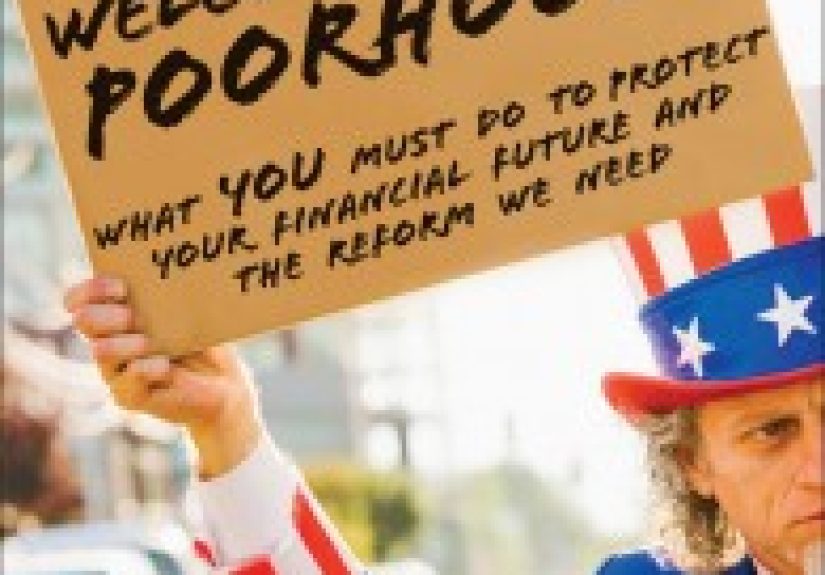
If you have ever opened a financial book hoping for a calm, soothing guide and instead found yourself getting yelled at by someone with a calculator, a memory of the housing crash, and absolutely no patience for nonsense, then America, Welcome To The Poorhouse may be your kind of read. Jane White’s book is not interested in whispering sweet budgeting tips into your ear. It is here to grab you by the lapels, point at your 401(k), your mortgage, your tuition bill, and your credit card statement, and say, “We need to talk.”
Originally published in the aftermath of the 2008 financial crisis, this book lands like a siren. White argues that far too many Americans are drifting toward financial instability not because they are uniquely irresponsible, but because the system itself nudges them in that direction. Her target is wide: underfunded retirement plans, risky mortgages, runaway college costs, credit card debt, and a political culture that too often favors powerful industries over ordinary households. That sounds heavy, and it is. But White also writes with enough snap, anger, and practical urgency to keep the book from feeling like a lecture delivered by a beige filing cabinet.
As a modern reader, the most interesting question is not whether the book is furious. It definitely is. The real question is whether it still works. The answer is yes, with a few wrinkles. This is a sharp, engaging, and occasionally exasperating book that mixes consumer-finance coaching with policy critique. It is not subtle. It is not neutral. It is also not boring, which in the personal finance aisle is practically a public service.
What the Book Is About
At its core, America, Welcome To The Poorhouse argues that many middle-class Americans are being set up to lose. White divides the book into the major pressure points of financial life: retirement, housing, college costs, debt, and politics. Her thesis is simple but potent: people are being told to act like rational, perfectly informed financial managers in systems that are often confusing, expensive, and tilted against them.
One of the book’s main claims is that the modern retirement model places too much risk on individuals. White is especially skeptical of the idea that a typical worker can simply stash money in a 401(k), let the market do its thing, and glide gracefully into retirement while smiling at the sunset like a yogurt commercial extra. She argues that this faith in individual accounts is often wildly optimistic, especially for people with inconsistent incomes, high fees, late starts, or long stretches without employer matches.
From there, White moves into housing, where she treats adjustable-rate mortgages and inflated home prices like a pair of villains who absolutely deserve their own dramatic entrance music. She also tackles college costs, arguing that higher education has become less of a ladder and more of a toll road. Credit card debt gets its own stern examination too, and the political chapters make clear that White sees lobbying, deregulation, and captured policymaking as part of the same larger story.
That makes this book something more than a standard money manual. It is half practical guide, half populist critique, and half warning flare. Yes, that is three halves. White would probably say the math got weird because the economy did first.
Why the Book Still Feels Relevant
The easiest way to dismiss this book would be to say it belongs to a specific post-crash moment. But that would be too easy, and also too lazy. Many of the book’s central anxieties still feel painfully current. Retirement insecurity remains a major concern for American households. Tuition is still expensive enough to make parents breathe into paper bags. Student debt continues to shape life choices. And while mortgage products are better regulated than they were during the wildest years of the housing bubble, the basic problem White identified remains: financial products are often easier to sell than to truly understand.
That is where the book earns its long shelf life. White understood that a lot of financial stress does not come from one bad decision. It comes from a pileup of perfectly ordinary decisions made under pressure. A family buys a house because renting feels unstable. A student borrows because college is framed as nonnegotiable. A worker under-saves because wages are tight and retirement is decades away. A household leans on credit because the emergency fund is more dream than reality. None of this is cartoon villainy. It is just modern life, with interest.
White is strongest when she connects those individual choices to larger structures. She does not let readers off the hook, but she also does not pretend that discipline alone can solve everything. That balance matters. Plenty of finance books scold people for buying lattes, as if foam art personally caused retirement shortfalls. White’s argument is broader and more persuasive: personal behavior matters, but policy, incentives, and industry design matter too.
Retirement: The Book’s Strongest Section
The retirement chapters are the real engine of the book. White writes with conviction about the shortcomings of 401(k)-style saving, especially for workers who start late, contribute too little, or lose years to layoffs, caregiving, or stagnant pay. She is not saying retirement saving is pointless. She is saying the cultural fantasy around it is flawed. And honestly, that point still lands like a thrown stapler.
What makes these sections effective is that White understands retirement is not just a math problem. It is a behavior problem, a labor-market problem, and a policy problem. The book recognizes that many Americans are expected to build long-term financial security inside a short-term economy. That tension gives the book its bite.
Housing, College, and Debt: Familiar Trouble Spots
The housing chapters work because White never treats homeownership as a sacred cow. She is willing to say something many Americans still do not love hearing: buying a home is not always wise just because it is culturally approved. She questions overpriced markets, risky loan structures, and the social pressure to buy bigger than makes sense. That candor is refreshing.
Her chapters on college costs are similarly blunt. White clearly believes education matters, but she refuses to romanticize the price tag. That is one of the book’s smarter moves. Too much public conversation treats college as both essential and ruinously expensive, then acts shocked when families feel trapped. White saw that contradiction clearly and attacked it without flinching.
The debt sections are less flashy, but they are useful. They are grounded, direct, and practical in a way that many readers will appreciate. If the political chapters are the drum solo, the debt chapters are the rhythm guitar: not always glamorous, but absolutely doing the work.
What Jane White Gets Right
First, White gets the emotional reality of financial anxiety right. She understands that money stress is not just about numbers. It is about fear, status, family obligation, and the feeling that one bad quarter can turn your life into a cautionary tale. That emotional accuracy gives the book credibility.
Second, she refuses to separate personal finance from public policy. This is one of the book’s most important strengths. White insists that retirement rules, lending laws, education financing, and industry lobbying are not background scenery. They are part of the main plot. Readers who are tired of being told that every financial problem can be solved with better hustle will likely find this perspective both validating and energizing.
Third, the book is unusually readable for a finance title. White has a journalistic rhythm that keeps the pages moving. She can turn policy frustration into momentum, which is not easy. Many books about retirement systems read like compliance paperwork came to life and asked for a coffee date. This one does not. Even when White is making a detailed argument, she usually keeps the prose brisk, pointed, and sharp-edged.
Finally, she offers advice that feels practical instead of decorative. The book does not pretend there is a magical app, a perfect side hustle, or a five-minute trick that will solve structural economic problems. Its advice is more grounded than that: be skeptical, avoid traps, save aggressively when possible, understand the fine print, and do not confuse a popular financial product with a safe one.
Where the Book Shows Its Age
No honest review should pretend this book is timeless in every way. It is very much a book of its era, and sometimes you can hear the 2009 news cycle rattling around in the walls. Some examples feel tied to that moment, some villains are introduced with such certainty that nuance gets steamrolled, and some arguments are delivered with the force of a closing statement rather than an open inquiry.
That tone can be thrilling when White is right and a little exhausting when she overreaches. Readers looking for a serenely balanced, academic overview may find the book too combative. White has opinions, and she does not wrap them in bubble wrap. The book occasionally lumps together valid policy critique, practical consumer advice, and broad political frustration in ways that feel a bit crowded.
There is also the simple fact that financial conditions evolve. Mortgage markets changed after the crash. Student lending debates shifted. Retirement planning conversations now include newer concerns about gig work, long life expectancy, market volatility, healthcare costs, and the uneven effects of inflation. So while White’s core warnings remain relevant, some of the framing reflects the moment in which the book was written.
Still, showing its age is not the same thing as losing value. In some ways, the book’s age adds to its appeal. It captures the anger and disillusionment of a country staring at the wreckage of easy-credit optimism and asking, with excellent reason, “Who thought this was a good idea?”
Writing Style: More Fire Alarm Than Whispered Meditation
Let us be clear: this is not a gentle beach read. White writes like someone who has watched too many families get bad advice and is no longer interested in being polite about it. That gives the book energy. It also gives it a slightly caffeinated, corner-me-at-the-cookout quality.
For many readers, that will be a plus. The style is vivid, direct, and memorable. White understands that outrage can be a useful organizing principle when the subject is financial harm. The prose has enough punch to keep policy-heavy material from turning into wallpaper. But the same quality that makes the book engaging may also make it feel relentless. If you prefer your nonfiction with more hedging and fewer verbal elbows, be advised.
Personally, I think the style works more often than it misses. The title promises urgency, and the book delivers. It never meanders. It never goes soft. It never pauses to admire its own restraint, because restraint is not what this book came here to do.
Who Should Read This Book?
This book is a strong pick for readers interested in personal finance, retirement policy, consumer protection, and the long shadow of the financial crisis. It will especially resonate with people who feel alienated by glossy money books that assume stable incomes, cheap housing, straightforward college choices, and employer benefits from a mythical workplace where no one ever gets laid off.
It is also useful for readers who want a finance book with an argument. White is not just handing out tips; she is making a case. If you enjoy books that combine practical advice with systemic critique, this one has plenty to chew on.
Who might struggle with it? Readers who want a narrowly focused retirement guide, a neutral tone, or deeply technical investing detail may find it too wide-ranging and too opinionated. This is not a spreadsheet in book form. It is a warning, a critique, and a call to pay attention.
Final Verdict
America, Welcome To The Poorhouse is an angry, intelligent, and surprisingly readable financial wake-up call. Jane White does not merely ask whether Americans are saving enough or borrowing too much. She asks why so many people are expected to navigate flawed systems with perfect judgment while powerful institutions get to make expensive mistakes and call it business. That question gives the book its staying power.
It is not flawless. It can be repetitive. It can be blunt enough to raise an eyebrow. It occasionally tries to do three books’ worth of work in one package. But it is also lively, memorable, and sharper than most finance books that aim for broad audiences. Even when you disagree with White, you rarely drift off.
If you want a book that treats financial insecurity as both a household challenge and a policy failure, this is still worth reading. If you want a book that will politely pat your shoulder and recommend a color-coded budget notebook, this is not that book. Jane White brought a megaphone, not a scented candle.
Related Experiences: Why This Book Still Hits a Nerve
What makes America, Welcome To The Poorhouse linger after the last page is not just its argument. It is the way the book brushes up against experiences so many readers already know by heart. You do not need to have lived through every chapter personally to recognize the emotional texture. The retirement worry. The housing second-guessing. The stomach-drop feeling that comes from opening a tuition bill or watching a credit card balance become a recurring character in your life story.
Plenty of readers will come to this book carrying their own version of financial whiplash. Maybe it is the memory of parents who did everything “right” and still ended up worried about retirement. Maybe it is the experience of graduating into a shaky economy and realizing adulthood came with monthly payments you did not exactly order. Maybe it is the strange American ritual of being told to dream big while simultaneously being invoiced for every step of the dream.
That is why White’s tone, for all its sharpness, feels familiar. She writes with the frustration of someone who has heard too many polished explanations for problems that ordinary people experience in painfully unpolished ways. A worker does not need a TED Talk to know that wages feel stretched. A family does not need a white paper to know housing can become a trap when the numbers stop making sense. A borrower does not need a motivational poster to understand that debt changes how freely a person imagines the future.
There is also a generational layer to the book’s appeal. Older readers may see in it the unraveling of promises they were once told to trust: work hard, buy a house, save steadily, and stability will follow. Younger readers may see something equally familiar: the exhaustion of trying to build security in an economy where every milestone seems to come with higher costs, thinner margins, and more fine print than anyone warned you about in homeroom.
And then there is the emotional contradiction at the center of the whole thing. Financial stress is deeply personal, yet its causes are often collective. People internalize shame for struggles that are partly structural. That tension is everywhere in this book, and it is one reason the message still connects. White is angry, yes, but beneath the anger is a refusal to normalize preventable insecurity. She does not want readers to settle into the idea that chronic financial anxiety is simply the adult version of weather.
In that sense, the book review becomes bigger than one book. It becomes a reflection on how Americans talk about money, risk, and responsibility. The lasting experience of reading America, Welcome To The Poorhouse is not just that you learn something. It is that you feel seen, challenged, and slightly less willing to accept bad systems as natural. That may not lower your interest rate overnight, but it does make the book memorable. And in a crowded field of personal finance titles, memorable counts for a lot.