Table of Contents >> Show >> Hide
- Quick answer (for the hungry and mildly impatient)
- Why does honey get a bad reputation in pregnancy?
- So… is honey actually safe during pregnancy?
- Benefits of honey during pregnancy (realistic, not magical)
- Risks and downsides (because honey isn’t a free pass)
- How much honey can you have while pregnant?
- Smart ways to eat honey safely during pregnancy
- Honey alternatives during pregnancy (if you’re switching it up)
- FAQ: the questions people actually Google at 2:00 a.m.
- Conclusion
- Real-World Experiences: What Honey Looks Like in Actual Pregnant Life
- Experience #1: The “tea era”
- Experience #2: The “I used to love sweets… now I crave weirdly specific sweets” phase
- Experience #3: The gestational diabetes learning curve
- Experience #4: The “raw honey from the farmer’s market” debate
- Experience #5: Postpartum reality check: “Honey is fine for me… but not for the baby”
Pregnancy has a funny way of turning you into a part-time detective. One minute you’re craving toast, the next you’re interrogating the internet like: “Is this toast… legal?” Honey often ends up on the suspect list because of that scary word people love to toss around: botulism. So let’s clear it up, calmly, with real science, practical tips, and exactly zero fear-mongering.
Quick answer (for the hungry and mildly impatient)
Yesmost pregnant people can eat honey. Including raw honey, pasteurized honey, and the fancy one in the tiny jar that costs more than your first car payment. The main honey rule you’ve heard“no honey!”is for babies under 12 months, not for adults with fully developed digestive systems.
Why does honey get a bad reputation in pregnancy?
Honey’s “problem” is that it can contain spores of Clostridium botulinum. Those spores can cause infant botulism in babies under one year old. The leap people make is: “If it’s unsafe for babies, it must be unsafe for pregnant people.” That leap is understandable… and also not how biology works.
The baby rule is real (and important)
The “no honey for babies” rule exists because infants don’t have mature gut flora and defenses yet. Spores can germinate in a baby’s intestines and produce toxin. That’s why pediatric guidance is firm: no honey before 12 months.
Adults (including pregnant adults) are built differently
In healthy adults, spores typically pass through without causing trouble because the adult digestive system and gut microbiome are not friendly places for them. Pregnancy doesn’t magically turn your stomach into an infant stomach. (If it did, we’d all be craving pureed peas.)
So… is honey actually safe during pregnancy?
For most people: yes. Medical and public health sources generally consider honey safe in normal food amounts during pregnancy. Concerns about botulism are primarily about infants, not pregnant adults.
Raw vs. pasteurized honey: does it matter?
From a pregnancy-safety perspective, raw honey and pasteurized honey are both generally considered safe for healthy adults. Raw honey may contain more natural enzymes and pollen, and it can crystallize faster (which is normal, not a betrayal). Pasteurized honey is heated for texture and shelf stability, but it’s still basically honey doing honey things.
Is honey safe in the first trimester?
Generally, yes. There isn’t evidence that honey is riskier in early pregnancy than later pregnancy. If you can keep it down (hello, nausea), it’s typically fine as part of a balanced diet.
When should you be extra cautious?
While honey is considered safe for most pregnant people, it’s smart to be more careful if you have:
- Serious gastrointestinal disease or a history of major gut surgery
- Recent prolonged use of strong antibiotics (which can disrupt gut defenses)
- Immune compromise (your clinician can individualize advice)
- Gestational diabetes or difficulty controlling blood sugar
These don’t automatically mean “never honey,” but they do mean “talk to your OB or dietitian before you turn honey into a food group.”
Benefits of honey during pregnancy (realistic, not magical)
Honey has a long history as a soothing, comforting food. Just keep expectations grounded: it’s not a prenatal vitamin in disguise, and it won’t negotiate your baby’s bedtime schedule later.
1) Soothing a cough or sore throat
Many pregnant people look for non-medication comfort measures when they’re congested or coughing. Honey in warm tea (not scalding hot) is a classic for throat comfort. It may help calm coughing and soothe irritationsimple, cozy, effective.
2) Antioxidants and bioactive compounds
Honey contains antioxidants and plant compounds that vary by floral source. Darker varieties often have more of these compounds. This is a nice bonus, but it doesn’t cancel out the fact that honey is still primarily sugar.
3) A flavorful sweetener that helps you enjoy nutritious foods
Sometimes the best benefit is practical: a drizzle of honey can make plain Greek yogurt, oatmeal, or whole-grain toast more appealingmeaning you’re more likely to eat foods that actually support pregnancy nutrition.
Risks and downsides (because honey isn’t a free pass)
1) Honey is still sugar
Honey has a “health halo,” but your body still processes it as a form of added sugar. If you’re managing weight gain, heartburn, or blood sugar (especially with gestational diabetes), honey should stay in the “small amounts” categoryalong with cupcakes, soda, and the idea that you’ll “sleep when the baby sleeps.”
2) Gestational diabetes: be strategic
If you have gestational diabetes, the goal is steady blood glucose and balanced carbohydrate intake. Honey can spike blood sugar like other sweeteners. That doesn’t make it forbidden, but it does make it something you should measure, time, and portion. Many people do best pairing a small amount of sweetness with protein/fat/fiber (for example: honey + yogurt + berries + nuts).
3) Allergies and sensitivities
Honey can contain trace pollen and bee-related proteins. If you have significant pollen or bee-product allergies, use caution and ask your clinicianespecially with raw honey or specialty products like propolis blends.
4) Watch out for “honey products,” not just honey
The biggest safety issues usually come from what honey is mixed with: herbal add-ins, “immune tonics,” unregulated supplements, or products marketed for babies (like honey pacifiers). During pregnancy, avoid random supplement-style concoctions unless your clinician OKs them.
How much honey can you have while pregnant?
There’s no universal “pregnancy honey limit,” but a good rule is: treat honey like any added sugaruse it for flavor, not as a main ingredient.
Practical portion ideas:
- 1 teaspoon in tea or stirred into oatmeal
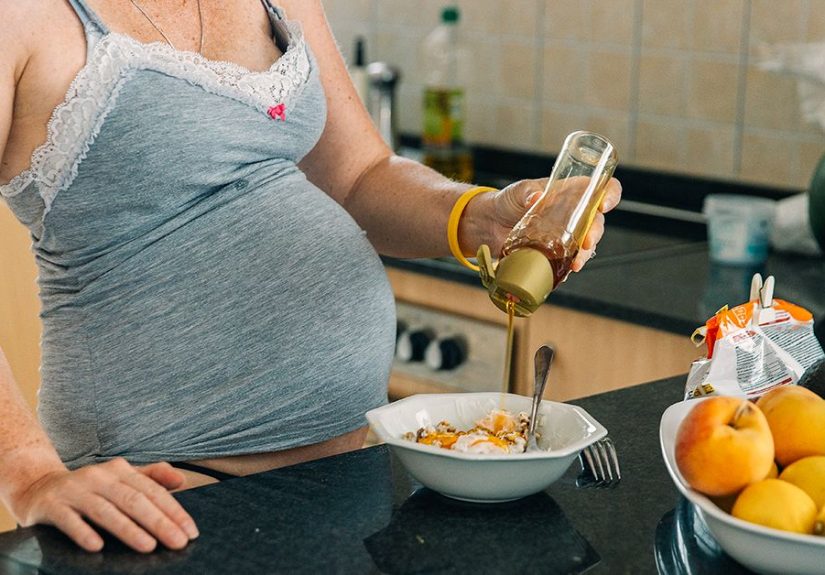
- 1–2 teaspoons drizzled over yogurt with fruit
- A thin swipe on whole-grain toast with nut butter
If you’re watching blood sugar, test how honey affects you personally (with your care team’s guidance), because responses can vary.
Smart ways to eat honey safely during pregnancy
- Buy from reputable sources (grocery brands with clear labeling or trusted local producers).
- Store it properly: tightly sealed at room temperature; avoid moisture contamination.
- Skip risky add-ons: avoid “detox” honey blends or unverified herbal mixtures.
- Use it to upgrade healthy foods: yogurt, oats, chia pudding, whole-grain toast, homemade salad dressings.
- Remember the postpartum rule: once baby arrives, keep honey (and honey-containing foods) away from infants under 12 months. Your honey jar is not a teething toy.
Honey alternatives during pregnancy (if you’re switching it up)
If you want sweetness without leaning on honey every day, rotate options:
- Fruit (mashed banana, berries, applesauce) to sweeten oatmeal or smoothies
- Maple syrup in small amounts (still added sugar, but delicious)
- Date paste for baking (fiber + sweetness, but still counts as sugar)
- Non-nutritive sweeteners (some are considered safe in moderation; ask your clinician if you use them often)
FAQ: the questions people actually Google at 2:00 a.m.
Can I eat raw honey during pregnancy?
For most healthy pregnant adults, raw honey is generally considered safe in food amounts. If you have immune compromise, serious GI conditions, or you’re unsure, ask your clinician.
What if I ate honey before I knew I was pregnant?
In most cases, there’s no reason to panic. Honey is widely considered safe for pregnant adults. Bring it up at your next appointment if you want reassurance, but this is usually a non-issue.
Is manuka honey safe during pregnancy?
Manuka honey is still honey. It may have different antibacterial activity levels, but pregnancy guidance is generally the same: safe for most people in moderation, but it’s still added sugar.
Can honey help with nausea or morning sickness?
Some people find warm tea with ginger and a little honey comforting, but honey isn’t a proven nausea treatment. If nausea is severe or you’re struggling to eat and drink, contact your care team.
Conclusion
If you’re pregnant and wondering whether honey is allowed, the answer is happily boring: yes, usually. Honey’s big safety warning is aimed at infants under 12 months, not pregnant adults. The real pregnancy “watch-outs” are less dramatic: portion size, blood sugar (especially with gestational diabetes), and avoiding sketchy supplement-style honey products.
So go aheadstir a teaspoon into tea, drizzle a little on yogurt, and enjoy the small comforts. Pregnancy has enough rules. Your sweetener doesn’t need to be one more villain in the story.
Real-World Experiences: What Honey Looks Like in Actual Pregnant Life
Let’s talk about how honey really shows up during pregnancybecause most people aren’t sitting around debating “raw vs. pasteurized” like it’s a reality TV reunion special. They’re just trying to eat, breathe, and maybe stop their throat from feeling like sandpaper.
Experience #1: The “tea era”
A very common pattern goes like this: pregnancy hits, someone catches a cold (or just has pregnancy congestion that feels like a cold), and suddenly warm tea becomes a personality trait. Honey joins the cast because it makes tea taste less like “hot leaf water” and more like “I’m being gently cared for by a mug.” Many people report that a teaspoon of honey in warm water with lemon feels soothing, especially at night when coughing is extra annoying. It’s not a miracle curebut it’s comfort you can actually look forward to.
Experience #2: The “I used to love sweets… now I crave weirdly specific sweets” phase
Pregnancy cravings are famously unpredictable. Some people go off sweets entirely. Others want something sweet but not “candy sweet.” Honey fits that middle lane: sweet, but with flavor. You’ll hear stories of pregnant people who can’t stand frosting but will happily drizzle honey on peanut butter toast because it’s sweet + salty + filling. The humor is that it feels “healthier,” which makes it easier to justify at 10 p.m. (No judgment10 p.m. is basically a separate food group in pregnancy.)
Experience #3: The gestational diabetes learning curve
For people diagnosed with gestational diabetes, honey often becomes a “test it and see” food. Some try replacing table sugar with honey and are surprised that their glucose monitor doesn’t care about honey’s wholesome reputation. The practical takeaway many share: portion and pairing matter. A tiny drizzle with high-protein yogurt may work better than honey stirred into plain carbs. People often learn to treat honey like any sweetener: measure it, keep it small, and combine it with fiber/protein. It’s less about fear and more about databecause nothing makes you humble like a number on a screen.
Experience #4: The “raw honey from the farmer’s market” debate
Plenty of pregnant people love buying local foods. Then they spot a jar labeled “RAW HONEY” in bold letters and immediately wonder if they’re about to break a pregnancy rule they’ve never actually seen written down anywhere. This is where reassurance usually helps: many people simply choose a trusted source, keep servings moderate, and move on with their day. Others decide they’d rather not think about it and grab a standard grocery-store honey. Both choices are normal.
Experience #5: Postpartum reality check: “Honey is fine for me… but not for the baby”
After delivery, honey sometimes becomes a household “handle with care” itemnot because it’s dangerous to adults, but because it’s a firm no for infants. Parents describe putting honey on high shelves, avoiding honey-sweetened snacks that might get shared accidentally, and telling well-meaning relatives, “Yes, it’s natural. No, the baby can’t have it yet.” That boundary-setting moment is practically a parenting rite of passage.
If these experiences have one theme, it’s this: honey is usually not the problem. Context is. Enjoy it like a grown-up (small amounts, smart pairings), and keep the baby rule for after birth. That’s the sweet spotpun absolutely intended.