Table of Contents >> Show >> Hide
- Quick Answer: YesBut Expect a Little Texture Moodiness
- What Happens When You Freeze Milk (And Why It Still Works)
- Food Safety Basics: Freezing Pauses TimeIt Doesn’t Reverse It
- Test Kitchen Method: How to Freeze Milk the Right Way
- How Long Can You Freeze Milk?
- How to Thaw Frozen Milk Safely (Without Inviting Bacteria to the Party)
- Can You Drink Thawed Milk?
- The Best Ways to Use Thawed Milk
- Freezing Different Kinds of Milk: What Works Best?
- Troubleshooting: When to Toss Frozen or Thawed Milk
- Extra: of Real-World “Freezer Milk” Experiences (So You Don’t Repeat Our Mistakes)
- Conclusion
If you’ve ever stared into the fridge holding a milk jug like it’s a ticking time bomb (“Best by… tomorrow?!?”), welcome. The good news: yes, you can freeze milk. The slightly sassier news: thawed milk sometimes comes back with a new hairstyle. Think “a little separation,” not “a dairy apocalypse.”
Below are the practical, tested, no-drama steps to freeze milk, thaw it safely, and use it in a way that keeps your coffee happy and your pancakes fluffy. We’ll also talk about which types of milk behave best, how long frozen milk keeps its quality, and the biggest mistake people make (spoiler: it involves freezing a totally full container and then acting surprised).
Quick Answer: YesBut Expect a Little Texture Moodiness
Milk is mostly water plus fat, proteins, and minerals. When it freezes, the water forms ice crystals. That process can nudge the fat and proteins to separate, so thawed milk can look a bit grainy or “split.” The fix is usually simple: shake, whisk, or blend to bring it back together. It’s typically a cosmetic issueespecially if you’re using the milk in cooking or baking.
What Happens When You Freeze Milk (And Why It Still Works)
1) Separation is normal
Freezing disrupts milk’s natural emulsion. After thawing, you may see a watery layer and a thicker layer. This doesn’t automatically mean the milk is bad. Give it a good shake (or a quick whirl with a blender if it’s being stubborn), and it usually smooths out nicely.
2) Color can change slightly
Sometimes frozen milk develops a faint yellow tinge. That’s not a horror-movie signit can happen because certain components in milk freeze at slightly different rates. The milk can still be safe and nutritious; the biggest difference is that flavor or texture might be a little off for drinking straight. Translation: it may be better in oatmeal, muffins, or mac and cheese than in a tall, proud glass.
Food Safety Basics: Freezing Pauses TimeIt Doesn’t Reverse It
Freezing is a “pause” button, not a “reset” button. If milk is already spoiled (sour smell, chunky curdling, or that unmistakable “nope”), freezing won’t make it fresh again. Freeze milk before the best-by date and while it still tastes and smells normal.
Also, freezer safety is mostly about temperature consistency. At 0°F (-18°C) or colder, frozen foods stay safe indefinitely. Quality is the part that changes over timeflavor, texture, and odor absorption can fade if you keep it frozen forever.
Test Kitchen Method: How to Freeze Milk the Right Way
Step 1: Choose a freezer-friendly container
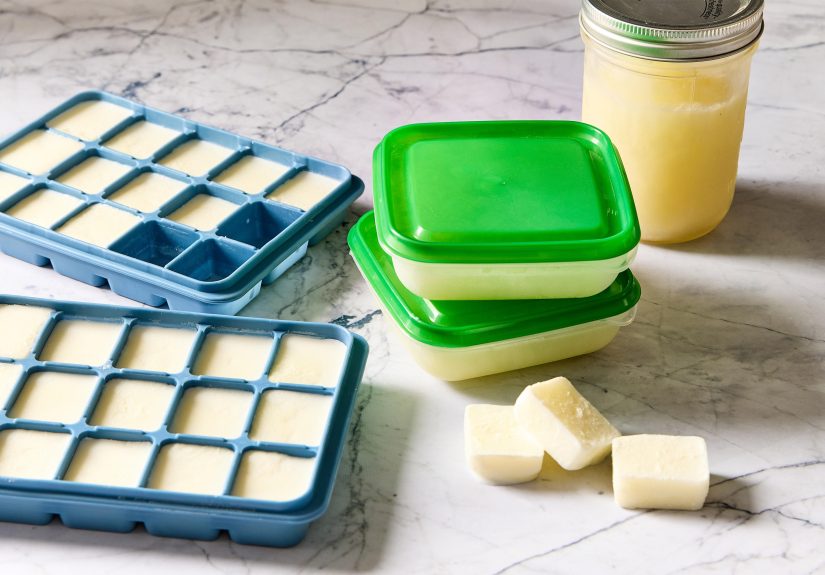
The best choices are airtight, freezer-safe plastic containers or heavy-duty freezer bags. You can freeze milk in the original container if it’s plastic and not completely full. Avoid glass (expansion can crack it), and don’t trust thin, flimsy containers that can split at the seams.
- Freezer-safe plastic containers: Great for stacking, fewer leaks.
- Heavy-duty freezer bags: Freeze flat for space-saving “milk files.”
- Ice cube trays: Perfect for portioning into smoothies, sauces, or coffee.
Step 2: Leave headspace (milk needs room to expand)
Liquids expand as they freeze. So don’t freeze a completely full jug unless you want to discover what “milk geyser” means. A good rule: leave about 1 inch of space at the top. If you’re freezing a gallon in its original jug, pour out about an inch first.
Step 3: Portion it like future-you will thank you
Big containers take longer to freeze and longer to thaw. Portioning means faster thawing and less risk of repeatedly warming and cooling the same milk. Try one (or more) of these:
- 1-cup portions: Ideal for recipes (pancakes, waffles, béchamel, boxed mac and cheese upgrades).
- Ice cube portions: Great for smoothies, small baking needs, or adding to soups after reheating.
- Cereal insurance: Freeze a small container as an emergency backup so breakfast doesn’t turn into “dry granola and regret.”
Step 4: Seal, label, and date it
Milk can pick up freezer odors (because it’s polite like thatit absorbs “mystery freezer aroma” without complaining). Use airtight containers, press out extra air in bags, and label with the freeze date and the amount. Your future self should not have to guess whether that bag is milk or “the world’s palest soup.”
Step 5: Freeze it in the coldest, steadiest spot
Put milk toward the back of the freezer, not in the door. Doors warm up slightly every time they’re opened, and milk doesn’t need that kind of emotional rollercoaster.
How Long Can You Freeze Milk?
For best quality, most guidance lands in the 1–3 month sweet spot. It may remain safe longer if kept consistently frozen at 0°F, but quality can drop: more separation, more chance of stale flavors, and more odor absorption.
If you’re a planner, here’s an easy, realistic rule: Freeze now, use within 3 months, and aim for the first month if you want the closest-to-fresh taste.
How to Thaw Frozen Milk Safely (Without Inviting Bacteria to the Party)
Best method: thaw in the refrigerator
Refrigerator thawing is the safest and gives milk the best chance to recombine smoothly. Small portions may thaw overnight; larger containers can take 12–24 hours (sometimes longer, depending on size and how cold your fridge runs).
Avoid thawing milk on the counter. Room-temperature thawing keeps the outer layer in the “bacteria love it here” zone too long.
Shake, whisk, or blend
After thawing, shake the container vigorously. If it still looks separated, whisk it, or blend briefly. This is especially helpful for higher-fat milk where separation is more noticeable.
Use thawed milk within a few days
Once thawed, treat it like regular milk again. Use it within 3–5 days for best freshness. And try not to refreeze thawed milkportioning ahead is the better strategy.
Can You Drink Thawed Milk?
Usually, yesassuming it was frozen fresh, thawed safely, and still smells/tastes normal. But texture can be slightly different. Some people don’t mind it in cereal or coffee; others notice a faint graininess and prefer it in cooking. If you’re picky (no judgment), save thawed milk for baking, sauces, and smoothies where texture won’t stand out.
The Best Ways to Use Thawed Milk
If your thawed milk is a little separated or looks “less photogenic,” put it to work where it shines:
- Baking: muffins, pancakes, quick breads, cakes
- Cooking: creamy soups, mashed potatoes, casseroles, sauces
- Breakfast: oatmeal, chia pudding, scrambled eggs
- Blended drinks: smoothies, protein shakes, milk-based blended coffees
Freezing Different Kinds of Milk: What Works Best?
Dairy milk (skim through whole): generally the easiest
Standard dairy milkskim, 1%, 2%, and wholetends to freeze well. You may see more noticeable separation in some cartons than others, but a good shake usually fixes it. If it tastes slightly “freezer-y” after thawing, use it in cooking.
Buttermilk and heavy cream: yes, with caveats
Buttermilk can be frozen and is especially handy for baking (biscuits, pancakes, marinades). Heavy cream can also be frozen, but it won’t whip quite the same after thawing. If you need whipped cream later, whip it first and freeze dollops instead of freezing the liquid.
Plant-based milks: possible, but often grainy
Almond, oat, coconut, and soy milks can separate and look curdled after thawing. Many manufacturers don’t recommend freezing because texture changes can be dramatic. Still, if waste is the enemy and you’re using it in blended recipes, freezing in ice cube trays can be a practical compromise.
Shelf-stable (UHT) milk: usually not worth freezing
Shelf-stable milk is designed to last unopened for months at room temperature. Freezing can encourage separation and doesn’t add much benefit unless the carton is already opened and you can’t finish it in time.
Troubleshooting: When to Toss Frozen or Thawed Milk
Use your senses, and be strict about safety. Discard milk if:
- It smells sour or “off” after thawing (beyond mild freezer aroma).
- It has chunky curds that don’t smooth out after shaking/blending.
- It was thawed at room temperature for an extended period.
- It tastes unpleasant even in small sips (don’t sufferlife is short).
Extra: of Real-World “Freezer Milk” Experiences (So You Don’t Repeat Our Mistakes)
Freezing milk sounds like one of those “sure, technically” tipsuntil you live through the very specific moment when you need it. The classic scenario is the accidental bulk buy: you snag a two-pack of gallons because it’s a great deal, and then you remember you are, in fact, one person (or one household) and not a small dairy-processing facility. Freezing turns that “Oops” into “Look at me, I’m prepared.”
Another common moment: the weather panic shop. A storm is coming, everyone buys bread like it’s going extinct, and you end up with milk that won’t get used before the date. Portioning helps here. People who freeze milk in one-cup containers swear it’s the difference between “I guess I’ll make French toast every day” and “I can just thaw what I need.”
Then there’s the parent breakfast emergency. The kids are ready for cereal right now. You open the fridge… and the carton is empty except for the last tablespoon (the universal symbol for “someone used it and didn’t say anything”). That’s when a small backup container of frozen milk becomes a superhero cape. Not a dramatic onemore like a sensible cardiganbut still heroic.
In cooking-focused households, frozen milk shows up as a quiet meal-prep hack. A few milk cubes can rescue a sauce that needs loosening, smooth out scrambled eggs, or round out a soup after reheating. (Pro move: if you make creamy soups, add thawed milk after reheating so you’re not boiling it into weirdness.)
And yes, people try the “milk cubes in coffee” trick. The first time, it feels cleverlike you’ve outsmarted physics. The second time, you realize you’ve created an iced latte situation at 7 a.m., which is either delightful or deeply confusing depending on your personality. If you’re the “hot coffee forever” type, save milk cubes for smoothies and sauces. If you love iced drinks, congratulations: you’ve found your thing.
The biggest real-world lesson? Label everything. Freezer amnesia is real. A bag of frozen milk looks suspiciously like a bag of frozen broth looks suspiciously like… regret. Write the date and the amount, freeze in portions you actually use, and thaw in the fridge. Do that, and frozen milk stops being “a weird internet tip” and becomes a genuinely useful kitchen habit.
Conclusion
Freezing milk is one of those simple kitchen moves that saves money, reduces waste, and prevents last-minute grocery runs. The keys are easy: use a freezer-safe container, leave headspace, freeze before the best-by date, thaw in the fridge, and shake well. If thawed milk tastes a little different, put it in cooking and bakingwhere it performs like a champ.