Table of Contents >> Show >> Hide
- Rice is supposed to be high in carbs
- How many carbs are in rice?
- Is 45 grams of carbs “too much”?
- White rice vs. brown rice: same family, different vibe
- Rice and blood sugar: the “meal” matters more than the grain
- Rice and weight: it’s usually not the riceit’s the “how”
- How to eat rice without blowing your carb budget
- When you might want less rice (and what to use instead)
- FAQ: quick answers
- Conclusion: rice isn’t “too much”unplanned rice is
- Real-World Experiences: What People Notice When They Tweak Rice
Rice has a funny reputation. In one corner, it’s the comforting, steamy sidekick to your stir-fry. In the other, it’s the “carb villain” blamed for everything from afternoon sleepiness to jeans that suddenly feel tighter. So… are the carbs in rice actually too much? Or is rice just being framed because it’s easy to count?
Let’s clear it up with real numbers, helpful context, and a few tricks that let you keep rice in your life without turning dinner into a math exam.
Rice is supposed to be high in carbs
Rice is a grain. Grains are mostly starch, and starch is a carbohydrate. So if you’re shocked that rice contains carbs, that’s like being surprised that water is wet. The smarter question is: how many carbs are in your portion, and how does that fit your goals and health?
How many carbs are in rice?
Carb content varies by rice type and portion size, but these are practical, everyday numbers for cooked rice.
Cooked white rice (long-grain): the “default” bowl
- 1 cup cooked: about 44–45 grams of carbohydrate.
- 1/2 cup cooked: about 22–23 grams of carbohydrate.
Cooked brown rice: similar total carbs, more fiber
Brown rice is still rice, so the total carbs are usually similar to white rice. The difference is that brown rice keeps the bran and germ, so it typically delivers more fiber and minerals per serving.
The sneaky part: portions often get bigger than you think
At home, a “serving” might be 1/2 cup. In restaurants, it can be 1.5 to 2 cups without anyone blinking. If 1 cup is ~45 grams of carbs, a large bowl can quietly become 90 grams of carbsbefore you even count sauce, bread, or that “just one” soda.
Is 45 grams of carbs “too much”?
Sometimes yes. Often no. It depends on what “too much” means for you and your day. Carbs aren’t automatically “bad.” They’re fuel. The “right” amount depends on things like:
- Activity: a long walk or a tough workout changes your carb tolerance.
- Goals: weight loss, maintenance, and muscle gain have different calorie targets.
- Health: diabetes, prediabetes, or insulin resistance may require more intentional carb planning.
- Meal quality: rice with veggies and protein behaves differently than rice with sugary sauce and no fiber.
A range that helps you sanity-check
Mainstream U.S. nutrition guidance commonly places carbs in a broad middle-of-the-plate range (not a tiny corner, not the whole plate). For many people, that means a cup of rice can fit in a day without drama. But if you’re intentionally eating low-carb or keto, even half a cup may be more than you want. The key is matching rice portions to your overall plan.
White rice vs. brown rice: same family, different vibe
White and brown rice start as the same grain. The difference is processing: white rice is refined, while brown rice keeps its outer layers. This changes how rice digests and what nutrients come along for the ride.
Why brown rice often wins for “everyday” meals
- More fiber: helps with fullness and can slow digestion.
- More natural micronutrients: including magnesium and B vitamins found in the bran/germ.
When white rice makes sense
- Gentler digestion: refined grains can be easier on sensitive stomachs.
- Often enriched: many white rice products have certain B vitamins and iron added back after refining.
Translation: brown rice is often better for steady energy and fullness. White rice can still be a smart tool when you need quick fuel or a low-fiber option.
Rice and blood sugar: the “meal” matters more than the grain
When people worry about rice carbs, they’re often worried about blood sugar spikes. That’s a real concern for manybut it’s also where context matters most.
Glycemic index (GI) and why rice varies
The glycemic index estimates how quickly a food raises blood sugar compared with pure glucose. In general, white rice tends to test higher and brown rice tends to land more in the middle. But rice GI can change with:
- Variety: basmati and long-grain often test lower than sticky/short-grain types.
- Cooking: softer, more gelatinized starch often raises GI.
- What else is on the plate: protein, fat, and fiber slow digestion.
- Portion size: “how fast” (GI) plus “how much” (portion) is what your body actually feels.
Carb counting makes rice less mysterious
If you manage diabetes (or are trying to), you’ve probably seen the “carb servings” idea: 1 carb serving is about 15 grams. By that math, 1 cup of cooked white rice is roughly 3 carb servings. That doesn’t mean you can’t eat itit just means you plan the rest of the meal accordingly.
What research trends suggest (in plain English)
Population studies have linked higher intake of white rice with a higher risk of type 2 diabetes, while swapping refined grains for whole grains tends to be linked with better metabolic outcomes. This isn’t proof that “rice causes diabetes.” It’s a big-picture reminder that diets heavy in refined starch and low in fiber can make healthy blood sugar harder to maintain over time.
Rice and weight: it’s usually not the riceit’s the “how”
Rice can fit into weight loss, maintenance, or gain. The usual troublemakers are:
- Portion creep: “one cup” becomes “a bowl.”
- Rice crowding out protein and plants: less satiety, more snacking.
A simple rice-friendly plate strategy
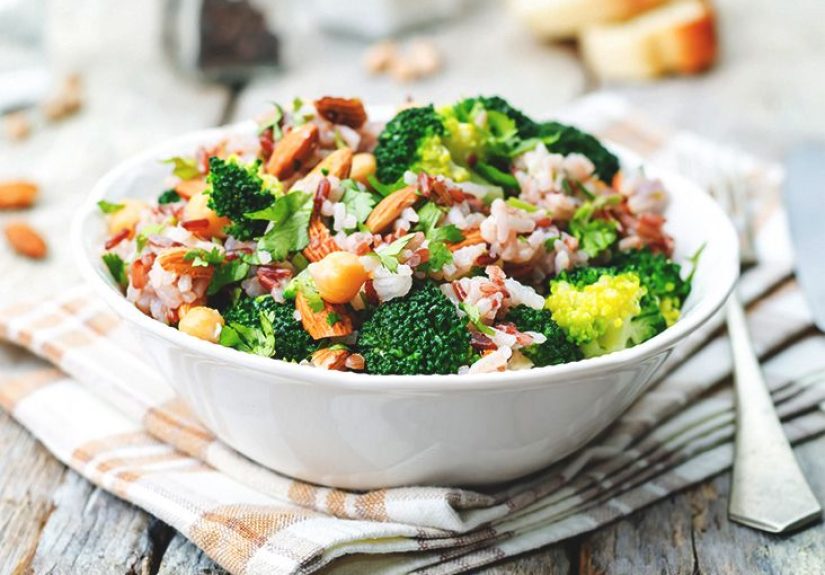
Try the “supporting actor” method: rice is the side, not the star.
- Rice: start with 1/2 cup cooked (adjust up/down as needed).
- Non-starchy veggies: aim for 1–2 cups (volume + fiber).
- Protein: include a palm-sized portion (fish, chicken, tofu, beans, eggs, lean meat).
- Flavor: add fat and sauces thoughtfully (a little goes a long way).
How to eat rice without blowing your carb budget
1) Measure once, then eyeball
Measure 1/2 cup and 1 cup a few times so your eyes learn the difference. After that, you can portion rice without turning dinner into a science fair.
2) Choose whole grains more often
A practical goal is to make at least half your grains whole. Brown rice, wild rice blends, quinoa, and barley help you get more fiber per bite.
3) Pair rice with protein + plants
Simple combos that work:
- Brown rice + black beans + grilled chicken + salsa + a big salad.
- White rice + salmon + roasted broccoli + lemon and herbs.
- Sushi bowl: a smaller scoop of rice + tofu/edamame + cucumber + seaweed.
4) Try the “cool and reheat” meal-prep trick
Cooling cooked rice can increase resistant starch, which may lead to a smaller blood sugar rise for some people. Research has found that cooling rice and reheating it can raise resistant starch and lower glycemic response compared with freshly cooked rice. It’s not magic, but it’s a real, practical tweak.
5) Make a bigger bowl with fewer carbs
Mix rice with “extenders” like cauliflower rice, shredded cabbage, mushrooms, or extra vegetables. You keep the comfort and volume while cutting the starch load.
When you might want less rice (and what to use instead)
If you’re tightening carbs for medical reasons, experimenting with lower-carb eating, or simply trying to eat more plants, you don’t have to “quit” riceyou can rotate your base.
- Wild rice or quinoa: often more fiber and protein per bite than white rice.
- Beans or lentils: higher in fiber and protein, and still satisfying in bowls.
- Cauliflower rice: great when you want volume and texture with far fewer carbs.
- Extra vegetables: roasted broccoli, cabbage, peppers, or mushrooms can replace some (or all) of the rice without making dinner sad.
FAQ: quick answers
Is brown rice low-carb?
No. It’s usually higher-fiber than white rice, but the total carbs are still similar. Think “better quality carbs,” not “low-carb.”
Does rinsing rice remove carbs?
Rinsing mostly removes surface starch and can make rice less sticky. It doesn’t meaningfully change the total carb content of a serving.
Can people with diabetes eat rice?
Often, yes. Portion size, carb counting, and pairing rice with protein and vegetables can make rice workable. If you use a glucose meter or CGM, let your data guide your portion and rice variety choices.
Conclusion: rice isn’t “too much”unplanned rice is
Rice is carb-rich by design. That doesn’t make it a diet deal-breaker. It becomes “too much” when portions balloon, meals are low in fiber and protein, or rice doesn’t match your personal carb needs. Keep rice, measure it honestly, balance your plate, and you’ll usually get the comfort without the crash.
Real-World Experiences: What People Notice When They Tweak Rice
I don’t have personal taste buds, but there’s a surprisingly consistent set of stories people share when they change how they eat rice. If you’re wondering whether small tweaks actually feel different, these patterns are worth watching for.
1) The first “aha” is almost always portion awareness. Many people assume they eat “one serving,” then measure once and realize their usual scoop is closer to 1.5–2 cups. When they switch to 1/2 cup or 3/4 cup, they often say dinner still feels satisfyingespecially if they add vegetables for volume. It’s less “I’m depriving myself” and more “wow, I was accidentally eating two servings.”
2) Energy tends to feel steadier when rice stops being a solo act. People who used to eat a big bowl of rice with a small amount of protein often report getting hungry again quickly. When they flip the ratiobigger protein portion, bigger veggie portion, smaller rice portionthe “two hours later snack attack” often calms down. The meal feels more complete, and cravings feel less dramatic.
3) Blood sugar patterns can change with tiny swaps. People using a glucose meter or CGM commonly notice differences when they switch from sticky white rice to brown rice, basmati, or parboiled riceor when they simply cut the portion. Another frequent observation: keeping the same rice portion but adding beans, tofu, chicken, or a big salad can lead to a gentler rise. Not everyone sees the same numbers, but many people see enough change to make the experiment feel worthwhile.
4) Meal prep makes the “cool and reheat” trick popular. When people cook a batch of rice, chill it overnight, and reheat portions during the week, they often report two benefits: it’s convenient and it feels less heavy. Some also notice fewer post-lunch slumps. Resistant starch isn’t a free pass to eat unlimited rice, but leftovers can be a smarter form of rice for some people.
5) Athletes and active folks often keep riceand just time it better. People who train hard frequently report that rice works best around workouts: a bit more rice the night before a long run, or after lifting when they want easy carbs to refuel. On lighter days, they scale back the rice portion and increase vegetables instead. The experience is less “carbs are good/bad” and more “carbs are a dial I can turn.”
6) The mindset shift is huge. When rice is labeled “bad,” meals become all-or-nothing: either you’re “being good” or you’re “failing.” People often report better consistency when they reframe rice as “a food with a measurable carb cost.” Then they can choose: half cup today, a bigger portion after a hard workout, or a cauliflower-rice mix on lower-activity days. That flexibility is usually what makes the change stick.
If you want a simple one-week experiment: keep rice in your meals, but measure your usual portion once, choose a slightly smaller portion most days, and always add protein and vegetables. Pay attention to hunger, energy, and (if relevant) glucose. The goal isn’t perfectionit’s useful feedback you can repeat.