Table of Contents >> Show >> Hide
- What Real Meteorites Actually Look Like (So Your Replica Passes the Vibe Check)
- The Five “Meteorite Tells” You Want to Recreate
- Material Options for Casting Meteorite-like Pieces
- 1) Cold-Cast Resin (Resin + Metal Powder) for a Real Metallic Read
- 2) Acrylic-Gypsum Composites (Like Jesmonite-Style Materials) for Stony Realism
- 3) Plaster, Cement, or Stone-Like Cast Mixes for Large Props and Set Pieces
- 4) Foam or Lightweight Cores with a Hard Shell (The Film-Prop Cheat Code)
- 5) Metal Casting (Aluminum/Bronze) for True MassDone by Professionals
- Texture Engineering: Regmaglypts, Crust, and “Came Through the Atmosphere” Storytelling
- Color, Sheen, and Finish: Making It Look Like a Space Rock in Normal Lighting
- Mold-Making Basics for Meteorite Shapes (Without the Headache)
- Three Specific Example Builds (Concepts You Can Adapt)
- Common Mistakes That Scream “Made on Earth”
- Safety and Honesty: Two Things That Should Always Be Non-Negotiable
- Field Notes: Common Experiences People Have When Casting Meteorite-like Materials (Extra)
Real meteorites are basically the universe’s way of dropping a “you up?” text onto Earth at 30,000+ mph.
They’re scarred, dense, oddly elegant, and (in most cases) far too expensive to let your cat knock off a shelf.
So if you’re building a movie prop, a classroom demo, a cosplay relic, or a piece of decor that looks like it
survived atmospheric entry, casting meteorite-like materials is the sweet spot: maximum “space rock” energy,
minimum museum-security budget.
This guide breaks down what makes meteorites look convincing, which casting materials get you there, and how
to finish a piece so it reads as “cosmic visitor” instead of “lumpy charcoal briquette with glitter.”
We’ll keep it practical, a little nerdy, and just funny enough to justify your new hobby being “pretending to
manufacture objects from outer space.”
What Real Meteorites Actually Look Like (So Your Replica Passes the Vibe Check)
The biggest mistake in “meteorite styling” is copying volcanic rocks too literally. Many meteorites don’t look
bubbly or frothy. Instead, they often have a thin outer skin formed during entry called a fusion crust
usually dark, sometimes glassy, sometimes more matte, and often chipped to reveal a lighter interior.
Some show subtle surface streaks called flow lines, formed when molten material gets pushed backward
and freezes mid-drift.
Many iron-bearing meteorites also show regmaglyptsrounded, thumbprint-like depressions that look like
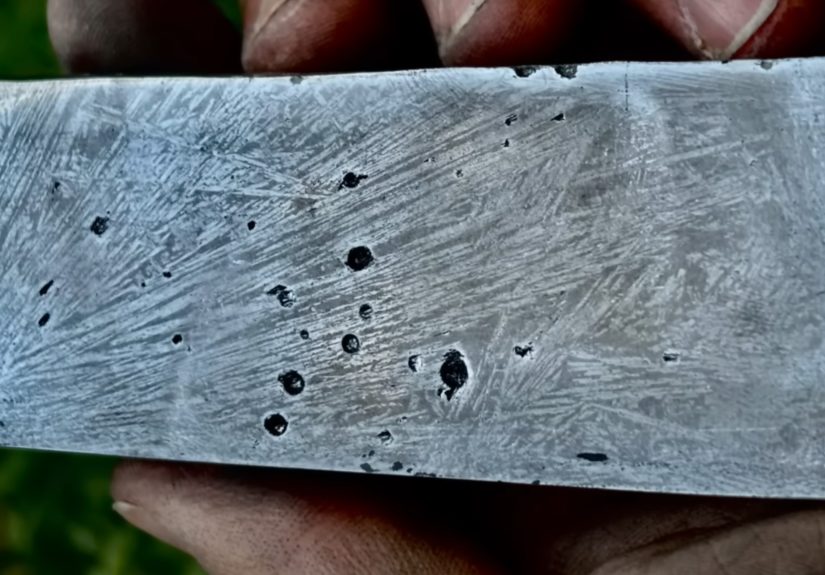
the rock was gently kneaded by a giant space toddler. And if you’ve seen those dramatic crosshatched “metal
crystal” patterns on polished meteorite slices, that’s the Widmanstätten structure in iron-nickel meteorites
a pattern that forms over extremely long cooling times in space. You don’t have to replicate it for every project,
but if you’re making a “cut face” display piece, a nod to it can be a realism superpower.
The Five “Meteorite Tells” You Want to Recreate
Think of this as your authenticity checklist. You don’t need all five for every object, but the more you nail,
the more your piece reads as “found in a field” instead of “made in a garage.”
- Irregular silhouette: Not round, not symmetrical, not “river rock.” Meteorites often look broken, angular, or oddly tapered.
- Fusion crust effect: A thin, darker exterior layer with occasional chips or worn edges.
- Regmaglypts: Soft, scooped depressionsmore like thumbprints than sharp craters.
- Interior contrast: A lighter, grainy “inside” (for stony types) or a metallic interior (for iron-rich styles).
- Mass cues: Meteorites tend to feel heavy for their size. If your replica is light, you’ll want visual tricks that suggest density.
Material Options for Casting Meteorite-like Pieces
“Meteorite-like” isn’t one material. It’s a lookachieved by pairing a castable base with smart texture and finishing.
Below are the most common approaches, from maker-friendly to “please do this with trained pros.”
1) Cold-Cast Resin (Resin + Metal Powder) for a Real Metallic Read
If you want a replica that can be polished to a convincing metallic sheenespecially for “iron meteorite” vibes
cold casting is the classic route. In simple terms, metal powder is incorporated into a castable resin so the surface
can be burnished, buffed, or aged to look like metal rather than painted plastic.
Why it works: The finish can catch light like real metal, and weathering effects (darkening in recesses,
brighter highlights on edges) look natural because you’re working with an actually metallic surface layer.
Best for: Pendants, props that will be handled up close, “cut face” display pieces, or anything where
you want believable metal without the weight and risk of molten casting.
2) Acrylic-Gypsum Composites (Like Jesmonite-Style Materials) for Stony Realism
If your goal is “stony meteorite,” you want something that feels rock-like, takes pigment well, and can hold crisp texture.
Acrylic-gypsum composites are popular in art and fabrication because they can cast cleanly, feel mineral-based, and finish
beautifully with stains, washes, and sealers.
Why it works: The surface naturally reads as stone, not plastic. That’s huge for meteorite replicas because
most meteorites are stony (or stony-iron) rather than solid metal.
Best for: Classroom replicas, decor objects, large fragments, and anything that needs a “real rock” look without
heavy masonry or specialized equipment.
3) Plaster, Cement, or Stone-Like Cast Mixes for Large Props and Set Pieces
For big “space boulder” builds, you can scale up with plaster-based or cementitious mixes and then do the realism with
surface work. These materials are cost-effective and naturally matte, which helps the fusion crust illusion.
Why it works: Big pieces need bulk. Stone-like mixes give you that weight and presence quickly.
Best for: Stage props, garden features, museum-style hands-on displays (properly sealed), and anything too large
to justify fancy resin.
4) Foam or Lightweight Cores with a Hard Shell (The Film-Prop Cheat Code)
Sometimes you need a meteorite that looks heavy but won’t injure an actor, destroy a table, or require a forklift.
The standard trick is a lightweight core (foam or similar) with a textured hard shell. The shell does the visual lifting:
pitting, crust, edge chips, and metallic highlights.
Why it works: The camera believes surfaces. Your back will, too.
5) Metal Casting (Aluminum/Bronze) for True MassDone by Professionals
Yes, a cast metal meteorite prop can be wildly convincing. It also introduces serious hazards: molten metal, splash risk,
heat, and fume exposure. If you want a true metal piece, the smart path is working with a professional foundry, a supervised
class, or a licensed fabrication shop that already has proper controls and training in place.
Best for: Public art, permanent installations, high-end props, or heirloom pieceswhen handled by trained professionals.
Texture Engineering: Regmaglypts, Crust, and “Came Through the Atmosphere” Storytelling
Meteorite realism lives in the surface. You’re not just making a rock; you’re making a rock that looks like it got sandblasted,
melted, pushed by airflow, and then flash-cooled. The good news: most of that is visual language you can sculpt or fake
with finishing.
Regmaglypts (Thumbprint Depressions)
The key to regmaglypts is softness. They’re usually rounded depressions, not sharp drill holes. If you overdo them, your piece
reads like coral or a pumice stone. If they’re too uniform, it reads like a pattern stamp. Natural regmaglypts vary in size,
depth, and spacingoften clustered, sometimes shallow.
Fusion Crust (Thin, Dark Outer Skin)
The crust effect works best as a layer concept: darker outside, lighter inside, with occasional chips or worn edges.
You can mimic “fresh crust” with a deeper black and subtle sheen, or “weathered crust” with brownish notes and more matte texture.
Either way, avoid making it look bubblymeteorites are typically not full of big gas pockets like some volcanic rocks.
Flow Lines (Subtle Drips, Not Zebra Stripes)
If you add flow lines, keep them understated. Think “wax drippings frozen in place,” not “painted racing stripes.”
These are best used on oriented, tapered shapes where it makes sense that molten material was pushed backward.
Color, Sheen, and Finish: Making It Look Like a Space Rock in Normal Lighting
A meteorite replica has to survive the harshest critic: someone’s kitchen ceiling light. That means your finish needs depth.
The most convincing meteorite finishes use multiple values (black, charcoal, brown, subtle metallic) and multiple sheens
(mostly matte with occasional satin highlights).
A Reliable “Fusion Crust” Palette
- Charcoal-black base: The main crust read.
- Brown-black variation: Suggests weathering and iron oxides without turning it into a chocolate bar.
- Soft gray dusting: Helps edges and raised areas feel mineral instead of plastic.
- Tiny metallic sparks: Use sparinglymore “micro flecks” than “disco ball.”
Metallic Aging Without the “Spray-Painted Halloween Rock” Problem
If you’re going for iron meteorite energy, the finish should behave like metal: dark in recesses, brighter on edges.
Cold-cast surfaces can be polished for highlight contrast, and then “aged” visually so it doesn’t look like a brand-new wrench.
For real metal parts or metal-rich surfaces, jewelers often use oxidizers/patinas to deepen shadows and bring out detail.
(Use chemical products only with proper precautions and adult supervision, following the manufacturer’s safety guidance.)
Mold-Making Basics for Meteorite Shapes (Without the Headache)
If you only need one meteorite, you can sculpt and finish directly. But if you need multiplesprops, classroom sets,
retail itemsmold-making makes your life dramatically easier.
What Makes Meteorite Molds Tricky
- Undercuts: Deep pits and overhangs can trap a rigid cast or tear a weak mold.
- Surface detail: Fine texture is what sells the illusion, so you need a mold material that captures it well.
- Air traps: Pits love holding bubbles (which then show up as annoying voids exactly where you wanted realism).
In practice, flexible mold rubbers (commonly silicone-based) are popular for complex textures because they capture detail and release
irregular shapes well. Two-part molds are often used when the shape locks itself in place. If you’re new to mold-making, use beginner
resources from established mold/casting manufacturers and follow product-specific instructionsdifferent materials behave differently.
Three Specific Example Builds (Concepts You Can Adapt)
Example 1: A Lightweight “Impact Fragment” for Film or Theater
Goal: Looks like a heavy chunk of space rock on camera, but safe to handle and drop. The winning approach is a lightweight core with a hard,
textured shell, then a layered crust finish with edge wear. Add a few “fresh break” areas where the interior reads lighter and granular.
In motion, that contrast sells.
Example 2: A Meteorite Pendant That Looks Like Metal Up Close
Goal: When someone holds it, it should read as metalnot paint. A cold-cast approach lets you polish highlights and keep recesses darker.
Keep regmaglypts small and tasteful; jewelry-scale meteorites look better with subtle pitting and strong edge definition.
Seal as needed so the finish stays stable with skin oils and daily wear.
Example 3: A “Science Class Cross-Section” Teaching Replica
Goal: Show crust + interior clearly. Make the exterior mostly dark with realistic chips, then create a clean “cut face” that contrasts
the outside. For stony meteorites, the interior can be speckled and grainy; for iron-rich styles, the cut face can hint at crystalline
patterning. Label it clearly as a replicabecause it’s educational, not a scam.
Common Mistakes That Scream “Made on Earth”
- Too many big bubbles: Reads like lava rock, not meteorite crust.
- Uniform crater pattern: Real regmaglypts vary; perfect repetition feels manufactured.
- Over-gloss: A little sheen can work, but full shine makes it look plastic.
- One-flat-color paint job: Meteorites have depthvalue shifts, chips, and subtle weathering.
- Too much sparkle: Metallic flecks should whisper, not shout.
Safety and Honesty: Two Things That Should Always Be Non-Negotiable
Casting and finishing materials can involve fumes, skin sensitizers, and (in metal casting) serious burn hazards.
Always follow the product’s safety documentation, use proper ventilation and protective gear, and involve a trained adult or professional
when processes exceed basic craft safety. If you ever step into molten metal territory, that’s a professional environment problemnot a
casual weekend experiment.
Also: never represent replicas as real meteorites. If you’re selling or displaying them, label them clearly as “cast replica” or “prop.”
The goal is wonder and craftnot confusing collectors or educators.
Field Notes: Common Experiences People Have When Casting Meteorite-like Materials (Extra)
Here’s the funny thing about making something that looks like it fell from space: the first version almost always looks like it fell from
a craft store. That’s not a character flawit’s just how our brains work. We see “black rock,” we paint it black, and suddenly we’ve created
a perfectly respectable… barbecue briquette. Makers who stick with it usually describe the same turning point: the day they stop treating
the meteorite look like a single texture and start treating it like a story told in layers.
One common early lesson is learning the difference between “holes” and “thumbprints.” Beginners often poke a bunch of sharp divots, because
that’s the fastest way to add drama. But regmaglypts aren’t needle-stabbed pits; they’re rounded scoops, and they rarely look evenly spaced.
People who get a convincing result usually do fewer depressions than they think they needand then vary them. A handful of well-placed,
softly contoured dimples reads more “atmospheric sculpting” than a hundred identical craters.
Another experience that comes up again and again: the finish looks wrong until the very end. Meteorite finishes often rely on
subtle shiftscharcoal, brown-black, gray dusting, a few bright edges. If you judge too early, you’ll overcorrect and end up with a rock that’s
either too shiny (toy-like) or too flat (stage-prop foam). Makers often say their best pieces looked “meh” halfway through, then suddenly snapped
into realism once highlights and edge wear were added. It’s the same magic trick used in miniature painting: shadows first, then highlights,
then tiny imperfections.
People also learn quickly that weight is emotional. Even if your replica is lightweight for practical reasons, viewers have a
built-in expectation that meteorites are dense. That’s why a convincing piece often borrows cues from real heavy objects: crisp edge chips,
darker recesses, and restrained sparkle. If a piece looks heavy, our brains forgive a lot. If it looks light, even a perfect paint job can
feel “off.” That’s why prop builders frequently prioritize surface realism (and how the object “reads” at arm’s length) over literal material
accuracy.
A particularly satisfying moment for many makers is discovering that “meteorite-like” doesn’t mean “all black.” Adding a whisper of brown
weathering or faint gray dusting suddenly makes the object feel like it has a history. And history is the whole point. Meteorites are travelers:
cold in space, violent on entry, then quiet on the ground. Replicas that feel most believable usually reflect that arcglassy crust in places,
worn edges in others, and the occasional fresh-looking chip that suggests it broke recently.
Finally, there’s the social experience: once you make one convincing meteorite replica, someone will inevitably say,
“Wait… is that real?” That’s your cue to enjoy the compliment, admit it’s a replica, and then explain the fun science bitsfusion crust,
thumbprints, flow lines, and (if you’re feeling fancy) the Widmanstätten pattern. In other words: you don’t just end up with a cool object.
You end up with a conversation starter that makes people look at ordinary rocks like they might be secret visitors.