Table of Contents >> Show >> Hide
- The Brand Behind the Boutique
- Why the Rue de Tournon Boutique Matters
- The Astier Aesthetic: Imperfection With Intent
- Why Spring Is the Perfect Lens for This Story
- What American Design Lovers See in Astier de Villatte
- The Boutique as Brand Strategy
- Final Thoughts
- Extended Springtime Experiences: Walking Into the Astier World
Paris in spring has a talent for making everyone feel like they should suddenly care more about flowers, linen napkins, and the emotional importance of a very good teacup. That mood suits Astier de Villatte perfectly. The cult French house, long adored for its handmade white ceramics and poetic, slightly eccentric universe, has built an identity around objects that feel both aristocratic and mischievous. Its Paris boutique on Rue de Tournon, often described as the brand’s “new” Paris shop in design coverage, captures that spirit in full: part ceramics destination, part scented daydream, part stationery fever dream, and part proof that retail can still feel theatrical.
For anyone interested in French ceramics, Paris shopping, luxury home decor, or the kind of boutique that makes you reconsider your entire dinner table, Astier de Villatte offers a compelling case study. This is not mass-market tableware wearing a fancy accent. It is a deeply specific brand universe built around craftsmanship, imperfection, atmosphere, and a refusal to separate beauty from daily life. In other words, it is what happens when a plate becomes a personality trait.
The Brand Behind the Boutique
Founded in Paris in 1996 by Ivan Pericoli and Benoît Astier de Villatte, the company began as an experiment in clay and grew into one of the most distinctive names in artisanal ceramics. The core appeal has always been the same: pieces made by hand, with softly irregular forms, intricate relief patterns, and a signature finish that looks at once antique, ghostly, and deliciously modern. Astier’s ceramics are typically crafted from dark terracotta and covered in a milky white glaze, creating that unmistakable contrast between rustic material and ethereal surface.
What makes the brand especially interesting is that it never stayed in one lane. Astier de Villatte expanded beyond handmade ceramics into incense, candles, perfume, notebooks, guidebooks, and printed paper goods, all while preserving a strong handmade identity. That wider world matters because the Rue de Tournon boutique is not merely a shop for plates and bowls. It is a stage set for the Astier point of view. The ceramics may be the headliners, but the supporting cast is excellent: scented products, stationery, books, odd treasures, and the sort of details that whisper, “Yes, this place does know more than the rest of us.”
Why the Rue de Tournon Boutique Matters
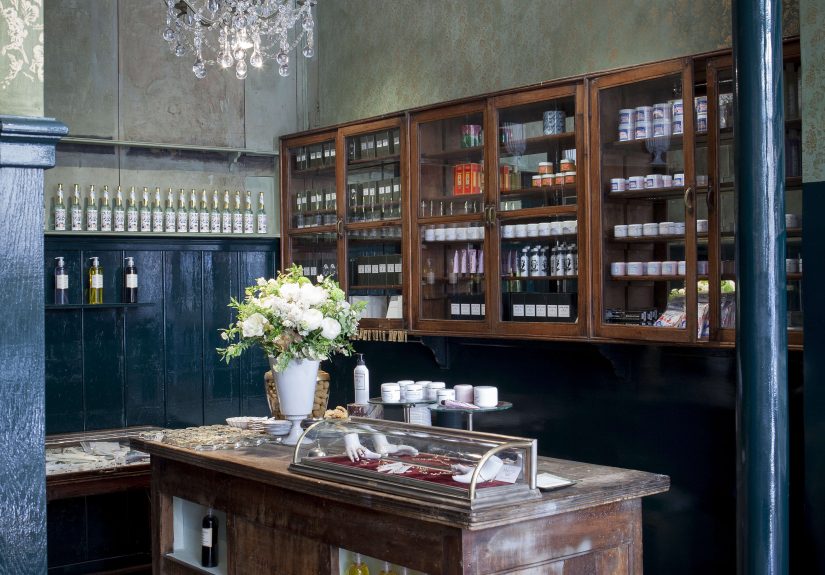
The boutique on Rue de Tournon gave Astier de Villatte a Left Bank address and a new kind of spatial storytelling. Housed in a former bookstore, the shop was reworked rather than scrubbed into bland perfection. That decision says a lot about the brand. Astier has always preferred patina over polish, character over convenience, and mood over modern retail sterility. The store embraces old surfaces, dark painted wood, period flooring, and cabinetry that feels discovered instead of installed yesterday by a team with laser measurers and no sense of wonder.
There is a reason design writers responded so enthusiastically to the opening. The boutique feels less like a launch and more like an inheritance. Its facade, painted in the same dark wagon-green family used by the Saint-Honoré shop, looks as though it has been there for ages. Inside, the atmosphere is richly layered: shelves of white ceramics, compartments for perfume and candles, cherrywood counters, wallpaper with a softly metallic glow, and stained glass that introduces a flicker of romance at the back of the room. The result is intimate, old-world, and just dramatic enough to make a shopper stand straighter.
A Boutique That Rejects the Museum Problem
Many luxury stores make the same mistake: they become so reverent that customers feel afraid to breathe near the merchandise. Astier de Villatte avoids that trap. Yes, the ceramics are precious in the sense that they are handmade and collectible. But they are also domestic. They are meant to hold soup, fruit, flowers, candles, or whatever else your beautifully chaotic life throws at them. The boutique communicates that tension brilliantly. It is polished but not sterile, precious but not prissy, elevated but never humorless.
That matters for SEO-minded readers searching terms like Astier de Villatte Paris boutique, best ceramic shops in Paris, or French artisanal homeware. The shop is memorable because it doesn’t behave like a typical luxury showroom. It invites curiosity. You browse. You linger. You fall into the very specific retail trance of wondering whether your life would improve if you owned a ceramic dish shaped like it had once belonged to an eccentric duchess with excellent taste in flowers.
The Astier Aesthetic: Imperfection With Intent
One of the most appealing things about Astier de Villatte is its relationship to imperfection. In an era obsessed with machine precision, the brand’s pieces celebrate wobble, variation, hand pressure, and slight asymmetry. A plate is not perfectly circular. A teapot leans a touch off-center. An edge ripples. A relief motif catches the light unevenly. None of this reads as flawed. It reads as alive.
That philosophy gives the boutique much of its emotional charge. The store is full of things that do not look algorithmically optimized. They look touched, considered, and individually finished. For shoppers exhausted by smooth sameness, that is the whole thrill. Astier’s ceramics feel personal before you even own them.
From Tableware to Total World-Building
Another reason the Rue de Tournon address stands out is that it presents the full Astier ecosystem. The brand is not only about plates, bowls, and pitchers. It is also about incense with destinations for names, candles that feel like souvenirs from imaginary travels, notebooks produced with a reverence for print culture, and guidebooks that turn everyday utility into object desire.
That mix broadens the appeal. A serious ceramics collector may enter for the Adelaide dinnerware or a sculptural vase. A design tourist may come for the atmosphere. A stationery obsessive may leave clutching gilded pages. Someone else may simply buy incense and convince themselves they are a more refined person now. Retail magic does not always require a shopping bag the size of a suitcase.
Why Spring Is the Perfect Lens for This Story
There is something especially right about thinking of Astier de Villatte in springtime. Spring is when interiors start loosening up. Heavy winter moods retreat. Windows open. Flowers return to tables. Lunch becomes a longer event. Ceramics shift from background utility to visible pleasure. A white glazed platter beside peonies or early market vegetables suddenly looks less like an object and more like an argument for civilized living.
The brand’s aesthetic thrives in that season because it balances freshness and nostalgia. The white glaze feels clean, airy, and bright. The old-world references keep it from becoming minimal in a cold way. This is not blank white dinnerware meant to disappear into a generic tablescape. It is characterful whiteware that makes spring arrangements look painterly. If winter is about cocooning, spring is about composition, and Astier is very good at composition.
The Rue de Tournon shop intensifies that seasonal charm. A former bookstore turned boutique already carries the romance of reinvention, which is a very spring concept. Add paper flowers, perfume, soft light, and shelves of pale ceramics, and you have a space that feels like Paris doing what Paris does best: making objects seem inseparable from mood.
What American Design Lovers See in Astier de Villatte
Astier de Villatte has long resonated with American editors, stylists, and collectors because it sits neatly at the intersection of several enduring tastes: artisanal craftsmanship, European heritage, quietly luxurious entertaining, and interiors that look collected instead of decorated in one click. U.S. design coverage has repeatedly framed the brand as heirloom-worthy, highly giftable, and uniquely atmospheric.
That appeal also comes from Astier’s collaborations and cultural fluency. The brand moves comfortably between ceramics, publishing, fragrance, and artistic partnerships. It can collaborate with figures like John Derian, inspire candle lovers, win over fashion editors, and remain credible to serious home-design audiences. That kind of cross-category strength is rare. Plenty of brands sell products. Fewer create a world people want to visit, physically and emotionally.
For American travelers in Paris, the boutique also satisfies a particular fantasy: discovering a shop that feels deeply local but globally legible. You don’t need to speak fluent French to understand what Astier is doing. The shelves tell the story. Handmade ceramics, old cabinetry, atmospheric scents, and beautifully printed paper goods are a universal language, especially to anyone with a weakness for texture and a low tolerance for boring stores.
The Boutique as Brand Strategy
From a business perspective, Astier de Villatte’s Rue de Tournon boutique is a smart reminder that retail design can function as editorial storytelling. Every element reinforces the brand message. The historic-feeling facade supports heritage. The restored materials support authenticity. The stained glass and cabinetry support artistry. The mix of ceramics, fragrance, and print supports the idea of a layered creative house rather than a narrow tabletop label.
In SEO terms, that gives the brand powerful relevance across multiple search intents: Paris home decor boutique, luxury ceramics store Paris, Astier de Villatte incense, French stationery brands, and artisanal tableware. The boutique is not just a place to buy things; it is a physical search result for everything the brand wants to mean.
And crucially, the store has that increasingly rare quality of being photographable without feeling engineered for social media. It is atmospheric first, postable second. That may be the most modern luxury move of all.
Final Thoughts
“Ceramics in the Springtime: Astier de Villatte’s New Paris Boutique” works as a story because it is about more than a retail opening. It is about the enduring power of craft, the seduction of a well-built brand universe, and the pleasure of spaces that feel authored rather than merchandised. Astier de Villatte has built a following by making objects that look a little haunted, a little noble, and very, very wanted. The Rue de Tournon boutique extends that identity with flair.
For travelers, design lovers, and collectors alike, the shop offers a lesson in how to make beauty feel intimate. It does not shout. It does not sparkle aggressively. It does not try to impress with scale. Instead, it relies on mood, handwork, memory, and small revelations. A shelf. A glaze. A scent trail. A notebook with gorgeous paper. A vase that somehow makes supermarket tulips look like a Dutch painting. That is the Astier trick. It turns ordinary rituals into aesthetic events and makes you oddly grateful for plates.
Extended Springtime Experiences: Walking Into the Astier World
To understand why this boutique lingers in the imagination, it helps to think less like a shopper and more like a guest. Imagine stepping off a Paris street in spring, carrying the mild confusion that comes from too much beauty before lunch. The city smells faintly of rain, stone, coffee, and expensive soap. Then you find the Astier storefront, its dark facade almost theatrical in its restraint, and the mood changes. The shop does not greet you like a department store. It receives you like a secret.
The first sensation is visual quiet. White ceramics line the shelves, but not in a cold, gallery-like way. They glow against darker woods and muted surfaces. Bowls, cups, pitchers, platters, and candlesticks appear related but not identical, like members of a family with excellent bone structure and strong opinions. You notice edges that are slightly uneven, handles that seem hand-considered, and relief details that cast tiny shadows. The pieces don’t beg for attention, yet attention keeps wandering back to them. Very rude of them, honestly.
Then comes the tactile fantasy. Even when you are not picking everything up, you can almost feel the slightly chalky glaze, the weight of a cup, the satisfying sturdiness beneath the delicate appearance. Astier ceramics often look fragile from a distance, but up close they project more confidence than fragility. That contradiction is part of the charm. They are tender-looking objects with real presence, like the design equivalent of someone who writes poetry and still wins arguments.
Spring intensifies the experience because it makes you think in arrangements. A vase becomes a future bouquet. A platter becomes lunch on a terrace. A mug becomes morning light near an open window. A candle becomes evening after the rain. The shop encourages this daydreaming without forcing it. Nothing feels overly staged; everything feels suggestive. You begin to imagine not just owning an object but living a slightly altered version of your life around it.
And that may be the deepest experience Astier de Villatte offers. It sells ceramics, yes, but it also sells tempo. Slower breakfasts. Better tables. More attentive hosting. A willingness to light incense on a Tuesday for no reason beyond morale. The boutique in springtime becomes a lesson in domestic imagination. It reminds visitors that beauty does not need to be saved for special occasions. It can live in the bowl that holds lemons, the pitcher that holds branches, the dish that catches rings, the cup that makes tea feel ceremonial instead of hurried.
By the time you leave, Paris outside seems slightly edited by the experience. Storefronts look flatter. Ordinary tableware looks a little too obedient. You may not walk out with a full dinner service or an elaborate vase, but chances are good you leave with a sharpened appetite for craft, atmosphere, and objects with soul. That is why Astier de Villatte’s boutique matters. It is not merely a pretty shop in Paris. It is a springtime argument for living with things that make daily life feel richer, stranger, and more beautifully composed.