Table of Contents >> Show >> Hide
- FC-31, J-31, J-35: Why One Jet Has So Many Names
- A Quick Timeline of What’s Been Seen (And When)
- Design Clues: What the Airframe Tells Us
- The Engine Question: Where Ambition Meets Metallurgy
- Avionics and Weapons: The Part That Actually Wins Fights
- The Carrier Story: Why Fujian Changes the Math
- Export Ambitions: The FC-31’s Original Job Interview
- FC-31 vs. F-35: Similar Silhouettes, Different Worlds
- Why the FC-31 (and J-35) Matters Strategically
- What We Still Don’t Know (And What to Watch Next)
- FAQ
- Conclusion
- Field Notes: The “Experience” of Following the FC-31 Story ( of Reality)
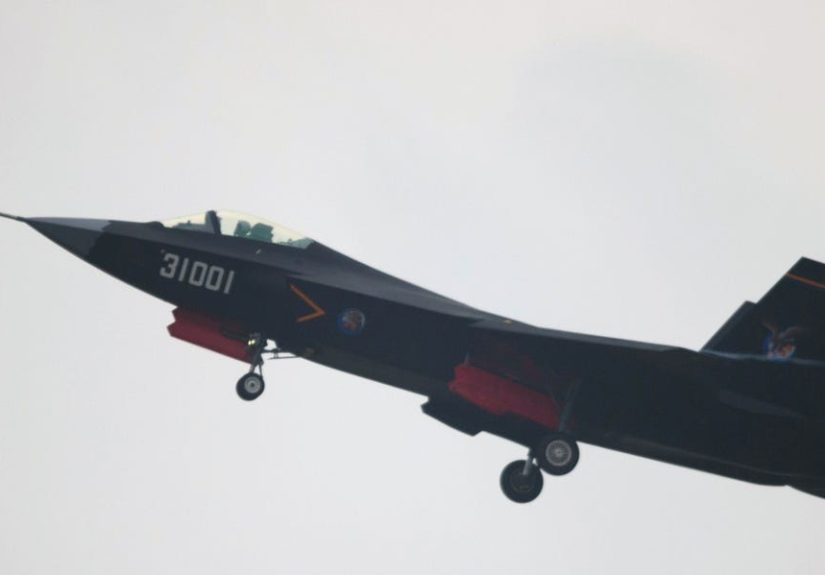
The Shenyang FC-31 is the stealth-fighter saga that refuses to stay in one genre. It started life as an export-minded “maybe we’ll sell it” jet, spent years as the aviation equivalent of a “coming soon” movie trailer, and now looks increasingly like it found its calling: helping China build a modern carrier air wing.
This article synthesizes reporting and analysis from a range of U.S.-based defense and aerospace outlets and institutions (including USNI News, the U.S. Department of Defense, CSIS, Air University’s CASI, The War Zone, Defense News, Breaking Defense, Air & Space Forces Magazine, Popular Mechanics, Popular Science, and Business Insider) to separate what’s solid from what’s “cool story, bro.”
FC-31, J-31, J-35: Why One Jet Has So Many Names
If you’ve seen the FC-31 called the J-31, and then heard people talk about the J-35 (and the J-35A), you’re not losing your mindthis program just has a long paper trail and a short official press release.
In plain English: FC-31 is commonly described as the export label tied to Shenyang’s twin-engine stealth demonstrator. J-31 is a name often used in open-source discussion for earlier prototypes. J-35 is widely used to describe the carrier-oriented evolution of that design, with J-35A often used for a land-based variant that China publicly showcased at the Zhuhai Airshow.
Think of it like a band that starts in garage rock (prototype), gets a new producer (naval requirements), and then rebrands for a stadium tour (carrier operations). Same roots, different expectations.
A Quick Timeline of What’s Been Seen (And When)
The FC-31 story is best understood as “slow burn, then suddenly: carrier jet.”
- 2012: The first FC-31/J-31 prototype makes its maiden flight, putting China in the “multiple stealth fighter programs” club.
- 2014–2016: An updated prototype and design changes appear publicly; a significantly revised second prototype later flies, suggesting ongoing refinement instead of a dead-end demo.
- 2021: A navalized-looking version associated with the “J-35” name begins showing up in imagery and reporting, implying serious carrier intent.
- 2024: China publicly unveils the J-35A at Zhuhai, offering clearer visuals and more clues about the program’s direction.
- 2024–2025: U.S. reporting and official U.S. government assessments point to continued development; footage and claims from China indicate carrier-related testing and demonstrations.
Design Clues: What the Airframe Tells Us
With stealth aircraft, the shape is the résumé. Even without official spec sheets, you can learn a lot by looking at the geometrywhat’s smooth, what’s aligned, and what’s hidden.
Stealth Shaping (A.K.A. “Angles Have Feelings”)
Multiple U.S. analyses note the FC-31/J-35 family’s resemblance to Western fifth-generation fighters, especially in broad layout and low-observable shaping. But resemblance isn’t the same thing as equivalence. Modern stealth is a full-stack problem: shaping, materials, manufacturing quality, edge treatments, radar-absorbent coatings, and the less glamorous partslike keeping seams tight after years of salty carrier air.
Still, visible features suggest a stealth-first mindset: blended surfaces, careful alignment of edges, internal weapon carriage (more on that soon), and sensor placements consistent with modern air combat needs.
Size and Role: Not a Mini Jet, Not a Flying Bus
U.S. defense analysis has often framed the FC-31/J-35 as a medium-class stealth fightersmaller than China’s heavier J-20, but large enough to carry meaningful fuel, sensors, and internal weapons. That’s an important sweet spot for carrier aviation, where you want range and payload but can’t be so big that deck operations become a daily forklift ballet.
Carrier-Friendly Tweaks: Built for Life on a Floating City
Carrier operations are brutal. The jet has to survive violent launches, hard landings, tight parking, and a maintenance environment that laughs at your corrosion-resistant claims.
Reporting on the J-35 emphasizes carrier-oriented features seen on the naval variantmost notably indicators of catapult compatibility (like a launch bar) and folding-wing logic that helps aircraft fit on crowded decks. If the FC-31 was a “maybe export” pitch, the J-35 looks like the “we need this on our newest carrier” answer.
The Engine Question: Where Ambition Meets Metallurgy
If stealth is the jet’s outfit, the engine is its metabolism. And for the FC-31 family, engines have been the long-running subplot.
U.S. reporting and analysis have noted that early prototypes were associated with Russian-origin powerplants used on aircraft like the MiG-29 family, and that Chinese programs have worked to transition to domestic engines over time. This is not just a pride issueengines determine thrust, range, reliability, and how quickly you can build and sustain a fleet without outside supply chains.
By the time the J-35A was publicly discussed at Zhuhai, U.S. reporting suggested the aircraft’s current engines may differ from its intended long-term engine plan. That gapbetween “works today” and “what we want eventually”is common in advanced fighter development. It’s also where timelines go to… stretch.
Avionics and Weapons: The Part That Actually Wins Fights
A stealth jet without good sensors is like buying a sports car and putting bicycle reflectors on it. Modern air combat is about detection, tracking, jamming, fusing, sharing, and shooting firstoften before the other pilot is even sure you exist.
Internal Weapons Bays: Stealth’s Favorite Magic Trick
Multiple U.S. reports describe the J-35/J-35A as designed to carry weapons internally in a low-observable configuration. That matters because external missiles and tanks turn “stealthy jet” into “stealthy jet wearing a wind chime.” Internal bays help preserve radar stealth, at least for the opening act of a fight.
Reporting around Zhuhai also highlighted expectations that the aircraft’s internal bay could accommodate modern Chinese air-to-air missiles, including export-showcased variants designed with space-saving features like folding surfaces.
AESA Radar, Networking, and the “Invisible” Part of Capability
U.S. reporting has described Chinese claims and expectations around AESA radar and networked warfare for the J-35 familycapabilities that define fifth-generation aircraft as much as stealth shaping does.
The big question is not whether the jet has an AESA radar (many modern fighters do), but how well its sensors, electronic warfare systems, and data links work together under stress. Sensor fusion is hard. Secure networking is hard. Doing both from a pitching carrier deck with electromagnetic launch systems nearby is extra hard.
The Carrier Story: Why Fujian Changes the Math
If you want to understand why the FC-31 matters now, you have to look at China’s newest carrier: Fujian.
STOBAR vs. CATOBAR (Or: “Ramp Jogging” vs. “Getting Yeeted Into the Sky”)
China’s first two carriers used a ski-jump system (STOBAR). That approach works, but it limits takeoff weight, which limits fuel and weaponstwo things fighter pilots tend to enjoy having.
Fujian is different. U.S. analysis describes it as China’s first carrier designed around catapult-assisted takeoff but arrested recovery (CATOBAR), and notably one that uses an electromagnetic launch system. That is a meaningful leap, enabling heavier launches and potentially more diverse air wing optionslike fixed-wing airborne early warning aircraft and next-generation fighters with better range/payload tradeoffs.
What We’ve Seen: Testing, Models, and Public Signals
U.S. government reporting noted that a model of the J-35 appeared on the deck of China’s carrier Liaoning as a test bed signal, while emphasizing the aircraft remained in development/prototype phases at the time. That’s the kind of “soft confirmation” that defense watchers treat as a breadcrumb with a neon sign attached.
U.S.-based reporting also described Chinese state media claims of takeoff/landing tests involving the J-35 on Liaoning, and later coverage described the PLAN stating Fujian launched and recovered advanced naval aircraft including the J-35 during catapult test activity. None of this automatically equals “fully operational squadron,” but it does suggest steady movement from prototype toward real-world carrier integration.
Export Ambitions: The FC-31’s Original Job Interview
The FC-31’s early reputation in U.S. coverage leaned heavily toward exportsChina building a stealth fighter it could sell to partners that either can’t buy Western jets or don’t want the political strings that come with them.
In 2025, U.S. defense reporting cited claims from Pakistan that China offered a package including J-35 stealth aircraft, reinforcing that export conversations haven’t disappeared. If anything, a carrier-validated design could make export marketing easierassuming production, engine maturity, and price point cooperate.
Of course, selling a stealth fighter is not like selling pickup trucks. Buyers will care about training pipelines, maintenance ecosystems, weapons integration, and whether the jet comes with a sustainable supply chainor just a fancy brochure and a “good luck, have fun.”
FC-31 vs. F-35: Similar Silhouettes, Different Worlds
Comparisons to the F-35 are inevitable. The silhouettes rhyme. The mission sets overlap. And the geopolitical subtext is basically shouting into a megaphone.
But there are important caveats:
- Twin-engine vs. single-engine: U.S. reporting emphasizes the J-35’s twin-engine configuration compared to the F-35’s single engineoften valued for carrier safety margins, but also adding complexity.
- Carrier ecosystem: The U.S. Navy has decades of carrier aviation experience. China is building that muscle now, and it takes timetraining, procedures, deck crews, logistics, and the thousand tiny lessons written in tire marks and maintenance logs.
- Systems integration: Fifth-generation advantage is as much about software, fusion, and networking as it is about shape. Public details on the J-35’s real-world integration remain limited.
- Scale and allies: The F-35 is embedded in a large allied ecosystem. China’s approach will be more centralizedand export partners (if any) may not have the same interoperability network.
Why the FC-31 (and J-35) Matters Strategically
A carrier-capable stealth fighter changes more than just the aircraft lineupit changes the geometry of naval airpower.
If Fujian can regularly launch a stealth fighter supported by fixed-wing airborne early warning aircraft, it could expand how far China can push credible carrier air cover and strike options beyond its coastline. U.S. reporting frames this as a milestone in China’s broader modernization and Pacific ambitions, even while emphasizing that “new capability” and “polished capability” are not the same thing.
In practical terms, a stealthy carrier fighter could:
- Improve survivability in contested airspace (especially early in a conflict).
- Complicate adversary tracking and targeting of carrier-based sorties.
- Enable longer-range offensive and defensive counter-air missions when paired with CATOBAR launch capacity.
- Support maritime strike and fleet defense as part of a broader sensor-and-missile network.
What We Still Don’t Know (And What to Watch Next)
For all the photos, airshow appearances, and official hints, the most important details remain fuzzy. Here’s what’s still largely unanswered in public:
- Operational status: Testing and demonstrations do not equal full operational capability. Watch for signs of unit assignments, routine deployments, and sustained deck cycles.
- Engine maturity: Whether the long-term engine plan is fully readyand how it performs in carrier conditionswill shape range, payload, and reliability.
- Avionics performance: Radar, electronic warfare, and sensor fusion quality are difficult to judge from the outside, but they define combat effectiveness.
- Production scale: How many will be built, how fast, and at what quality level? That’s where strategic impact becomes real.
- Carrier integration tempo: The tell is not a single launch videoit’s repeatable sortie generation, night ops, rough-weather cycles, and maintenance turnaround times.
FAQ
Is the FC-31 the same as the J-35?
They’re best understood as closely related stages of a design family: FC-31/J-31 as the demonstrator/export-associated lineage, and J-35/J-35A as the more operationally oriented evolutionsespecially for carrier use.
Is China’s J-35 already operational on carriers?
Public reporting points to testing, models, and announced milestones, but U.S. assessments have described the aircraft as being in development/prototype phases (at least in the timeframes discussed). Operational service implies routine squadron use and sustained deploymentsignals that are harder to confirm publicly.
Why does CATOBAR matter so much?
Catapults let carriers launch heavier aircraft with more fuel and weapons, and support specialized fixed-wing aircraft that improve situational awareness. In short: more capability per sortie, and more types of sorties.
Conclusion
The FC-31 started as a question mark and is increasingly turning into a strategic exclamation point. The clearest through-line in U.S. reporting is that China’s carrier aviation ambitions have maturedand the FC-31’s descendants (often discussed as the J-35 family) are positioned to be part of that leap, especially as the Fujian-era CATOBAR ecosystem comes online.
What’s “known” is still mostly what’s been shown: prototypes, public reveals, carrier-related signals, and official assessments that point to continued development. What’s not fully knownproduction scale, engine maturity, and real-world systems performanceis exactly what will determine whether this jet becomes a game-changer or simply a very expensive way to generate a lot of interesting satellite imagery.
Field Notes: The “Experience” of Following the FC-31 Story ( of Reality)
If you’ve ever tried to keep up with the FC-31/J-35 story, you’ve probably discovered the unofficial rule of modern military aviation coverage: the aircraft may be stealthy, but the internet is not. Following this program is less like reading a neat product brochure and more like assembling a puzzle where half the pieces are blurry screenshots and the other half are arguments.
The most common “experience” aviation watchers share is learning to treat every new image like it’s evidence in a courtroom drama. One photo pops up online: maybe it’s a prototype taxiing, maybe it’s a mock-up near a carrier facility, maybe it’s a museum display that accidentally launches 48 hours of hot takes. The smarter approach is to ask boring questions firstwhere was it taken, when did it appear, and does it match previous sightings? That kind of disciplined skepticism is the difference between analysis and hype tourism.
Another very real experience is watching how context changes the meaning of the same aircraft. For years, the FC-31 felt like an export pitch looking for a customer. Then carrier-related cues started stacking up: navalized features, training-site sightings, and eventually carrier discussions that lined up with China’s CATOBAR ambitions. The jet didn’t suddenly become “more important” because it looked coolerit became more important because the platform it might operate from (Fujian) could actually launch it with meaningful fuel and weapons.
There’s also the whiplash of airshow season. When a jet appears at Zhuhai, it’s like the program briefly steps onto a lit stage: you get cleaner photos, better angles, and sometimes semi-official language that helps confirm what observers have been guessing. That’s where casual readers often assume the story is “done”as if a public rollout equals instant operational readiness. The longer you follow these programs, the more you appreciate the unglamorous middle chapter: testing, fixing, re-testing, training, maintenance, and learning how the aircraft behaves when the weather is bad and the schedule is worse.
Finally, the FC-31 story teaches a practical lesson about modern airpower: capability is a system. A carrier stealth fighter matters most when it’s supported by early warning aircraft, robust data links, reliable engines, trained deck crews, and repeatable sortie generation. So the “experience” of tracking the FC-31 isn’t just learning about one jetit’s learning how to read the wider ecosystem around it. And yes, it’s occasionally learning to enjoy the irony that a stealth fighter program can generate some of the loudest online debates in all of defense aviation.