Table of Contents >> Show >> Hide
- What You’ll Find in This Recipe
- Why You’ll Love This Chocolate Bread Pudding Casserole
- What Is Chocolate Bread Pudding Casserole?
- Ingredients for Chocolate Bread Pudding Casserole
- Best Bread for a Bread Pudding Casserole (And Why “Stale” Wins)
- Chocolate Bread Pudding Casserole Recipe (Step-by-Step)
- Chocolate Bread Pudding Casserole Variations (Choose Your Adventure)
- Toppings That Make It Feel Like a Restaurant Dessert
- Make-Ahead, Storage, Freezing, and Reheating
- Troubleshooting: Common Bread Pudding Casserole Problems
- FAQ: Chocolate Bread Pudding Casserole
- Conclusion
- Real-Kitchen Experiences With Chocolate Bread Pudding Casserole (What Actually Happens)
If brownies and French toast had a dessert baby who wore sweatpants to dinner (no judgment), it would be a
chocolate bread pudding casserole. It’s cozy, fudgy, ridiculously chocolatey, and basically designed
for anyone who has ever looked at leftover bread and thought, “You… could become something glorious.”
This recipe is built for real life: it uses pantry staples, forgives you if your bread cubes aren’t perfectly
identical, and rewards you with gooey pockets of melted chocolate and a crisped, brownie-like top. Bonus: it’s
make-ahead friendly, so you can do the work today and accept compliments tomorrow like a true culinary mastermind.
Why You’ll Love This Chocolate Bread Pudding Casserole
- Deep chocolate flavor from cocoa + real melted chocolate (not just a handful of chips tossed in as an afterthought).
- Perfect texture balance: custardy middle, crisped top, melty pockets.
- Make-ahead friendly for brunch, holidays, or “I want dessert but not stress” nights.
- Uses leftover bread (aka turning “almost stale” into “absolutely legendary”).
- Flexible: adjust sweetness, add spices, swap breads, or go full deluxe with ganache.
What Is Chocolate Bread Pudding Casserole?
Bread pudding is a baked custard where bread cubes soak up a sweet egg-and-dairy mixture, then bake until set.
Calling it a “casserole” just means we’re leaning into the crowd-friendly, scoopable, bake-in-one-dish vibe.
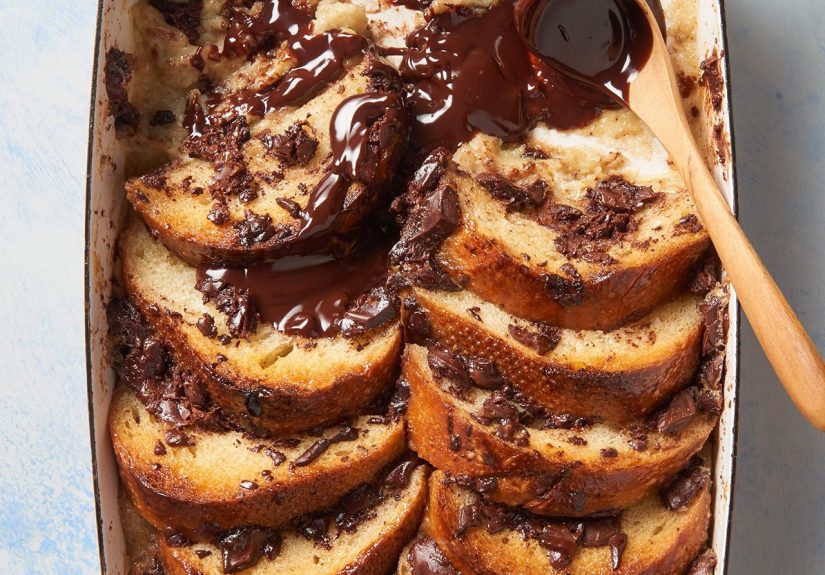
The chocolate version is exactly what it sounds like: the custard becomes a rich hot-chocolate-style base, and you
tuck extra chocolate throughout so every serving gets those “who put lava in my dessert?” moments.
Ingredients for Chocolate Bread Pudding Casserole
This list is intentionally practical. If you can make boxed mac and cheese without emotional damage, you can make this.
The Bread
- Day-old bread (brioche, challah, French bread, or sourdough): about 12–14 cups 1-inch cubes (roughly 14–16 oz).
- Butter for greasing the dish (and optional extra for “because yum”).
The Chocolate Custard
- Whole milk: 2 1/2 cups
- Heavy cream (or half-and-half): 1 1/2 cups
- Large eggs: 6
- Brown sugar: 3/4 cup packed
- Granulated sugar: 1/4 cup
- Unsweetened cocoa powder (Dutch-process or natural): 1/2 cup
- Bittersweet or semisweet chocolate, chopped: 6 oz (for melting into the custard)
- Vanilla extract: 2 teaspoons
- Kosher salt: 1/2 teaspoon
For Those Magical Melty Pockets
- Chocolate chips or chopped chocolate: 1 to 1 1/2 cups, divided
Optional Flavor Boosters (Pick Your Personality)
- Instant espresso powder: 1 teaspoon (makes the chocolate taste more chocolateyno, it won’t taste like coffee)
- Ground cinnamon: 1/4 teaspoon (hello, cozy hot chocolate vibes)
- Orange zest: 1 teaspoon (chocolate-orange fans, assemble)
- Toasted nuts (pecans or walnuts): 1/2 cup
Easy Substitutions
- No heavy cream? Use half-and-half, or do all whole milk (slightly less rich, still delicious).
- Want less sweet? Reduce granulated sugar to 2 tablespoons, or use slightly darker chocolate.
- Only sandwich bread? It works in a pinch, but toast it well to avoid turning the texture into “sweet sponge.”
Best Bread for a Bread Pudding Casserole (And Why “Stale” Wins)
The best bread is sturdy enough to hold its shape but eager enough to soak up custard like it’s getting paid for it.
That’s why enriched breads like brioche and challah are favorites: tender crumb, rich flavor,
and they bake up cake-like. French bread and sourdough also work great for a slightly chewier, more structured bite.
Stale (or dried) bread matters because fresh bread can collapse into mush before the custard sets. If your bread is fresh,
don’t panicjust dry it out in the oven. We’re not being fancy; we’re being strategic.
Chocolate Bread Pudding Casserole Recipe (Step-by-Step)
Recipe Snapshot
- Servings: 10–12
- Pan: 9×13-inch baking dish (or similar 3-quart casserole)
- Prep time: ~20 minutes
- Soak time: 30–45 minutes (or overnight)
- Bake time: ~45–60 minutes
Equipment
- 9×13-inch baking dish
- Large mixing bowl + whisk
- Medium saucepan
- Rubber spatula or large spoon
- Foil
- Instant-read thermometer (optional, but extremely helpful)
Step 1: Dry the Bread (If Needed)
- Preheat oven to 300°F.
- Spread bread cubes on a baking sheet in a single layer.
- Bake for 15–20 minutes, stirring once, until the cubes feel dry on the outside (not deeply browned).
- Cool for 5–10 minutes while you make the custard.
Tip: Dry bread absorbs custard evenly without collapsing, which helps prevent a soggy center.
Step 2: Prep the Casserole Dish
- Grease a 9×13-inch baking dish generously with butter.
- Add bread cubes to the dish and sprinkle in about 2/3 of the chocolate chips (save the rest for the top and tucking).
Step 3: Make the Chocolate Custard
- In a large bowl, whisk together the eggs, brown sugar, granulated sugar, and salt until smooth.
- In a saucepan, whisk the cocoa powder with a splash of the milk to make a smooth paste (this helps avoid cocoa lumps).
- Add remaining milk and cream. Warm over medium heat until steaming but not boiling.
- Add chopped chocolate and whisk until melted and glossy.
- Remove from heat and stir in vanilla (and espresso powder/cinnamon/orange zest if using).
Step 4: Temper (So You Don’t Make Scrambled-Egg Chocolate)
- Slowly pour a little warm chocolate mixture into the egg bowl while whisking constantly.
- Keep whisking and gradually add the rest until fully combined.
Tempering is the quiet hero of smooth custard. It keeps eggs from cooking too fast and turning your dessert into a very confusing breakfast.
Step 5: Soak the Bread
- Pour the custard evenly over the bread in the baking dish.
- Gently toss and press bread down so it’s mostly submerged.
- Let it sit for 30–45 minutes, stirring once halfway through if you can.
Make-ahead option: Cover and refrigerate overnight. (Bring the dish closer to room temp while the oven preheats the next day.)
Step 6: Bake (Covered Then Uncovered = Best Texture)
- Heat oven to 325°F (creamier custard) or 350°F (slightly firmer, toastier top).
- Cover the dish with foil and bake for 25–30 minutes.
- Remove foil, sprinkle remaining chocolate chips on top, and bake another 20–30 minutes.
- It’s done when the center is set (a gentle jiggle is fine) and an instant-read thermometer in the center reads
160–170°F.
Step 7: Rest and Serve Like a Legend
- Let the casserole rest for 20–30 minutes. The custard continues to set as it cools.
- Serve warm with vanilla ice cream, whipped cream, powdered sugar, or a drizzle of chocolate sauce.
Serving idea: For a brunch crowd, cut into squares like a breakfast casserolethen watch everyone pretend they “only want a small piece.”
Chocolate Bread Pudding Casserole Variations (Choose Your Adventure)
1) Mexican Hot Chocolate Style
Add 1/2 teaspoon cinnamon + a tiny pinch of cayenne. Not spicy-hotmore “warm and interesting.”
2) Mocha Lover’s Version
Use espresso powder (1–2 teaspoons) and top with lightly sweetened whipped cream.
3) Chocolate Croissant Bread Pudding
Use croissants instead of bread for a richer, flakier texture. Reduce soak time slightly (croissants surrender quickly).
4) Peanut Butter Swirl
Warm 1/3 cup peanut butter and dollop it over the top halfway through baking; swirl gently with a knife.
5) Holiday-Friendly Add-Ins
Try dried cherries, toasted pecans, or a splash of bourbon in the custard (just a tablespoon or two for flavor).
Toppings That Make It Feel Like a Restaurant Dessert
- Vanilla ice cream: Classic for a reason. Hot + cold = happiness.
- Whipped cream: Softens the intensity and makes it feel fancy with almost zero effort.
- Crème anglaise: If you want maximum “I definitely have my life together” energy.
- Salted caramel: Sweet, salty, and dangerously compatible with chocolate.
- Powdered sugar + berries: Great for brunch vibes and photos that make people text “WHERE ARE YOU?”
Make-Ahead, Storage, Freezing, and Reheating
Make-Ahead Instructions
- Assemble everything, cover tightly, and refrigerate overnight.
- Before baking, let it sit at room temp for 20–30 minutes while the oven preheats (helps even baking).
How to Store Leftovers
- Cool completely, then cover and refrigerate.
- Best within 3–5 days.
How to Reheat
- Oven (best): 300°F for 10–20 minutes, covered loosely with foil.
- Microwave (fast): 30–60 seconds per serving. Add ice cream immediately for… scientific reasons.
Freezing
- Freeze baked, cooled portions wrapped well. Thaw overnight in the fridge.
- Reheat gently in the oven so the custard stays creamy.
Troubleshooting: Common Bread Pudding Casserole Problems
“It’s runny in the middle.”
- It likely needs more bake time. Tent with foil if the top is getting too dark.
- Use the thermometer goal: 160–170°F in the center.
- Resting matters. The custard sets more as it cools.
“It’s dry.”
- Not enough soak time. Give it at least 30 minutes so the custard reaches the center of the bread.
- Overbaked. Pull it when set and still slightly jiggly.
- Very lean bread (like baguette) can need a bit more custard or a shorter bake.
“The top is done but the center isn’t.”
- Cover with foil for the first half of baking, then uncover to finish.
- Check your oven temp (some ovens run hot and brown too fast).
“It’s not chocolatey enough.”
- Use darker chocolate or add espresso powder.
- Don’t skip the melted chocolate in the custardchips alone won’t deliver the same depth.
FAQ: Chocolate Bread Pudding Casserole
Can I use fresh bread?
Yes. Dry it in a 300°F oven for 15–20 minutes first. Fresh bread plus custard can turn into mush if you skip this step.
What’s the best chocolate to use?
Use a chopped bar for melting into the custard (semisweet or bittersweet). Chips work great for mix-ins and pockets.
Do I need a water bath?
Not required for casserole-style bread pudding. A water bath can make the custard extra silky, but the covered-then-uncovered bake method
gives you a nice set center and a great top.
Can I reduce the sugar?
Absolutely. Reduce granulated sugar first (it’s the easiest adjustment). Keep some brown sugar for moisture and flavor.
Is this a dessert or a breakfast?
Officially: dessert. Emotionally: both. Serve it at brunch and call it a “chocolate breakfast bake.” No one will report you.
Conclusion
A great Chocolate Bread Pudding Casserole Recipe is about three things: drying the bread (so it absorbs instead of dissolving),
building real chocolate flavor (cocoa + melted chocolate), and baking until set (so you get custard, not chocolate soup).
Once you nail that, the rest is just choosing your toppings and deciding whether to share.
Make it for holidays, potlucks, brunch, snow days, or any night you need dessert that feels like a warm blanket with chocolate chips.
If anyone asks for the recipe, you can say, “Oh, it’s easy,” and then accept your standing ovation.
Real-Kitchen Experiences With Chocolate Bread Pudding Casserole (What Actually Happens)
The first time most people make chocolate bread pudding casserole, they assume it works like regular baking: mix, bake, done.
But bread pudding is secretly a “soak first, then bake” situationmore like a custard project wearing a bread costume. In real kitchens,
that soak time is the difference between a creamy, sliceable casserole and a pan of bread cubes floating in chocolate milk.
One home-cook classic is rushing it because guests are arriving. The top browns, everyone cheers, and then the center is still liquid
because the bread never fully absorbed the custard. The fix is boring but true: give it time to soak (or prep it the night before).
Bread choice also changes the vibe more than people expect. Brioche and challah make the texture almost cake-likesoft, rich, and
“dessert-forward.” French bread brings more chew and structure, which some people love because it feels hearty and less like pudding.
Sandwich bread can work, but it’s the most likely to go from “tender” to “I made a chocolate sponge” if it’s too fresh. If you’re stuck with
sandwich bread, drying it longer is the move. Think of it like giving the bread a little backbone before it dives into custard.
Chocolate intensity is another real-world lesson. Lots of recipes toss in chocolate chips and call it a day, but many people report that
tastes like vanilla bread pudding with occasional chocolate surprises. When you melt real chocolate into the custard and add cocoa powder,
the whole dish becomes chocolateyevery bitenot just the chip zones. Espresso powder is the sneaky trick that converts “pretty good chocolate”
into “wow, what is in this?” It doesn’t make it taste like coffee; it makes it taste like a deeper version of chocolate.
Then there’s the top crust situation. Some people want a soft, fully custardy top. Others want a crisp, brownie-like layer.
In practice, covering the dish for part of the bake helps the center cook through before the top gets too dark. Uncovering later lets the top
caramelize and set. This is especially helpful if your oven runs hot or if your dish is a little deeper than a standard 9×13.
If you’ve ever pulled out a bread pudding that looked done, only to find a wet center, this covered-then-uncovered method feels like
discovering cheat codes.
Serving it teaches another funny truth: people always underestimate how rich it is. At potlucks, the first scoopers take giant servings like
it’s a light fruit salad. Two minutes later they’re walking around with a smaller “second serving” (which is also huge, just emotionally smaller).
The best move is cutting or scooping modest portions and letting toppings do the heavy liftingvanilla ice cream, whipped cream, or berries.
That balance makes the dish feel fancy instead of heavy, and it keeps the chocolate flavor front and center.
Finally, leftovers. Chocolate bread pudding casserole reheats beautifully if you go gentle. The microwave works, but the oven brings back that
just-baked textureespecially if you cover it with foil so it warms without drying out. Many people say it’s even better on day two because the
flavors settle and the texture becomes more uniform. In other words, this dessert is not only deliciousit’s also patient, forgiving, and
totally fine with you planning ahead. Honestly, we should all aspire to that.