Table of Contents >> Show >> Hide
- What is a Cornish Blue storage jar, exactly?
- Why people love Cornish Blue jars (hint: it’s not just the stripes)
- Common sizes (and what to store in them)
- Airtight or “airtight-ish”? What the seal really means
- What belongs in a Cornish Blue storage jar (and what doesn’t)
- How to choose the right Cornish Blue jar for your kitchen
- Pantry organization tips that make the jar earn its keep
- Care and keeping: how to treat stoneware like it’s staying for the long haul
- Styling ideas: making Cornish Blue look intentional (even on a Tuesday)
- Is a Cornish Blue storage jar worth it?
- Real-life experiences with a Cornish Blue storage jar (the part that feels like your kitchen)
- Conclusion
- SEO Tags
Every kitchen has that drawer. You know the one: half a roll of twine, three mystery rubber bands,
a stray measuring spoon, andsomehowyour sanity. Now picture the opposite energy: calm counters, tidy shelves,
and one crisp, blue-and-white striped jar quietly doing the most. That’s the charm of a Cornish Blue storage jara piece that feels
equal parts “grandma’s best tea setup” and “modern pantry goals,” without trying too hard.
This guide breaks down what a Cornish Blue storage jar is, why people collect it, how to choose the right size,
how to actually use it (beyond just admiring it), and how to keep it looking sharp for years. And yesthere’s a section at the end
that reads like real life, because kitchens are where real life happens (usually five minutes before guests arrive).
What is a Cornish Blue storage jar, exactly?
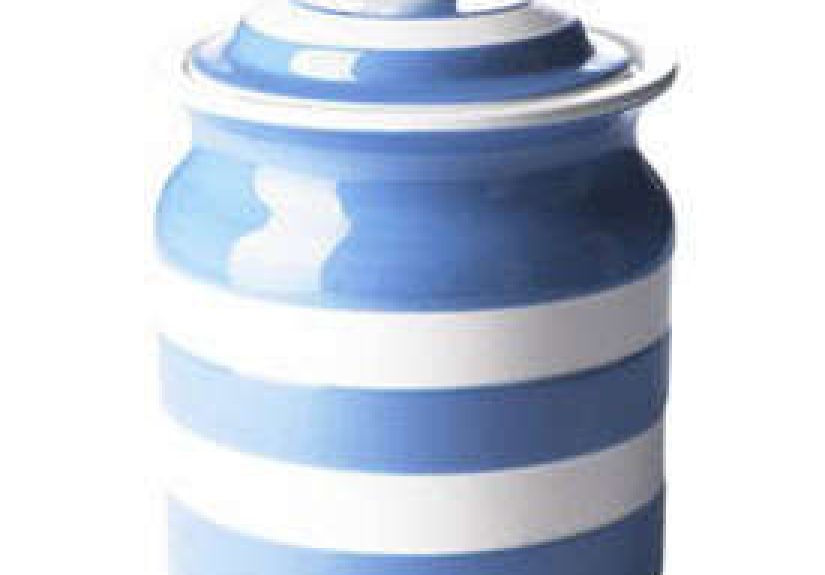
“Cornish Blue” typically refers to the iconic blue-and-white stripe pattern associated with Cornishwareclassic, bold,
and instantly recognizable. In practical terms, a Cornish Blue storage jar is a stoneware canister meant for holding pantry
staples (tea, coffee, sugar, flour, pasta, rice) or countertop essentials (utensils, garlic bulbs, even a stash of dog treats you swear you’re not spoiling them with).
Retail listings commonly describe these jars as made in England, with many noting they’re handmade/hand-decorated and designed
for everyday use in a busy kitchen. The look is timeless, but the goal is very modern: better organization, less waste, fewer “Why is my brown sugar now a brick?” moments.
Why people love Cornish Blue jars (hint: it’s not just the stripes)
1) They’re decorative without being delicate
Some kitchen décor is basically a museum exhibit. Cornish Blue is different. The pattern is cheerful, but not fussy;
it plays nicely with farmhouse, coastal, traditional, and even minimalist kitchens (blue-and-white is a universal language).
And because stoneware is built for real kitchens, it can handle day-to-day life better than fragile “display-only” pieces.
2) They make pantry habits easier
A good jar nudges you into better systems. When your flour has a “home,” you’re more likely to close it properly, keep it fresh,
and notice when you’re running low. Organization experts and food publications routinely recommend decanting certain pantry items into
airtight containers to reduce clutter and help preserve freshness.
3) They’re functional countertop “anchors”
A Cornish Blue jar can act like a visual anchorespecially on open shelving or a coffee station. It’s the kind of item that says,
“Yes, I absolutely have my life together,” even if the dishwasher is currently doing the job of a cabinet.
Common sizes (and what to store in them)
Cornishware-style storage jars show up in a few practical sizes. Two very common ones you’ll see in U.S. retail listings are:
Tea-size jar: about 84cl (roughly 28.5–30 oz)
This size is often marketed as a tea storage jar, and it’s also a popular “small canister” size for coffee, sugar, or snacks.
Typical specs listed by U.S. retailers include around 84cl capacity, with dimensions roughly in the 5-inch diameter range and
a height around 6 inches (depending on the exact jar and lid style).
Best for: loose tea, tea bags, coffee beans, ground coffee, sugar, cocoa, cookies, protein powder, dog treats, or that fancy salt you bought for “finishing”
(and now use on everything, including popcorn).
Large jar: about 168cl (roughly 59 oz)
This is the “pantry staple workhorse.” One widely listed large Cornishware-style jar is described as ideal for pasta, rice, or flour and noted to have an
airtight seal. Typical dimensions listed are approximately 6.25 inches in diameter and 8.5 inches tall.
Best for: flour, rice, pasta, oats, bulk snacks, baking sugar, or anything you buy in a bag that loves to flop open at the worst possible moment.
Airtight or “airtight-ish”? What the seal really means
“Airtight” can mean different things depending on the lid design. Some jars are built with gaskets or sealing mechanisms.
Others have a snug, weighty lid that’s very good for everyday pantry use but may not be a laboratory-grade seal.
If you’re storing ingredients that go stale quickly (like coffee) or attract pests (like flour), prioritize a jar specifically described as airtight.
Practical rule: if your goal is freshness + pest protection, treat airtight as a feature worth paying attention tonot just a marketing adjective.
And if you live somewhere humid, airtight becomes even more valuable.
What belongs in a Cornish Blue storage jar (and what doesn’t)
Pantry MVPs
- Flour & baking staples: stay fresher, and you can scoop without battling a paper bag.
- Rice & pasta: less mess, better visibility, easier portioning.
- Sugar: especially useful for keeping brown sugar from drying out (pair with a humidity-control trick if needed).
- Coffee: benefits from being kept away from air, moisture, heat, and lightan opaque stoneware jar can help with the “light” part.
- Snacks: crackers, cookies, nutsanything that goes stale when left in a flimsy bag clip situation.
Things to avoid
- Wet foods (unless the jar is specifically intended for it): moisture is not your friend in a dry-goods canister.
- Strong-smelling items if you swap contents often: some foods “leave a memory.” (Garlic powder is basically a haunting.)
- Heat-sensitive items stored near the stove: storage jars work best in cool, dry places.
How to choose the right Cornish Blue jar for your kitchen
Step 1: Decide where it will live
Countertop jar? Go for the one you’ll enjoy looking at daily (and that fits under your cabinets if it’s tall).
Pantry shelf jar? Choose based on capacity and how easily you can grab it.
Open shelving? Matching stripes create a cohesive looklike you planned it on purpose (you did, obviously).
Step 2: Pick based on how you use the ingredient
Daily-use items (coffee, sugar, tea) deserve the easiest access.
Bulk ingredients (flour, rice) benefit from larger capacity and a reliable seal.
If you bake a lot, a wide opening that fits a measuring cup is a quality-of-life upgrade you’ll feel immediately.
Step 3: Consider labeling without ruining the vibe
If you’re using multiple jars, add subtle labels (chalk marker on a small tag, or a neat label on the base).
A jar can be beautiful and still prevent the classic “Is this sugar or salt?” mistake. (A mistake that can haunt pancakes.)
Pantry organization tips that make the jar earn its keep
A Cornish Blue storage jar is a great start, but the real magic is pairing it with simple pantry habits:
- Decant strategically: move items that come in messy bags/boxes into containers that close well and pour/scoop easily.
- Use zones: baking zone, breakfast zone, snack zoneso you’re not playing hide-and-seek with oats.
- Practice FIFO: “first in, first out” helps reduce waste (use older ingredients first).
- Store smart: keep dry goods away from heat and moisture to protect quality.
The jar becomes part of a system: it keeps staples accessible, looks good enough to leave out, and encourages you to treat pantry items like ingredientsnot clutter.
Care and keeping: how to treat stoneware like it’s staying for the long haul
Dishwasher and microwave notes
Many Cornishware-style listings in the U.S. describe these jars as dishwasher safe and microwave safe.
Still, if you want to preserve that crisp stripe finish for years, consider these best practices:
- Avoid thermal shock: don’t go from fridge-cold to piping hot immediately.
- Mind the lid: if there’s a gasket/seal, keep it clean and dry so it continues to seal well.
- Watch for chips: like any ceramic, a hard knock on stone counters can cause damage.
- Deep clean between ingredients: especially if switching from something aromatic (coffee) to something neutral (sugar).
Styling ideas: making Cornish Blue look intentional (even on a Tuesday)
Coffee station upgrade
Pair a Cornish Blue jar with a simple tray, a grinder, and two mugs. The stripes add character without needing extra clutter.
Bonus points if the jar holds coffee and you stop storing beans in a crumpled bag like a raccoon.
Open-shelf “stripe rhythm”
Stripes look best when they repeat. One jar is cute. Two or three creates a visual rhythm that makes the whole shelf feel styled.
Mix heights (tea jar + large jar) to avoid a “cookie-cutter” look.
Countertop utensil corral
Some Cornishware pieces are sold as utensil jars, and the same idea applies: corral spatulas, whisks, wooden spoons, and make the counter feel cleaner instantly.
Is a Cornish Blue storage jar worth it?
If you want a canister that’s purely utilitarian, you can absolutely find inexpensive airtight plastic sets.
But if you want something that’s functional, giftable, and aesthetically satisfyinga storage jar that doesn’t have to be hidden in a cabinetCornish Blue shines.
It’s the rare kitchen object that can improve your routine and your shelves at the same time.
Think of it as a “use every day” collectible: you’re not buying clutter, you’re buying a better home for the stuff you already have.
Real-life experiences with a Cornish Blue storage jar (the part that feels like your kitchen)
Here’s what people commonly experience once a Cornish Blue storage jar moves inand starts acting like the calm, striped roommate your pantry never knew it needed.
The first week: You decant something simplemaybe tea bags or coffeebecause it’s easy and satisfying. The jar lands on the counter and suddenly
the space looks more “curated kitchen” and less “I swear I cleaned yesterday.” You catch yourself opening it just because the lid feels substantial, like it means business.
(It’s weirdly motivating.)
The “oh wow” moment: You realize how much packaging was basically full of air. A half-empty cereal bag, a flour sack that collapses every time you scoop,
a pasta box that never closes again after the first openinggone. Replaced by one tidy jar that sits there like it has a PhD in Not Making a Mess.
Your shelf looks calmer. Your brain does, too.
The unexpected benefit: You stop buying duplicates. When your staples are in clear systems (even opaque jars, if they’re consistent and labeled),
you can tell what you actually have. That means fewer “Do we have rice?” debates and fewer surprise discoveries of three open bags of the same thing.
Many people end up wasting less food simply because the pantry becomes easier to read at a glance.
The hosting test: Someone comes over, sees the stripes, and says, “Oh, that’s cute.” You casually reply, “Thanks,” as if it wasn’t the highlight of your week.
Later, you notice you’re refilling the jar before guests arrive, like it’s part of the ritualwipe the counter, fluff the towels, top off the sugar.
The jar becomes a tiny signal that the kitchen is “ready,” even if the living room is currently full of laundry in a basket called “temporary.”
The daily routine shift: If the jar holds coffee, mornings get smoother. You scoop without fighting a bag clip.
If it holds flour, baking feels less chaotic. You can measure quickly, close it properly, and move onno flour dust plume, no paper bag falling over,
no mini avalanche of powder on the shelf. If it holds snacks, the jar becomes a grab-and-go station that’s strangely satisfying for kids and adults alike.
The long-term reality: After a while, you stop thinking of it as décor and start thinking of it as infrastructure.
It’s just part of how your kitchen workslike your favorite knife or the one spatula you refuse to replace because it’s “seen things.”
The Cornish Blue jar becomes a quiet helper: it keeps ingredients where they belong, makes the space feel pulled together,
and gives your pantry a little dignity. And honestly? In a world where the “miscellaneous drawer” keeps multiplying,
dignity is a highly underrated kitchen feature.
Conclusion
A Cornish Blue storage jar is the rare kitchen item that earns its space twice: it’s genuinely useful for keeping pantry staples
tidy and (when designed with a sealing lid) fresher, and it looks good enough to leave on the counter without apologizing.
Choose your size based on what you store most, prioritize an airtight seal for freshness-sensitive foods, and treat it like a toolnot a trophy.
Your pantry will look better, your routine will feel smoother, and your kitchen might finally stop whispering, “Chaos,” every time you open the cabinet.