Table of Contents >> Show >> Hide
- The Interview That Reopened the Felt Wars
- Why Fans Were Already Primed to Explode
- Rian Johnson’s Logic Is Sensible and Fans Still Hate It
- Why “Forks Out” Was So Effective
- Daniel Craig’s Reaction Made Everything Worse in the Best Way
- What the Internet Is Really Arguing About
- The Fan Experience: Why This Topic Hits Harder Than It Should
- Conclusion
There are movie controversies, there are internet controversies, and then there is the oddly wholesome yet deeply committed campaign to put Daniel Craig’s Benoit Blanc in a full-blown Muppets movie. The latest flare-up did not come from a studio leak, a casting rumor, or an overeager fake poster on social media. It came from Daniel Craig himself or, more specifically, from his delighted reaction to a Sesame Street parody that gave fans just enough of what they wanted to make them furious they still were not getting the real thing.
That is the strange genius of the current Muppets outrage. Nobody is actually mad that the parody was bad. Quite the opposite. The short was funny, clever, and absurd in exactly the way fans hoped it would be. The problem is that it worked. Once viewers saw a fuzzy detective named Beignet Blanc solving the mystery of Cookie Monster’s missing pie, the internet responded the only way the internet knows how: by demanding the larger, weirder, riskier version immediately. Then Craig came along, laughed at the bit, seemed genuinely charmed by it, and all but confirmed that he would have happily joined the felt madness himself. At that point, the fandom stopped asking politely and resumed yelling into the cultural void.
The Interview That Reopened the Felt Wars
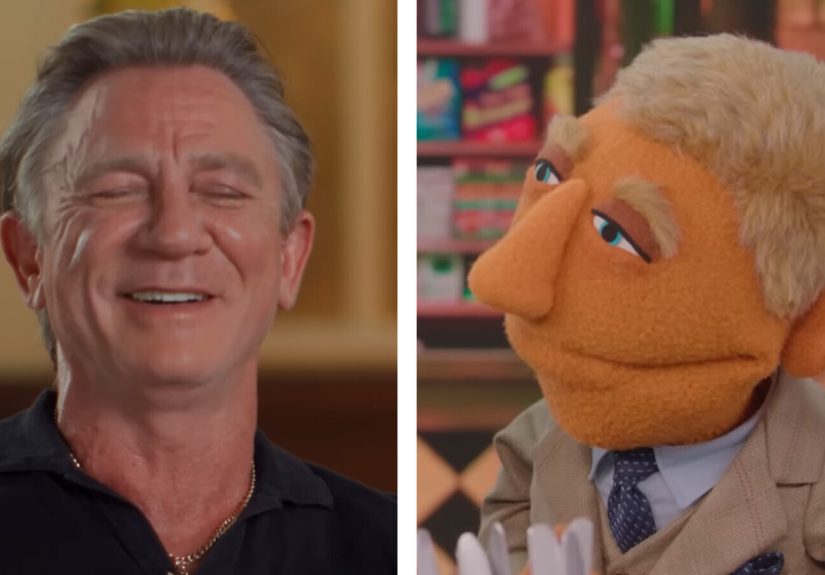
The title of this saga sounds dramatic, but the reality is much funnier. Craig’s “interview” was really a reaction segment tied to promotion for Wake Up Dead Man: A Knives Out Mystery, the third Benoit Blanc film. In that clip, he watched the Sesame Street short “Forks Out,” where a puppet detective modeled after Blanc investigates the disappearance of Cookie Monster’s triple-berry pie. Instead of offering the standard celebrity response a mild chuckle, a polite “that’s cute,” and an immediate pivot back to the press tour Craig looked genuinely enchanted.
He joked that he had practically been replaced, admired the comic setup, and sounded sincerely moved by seeing his detective turned into a kid-friendly Muppet adjacent sleuth. That reaction mattered more than it should have, and yet it mattered exactly as much as Muppets discourse always does. Fans did not hear, “This is a fun promo.” They heard, “Daniel Craig understands the assignment.” They heard, “The lead actor is in.” And once the star of the whole enterprise seems game, the excuses start sounding thinner than a Gonzo mustache in a rainstorm.
In other words, Craig did not merely approve the joke. He accidentally strengthened the case for making the movie fans have been pitching for years. He turned a cute side quest into renewed evidence.
Why Fans Were Already Primed to Explode
This was not some random new campaign. The idea of a Knives Out-meets-Muppets movie has been floating around online for years, mostly because it feels instantly right in the kind of way that cannot be easily defended in a boardroom but makes total spiritual sense on a timeline. Benoit Blanc is theatrical, fussy, observant, and just heightened enough to fit beside Kermit, Miss Piggy, Fozzie, and Gonzo without looking like he wandered in from a grim Scandinavian crime drama.
The fantasy also comes with a built-in template. Fans are not imagining a generic crossover stuffed with wink-wink cameos. They are imagining the Muppet Christmas Carol model: one serious human lead surrounded by Muppets who behave as if this is all perfectly normal. Michael Caine played that trick to perfection, and movie lovers have never recovered. Ever since then, viewers have been hunting for the next performer who could keep a straight face while chaos in felt form unfolds around them. Daniel Craig, with that honey-thick Blanc accent and his ability to play sincerity and absurdity at the same time, looks like he was engineered in a lab for the job.
That is why “Forks Out” did not calm anybody down. It reminded them that the chemistry does, in fact, exist. The concept is not broken. It is merely being withheld.
Rian Johnson’s Logic Is Sensible and Fans Still Hate It
Rian Johnson has not been ignoring the conversation. In fact, he has addressed it more than once, which is probably why the debate keeps growing instead of fading away. His argument is straightforward: a Benoit Blanc mystery and a Muppet movie follow different rules. If you put Muppets into a Blanc mystery, he has suggested, the tone breaks because those stories involve murder and human darkness. If you put Blanc into a Muppet movie, then Blanc no longer feels like Blanc; he becomes part of a different kind of comic universe.
From a craft perspective, that is not a ridiculous position. Johnson is protective of both modes. He clearly takes the architecture of the murder mystery seriously, and he also seems to genuinely respect the Muppets as their own genre, not just as nostalgic puppets who can be dropped into anything for quick irony points. Honestly, that part is admirable. He is not rejecting the idea because it is silly; he is rejecting it because he thinks it deserves more rigor than a meme can provide.
Unfortunately for him, this is exactly the kind of careful, reasonable explanation that the internet loves to treat as a challenge. The moment Johnson says the two things cannot fit together, fans begin assembling exhibits. Exhibit A: The Muppet Christmas Carol. Exhibit B: Muppet Treasure Island. Exhibit C: the fact that the Muppets have always flirted with melodrama, peril, and parody. Exhibit D: Benoit Blanc is already a heightened character living in a heightened world. At that point, Johnson’s well-argued caution gets translated online into a much simpler accusation: “You’re thinking too small, sir.”
Why “Forks Out” Was So Effective
Part of the outrage comes from the fact that “Forks Out” is not just a lazy promo. It is a clever little riff. Beignet Blanc is a funny name. Cookie Monster’s missing pie is exactly the right scale for a Sesame Street mystery. The premise smartly borrows the rhythm of a Benoit Blanc case while translating it into a playful children’s-TV structure. It is short, bright, self-aware, and efficient. Worst of all for the anti-crossover crowd, it proves that the tonal gap between these franchises is not a canyon. It is a speed bump.
That is why the fan frustration has such a specific flavor. Nobody watched the sketch and thought, “Well, that answers it this would never work.” They watched it and thought, “Oh no, this works immediately.” The parody did not settle the debate. It functioned like a test screening for an idea the studio still refuses to greenlight.
The short also triggered a deeper emotional response because it folded childhood nostalgia into contemporary fandom. Sesame Street is not just another brand extension. For many viewers, it is one of the earliest things they ever loved on a screen. Watching a modern mystery franchise brush up against that world creates a double hit: adult genre pleasure meets childhood comfort. That is potent stuff. Add Craig’s warmth on top of it, and suddenly the whole episode stops feeling like marketing and starts feeling like a missed opportunity dressed as a joke.
Daniel Craig’s Reaction Made Everything Worse in the Best Way
If Craig had looked confused, bored, or faintly embarrassed, the discourse probably would have cooled off. Instead, he looked like a man who had discovered a secret door to a more fun version of his own career. That energy matters. Fans can live with a studio saying no. What they struggle to accept is a situation where the star seems delighted, the audience is ready, the proof of concept exists, and the idea still remains in development limbo somewhere between “too weird” and “not weird enough.”
Craig’s reaction also reinforced something people like about him in the Benoit Blanc era. He has loosened up. After years of being associated primarily with the intensity and bruised masculinity of James Bond, he has embraced sillier, stranger material. Blanc is flamboyant without being smug, intelligent without being robotic, and funny without becoming a parody of himself. That makes Craig feel unusually compatible with the Muppets, who demand absolute commitment from their human collaborators. He would not need to wink at the absurdity. He would need to honor it. Judging by his reaction, he seems more than willing.
And once fans sensed that, the online mood shifted from “Wouldn’t this be funny?” to “Why are we all pretending this is impossible?” That is the new wave of Muppets outrage in a nutshell: less scandal, more exasperated longing.
What the Internet Is Really Arguing About
Underneath the jokes, the memes, and the felt-based emotional instability, this debate is really about how modern franchises are allowed to be playful. Audiences are tired of calculated “universe building” that feels focus-grouped into a beige paste. The Muppets-Benoit Blanc fantasy represents the opposite impulse. It is specific. It is eccentric. It has real comic shape. It is not a crossover because two logos look good beside each other; it is a crossover because the personalities actually spark.
That is why people keep returning to it. The idea promises not just novelty, but joy. It sounds like the kind of movie made by people who have taste, nerve, and one slightly unhinged whiteboard. In an era where a lot of big entertainment feels assembled rather than imagined, that matters.
So yes, the “outrage” is playful. No, civilization is not collapsing because Daniel Craig laughed at a puppet detective. But the intensity of the response says something real about what viewers want from pop culture now. They want movies that feel handcrafted, surprising, and gloriously committed to the bit. They want at least one studio executive to wake up in a cold sweat and whisper, “What if Miss Piggy is the prime suspect?”
The Fan Experience: Why This Topic Hits Harder Than It Should
What makes this story linger is not just the parody or the interview clip. It is the experience surrounding them. Almost everyone following this mini-drama has had the same sequence of emotions. First comes curiosity: someone sends you the sketch, you grin at the pun, and you expect a disposable little promotional joke. Then comes surprise: this is actually pretty good. Then comes danger: your brain begins quietly casting a two-hour version. Before long, you are imagining Benoit Blanc sitting in a grand old manor while Kermit gently insists no one panic, Miss Piggy delivers an alibi with Oscar-worthy force, Fozzie ruins the tension by stepping on every clue, and Gonzo somehow becomes both suspect and witness.
That mental movie starts screening in your head without permission, which is exactly why fans get so attached. It becomes less like an internet pitch and more like a memory from a film that somehow already exists in a parallel universe. The frustration is almost comical because it feels so tangible. You can practically hear the score. You can practically see Craig walking through a crowd of Muppets with complete seriousness, as if this is the most important case of his life. Once you can visualize it, the absence of the real thing starts to feel weirdly personal.
There is also a generational element here. A lot of viewers grew up with Sesame Street, graduated into the wider Muppet canon, and then discovered the pleasures of the modern whodunit through Knives Out. This crossover fantasy sits right at the intersection of childhood warmth and adult genre obsession. It lets people want something innocent and sophisticated at the same time. That is rare. Most franchise talk online is fueled by power scaling, canon arguments, or casting wars. This one is fueled by the hope that one elegant detective might someday share the frame with a frog, a pig, a bear, and whatever Gonzo legally is.
There is something refreshing about outrage that is basically a plea for more imagination. Fans are not asking for darker lore, a grittier reboot, or six spin-offs explaining backstory nobody actually requested. They are asking for a movie with craft, comic precision, and enough confidence to let one world play absolutely straight while the other world remains gloriously weird. That is why Craig’s reaction landed so hard. He did not mock the idea. He seemed to feel the same spark viewers felt: the sudden recognition that this absurd thing is not absurd in the wrong way. It is absurd in the perfect way.
And that is the enduring experience of this whole saga. You start by laughing at the concept. You end by sincerely believing it should happen. Somewhere along the way, the joke stops being a joke and turns into a standard by which all future franchise decisions are unfairly judged. That is a lot to put on a puppet detective and a stolen pie, but here we are.
Conclusion
Daniel Craig did not create the Muppets-Benoit Blanc movement, but his reaction to the Sesame Street parody gave it fresh oxygen. What looked like a harmless promotional detour became a new round of evidence for fans who already believed this crossover could work. Rian Johnson’s objections are thoughtful, respectable, and probably artistically sincere. Unfortunately, the internet has seen the sketch, heard Craig’s delight, and decided that thoughtful objections are no match for vibes, detective charm, and the long shadow of Michael Caine.
So the whole new wave of Muppets outrage is less about anger than about possibility. Fans were shown a tiny version of the dream, and now they want the full banquet. They do not want a wink. They want the movie. They want Daniel Craig in the middle of felt chaos, solving a mystery with absolute seriousness while the Muppets do what the Muppets do best: turn nonsense into art. Until that happens, every interview, every parody, and every offhand comment will keep reopening the case.