Table of Contents >> Show >> Hide
- What Is the Dark Triad Personality?
- So What Is a “Dark Empath”?
- Empathy 101: The Two (and a Half) Types That Matter Here
- Dark Empath Test (Non-Clinical): A Two-Score Self-Check
- Signs a Dark Empath Style May Show Up in Real Life
- Dark Triad Traits vs. Personality Disorders: Don’t Mix These Up
- Why Dark Empathy Can Be So Effective (and So Confusing)
- How to Protect Yourself (Without Becoming a Paranoid Detective)
- FAQ: Quick Answers People Actually Want
- Conclusion
- Experiences: What “Dark Empathy” Can Feel Like in Real Life (500+ Words)
Some people can read a room like a bestselling novel. They notice micro-expressions, sense tension before anyone speaks, and somehow always know the
exact thing to say. That can be a gift. It can also be a weapon.
If you’ve stumbled onto the phrase dark empath, you’ve probably seen it framed like a horror-movie twist:
“They have empathy… but it’s evil.” Real life is less dramatic (usually) and more nuanced: empathy is a skill, and like any skill,
it can be used to help peopleor to steer them.
This guide breaks down the science-y idea behind the Dark Triad personality traits, explains what people mean by “dark empath,”
and gives you a non-clinical dark empath test you can use for self-reflection. No labels tattooed on your forehead. No diagnosing
strangers on the internet. Just a clearer picture of how empathy and “dark” traits can mix.
What Is the Dark Triad Personality?
The Dark Triad is a research term for three socially aversive (but often subclinical) personality traits that can cluster together:
narcissism, Machiavellianism, and psychopathy. Think of them as three different flavors of
self-serving behavioreach with its own “signature move.”
1) Narcissism: “Mirror, Mirror, Who’s the Main Character?”
In Dark Triad research, narcissism usually refers to a pattern of grandiosity, entitlement, and a strong need for admiration. At milder levels,
it can look like confidence plus spotlight-hogging. At higher levels, it can involve hypersensitivity to criticism, status obsession,
and treating people like supporting actors in the Great Me Movie.
Important: narcissistic traits are not the same as Narcissistic Personality Disorder (NPD). A clinical diagnosis
requires a broader pattern and meaningful distress or impairment. (Translation: you can be annoyingly self-absorbed without meeting criteria for a disorder.)
2) Machiavellianism: “It’s Not Personal, It’s Strategy”
Machiavellianism is the chess-player energy of the trio: manipulation, calculation, and a “results justify the means” attitude.
People high in Machiavellian traits may be skilled at impression management, selective honesty, and alliances that conveniently expire once
they’re no longer useful.
Not every planner is a Machiavellian. The difference is intent: planning to coordinate a surprise party is sweet;
planning to control people’s choices without their consent is… less cupcake, more supervillain.
3) Psychopathy: “Cold Nerves, Hot Impulses”
In Dark Triad research, psychopathy typically refers to a mix of low remorse, callousness, fearlessness, and sometimes impulsivity.
Pop culture turns “psychopath” into a movie monster. Research versions can show up as shallow affect, low guilt, thrill-seeking,
and an ability to stay calm when others feel anxiety.
Also important: psychopathy as a clinical concept is complicated and often overlaps (in public understanding) with
antisocial personality disorder. But the Dark Triad focuses on traits in general populations, not a formal diagnosis.
So What Is a “Dark Empath”?
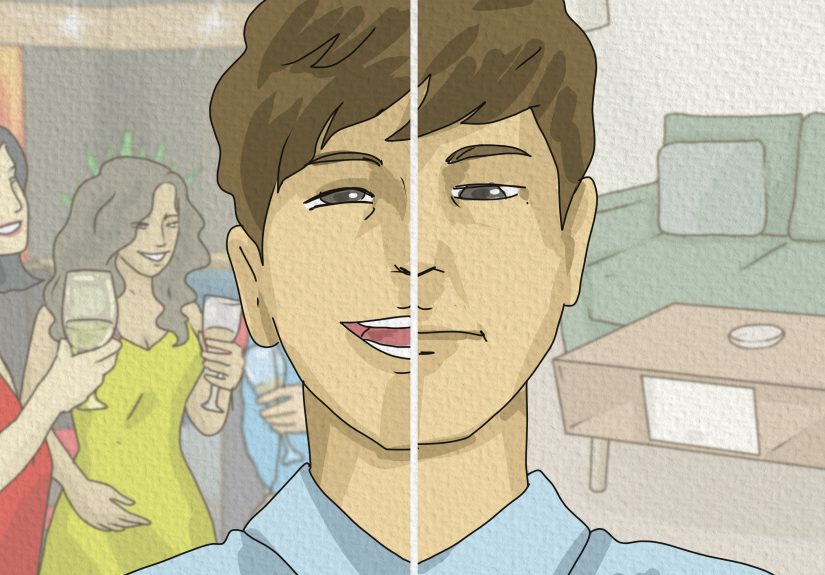
The phrase dark empath is used to describe people who score high on Dark Triad traits while also showing
relatively high empathyespecially the “mind-reading” kind. In some research and popular summaries, “dark empath”
describes a group that can understand others’ emotions and perspectives, yet still behaves in manipulative or self-serving ways.
If the classic Dark Triad vibe is “I don’t really care how you feel,” the dark empath vibe is closer to:
“I absolutely understand how you feel… and I can use that.”
That doesn’t automatically mean “abuser,” “villain,” or “beyond help.” Traits exist on a spectrum, and context matters.
But the combination can be powerful in relationships, workplaces, and social dynamicsbecause empathy can make manipulation
more precise and harder to spot.
Empathy 101: The Two (and a Half) Types That Matter Here
Empathy isn’t one thingit’s a bundle of related abilities. The split that shows up most often in research and education is:
-
Cognitive empathy (perspective-taking): understanding what someone else feels and why.
It’s the “I can read the room” skill. -
Affective empathy (emotional resonance): actually feeling something in response to another person’s emotion.
It’s the “your pain hurts me” reaction. - Compassionate empathy (sometimes discussed as a third type): understanding + caring + a desire to help.
Here’s the key twist: someone can have strong cognitive empathy (accurate emotional radar) without strong
affective empathy (emotional warmth). That combo can create a person who is socially perceptive but emotionally
self-focusedexcellent at predicting reactions, not necessarily motivated to protect feelings.
Dark Empath Test (Non-Clinical): A Two-Score Self-Check
This is not a diagnosis. It’s a reflection tool. Answer quickly, based on your typical behaviornot your best day, not your worst day,
and not the version of you that shows up on LinkedIn.
How to Score
For each statement, choose a number from 1–5:
1 = Strongly disagree, 3 = Neutral, 5 = Strongly agree.
You’ll calculate two totals: an Empathy Score and a Dark Traits Score.
Part A: Empathy Score (Add these 10 items)
- I can usually tell when someone is uncomfortable, even if they say they’re “fine.”
- I’m good at figuring out what someone wants from a conversation (support, solutions, space, praise).
- I can explain a disagreement from the other person’s point of view, even if I don’t agree.
- I notice subtle changes in tone, pace, and facial expression.
- I adjust how I communicate based on what will land well for the other person.
- People often tell me I “get them.”
- I can predict what will make someone feel respected versus dismissed.
- I remember emotional details (what someone was worried about, what embarrassed them, what they’re proud of).
- I’m good at calming tense situations.
- I can pick up on group dynamics quickly (alliances, conflicts, who feels left out).
Part B: Dark Traits Score (Add these 10 items)
- When I want something, I’m comfortable nudging people emotionally to get it.
- I sometimes test people’s boundaries to see what I can get away with.
- I believe most people are easier to manage with the right story.
- If someone criticizes me, I’m strongly motivated to “win” the situation (even if it hurts the relationship).
- I’ve used charm or kindness to keep someone on my side when it benefited me.
- I don’t feel much guilt when I think the other person “should have known better.”
- I can justify bending rules if the outcome is important.
- I enjoy having social leverage (information, influence, status) more than I enjoy being equal.
- I’m skilled at making people doubt themselves during conflict.
- I sometimes feel powerful when others depend on me emotionally.
Interpretation: What Your Score Pattern Might Suggest
Each score ranges from 10 to 50.
-
High Empathy (35–50) + Low Dark Traits (10–24):
You likely use empathy in a pro-social waysupport, conflict repair, collaboration. Your risk is over-giving or absorbing other people’s emotions. -
Low Empathy (10–24) + High Dark Traits (35–50):
This resembles the “classic” Dark Triad profile: self-focus, exploitation risk, low emotional concern. If you’re here, the growth edge is values,
accountability, and learning why relationships are not vending machines. -
High Empathy (35–50) + High Dark Traits (35–50):
This is the dark empath zone: high social-emotional insight plus a meaningful tendency toward manipulation, ego-defense,
or callous strategy. It doesn’t doom youbut it does mean your impact can be intense. Your best upgrade is ethical clarity and consent-based influence. -
Mid-range on both (25–34):
Welcome to the human middle. You’re capable of empathy and also capable of being selfish sometimes. Congratulations: you are carbon-based.
If you score high in the dark empath zone and feel uneasy: that discomfort is a good sign. People who truly lack insight rarely pause to ask,
“Am I the problem?” They tend to ask, “Why is everyone else so sensitive?”
Signs a Dark Empath Style May Show Up in Real Life
You can’t “spot” a personality profile from a single interaction, but patterns can raise flagsespecially when empathy seems to be used as a tool
for control rather than connection.
Common behavioral patterns
- Precision compliments that feel flattering but also like they’re steering your choices.
- Emotional mirroring that earns quick trustfollowed by subtle pressure or guilt.
- Selective vulnerability: sharing just enough “pain” to hook your caretaker instincts, then using your support as leverage.
- Conflict fog: arguments that leave you confused, apologizing for things you didn’t do, or doubting your memory.
- Kindness with receipts: help that later becomes a debt you didn’t agree to.
A simple “impact check”
After spending time with the person, do you consistently feel smaller, guilty, indebted, or mentally scrambled? If so, focus less on labels
and more on your nervous system. It’s giving you data.
Dark Triad Traits vs. Personality Disorders: Don’t Mix These Up
“Dark Triad” is a personality-traits framework used in researchoften with short self-report scales. It’s not the same thing as a mental health diagnosis.
Clinical disorders (like NPD or ASPD) involve a pervasive pattern plus distress/impairment and require professional assessment.
Why does this matter? Because internet diagnosing can become a fast pass to stigma. Calling every difficult ex a “psychopath” doesn’t protect you;
it just turns your healing into a true-crime binge. You’re allowed to set boundaries without running a personality court.
Why Dark Empathy Can Be So Effective (and So Confusing)
Empathy builds closeness. Dark traits can prioritize winning. Put them together and you get influence that feels personal:
the person seems caring, attentive, and “safe,” but the direction of the relationship subtly benefits themoften at your expense.
In workplaces, this can look like a colleague who “supports” you publicly while collecting information privately, then uses it to compete.
In friendships, it can look like someone who asks deep questions, learns your insecurities, and later “jokes” about them in ways that sting.
In dating, it can look like intense early understanding followed by pressure, jealousy, or control disguised as concern.
How to Protect Yourself (Without Becoming a Paranoid Detective)
1) Don’t argue about their intentionstrack patterns
A manipulative dynamic often relies on endless debates about “what they meant.” Instead, track what happens repeatedly:
pressure, guilt, confusion, boundary pushing, blame shifting.
2) Use slow trust
Trust should be earned through consistent behavior over time. If someone tries to speed-run intimacy (“I’ve never told anyone this before…” on date two),
treat it like a pop-up ad: interesting, but not necessarily safe to click.
3) Name your boundaries out loud
Clear boundaries are manipulation-resistant. “I’m not available for that.” “I need a day to think.” “Please don’t joke about that.”
Healthy people adjust. Unsafe people negotiate like your boundary is a coupon code.
4) Reality-check with a third party
If you feel chronically confused, talk to someone grounded who knows you (friend, mentor, therapist). Manipulation often shrinks your perspective.
Outside input widens it.
5) If you see these traits in yourself, build an ethical compass
High empathy plus high dark traits can be redirected. The skill is influence; the question is consent.
Practice asking: “Am I persuading, or am I pressuring?” “Is this transparent?” “Would I be okay if someone did this to me?”
FAQ: Quick Answers People Actually Want
Is the dark empath “real”?
It’s not an official diagnosis, but it’s a concept used in research and popular summaries to describe a pattern:
higher empathy alongside dark traits. Think “descriptive label,” not a medical category.
Can someone change?
Traits are relatively stable, but behavior can change with insight, motivation, accountability, and skill-building (emotion regulation, values-based action,
healthy communication). The biggest predictor is willingness: do they take responsibility without turning it into a courtroom drama?
What if I scored higham I the villain?
No. A score is feedback, not a prophecy. If anything, self-awareness is the opposite of cartoon villainy.
Use the result as a prompt: where can you choose empathy that helps rather than empathy that controls?
Conclusion
The idea of a dark empath can sound like a spooky label, but it’s really a reminder:
empathy is power. Power can protect people or manipulate them.
Whether you’re evaluating yourself or navigating someone else’s behavior, focus on patterns, impact, consent, and boundaries
not viral buzzwords.
Experiences: What “Dark Empathy” Can Feel Like in Real Life (500+ Words)
People rarely describe a dark empath experience as “obvious manipulation.” They describe it as being understoodand then
slowly realizing that understanding comes with strings. A common story starts with warmth: the person remembers your goals, your triggers,
your family dynamics, even the tiny things (like how you hate phone calls). They seem emotionally intelligent, attentive, and unusually
tuned-in. You feel seen. And for many of us, feeling seen is basically emotional oxygen.
Then the vibe shifts. Not dramaticallymore like a thermostat being turned down one degree at a time. Maybe they “help” you by correcting you
in front of others, but in a tone that sounds caring: “I just don’t want you to embarrass yourself.” Maybe they give you advice that is
technically useful but also positions them as the expert you must consult. Over time, the relationship begins to orbit their preferences:
how you should speak, what you should post, who you should trust, what you “really meant.”
In workplaces, a dark-empath-ish dynamic can feel like a coworker who becomes your unofficial therapistasking deep questions, validating your frustration,
and encouraging you to vent. Later, you discover your venting was not a bonding moment; it was a data collection mission. Suddenly, your concerns appear
in a meeting as “general feedback,” conveniently framed to make you look unstable or uncommitted. The confusing part is that the person can still be
charming and supportive in other moments. That inconsistency keeps you guessing. Humans are pattern-seekers. Manipulative inconsistency turns that
tendency into a hamster wheel.
In friendships, people often report a “frenemy glow.” The friend is great one-on-one, especially when you’re struggling. They know exactly how to comfort you.
But they also slip in comparisons, subtle jabs, or “jokes” that poke your insecurities. If you react, they act wounded: “Wow, I can’t believe you’d take it
that way after everything I do for you.” You leave the conversation apologizingeven though your original request was simple (like, “please don’t bring that up”).
The experience can make you doubt your own sensitivity, which is exactly why it’s effective.
In dating, the early stage can feel like finding your emotional twinrapid intimacy, intense eye contact, uncanny “gets you” moments.
Later, that same insight can be used to steer your behavior. They know what you fear (abandonment, failure, being misunderstood), so pressure comes wrapped
in emotional packaging: “If you cared about us, you’d…” or “After what you’ve been through, I thought you’d be more loyal.” You’re not being asked;
you’re being corneredpolitely.
What helps most people isn’t “proving” the person is a dark empath. It’s rebuilding trust in their own internal signals:
noticing dread before interactions, tracking repeated confusion, watching for boundary negotiations, and choosing slow trust.
If you relate to these experiences, you don’t need a perfect label to act. You can set boundaries, seek support, and protect your peace.
And if you recognize some of these patterns in yourself, that’s not a life sentenceit’s an invitation to use your empathy as care, not control.