Table of Contents >> Show >> Hide
- Why online chat feels harder than it should (and how to make it easier)
- The first message: how to start strong without sounding like a bot
- Keeping it going: the difference between a chat and an interrogation
- Flirting that feels fun (not forced)
- Timing and pacing: how not to text yourself into a corner
- When to move off the app (and how to do it smoothly)
- Common chat problems (and what to do instead of panicking)
- Safety basics: keep your heart open, not your bank account
- Conversation starter menu: 25 prompts that actually lead somewhere
- Extra: real-world chatting experiences (the stuff people learn the hard way)
- Conclusion
- SEO Tags
Online dating is basically modern romance with two plot twists: (1) your thumbs are doing the flirting, and (2) tone is a slippery little gremlin.
One message can read as charming, confident, and funny. The next can read as “I am a spreadsheet wearing a hoodie.”
The good news: great online conversation isn’t magicit’s a set of repeatable moves. The better news: you don’t need pickup lines, a comedy special,
or a 14-message monologue about your dog’s emotional journey. You just need a strong start, smart momentum, and a clean way to level up from texting
to actually meeting (safely, like a responsible adult with functioning survival instincts).
Why online chat feels harder than it should (and how to make it easier)
In person, you get facial expressions, timing, energy, and the reassuring proof that the other person is not secretly three raccoons in a trench coat.
Online, you get… words. That’s it. So the goal is to write messages that carry personality, clarity, and curiositywithout turning into a novel.
- Clarity beats cleverness. A simple message that’s easy to answer outperforms a “genius” one that requires a decoder ring.
- Specific beats impressive. “That photo in Zion is epichow brutal was that hike?” is better than “You seem adventurous.”
- Momentum beats perfection. The best conversation is the one that keeps moving, not the one that wins a Pulitzer.
The first message: how to start strong without sounding like a bot
Your opener has one job: make it easy (and enjoyable) to reply. Think “friendly doorway,” not “final exam.”
Here are reliable templates that feel humanbecause they’re built around attention and curiosity, not copy-paste.
1) The “Profile Proof” opener (compliment + detail + question)
Show you actually read their profile. People respond better when they feel chosennot mass-messaged.
- Example: “Okay, your ‘perfect Sunday’ prompt is elite. If you had to pick: lazy brunch or an outdoor adventure?”
- Example: “That homemade ramen pic made me hungry. Are you the ‘follow the recipe’ type or the ‘vibes and chaos’ chef?”
- Example: “You mentioned you’re learning guitarwhat’s the first song you’re determined to conquer?”
2) The “Two-lane highway” opener (two easy choices)
This works because it reduces effort: they can pick A or B, then add a little extra.
- Example: “Important research: tacos or pizza? And what’s your go-to order?”
- Example: “Are you more ‘plan the trip’ or ‘wing it and discover things’?”
3) The “Micro-story + hook” opener (tiny moment, then a question)
A small, real detail from you makes the conversation warmerand invites them in.
- Example: “I just tried to make cold brew and accidentally created coffee tar. What’s your current small obsession?”
- Example: “I’m debating whether to be productive or become one with my couch. What’s the best part of your day so far?”
What to avoid (unless your goal is… fewer replies)
- “Hey” / “Hi” / “Sup.” Not illegal, just low-traction.
- Overly generic compliments. “You’re gorgeous” gives them nothing to respond to (and can feel copy-pasted).
- Anything explicit early. If you want a conversation, don’t start by making it uncomfortable.
- A paragraph-long autobiography. Save the origin story for later seasons.
Keeping it going: the difference between a chat and an interrogation
Most online conversations die for one of two reasons:
(1) they never get past “How was your day?” loops, or
(2) they turn into an interview where one person asks questions and the other person answers like they’re applying for a bank loan.
Use open-ended questionsbut make them feel natural
Open-ended questions invite stories, not just “lol yes.” The trick is to keep them lightweight at first, then deepen gradually.
- Light + fun: “What’s a hobby you picked up that actually stuck?”
- Personal but safe: “What’s something you’re currently excited about?”
- Deeper (after some rapport): “What’s a green flag you wish more people cared about?”
Follow-ups are the secret weapon
Anyone can ask one good question. The magic is in the second questionthe one that shows you listened.
- The “tell me more” move: “Wait, how did you get into that?”
- The “zoom in” move: “What was the best part of that trip?”
- The “why” move: “What do you like most about it?”
Balance curiosity with self-disclosure (a simple rhythm)
A good flow is: Question → answer → small share → question back.
It keeps things mutual and prevents the dreaded “interview mode.”
Example:
“You said you’re into hikingwhat’s your favorite trail you’ve done?”
“Nice. I’m more ‘moderate hike + snack reward’ than ‘summit at sunrise,’ but I’m trying to level up. Any trail you’d recommend for a non-mountain-goat?”
Watch out for “boomerasking” (the sneaky vibe killer)
This is when you ask a question just to answer it yourself immediately. It can feel like a trapdoor into your monologue.
Instead, ask, pause, let them respond, then share.
Flirting that feels fun (not forced)
Flirting over text is basically seasoning. Too little and it’s bland. Too much and it’s inedible.
The sweet spot is playful, specific, and respectful.
Compliment choices, not just appearance
- Better: “Your taste in music is dangerously good. How did you discover that band?”
- Also good: “That travel photo looks unrealwhat was the story behind it?”
Use humor like a garnish
- Example: “I respect your commitment to brunch. That’s a lifestyle, not a meal.”
- Example: “If we ever do trivia, I’m bringing snacks and moral support. What category are you weirdly good at?”
Emoji and GIFs: proceed with intention
Emojis can add warmth and clarity, but they’re not a substitute for actual words. When in doubt, keep it simple:
one emoji, not an entire fireworks show.
Timing and pacing: how not to text yourself into a corner
- Match energy, don’t mimic it. If they write short messages, respond warmly but don’t send essays.
- Don’t rapid-fire. Multiple back-to-back messages can feel overwhelming unless you already have momentum.
- Give the chat somewhere to go. If you’re vibing, gently steer toward a plan instead of infinite texting.
When to move off the app (and how to do it smoothly)
Endless messaging can create a “pen-pal loop” where you build familiarity but never build real connection.
A good rule of thumb: once you’ve exchanged a few solid messages and the vibe is positive, suggest a low-pressure next step.
Low-pressure scripts that work
- “I’m enjoying this. Want to do a quick call sometime this week to see if we click in real time?”
- “You seem funwant to grab coffee this weekend? Nothing dramatic, just caffeine and good conversation.”
- “I’m better at banter in person. Want to pick a day and keep it simple?”
If they’re interested, they’ll meet you halfway. If they dodge forever, you’ve learned something usefulwithout wasting three weeks
discussing favorite pizza toppings like it’s a doctoral dissertation.
Common chat problems (and what to do instead of panicking)
Problem: one-word replies
Sometimes they’re busy. Sometimes they’re not that interested. Either way, don’t do emotional CrossFit trying to carry the conversation alone.
Send one message that gives them a clear lane to engage, then watch what happens.
Try: “Fair. Quick questionwhat’s something you’re looking forward to this week?”
Problem: slow responses
People have jobs, families, and the occasional need to stare into space. Look for patterns, not isolated delays.
If the replies are thoughtful when they arrive, you’re fine. If it’s consistently dry and days apart, it’s okay to move on.
Problem: a joke lands weird
Online, tone can misfire. A quick reset is attractive.
Try: “Hareading that back, it sounded sassier than I meant. I’m joking. Tell me more about…”
Problem: ghosting
It happens. Don’t send five messages, a poem, and a sworn affidavit. If you want closure, one calm follow-up is enough.
Try: “Hey! No worries if the timing’s off. I enjoyed chattingwishing you a good week.”
Safety basics: keep your heart open, not your bank account
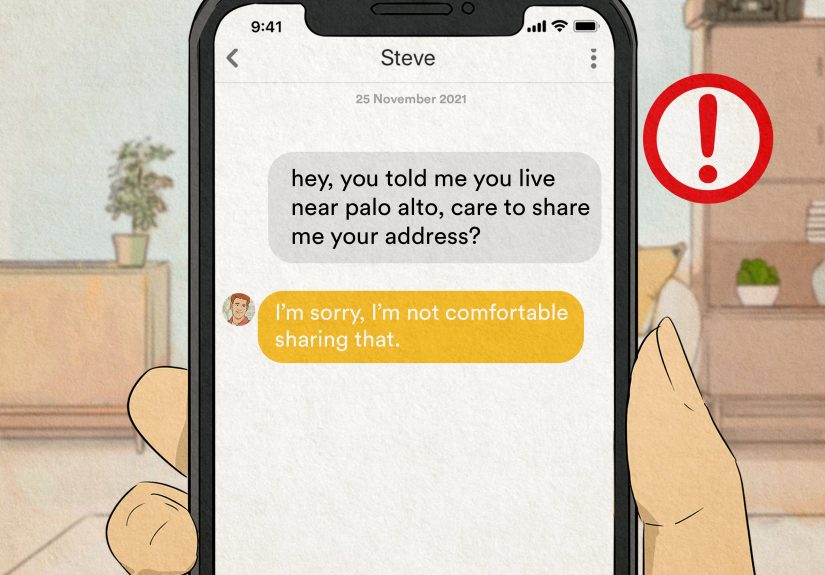
Most people on dating apps are normal humans looking for connection. Some are scammers. Your job isn’t to be paranoid
it’s to be appropriately skeptical, especially if something feels off.
Common red flags
- They push for money, gift cards, crypto, or “urgent help.”
- They refuse video calls or always have dramatic excuses for not meeting.
- They try to move you off the app immediately and isolate communication.
- They “love-bomb” fast (intense affection very early) paired with pressure.
- They send suspicious links or ask for private info quickly.
Simple safety habits
- Keep early chats on-platform until trust is established.
- Do a quick video call before meetingespecially if anything seems inconsistent.
- Meet in public and tell a friend where you’re going.
- Never send money to someone you only know online. Ever. (Not even “just this once.”)
Conversation starter menu: 25 prompts that actually lead somewhere
Use these when you want something better than “wyd” but don’t want to overthink it. Pick one that fits their profile,
then add one sentence of context from you.
- “What’s a hobby you tried that surprised you?”
- “What’s your ‘small luxury’ that makes life better?”
- “What’s the best meal you’ve had recently?”
- “What’s your ideal low-key weekend?”
- “What’s something you’re proud of from the last year?”
- “What’s a show or podcast you’re into right now?”
- “What’s a place you’d revisit instantly?”
- “What’s your comfort food when life is chaotic?”
- “What’s a green flag you notice quickly?”
- “What’s a ‘tiny hill you’ll die on’ opinion?”
- “What’s a skill you wish came pre-installed?”
- “What’s your go-to way to unwind after work?”
- “What’s your perfect ‘first date’ vibecoffee, walk, drinks, activity?”
- “What’s a song you can’t help but sing along to?”
- “If we did trivia, what category would you carry?”
- “What’s your favorite kind of day: spontaneous or planned?”
- “What’s the best thing you’ve learned from a past relationship?”
- “What’s your ‘this makes me feel alive’ activity?”
- “What’s an underrated city (or neighborhood) you love?”
- “What’s a tradition you’d want in a future relationship?”
- “What’s the most random fun fact you know?”
- “What’s a goal you’re quietly working on?”
- “What’s a boundary you’ve learned to respect for yourself?”
- “What’s your ‘I can’t believe I used to dislike this’ thing?”
- “What’s a first date that sounds genuinely fun to you?”
Extra: real-world chatting experiences (the stuff people learn the hard way)
If you’ve ever stared at a dating app chat like it’s a microwave with too many buttons, you’re in good company. A very common experience is
realizing that online dating is less about “finding the perfect line” and more about managing energy and attention. People often report that
their best conversations start on days when they’re relaxed and curiousnot when they’re trying to “perform.” That’s why the Profile Proof opener
works so well: it’s grounded, personal, and doesn’t require you to become a part-time stand-up comedian.
Another frequent experience: the “How are you?” trap. It’s not that the question is evilit’s that it often leads to autopilot answers (“Good, you?”)
and then you’re both stuck pushing a conversational shopping cart with a wobbly wheel. Daters who do better tend to swap “How are you?” for something
specific like “What’s been the best part of your day?” or “What are you looking forward to this week?” It’s the same friendliness, but with traction.
Many people also learn (sometimes painfully) that fast chemistry in text doesn’t always translate to real-life compatibility.
That’s why a low-pressure call or quick coffee date can be a kindness to both of you. It saves time, prevents the pen-pal loop, and reveals the
things texting can’t: conversational rhythm, warmth, effort, and whether the vibe feels safe and easy.
A super relatable moment: you’re having a great chat, then life gets busy, replies slow down, and you start writing dramatic backstories in your head
(“They hate me.” “They got abducted by a circus.”). In reality, the healthiest daters tend to look for patterns, not single delays. If the other person
comes back with thoughtful messages and asks questions too, the connection is probably still alive. If they repeatedly give one-word replies and never
re-engage, that’s informationuse it to protect your energy.
People who enjoy online dating more often describe adopting a “light grip” mindset: show interest, be clear, and don’t chase. They’ll send one good
follow-up if the conversation stalls, and if it doesn’t revive, they let it go without turning it into a personal referendum. This is especially
important because many users juggle multiple matches, busy schedules, or simple dating fatigue. A calm, self-respecting exit (“No worries if timing’s
offwishing you a good week”) is oddly powerful: it keeps your dignity intact and leaves the door open without begging.
Finally, there’s the safety learning curve. Plenty of people report encountering profiles that move too fast, avoid video calls, or steer toward money
problems and urgent “help.” The experience of spotting a red flag earlyand stepping awayoften becomes a turning point. You don’t need to be cynical;
you just need boundaries. The most satisfying dating stories usually come from people who stayed open-hearted and stayed smart: curiosity, clarity,
and a willingness to verify before getting deeply invested.
Conclusion
Great online dating conversation is a simple mix: specific attention + open-ended curiosity + steady momentum.
Start with something real from their profile, ask questions that invite stories, and keep the vibe mutual by sharing a little about yourself too.
If the connection is good, don’t text it into infinitysuggest a low-pressure call or date and see if it clicks in real life.
And remember: you’re not trying to entertain the internet. You’re trying to find one person who likes your particular flavor of weird.
Lead with kindness, keep it playful, and protect your time like it’s the last slice of pizza.