Table of Contents >> Show >> Hide
- The Declassified Color Photos Changed the Mood of the Story
- Before Laika Became a Legend, the Program Was Testing Dogs on Suborbital Flights
- Laika and Sputnik 2: The Most Famous and Most Misunderstood Mission
- Belka and Strelka: The Mission That Proved Recovery Was Possible
- How the Space Dogs Paved the Way for Gagarin
- Why These Photos Matter Now
- Experiences and Reflections: What These Space Dog Photos Feel Like in Real Life
- Conclusion
Black-and-white space history has a strange superpower: it can make everything look neat, distant, and almost polite. Then color shows up and ruins that illusion in the best possible way. Suddenly, the Soviet Union’s early space dog program stops feeling like a chapter title and starts feeling real. The rockets look dusty and industrial. The equipment looks improvised and urgent. The dogs look less like symbols and more like actual animals standing in the middle of one of the biggest technological gambles in human history.
That is exactly why the declassified color photos of the Soviet space dog era matter so much. They do more than add visual flair. They restore texture to a story that is often told in quick headlines: Laika was first into orbit. Belka and Strelka came back alive. Humans followed. But the full story is messier, more emotional, and more revealing about how the Space Race really workedequal parts ambition, propaganda, brilliant engineering, and moral compromise.
In this article, we’ll look at what the newly released color images reveal, how the Soviet dog missions evolved from risky test flights to orbit and back, why these animals became cultural icons, and what modern readers can learn from a chapter of space history that still sparks admiration and discomfort at the same time.
The Declassified Color Photos Changed the Mood of the Story
When the Russian Ministry of Defense released a set of color images tied to the history of the Kapustin Yar missile range, it gave historians and curious readers a rare visual window into the early Soviet rocket program. The photos showed more than dogs. They also showed the broader missile ecosystem around them: launch pads, transport rigs, early ballistic rockets, and the rough infrastructure that powered the Soviet push into the upper atmosphere.
What makes these images especially compelling is how they connect the space dog story to the military roots of the Soviet space program. In the photos, you can see rockets like the R-series vehicles and the equipment used to support both weapons testing and scientific flights. In other words, the same engineering momentum that built missiles also opened the door to space biology and, eventually, human spaceflight.
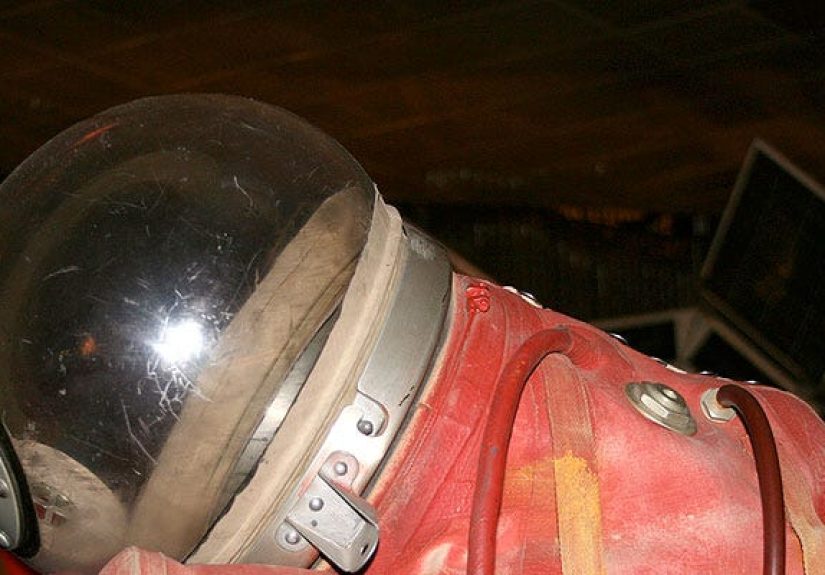
Some of the most memorable frames include dog-related hardware and training gear: custom spacesuits, nose sections used for animal flights, and the tiny life-support setups built around the dogs’ bodies. The details are almost startling. These weren’t cartoon “space puppies.” They were test subjects inside carefully designed biomedical systems, with sensors, restraints, and life-support components built into cramped cabins.
The color images also highlight just how early this all was. Nothing looks sleek. Nothing looks “future” in the glossy modern sense. It looks experimental, mechanical, and very human-madewhich is exactly what it was. Space history often gets told as a parade of firsts. The photos remind us it was also a workshop full of improvisation, deadlines, and high-stakes decisions.
Before Laika Became a Legend, the Program Was Testing Dogs on Suborbital Flights
Laika is the best-known name, but she was part of a larger Soviet animal testing program that began years earlier. Soviet teams launched dogs on suborbital rocket flights in the 1950s to study how living organisms handled acceleration, weightlessness, and reentry conditions. These missions were designed to answer a basic but urgent question: could a living body survive spaceflight long enough for a human to do it next?
The dogs were usually selected from Moscow strays. Soviet researchers believed mixed-breed street dogs were hardy, adaptable, and better suited to stress than pampered purebreds. Female dogs were also preferred because of the cabin size and waste-management systems. (Space engineering is glamorous right up until you read the sanitation section.)
Training was intense. Dogs were confined in increasingly small capsules, spun in centrifuges, and acclimated to noise and vibration. They were fed jellied food that could be managed in microgravity. By the time the orbital missions arrived, Soviet researchers had already gathered years of data from animal flights, though the success rate was uneven and some dogs died in test missions due to technical failures.
This context matters because the declassified photos make clear that the “space dog” era was not one dramatic launch and a sad newsreel. It was a sustained program of biomedical experimentation embedded inside the broader Soviet rocket and missile complex. The photos turn the myth back into a systemand that makes the history more honest.
Laika and Sputnik 2: The Most Famous and Most Misunderstood Mission
Laika’s flight was historic and rushed
On November 3, 1957, Laika became the first living creature to orbit Earth aboard Sputnik 2. Her mission came just weeks after Sputnik 1 and was rushed forward in time to align with the 40th anniversary of the Bolshevik Revolution. That political deadline shaped everything: design choices, testing time, and the mission’s fatal limitations.
Soviet planners knew Laika would not return alive. Early public accounts suggested she would survive for days and later be euthanized painlessly. For decades, those reports shaped popular retellings. But later disclosures from Russian officials and scientists showed a different reality: Laika likely died within hours after launch due to overheating and stress, as cabin temperatures rose unexpectedly.
Why the truth took decades to emerge
One of the most fascinating parts of the Laika story is not only what happened, but how slowly the truth came out. Soviet secrecy, incomplete telemetry, and conflicting post-flight narratives created a fog that lasted for decades. Later reporting described how thermal-control failures and a hotter-than-expected cabin likely ended Laika’s life far earlier than the official story claimed.
Declassified documents and retrospective accounts also showed how fragmentary the data were. Tracking limitations, orbital conditions, and the rapid pace of the mission meant scientists themselves did not always receive a complete, tidy picture in real time. That uncertainty is part of why Laika’s story is still discussed today: it sits at the intersection of scientific achievement, state messaging, and moral regret.
Laika’s cultural afterlife became global
Even though Laika’s mission was tragic, her image became enormous in popular culture. She appeared on stamps, pins, posters, and later in songs, books, and films. In the United States and Britain, the press coined nicknames and debated the ethics of the flight. In the Soviet Union, Laika became a symbol of sacrifice in service of progress.
The declassified color photos sharpen that contrast. We already knew the icon. Now we can better see the machinery around the icon: the launch culture, the equipment, and the military-scientific infrastructure that made the mission possible. It becomes harder to talk about Laika as a simple legend and easier to talk about the real conditions she flew in.
Belka and Strelka: The Mission That Proved Recovery Was Possible
The mission that changed everything
If Laika proved orbit was possible, Belka and Strelka helped prove survival and return were possible. On August 19, 1960, the Soviet Union launched Sputnik 5 with a remarkably crowded biological payload that included the two dogs, plus mice, rats, a rabbit, flies, and plant material. This was not a symbolic stunt. It was a full systems test for life-support and recovery.
Belka and Strelka became the first living creatures to orbit Earth and return safely. That success was a major turning point in the Space Race because it provided practical confidence that a human could survive orbital flight and come home. Less than a year later, Yuri Gagarin would do exactly that.
Even the heroes got motion sick
One detail that has survived in historical accounts is wonderfully unglamorous: during televised monitoring, Belka reportedly vomited during orbit. As odd as that sounds, it was valuable biomedical information. The Soviets were trying to understand what weightlessness did to living bodies in real time. Spaceflight was not just about launch and splashdown; it was also about what happened in the middle, when gravity stopped behaving the way biology expected.
This is one reason the Belka and Strelka mission feels so modern in hindsight. It was packed with instrumentation, live observation, and a mixed biological payloadbasically an early orbital lab with fur. Not exactly the poster version of space heroism, but scientifically, it was a huge step.
From lab subjects to Soviet celebrities
After their successful flight, Belka and Strelka became full-blown public figures. They appeared on postcards, chocolates, matchboxes, toys, and stamps. In a system that often prioritized collective achievement over individual fame, these two dogs became recognizable stars anyway. The propaganda value was obvious: unlike Laika, these heroes came home.
Their fame also crossed borders. One of Strelka’s puppies, Pushinka, was later gifted to Caroline Kennedy, daughter of President John F. Kennedy, during a brief thaw in Cold War relations. It is one of those perfectly strange historical details that sounds made up, but isn’t: from Soviet orbital mission to White House family dog, via geopolitics.
How the Space Dogs Paved the Way for Gagarin
Space dog missions were never an isolated sideshow. They were part of the direct scientific path toward human launch. Soviet doctors and engineers needed data on respiration, heart rate, cabin temperature, confinement, stress response, and recovery procedures before placing a human on top of a rocket. The dogs helped generate that data under real mission conditions.
Belka and Strelka’s successful orbital return in 1960 gave Soviet planners confidence to move forward. On April 12, 1961, Yuri Gagarin became the first human to orbit Earth, and his Vostok 1 mission lasted 108 minutes. By then, the Soviet program had learned critical lessons from earlier dog flightssome learned through success, others through failure.
This is why the phrase “hero space dogs” is not just sentimental. Their missions directly contributed to the operational knowledge needed for early human spaceflight. The history is uncomfortable in places, but it is also true: before the first human orbital hero, there were canine test subjects doing the dangerous first rounds.
Why These Photos Matter Now
Color restores scale, not just nostalgia
A lot of historical coverage treats colorization or color archives like a cosmetic upgrade. In this case, color actually changes interpretation. You notice textures, labels, materials, and staging more clearly. You can read the environment around the dogsthe rockets, the support systems, the outdoor launch conditionswith less emotional distance.
The photos also connect three stories that are often separated: the Soviet missile program, the biomedical experiments, and the propaganda machine. In one visual sequence, you can move from hardware to test infrastructure to dog-related equipment and see how tightly these worlds were linked. It is a sharper, more complete view of how the Space Race functioned on the ground.
They also reopen the ethics conversation
Modern audiences often respond to Laika with a mix of awe and heartbreak, and that reaction is completely understandable. Even many people involved in the Soviet program later expressed regret about the mission. Today, a knowingly one-way animal mission would be ethically unacceptable to most people and scientific institutions.
But history is not improved by flattening it into villains and heroes only. The Soviet dog program emerged from a time when both superpowers used animals in high-risk flight testing, and when the biological effects of space were still largely unknown. The hard partand the useful partis holding both truths at once: these missions advanced spaceflight, and they also carried a real moral cost.
The declassified color photos help with that kind of honest reading. They make the history harder to romanticize and harder to dismiss. They show the dogs as part of a real technical system, and that makes their role feel more concrete, not less moving.
Experiences and Reflections: What These Space Dog Photos Feel Like in Real Life
There’s a specific kind of experience people have when they first see these declassified color images, especially if they grew up with the usual black-and-white “Space Race” photos in textbooks. At first, it feels like a history upgradenice colors, clearer details, better contrast. Then, a few seconds later, it becomes something else entirely. You start noticing the dogs’ size next to the equipment. You notice the handlers’ expressions. You notice how small the cabins look. And suddenly, the story stops being abstract.
For many readers, the emotional shift is immediate. Laika is no longer just “the first dog in orbit.” She becomes a living animal in a constrained system built by people under pressure. Belka and Strelka stop looking like cheerful mascots from old Soviet posters and start looking like survivors of a dangerous technical experiment. That shift is important because it changes the kind of questions people ask. Instead of “Who was first?” they ask, “What did this cost?” and “What exactly did scientists learn?”
Historians and museum visitors often describe a similar reaction when they encounter artifacts from early spaceflight: the hardware looks simultaneously crude and brilliant. The same thing happens with the space dog images. The suits and equipment can look improvised by modern standards, but they also represent serious engineering under extreme time pressure. You can practically feel the urgency in the materialsmetal housings, straps, sensors, compact life-support components, and test hardware built for function, not beauty.
There’s also a strangely human reaction that kicks in: people start talking about the dogs as personalities. Laika becomes the solemn pioneer. Belka and Strelka become the duo who made it back and accidentally won the PR war by being adorable. That might sound sentimental, but it reflects a real historical pattern. The Soviet Union itself turned these dogs into public symbols through stamps, postcards, and mass-produced images. Long before social media learned that animals drive engagement, Cold War propaganda already knew.
Teachers and content creators who use these photos today often say they work because they create a rare mix of curiosity and empathy. Students who normally tune out “Space Race history” start asking sharp questions: Why dogs and not other animals? Why were the missions so rushed? How did telemetry work? Why was the public story different from the later scientific story? That is exactly what good historical material should do. It opens the door to deeper thinking.
There is also a personal, quieter kind of experience tied to these images. For some viewers, especially dog lovers, the photos are genuinely hard to look at for long. That discomfort is not a problem to be solved; it is part of what makes the images powerful. They force modern audiences to confront the reality that scientific progress often comes wrapped in ethical tradeoffs. You can admire the engineering and still feel sad. You can respect the historical importance and still wish the story had gone differently.
In the end, that may be the strongest effect of the declassified color photos: they make the history feel alive enough to argue with. Not frozen. Not mythic. Not simplified. Alive. And once a story feels alive, people stop treating it like trivia and start treating it like historywith complexity, empathy, and a little humility. That’s a pretty remarkable legacy for a set of old photographs and a handful of dogs who never knew they were helping to change the world.
Conclusion
The declassified color photos of the Soviet space dogs do more than make an old story look new. They reveal the real setting behind the legend: a high-pressure Cold War program where military rockets, biomedical research, and state propaganda overlapped. They also deepen our understanding of the dogs themselvesfrom Laika’s tragic one-way mission to Belka and Strelka’s successful orbital return and celebrity status.
If you want to understand how human spaceflight became possible, you can’t skip this chapter. The Soviet space dogs were not a footnote. They were a bridge between theory and human launch, between laboratory science and orbital reality. The color photos simply make that truth harder to ignoreand much harder to forget.