Table of Contents >> Show >> Hide
- Why demographics belongs in the inflation conversation
- The four main ways demographics can influence inflation
- The dependency ratio idea: why the age mix matters, not just the headcount
- Two competing narratives: aging is deflationary… or inflationary
- A U.S. snapshot: the demographic trends investors can’t ignore
- So… will demographics raise inflation or lower it?
- Examples that make the theory feel real
- Investor takeaways: the “wealth of common sense” version
- Experiences and real-world perspectives (added section)
- Conclusion
Inflation is the loud roommate of economics: it eats your groceries, borrows your money, and somehow still expects you to be grateful it “keeps the wheels turning.”
Demographics, on the other hand, is the quiet roommate. It doesn’t slam doors or throw parties. It just slowly rearranges the entire house while you’re not looking.
And if you’re trying to understand why inflation behaves the way it doeswhy it runs hot, cools off, or refuses to do what your carefully curated budget spreadsheet says it shoulddemographics deserves a seat at the table.
The big idea behind Demographics vs. Inflation is common-sense simple: how many people are working, spending, saving, and retiring shapes the economy’s “default settings.”
But the details? Those are where things get interesting, because demographics can push inflation down in one decade and up in the next, depending on what else is happening.
Think of it like this: demographics is the tide, and inflation is the waves. The tide doesn’t explain every wavebut it changes where the waves hit.
Why demographics belongs in the inflation conversation
Most inflation debates focus on fast-moving forces: energy shocks, supply chains, interest rates, government spending, global trade, or whatever your group chat is yelling about this week.
Demographics is slower. It changes in years and decades, not quarters. That slowness is exactly why it matters: it sets the backdrop for labor markets, growth, housing demand,
and the political choices that can make inflation behave.
In “wealth of common sense” terms: if you’re looking for a single, neat inflation “cause,” demographics won’t satisfy you.
But if you want to understand the range of inflation outcomes that are more likely given an aging population, lower birth rates, and shifting workforce participation,
demographics is one of the most practical lenses you can use.
The four main ways demographics can influence inflation
1) Labor supply: fewer workers can mean more wage pressure
Inflation isn’t just about what people want to buyit’s also about the economy’s ability to produce goods and services.
When labor supply grows slowly (or shrinks), employers compete harder for workers. That competition can push wages up, which can feed into prices,
especially in labor-intensive sectors like health care, education, hospitality, and many personal services.
Demographics affects this directly: retirements rise as large cohorts age, and fewer younger workers replace them.
Even if productivity improves, a slower-growing workforce can create persistent tightnessparticularly in occupations where you can’t just “AI your way out of it”
(good luck asking a chatbot to fix your burst pipe at 2 a.m.).
2) Demand shifts: what people buy changes as the population ages
A 30-year-old household and a 70-year-old household don’t spend the same way. Younger families tend to spend more on housing, commuting, childcare,
and household formation. Older households often spend more on health care, services, and (depending on wealth) leisure.
These shifts matter because services inflation tends to behave differently than goods inflationoften stickier, more wage-driven, and slower to cool.
Demographics doesn’t just change how much demand existsit changes what kind of demand dominates. That can influence which prices rise fastest,
and how quickly inflation responds to interest rate policy.
3) Savings, investment, and interest rates: the “quiet channel” that still moves prices
There’s a long-running argument that aging populations can be disinflationary because they reduce trend growth and can increase desired saving,
putting downward pressure on real interest rates. Lower real rates can stimulate spending and asset prices, but they can also reflect an economy
with weaker demand and slower growthconditions that historically lean disinflationary.
Many central-bank discussions about long-run interest rates (sometimes called the “neutral rate”) treat demographics as a key structural driver.
When the economy’s speed limit falls, inflation can have a harder time sustaining above-target levels without shocks.
4) Fiscal and politics: aging can stress budgetsand budgets can stress inflation
Aging also changes public finances. More retirees can mean higher spending on Social Security, Medicare, and other age-related programs.
If governments respond with higher taxes, spending cuts elsewhere, more borrowing, or some mix, it can influence demand and inflation dynamics.
This is where “common sense” meets reality: inflation isn’t just economicsit’s also choices. And demographics can pressure those choices for decades.
The dependency ratio idea: why the age mix matters, not just the headcount
One useful way to frame demographics is with a dependency ratio: how many non-working-age people (younger and older dependents) exist relative to the working-age population.
The intuition is straightforward. A larger working-age share can be disinflationary because more people are producing relative to consuming.
A larger dependent share can be more inflationary because consumption needs remain while production capacity can be relatively constrained.
That doesn’t mean “more retirees = automatic inflation.” It means the balance of workers to non-workers can tilt the playing field.
The catch is that the effect can vary by country, policy, productivity growth, and whether older adults stay in the labor force longer.
Two competing narratives: aging is deflationary… or inflationary
If you’ve read enough about demographics and inflation, you’ve probably noticed economists can’t resist creating two camps:
Camp A: Aging is deflationary (slower growth, lower rates, weaker demand)
This view argues that aging populations reduce labor force growth and trend GDP growth, contributing to lower real interest rates and persistent downward pressure on inflation.
Before the pandemic, many advanced economies experienced low inflation and low rates alongside aging trends, which strengthened this argument.
Camp B: Aging is inflationary (labor scarcity, services inflation, fiscal strain)
This view argues that retirements can create chronic labor shortages, pushing wages and service prices upward.
It also emphasizes fiscal pressure: aging-related spending can rise faster than revenue, encouraging deficits or policy choices that can be inflationary in certain environments.
The most useful conclusion is not “pick a team.” It’s: both mechanisms can be real, and the dominant effect can change depending on productivity,
immigration, globalization, technology, and policy responses. Demographics isn’t a prophecy. It’s a slow-moving force that interacts with everything else.
A U.S. snapshot: the demographic trends investors can’t ignore
In the United States, the headline trend is a larger older population and slower natural population growth.
Recent Census estimates show the 65-and-older population rising while the under-18 population has edged down in the same periodan aging profile that’s hard to miss
once you know to look for it.
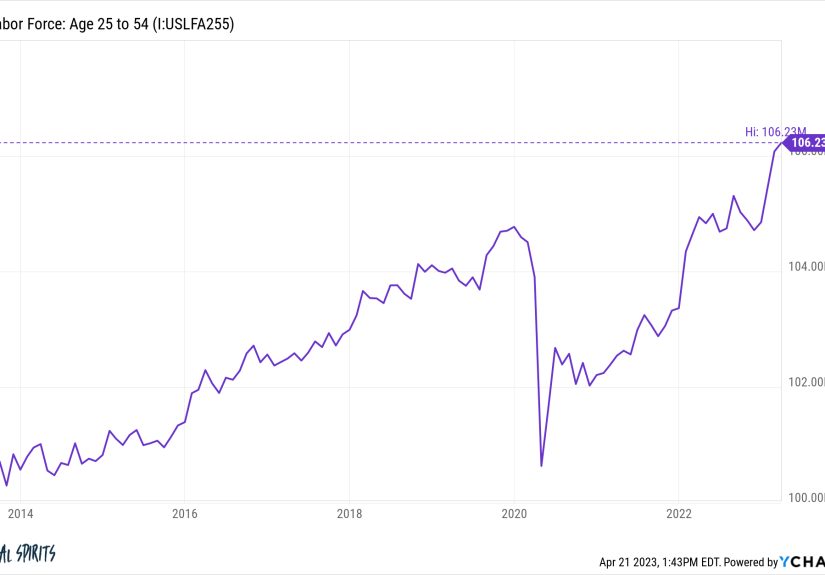
Meanwhile, labor force participation and employment growth are shaped by age composition. Prime-age participation can look healthy even while overall participation is held down
by a growing share of older adults. That creates a situation where the economy can feel “tight” in hiring even if the top-line labor force numbers don’t look booming.
Employment projections also point to slower growth compared with prior decadesanother sign that the labor supply backdrop may be less forgiving going forward.
When labor supply grows more slowly, inflation outcomes become more sensitive to shocks (like energy spikes) and to policy choices (like immigration rules).
So… will demographics raise inflation or lower it?
The most honest answer is: demographics changes the odds, not the script.
Here’s a practical way to think about it:
- Demographics can be disinflationary by reducing trend growth and encouraging higher saving, which can keep long-run inflation pressure muted when shocks are absent.
-
Demographics can be inflationary when labor supply constraints collide with strong demand, when service-heavy spending dominates,
or when fiscal pressures lead to persistent deficits in an economy already operating near capacity.
In other words, demographics can make inflation less explosive most of the time, but more stubborn when it shows up.
Think “fewer boom-bust years,” but potentially “stickier service inflation” and “harder hiring” if labor force growth slows.
Examples that make the theory feel real
Japan: the classic aging-and-low-inflation case
Japan is often cited as a real-world example where aging coincided with long periods of low inflation (and frequent deflation concerns).
It’s a reminder that aging can align with low demand growth and low rates for extended stretches.
But it’s also a reminder that institutional factorswage-setting norms, productivity trends, and policy frameworksmatter a lot.
The U.S. services story: where demographics shows up quietly
Even without making big headlines, demographics can show up in the “everyday” parts of inflation: health care, home services, personal care,
and other sectors where labor is the main input and demand is steady.
If more spending shifts toward these categories, the inflation basket can become naturally stickier.
Immigration and workforce growth: a policy lever that changes the inflation math
In a country with slower natural population growth, immigration becomes more important for workforce expansion.
More workers can ease wage pressure and raise productive capacity; fewer workers can intensify scarcity.
This is one reason demographic trends can’t be separated from policy choices when you’re thinking about future inflation risk.
Investor takeaways: the “wealth of common sense” version
1) Don’t build a portfolio on a single demographic forecast
Demographics is slow and powerfulbut inflation is also driven by shocks, technology, energy, geopolitics, and policy.
Use demographics to inform your expectations, not to place a one-way bet.
2) Prepare for a world where inflation may be less about goods and more about services
If aging shifts spending toward services, inflation may be more wage-driven and persistent. That can matter for how quickly inflation cools after it rises,
and how central banks respond.
3) Diversification still beats cleverness
If you’re worried demographics could contribute to stickier inflation, you might consider inflation-hedging tools (like TIPS) or assets with pricing power,
but the bigger “common sense” move is still diversification: a mix of equities, high-quality bonds, and (when appropriate) inflation protection.
4) Watch the labor market more than the headlines
Demographics often influences inflation through labor scarcity and participation trends. If you want an early signal of demographic inflation pressure,
pay attention to hiring difficulty, wage trends, and labor force participation by age groupnot just the CPI print that makes social media angry for a day.
Experiences and real-world perspectives (added section)
If demographics sounds abstract, here’s what it looks like in everyday lifethrough experiences that households, workers, and investors commonly report when a population is aging
and inflation is doing its thing. No crystal ball required, just pattern recognition.
The “why is it so hard to hire?” experience
One of the most common business-owner experiences in aging regions is the feeling that the applicant pool is thinner than it used to be.
It’s not always dramaticsometimes it’s just slower responses, more no-shows, or fewer people willing to take physically demanding roles.
Employers respond the same way humans always do when something becomes scarce: they raise the offer.
That might mean higher wages, bigger signing bonuses, more flexible schedules, or better benefits.
Over time, this creates a subtle shift in local inflation. It’s not that every price rises at onceit’s that labor-heavy services quietly get more expensive:
repairs, home health aides, childcare, landscaping, restaurant meals. People feel it in the “life admin” category: the stuff you can’t avoid and can’t easily substitute.
And when enough households experience that squeeze, inflation becomes emotionalbecause it’s showing up in the parts of life that feel non-negotiable.
The “my parents’ spending changed the whole family budget” experience
Families often describe a shift when older relatives need more support. Spending tilts toward health care, transportation help, prescriptions, home modifications,
and sometimes paid caregiving. These aren’t always one-time expenses. They can be recurring, and they often rise faster than general prices because they are service-heavy
and labor-constrained.
In practical terms, households experience this as a budget reallocation: fewer big discretionary purchases, more steady monthly costs.
And because these categories are less sensitive to interest rates (you can postpone buying a car; you can’t postpone necessary care forever),
inflation can feel stickier. That’s a lived experience of demographics affecting inflation: not a headline, but a slow change in where money goes and why.
The “housing isn’t just about babies anymore” experience
People often assume housing demand is mostly driven by young families forming households. But in aging areas, housing demand can shift rather than vanish.
Older adults may downsize, relocate, or move closer to family. Some stay put longer than expected because they’re healthier, because moving is expensive,
or because the housing market is tight. That can reduce housing turnover, limiting supply for others.
The experience on the ground can be paradoxical: fewer young people in the area, yet housing still feels constrained. Prices and rents may not skyrocket forever,
but they can remain stubborn. That stubbornness feeds into cost-of-living inflation because shelter costs are a huge part of household budgets.
Again, demographics doesn’t “cause” every housing movebut it changes the traffic patterns on the road.
The “investing feels different than it did in the 2010s” experience
Many long-term investors describe the 2010s as a period where low inflation and low interest rates felt like the default.
In that environment, long-duration assets benefited: growth stocks, long-term bonds, and anything that looked better when discounted at low rates.
As demographics and fiscal pressures evolveand as investors debate whether low rates are permanentpeople experience more uncertainty about the long-run backdrop.
The practical response is often “less prediction, more resilience.” Investors diversify, hold more cash for flexibility, shorten bond duration,
or add inflation-sensitive assetsnot because they’re sure demographics will create inflation, but because they’ve learned inflation can return,
and it can stick around long enough to matter. That’s the common-sense takeaway: you don’t have to be right about the exact path of inflation
to build a plan that can survive multiple outcomes.
Put simply, demographics influences inflation in ways that feel personal: hiring, caregiving, housing turnover, and spending priorities.
The point isn’t to panicit’s to notice the slow forces. The quiet roommate really is rearranging the furniture.
Conclusion
Demographics won’t tell you what inflation will be next month, and it won’t explain every inflation spike.
But it does help explain why inflation might become more service-driven, why labor markets can stay tight, why growth can slow,
and why fiscal choices become more consequential as the population ages.
The “wealth of common sense” approach is to treat demographics as a backdrop that shapes probabilities.
Use it to stress-test your assumptions, not to make all-or-nothing bets. And remember: the future rarely follows one storyline.
It follows several, awkwardly at the same timejust like the economy.