Table of Contents >> Show >> Hide
- First, the suspect lineup: What are Granada tiles?
- Cement tile 101: Why it looks different (and why that matters)
- Why Granada Tile feels so Los Angeles
- Where to spot Granada Tile in Los Angeles: A sleuth’s mini itinerary
- Silver Lake: Intelligentsia Coffee (pattern as identity)
- Downtown LA: Otium (tile + wood = instant warmth)
- Downtown LA: Rappahannock Oyster Bar (bold color, controlled chaos)
- Fashion District: DAMA (Mediterranean flair without the costume)
- Koreatown: Break Room 86 at The Line Hotel (pattern that sets the mood)
- Beverly Hills: Bouchon Bistro (custom color as sophistication)
- Hollywood: Delphine at the W (smart rhythm with two patterns)
- Hollywood Hills and beyond: Homes that use Granada tile like jewelry
- Santa Monica: Frank Gehry’s kitchen floor (yes, even modern icons do pattern)
- How to “ID” Granada tile like a pro
- How to use Granada tile at home (without overdoing it)
- Design rules that prevent “pattern regret”
- Installation and care: the “boring” part that saves your gorgeous floor
- Shopping smart: in-stock vs. custom (and what to ask for)
- Final verdict: The best Granada tile moments feel intentional
- Experience Notes: A Tile Sleuth’s Weekend in Los Angeles (Extra Field Report)
Los Angeles is a city that loves a statement floor. We’ll paint the walls white, make the couch the color of oat milk, and thenBAMdrop a bold tile pattern like it’s the season finale. If you’ve ever walked into a coffee shop, a restaurant, or a Hollywood Hills kitchen and thought, “Wait… is that tile doing jazz hands?” you may have just crossed paths with Granada Tile.
This is your design-sleuth field guide: who Granada Tile is, why their cement tiles feel so “L.A.” (sunny, confident, slightly dramatic), where you can spot them around town, and how to use them in your own space without accidentally creating a floor that looks like it’s trying to audition for a circus. (Unless that’s your vibeno judgment. This is Los Angeles.)
First, the suspect lineup: What are Granada tiles?
Granada Tile is Los Angeles–based and best known for handcrafted cement tiles with graphic patterns and richly pigmented color. The company’s origin story is wonderfully on-brand for L.A.: it begins with curiosity, a little bit of obsession, and a DIY experiment that escalated into a full-blown design phenomenon.
The founders drew inspiration from the historic city of Granada in Nicaraguawhere early-1900s cement tiles still show up in beautiful conditionand built the business around reviving that old-world craft for modern spaces. The tiles are made using a traditional process: pigmented cement is placed into metal molds, pressed, and cured (not kiln-fired), creating a matte, velvety surface that reads warm and tactile rather than glossy and slick.
Translation: these tiles don’t look “printed.” They look made. And in a city where everyone is chasing authenticitysourdough starters, vintage Levi’s, and “imperfect” ceramicscement tile fits right in.
Cement tile 101: Why it looks different (and why that matters)
Cement tile (often called encaustic cement tile) isn’t ceramic tile’s shiny cousin. It’s more like a stylish older relative with great stories and a tiny chip in one tooth that somehow makes them more attractive.
What makes cement tile special?
- It’s not fired. Cement tile is pressed and cured, which helps explain its soft, stone-like finish.
- The color is in the material. Patterns come from pigmented cement in molds, not surface glazing.
- It can develop patina. Over time, cement tile can wear like natural stonepart of its charm if you’re into the “lived-in” look.
What makes cement tile high-maintenance-ish?
- It’s porous. Cement tile generally needs sealing (especially before grouting) to avoid stains and grout haze.
- Acid is the villain. Harsh or acidic cleaners (hello, vinegar DIY hacks) can damage or etch cement-based surfaces. Save the vinegar for salad dressing.
- Installation is not a “wing it” project. A contractor who treats cement tile like ceramic tile can turn a dream pattern into a cautionary tale.
If you love design that feels storied and handmade, cement tile is a yes. If you want something you can ignore for a decade like a rental carpet… cement tile will remember that you forgot about it.
Why Granada Tile feels so Los Angeles
Granada tile hits a very specific L.A. sweet spot: it nods to history without feeling like a theme park. It can go Spanish Colonial, Moroccan, Mediterranean, Art Deco, or crisp modernsometimes in the same buildingbecause Los Angeles is a city of overlapping design dialects.
Here’s why it works especially well in Southern California homes and hospitality spaces:
- Indoor-outdoor living. Patterned tile makes patios, courtyards, and breezeways feel “finished,” not just functional.
- Sunlight loves matte surfaces. Granada’s cement tile finish plays nicely with bright California lightless glare, more texture.
- It pairs perfectly with L.A. staples. White plaster walls, warm woods, brass, rattan, and big plants all look better when the floor has opinions.
In other words: Granada tile is basically the accessory that turns a simple outfit into a look. It’s the sunglasses, the gold hoop, the “I woke up like this” that definitely required planning.
Where to spot Granada Tile in Los Angeles: A sleuth’s mini itinerary
If you want to see Granada tile “in the wild,” Los Angeles has plenty of clues. Here are some real-world sightings that double as design lessons:
Silver Lake: Intelligentsia Coffee (pattern as identity)
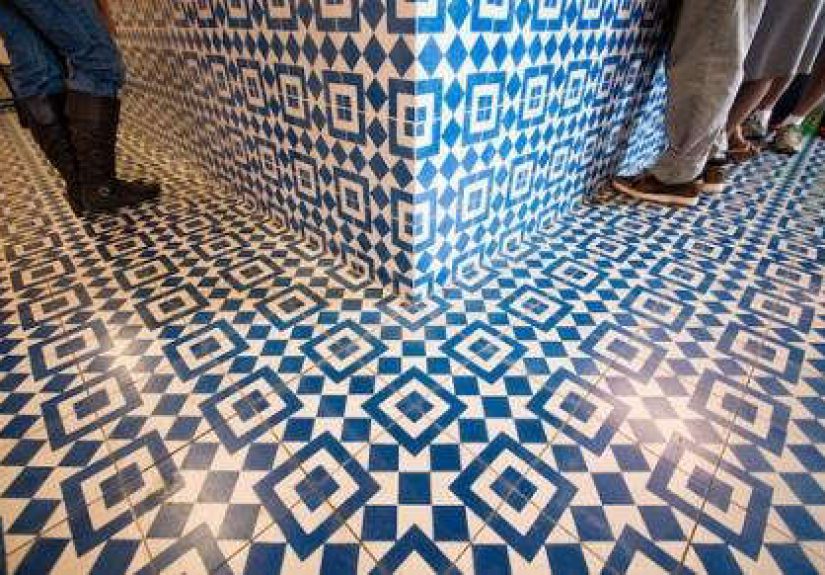
At the Silver Lake outpost of Intelligentsia Coffee, design turns a caffeine run into a full aesthetic moment. The Carrara marble bar is faced with blue-and-white Fez tiles from Granada, and the pattern continues across the floorgraphic, memorable, and perfectly matched to Silver Lake’s love of “clean lines + one bold thing.” If you’re trying to understand how tile can brand a space, start here.
Downtown LA: Otium (tile + wood = instant warmth)
Otium, adjacent to The Broad, uses Granada’s hexagon cement tiles in black, white, silver, and graythen mixes them with wood flooring. The result feels layered and modern, like a tailored suit with sneakers. It’s a great example of how to soften a geometric pattern: pair it with a natural material that’s visually calmer.
Downtown LA: Rappahannock Oyster Bar (bold color, controlled chaos)
Rappahannock Oyster Bar is where Granada tile proves it can be playful without becoming a headache. Geometric forms and vibrant colors move from floor to bar front, creating energy and movement. Lesson: if you’re going colorful, commitand keep the surrounding finishes simpler so the pattern doesn’t fight the furniture.
Fashion District: DAMA (Mediterranean flair without the costume)
DAMA leans into lush, tropical-meets-Mediterranean vibes, using Granada’s Copenhagen design cement tile as a major visual anchor. The takeaway: “old-world” patterns can feel fresh if the palette is sunny and the styling is modern.
Koreatown: Break Room 86 at The Line Hotel (pattern that sets the mood)
Break Room 86 uses Granada’s Serengeti cement tile to help establish its atmospheregraphic, rhythmic, and a little theatrical (in the best way). Mood-setting tile is real, and this is Exhibit A.
Beverly Hills: Bouchon Bistro (custom color as sophistication)
At Bouchon in Beverly Hills, Granada’s Copenhagen design appears in a custom colorway chosen by the restaurant’s design team to add a polished French flair. This is your reminder that the same pattern can read totally different depending on color: choose a calmer palette and suddenly the tile feels refined instead of loud.
Hollywood: Delphine at the W (smart rhythm with two patterns)
Delphine’s installation pairs two Granada designs (Cannes and Monaco) in teal and white. The mix creates a rhythmic effectcoordinated, not chaotic. If you’ve ever wanted to blend patterns, this is the model: pick designs that share a color family and a similar “visual volume.”
Hollywood Hills and beyond: Homes that use Granada tile like jewelry
Granada tile shows up in high-design residential spaces across the LA orbitfrom a Hollywood Hills home makeover featuring Granada tile flooring and terrace surfaces, to Architectural Digest features that highlight Granada tile details in kitchens, bathrooms, and outdoor areas. These projects tend to use tile as a focal point: one standout surface that makes everything else look more intentional.
Santa Monica: Frank Gehry’s kitchen floor (yes, even modern icons do pattern)
Even in the world of legendary architecture, a patterned floor can hold its own. Architectural Digest has featured Frank Gehry’s California residence with custom Granada tile in the kitchenproof that pattern can still feel modern when it’s paired with clean-lined cabinetry and warm wood tones.
How to “ID” Granada tile like a pro
Tile sleuthing is less “CSI” and more “enthusiastic nosy neighbor,” but a few details can help you recognize Granada-style cement tile:
- Matte finish with depth. Cement tile typically looks velvety, not glossy.
- Graphic geometry. Fez, Copenhagen, and other repeating motifs often read crisp from a distance.
- Subtle variation. Handmade tile can have small tonal shifts that add character (and make photos look better).
- Pattern placement that feels designed. In pro projects, you’ll often see thoughtful transitionsborders, framing, or a clean stop against wood.
Important note from your friendly design detective: plenty of brands make cement tile. Spotting “cement tile energy” is easier than confirming the exact maker. When in doubt, treat it like a celebrity sightingassume it’s them, but don’t bet your rent on it unless you’ve got receipts.
How to use Granada tile at home (without overdoing it)
Granada tile can be the star of your remodelor the supporting actor that steals every scene. The key is choosing a role and casting the rest of the room accordingly.
1) Floors that anchor the whole space
Kitchen floors, entryways, powder rooms, and laundry rooms are prime territory. If you choose a bold pattern, keep cabinets and walls simpler. A patterned floor with busy countertops and loud wallpaper is how you end up living inside a visual group chat.
2) Backsplashes that act like artwork
If you want tile impact without committing to a whole floor, use it as a backsplash. A patterned backsplash behind a range or sink can feel like a framed piece of artespecially with clean, classic subway tile elsewhere to give your eyes a place to rest.
3) Bathrooms: one bold surface is usually enough
A patterned bathroom floor + simple wall tile is a classic strategy. If you want to go bigger, consider using the cement tile on the vanity wall or as a shower accentjust remember that cement tile needs proper sealing and gentle cleaning habits.
4) Outdoor patios and courtyards
In Los Angeles, outdoor spaces are basically extra rooms. Patterned cement tile can make a patio feel like a destination instead of an afterthoughtespecially when paired with warm lighting, terracotta pots, and furniture that looks good even when someone’s holding a taco over it.
Design rules that prevent “pattern regret”
- Pick a pattern scale that matches the room. Small spaces can handle bold pattern because you see it as a “moment.” Large spaces may need calmer repeats so it doesn’t feel like visual static.
- Limit the palette. If your tile has 4+ colors, make most other finishes quiet. If the tile is black-and-white, you can play more with textiles and art.
- Use grout wisely. Cement tile can stain if you go too dark or skip the right prep. Many pros choose a lighter grout that blends rather than competes.
- Create clean transitions. Pairing tile with wood? Use a neat edge, threshold, or border so it looks intentional, not accidental.
Installation and care: the “boring” part that saves your gorgeous floor
This is the moment where the detective puts on reading glasses and gets serious. Cement tile is durable, but it’s also particular. A few best practices show up again and again in reputable guidance:
During installation
- Seal before grouting. Pre-grout sealing helps prevent grout pigment from staining the tile face.
- Work in small sections. Grouting a giant area at once increases the chance of haze and staining.
- Hire someone who has done cement tile before. Cement tile is not the place to “learn on the job.”
For everyday maintenance
- Sweep often. Grit can wear a finish over time.
- Clean with pH-neutral products. Think “stone-safe,” not “kitchen chemistry experiment.”
- Expect patina. Many cement tile guides point out that fine lines, natural wear, and character can developand that’s part of the appeal.
If you want the tile to look brand-new forever, cement tile may frustrate you. If you want it to look better as your life happens on itcooking, hosting, dancing badly while holding a spatulacement tile is in its element.
Shopping smart: in-stock vs. custom (and what to ask for)
Granada tile projects often fall into two lanes:
- In-stock designs with set colorwaysgreat for faster decisions and a cleaner budget forecast.
- Custom colorways that let designers tune the palette to a specific space (the “this looks expensive” option, because it usually is).
Before you order, ask yourself:
- Is this tile a feature (one surface) or a foundation (multiple rooms)?
- Do I want a crisp, high-contrast look, or a softer, more blended palette?
- Am I okay with patina and variation, or do I want uniform perfection?
And measure like you mean it. Add extra tile for waste, cuts, and future repairsbecause if you ever need a replacement tile years later, “close enough” color matching is not a fun hobby.
Final verdict: The best Granada tile moments feel intentional
Granada tile is at its best when it’s treated like a design decision, not a decorative afterthought. The most successful Los Angeles examplescoffee bars, downtown restaurants, Hollywood patios, and design-forward homesuse cement tile to create identity: a memorable pattern, a confident color story, and a tactile surface that feels grounded and real.
So grab your metaphorical magnifying glass. Start noticing floors. Peek at patios. Compliment strangers’ entryways (politely). And when you’re ready, bring that same intentionality into your own spacebecause in Los Angeles, the floor is never just the floor. It’s the opening line.
Experience Notes: A Tile Sleuth’s Weekend in Los Angeles (Extra Field Report)
Imagine you decideon a totally normal Saturdayto become the kind of person who “notices tile.” This is how it starts: coffee first, obviously. You wander into Silver Lake, order something with an oat-milk upgrade you didn’t ask for (it just happens here), and suddenly your eyes drop from the menu board to the floor. That’s when you see it: a bold, graphic pattern that makes the whole room feel sharper, cooler, more designed. You don’t even need to know the name “Fez” yetyou just feel the vibe. The tile isn’t whispering. It’s telling the room who it is.
Next thing you know, you’re walking slower than usual. You’re “taking in the details.” You’re doing that respectful lean people do at museums, except it’s over someone’s entryway. In downtown LA, you spot another clue: geometric cement tile mixed with warm wood underfoot at a restaurant. The pattern feels modern, but the material feels groundedlike it could survive a century of footsteps and still look intentional. You catch yourself thinking, “This is why everyone here pairs tile with wood. It’s the perfect truce: bold meets calm.”
By mid-afternoon, you’re fully in it. You’re the person who notices transitionshow the patterned tile ends cleanly, how the grout doesn’t compete, how the surrounding surfaces step back so the floor can have its moment. You start mentally redecorating your own home. “What if I did a patterned backsplash just behind the range?” you think. “What if my sad little patio became a Mediterranean courtyard?” You picture outdoor string lights, a tiny bistro table, and a tile pattern that makes the space feel like a destination instead of a storage unit for forgotten plant pots.
Then you wander into a place where the tile is colorfulreally colorfulrunning from floor to bar front like it’s doing choreography. You realize bold pattern can work at full volume if everything else is edited: simpler walls, restrained furniture, fewer competing textures. It’s a design lesson delivered via your eyeballs, and it sticks. You also realize something else: cement tile isn’t trying to look perfect. It’s trying to look alive. It wants that soft matte surface, the slight variation, the feeling that a person made itnot a machine.
On Sunday, you go home and look at your own floors like they’ve betrayed you personally. But instead of spiraling, you make a plan: start with a small area, pick a palette that plays nicely with what you already own, and hire an installer who actually understands cement tile. You’ll keep cleaners gentle. You’ll accept patina as “character,” like laugh lines for architecture. And when someone walks into your home and says, “Whoathis tile,” you’ll smile like a person who totally meant to do that.