Table of Contents >> Show >> Hide
- Start With a Simple Lighting Plan (So You Don’t Buy Random Lights Like Snacks at a Gas Station)
- Beginner-Friendly Outdoor Lighting Options (Ranked by “How Likely Am I to Regret This?”)
- Safety Rules (Because the Goal Is “Beautiful Yard,” Not “Buzzing Extension Cord Documentary”)
- Tools and Supplies You’ll Actually Use
- 3 Beginner DIY Outdoor Lighting Projects (Step-by-Step)
- Design Tips That Make DIY Lighting Look Expensive
- Easy Upgrades Once You’ve Got the Basics
- Troubleshooting: Common Beginner Problems (And the Fixes)
- Conclusion
- Beginner Experiences: 5 Real-World Lessons I Wish Someone Had Told Me (About )
Outdoor lighting is basically “make your yard useful after 6 p.m.” magic. It’s also the difference between a cozy patio vibe and
doing the phone-flashlight shuffle while you whisper, “Please don’t let me step on a sprinkler head.”
The good news: beginner-friendly DIY outdoor lighting is totally doable if you stick to safe options (solar, plug-in, and low-voltage kits),
plan your layout, and avoid the classic mistake of turning your backyard into a small airport runway.
This guide walks you through smart beginner choices, safety basics, three easy starter projects, and design tricks that make budget lights
look intentional (the fancy word for “I meant to do that”).
Start With a Simple Lighting Plan (So You Don’t Buy Random Lights Like Snacks at a Gas Station)
Step 1: Decide what you want the light to do
- Safety: Steps, walkways, driveways, uneven pavers, slippery spots.
- Function: Grill area, outdoor dining table, door locks, trash bins, dog zone.
- Ambiance: Seating areas, pergolas, trees, fences, water features.
- Security: Entry points, side yards, garage doors, dark corners.
Step 2: Use the “lighting layers” trick
The fastest way to make beginner lighting look professional is to layer it:
ambient (overall glow), task (see what you’re doing), and accent (highlight something cool).
You don’t need a ton of fixturesjust don’t rely on one harsh blast of light to do everything.
Step 3: Sketch a tiny map
Grab paper (or a notes app) and draw your outdoor space like a treasure map. Mark outlets, doors, pathways, steps, and anything you want to highlight.
This one-minute doodle prevents two expensive outcomes: “not enough cable” and “why is the transformer in the worst possible spot?”
Beginner-Friendly Outdoor Lighting Options (Ranked by “How Likely Am I to Regret This?”)
1) Solar lights: easiest, fastest, but not always the brightest
Solar path lights and solar spotlights are great for beginners because there’s no wiring and no outlet required. They’re perfect for
decorative glow and gentle path marking. The trade-off: performance depends on sunlight, season, and battery health.
Best for: walkways, garden edges, small accent spots, renters, quick upgrades.
2) Plug-in string lights: instant patio personality
Outdoor-rated string lights can transform a patio, deck, or balcony in an afternoon. They’re forgiving, flexible, and beginner-proofespecially
if you use hooks and a guide wire to keep lines tidy and supported.
Best for: patios, pergolas, fences, outdoor dining areas, cozy corners.
3) Low-voltage landscape lighting kits: the “real upgrade” that’s still beginner-friendly
Low-voltage lighting (often 12-volt) uses a plug-in transformer that steps down power from a standard outdoor outlet. You run low-voltage cable
through the yard to fixtures (path lights, spots, well lights). It takes more planning than solar, but it’s more consistent and usually brighter.
Best for: walkways, steps, front yard curb appeal, garden accents, reliable nightly lighting.
4) Portable LED lanterns and cordless lamps: low drama, high charm
Battery-powered lanterns, rechargeable lamps, and flameless candles are amazing for layeringespecially on tables or stepswithout any installation.
Think of them as the “accessories” that make the whole look feel finished.
Safety Rules (Because the Goal Is “Beautiful Yard,” Not “Buzzing Extension Cord Documentary”)
Use outdoor-rated gear and the right ratings
- Choose fixtures and cords labeled for outdoor use (and for damp or wet locations where appropriate).
- Use outdoor-rated connectors and weatherproof covers for plug connections.
- Stick with LED options when possible: they run cooler and use less energy.
Respect water like it’s a supervillain
- Keep plugs and cord connections off the ground and away from puddles.
- Avoid running cords through high-traffic areas where they can get damaged (or clotheslined by a lawn mower).
- Don’t “daisy chain” multiple extension cords together. If you need length, buy one properly rated outdoor cord.
GFCI is your friend
Outdoor outlets are commonly GFCI-protected for a reason: they help reduce shock risk when moisture is involved.
If your outlet doesn’t have GFCI protection (or you’re not sure), consider having a qualified electrician check it.
Know your beginner boundary
This guide focuses on solar, plug-in, and low-voltage systems. If your project involves hardwiring line-voltage (120V) fixtures, adding new circuits,
or upgrading outdoor outlets, call a licensed electrician and follow local code. It’s not about braveryit’s about safety and legality.
Tools and Supplies You’ll Actually Use
- Tape measure
- Outdoor-rated extension cord (if needed) and cord clips/covers
- Screw-in hooks or mounting clips (for string lights)
- Drill + bits (for pilot holes)
- Zip ties (UV-resistant is best)
- Wire stripper (for low-voltage kits)
- Garden trowel or edging tool (for shallow cable trenches)
- Gloves and a headlamp (because you’ll test lights at dusk)
3 Beginner DIY Outdoor Lighting Projects (Step-by-Step)
Project #1: Hang Outdoor String Lights That Don’t Sag After Two Weeks
Perfect for: patios, decks, pergolas, fences, balconies
- Plan the shape: A simple zigzag across a patio is easiest. Mark anchor points (posts, fascia, fence line, pergola beams).
- Check your power plan: Identify the nearest outdoor outlet. If you need an extension cord, use an outdoor-rated one and avoid trip hazards.
- Install anchors: Use screw hooks/eyes or mounting clips. Pre-drill pilot holes to avoid splitting wood.
- Add a guide wire (optional but awesome): If you’re spanning a wide area, run a thin outdoor-rated support wire first. It keeps lights straight and reduces strain.
- Hang the lights: Attach the light strand to the guide wire with zip ties or clips. Keep gentle tensiondon’t stretch like a guitar string.
- Weatherproof the plug: Use a weatherproof outlet cover and keep the connection elevated and sheltered when possible.
- Test at night: Adjust sag points and angles. If the vibe feels “too bright,” swap to softer bulbs or add a dimmer-rated smart plug (only if the set supports dimming).
Beginner pro tip: If your string lights look messy, it’s usually because the anchor points aren’t symmetricalor because the cord is doing a weird diagonal
you didn’t notice in daylight. Testing at dusk saves you from “why does my patio look stressed?”
Project #2: Install Solar Path Lights That Actually Help You See the Path
Perfect for: quick curb appeal, garden edges, renters, no-outlet zones
- Choose sunny spots: Solar panels need real sun. If the lights are under heavy shade all day, they’ll act tired at night. (Relatable, but not helpful.)
- Lay them out before you stake: Place lights along the path first and walk it at night with a flashlight to visualize spacing.
- Use “staggered” placement: Instead of lining lights like soldiers, alternate left and right. It looks more natural and reduces glare.
- Set consistent spacing: For most walkways, even spacing looks clean. Tight spacing can look runway-bright; wide spacing can feel patchy.
- Prep hard soil: If the ground is tough, loosen it with a trowel first. Don’t hammer plastic stakescracked stakes are the unofficial mascot of rushed DIY.
- Maintain seasonally: Wipe solar panels clean and replace rechargeable batteries when performance drops.
Project #3: Install a Low-Voltage Landscape Lighting Kit (Beginner Edition)
Perfect for: reliable path lighting, front-yard glow-ups, highlighting landscaping
Step 1: Pick your “must light” targets
- Walkways and steps (safety first)
- Entry approach (feels welcoming)
- One or two focal features (a tree, textured wall, planter bed)
Step 2: Size the transformer (the simple way)
Add up the wattage of all fixtures you plan to run on the line, then choose a transformer with extra capacity for breathing room and future upgrades.
Many installers aim for a buffer rather than running the transformer at max capacity all the time.
Step 3: Lay out cable above ground first
Place fixtures where you want them, then run the cable along the route without burying anything.
Connect temporarily and test at night. This is the part where you discover that your “perfect” daytime placement
was actually spotlighting a trash can like it’s an art installation.
Step 4: Make connections and test again
Follow your kit instructions for connectors (piercing connectors or stripped-and-clamped connections).
Keep connections snug, and aim for consistent brightness across fixtures.
Step 5: Bury or conceal the cable neatly
Once everything looks right, bury the cable shallowly (or conceal it under mulch where appropriate),
and keep it away from areas where it could be cut by edging or digging.
Always follow the manufacturer instructions and local guidance for cable placement.
Beginner voltage-drop sanity check
If lights near the end of a long run look dimmer, it may be voltage drop. Common fixes include using thicker cable,
shortening runs, or splitting the layout into multiple runs from the transformer (instead of one long “light snake”).
Design Tips That Make DIY Lighting Look Expensive
Pick a consistent color temperature
Warm white (often around the warm end of the spectrum) tends to feel cozy and inviting for patios and front entries.
Cooler whites can feel brighter and more “security light” in mood. Consistency matters more than perfectionmixed tones can look accidental.
Aim lights carefully to avoid glare
Glare happens when a bright point is visible at eye level. Use shielded fixtures, aim spotlights away from seating,
and think “wash the surface” rather than “blast the eyeballs.” Your guests will thank you. So will your retinas.
Use the “less is more” rule for path lights
Path lights should guide, not interrogate. Stagger them, keep brightness moderate, and let darkness exist between pools of light.
That contrast is what makes outdoor spaces feel calm instead of overlit.
Highlight texture for instant curb appeal
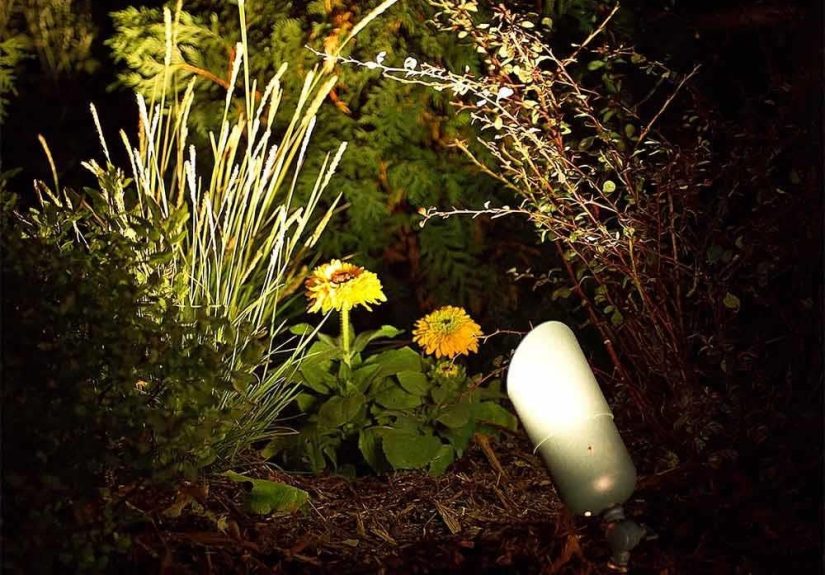
Grazing light across stone, brick, or wood brings out texture and depth. One well-placed spotlight on a tree canopy
can be more dramatic than ten random lights scattered like confetti.
Easy Upgrades Once You’ve Got the Basics
- Timers and photocells: Set it and forget it. Lights turn on at dusk and off later.
- Smart plugs (outdoor-rated): Control string lights from your phone, schedule them, or voice-control them.
- Motion sensors: Great for side yards and entrieslight only when needed.
- Solar + low-voltage combo: Use solar for accents and low-voltage for “must work” safety zones.
Troubleshooting: Common Beginner Problems (And the Fixes)
“My solar lights are dim.”
- Move them to a sunnier spot or trim shading branches.
- Clean the solar panel (dust matters).
- Replace rechargeable batteries if they’re aging.
“My string lights keep going out.”
- Check the outlet and reset the GFCI if needed.
- Inspect the plug connection for moisture intrusion and elevate/shelter it.
- Confirm you’re not exceeding the manufacturer’s max linkable strands.
“My low-voltage lights are uneven brightness.”
- Test connectionsloose connectors are a usual suspect.
- Shorten cable runs or split into multiple runs.
- Consider thicker gauge cable for long distances.
Conclusion
For beginners, the best DIY outdoor lighting strategy is simple: plan the zones, layer the light,
and choose beginner-safe systems (solar, plug-in, and low-voltage kits). Start with what improves your life the mostusually steps, walkways,
and the spot where you actually hang out. Then add ambiance with string lights or accent spots, and upgrade later with timers or smart controls.
If you do one thing tonight: walk your outdoor space at dusk and notice where you hesitate, squint, or shuffle. Those are your “first light” locations.
Your future selfcarrying groceries, chasing a runaway napkin, or simply enjoying a calm evening outsidewill be extremely grateful.
Beginner Experiences: 5 Real-World Lessons I Wish Someone Had Told Me (About )
The first time I tried DIY outdoor lighting, I assumed it was basically “hang lights, become a lifestyle influencer, done.” Reality was more like:
“hang lights, notice they sag, adjust them, notice they sag again, then finally discover gravity is undefeated.” My biggest takeaway?
Outdoor lighting looks easiest in photos because photos don’t show the part where you stand on a step stool for the fourth time wondering
if your neighbor is taking notes for a documentary called Patio Lights: The Struggle.
Lesson one: support matters more than you think. If you span string lights across an open space without a guide wire,
they’ll droop like a hammock. The fix is simpleadd a support cable or plan anchor points that shorten the span. When I finally used a guide wire,
the whole setup looked cleaner, the bulbs lined up better, and the strand stopped feeling like it was one breeze away from retirement.
Lesson two: daytime placement lies. In daylight, I placed a spotlight where I thought it would highlight a nice shrub.
At night, it proudly illuminated… a garden hose. I learned to temporarily place fixtures, test at dusk, then adjust. That one extra test saved me
from permanently spotlighting “miscellaneous yard items” like they were museum pieces.
Lesson three: solar lights are mood lighting, not stadium lighting. I expected solar path lights to fully light a walkway.
They were more like “helpful hints” of lightpretty, but not always bright, especially after cloudy days. Now I treat solar as decorative guidance
and use low-voltage lighting for places where I truly need visibility (steps, turns, and tricky spots).
Lesson four: cable management is the difference between charming and chaotic. Outdoor cords have a talent for becoming trip hazards.
Once I started routing cords along edges, clipping them neatly, and keeping connections off the ground, everything felt safer and looked more intentional.
The yard didn’t just glowit looked cared for.
Lesson five: brightness isn’t the goalcomfort is. My early instinct was “brighter is better.” But harsh glare makes people avoid
sitting areas, and overlit paths can feel sterile. Now I aim for gentle pools of light, warm tones where people gather, and a few accents to add depth.
The funny part is that using less lightplaced thoughtfullymade the space feel more expensive. Turns out the secret isn’t more fixtures;
it’s better choices.