Table of Contents >> Show >> Hide
- Do Air Purifiers Really Work?
- What the Research Says About Air Purifiers
- 1. They are especially effective at reducing particulate matter
- 2. They may help with allergy and asthma symptoms
- 3. They can support cleaner indoor air during smoke events
- 4. They may help reduce airborne virus-containing particles, but they are not magic shields
- 5. They are less impressive for gases and odors unless designed for that job
- When Air Purifiers Help the Most
- When Air Purifiers Disappoint
- Best Practices for Getting Real Results
- Common Mistakes People Make
- So, Are Air Purifiers Worth It?
- Experiences People Commonly Report With Air Purifiers
- Final Takeaway
If you have ever stared at an air purifier and wondered whether it is a life-changing machine or just an expensive fan with a superiority complex, you are not alone. Air purifiers have become the go-to gadget for allergy season, wildfire smoke, pet dander, city air, and that mysterious “something funky” smell floating around the living room.
So, do air purifiers work? Yes, but with a giant asterisk. They can absolutely help reduce airborne particles like dust, pollen, smoke, and pet dander when you choose the right unit and use it correctly. What they do not do is magically erase every indoor air problem, fix mold at the source, or excuse your kitchen from producing smoke every time you “just eyeball” the skillet temperature.
This guide breaks down what the research says, when air purifiers help the most, where they fall short, and how to use one without turning it into an overpriced side table.
Do Air Purifiers Really Work?
The short answer is yes, especially for airborne particles. A good air purifier with a true HEPA filter can capture very small particles that float around indoors, including dust, pollen, mold spores, pet dander, and smoke. That is the practical win people care about most. If your house feels like it is hosting a private pollen festival or your dog sheds like it is auditioning for a fur-based remake of a disaster movie, an air purifier can help.
But effectiveness depends on three big things: the type of pollutant, the size of the room, and whether the purifier is actually running enough to do its job. That last one matters more than many people think. An unplugged purifier is, scientifically speaking, a decorative cube.
Research and public health guidance consistently show that portable air cleaners work best as part of a larger indoor air strategy. In plain English, they are a helpful teammate, not the whole team. If you keep introducing pollutants through smoking indoors, poor ventilation, heavy candle use, or moisture problems that create mold, the purifier is fighting uphill in flip-flops.
What the Research Says About Air Purifiers
1. They are especially effective at reducing particulate matter
This is where air purifiers shine. HEPA-based units are designed to remove airborne particles, and that includes some of the particles most likely to irritate the lungs and trigger allergies. Research on portable air cleaners has repeatedly found meaningful drops in indoor particulate matter, especially PM2.5, the fine particle pollution linked with smoke and other health concerns.
That matters because indoor air is not always as innocent as it looks. Even homes that seem clean can have particle pollution from cooking, candles, cleaning sprays, fireplaces, outdoor smoke drifting inside, and basic everyday life. You may not see the particles, but your sinuses and lungs sometimes send strongly worded complaints.
One randomized trial involving children with asthma in Washington state found that homes using HEPA air cleaners had notably lower PM2.5 in both the child’s sleeping area and the main living area. Another clinical trial in people with moderate-to-severe COPD found improvements in respiratory symptoms and fewer moderate exacerbations among participants using active air cleaners compared with a sham setup. That does not mean every user will suddenly breathe like they live on a mountain retreat, but it does suggest real benefits for some households.
2. They may help with allergy and asthma symptoms
This is the part many buyers care about most. If your mornings begin with sneezing, itchy eyes, and a dramatic search for tissues, an air purifier may help reduce symptom triggers in the room where you spend the most time, especially the bedroom.
That said, the research is not a full-on fairy tale. Studies show possible improvements in some allergy and asthma symptoms, but not always dramatic ones, and not in every person. Why? Because many allergens are not just floating in the air. They also live on bedding, carpets, upholstery, curtains, and the family pet who somehow weighs 18 pounds and still occupies 90% of the couch.
That is why air purifiers tend to work best when paired with allergen control: washing bedding, vacuuming with good filtration, reducing indoor humidity, keeping windows closed during high-pollen days, and cleaning surfaces regularly.
3. They can support cleaner indoor air during smoke events
Wildfire smoke is one of the clearest situations where portable air purifiers prove their value. Smoke contains fine particles that can travel indoors and linger. In those situations, a correctly sized HEPA air purifier can reduce indoor particle levels and help create a cleaner room inside the house.
This is especially useful for children, older adults, pregnant people, and anyone with asthma, COPD, heart disease, or other conditions that make dirty air more than just annoying. When the outdoor air is bad, a purifier becomes less of a “nice-to-have” and more of a practical indoor survival tool.
4. They may help reduce airborne virus-containing particles, but they are not magic shields
Air purifiers can help reduce airborne contaminants, including particles that may contain viruses. That is why public health guidance often includes portable HEPA cleaners as one layer of protection in homes, classrooms, offices, and other shared spaces.
Still, one layer is the key phrase. Air purifiers do not replace ventilation, staying home when sick, or other commonsense steps. They can lower risk, not eliminate it. Think of them as part of a layered defense, like wearing a raincoat in a storm. Helpful? Absolutely. A guarantee that you stay perfectly dry? Not so much.
5. They are less impressive for gases and odors unless designed for that job
Here is where marketing often does cartwheels away from reality. HEPA filters are excellent for particles, but gases, odors, and volatile organic compounds are a different challenge. If you want help with smoke smells, cooking odors, or certain gaseous pollutants, you need activated carbon or another gas-phase filter designed for that purpose.
Even then, performance varies a lot. There is no universally used consumer rating system for gas removal the way CADR is used for particles. So if a product makes grand promises about “neutralizing toxins” while offering vague details and too much glowing blue light, healthy skepticism is your friend.
When Air Purifiers Help the Most
Air purifiers are most useful in homes and rooms where particle pollution is the main problem. That includes bedrooms for people with allergies, homes with pets, apartments near traffic, houses affected by wildfire smoke, and rooms where dust or pollen levels stay high.
They are also useful when outdoor ventilation is limited. For example, on smoky days or during very high pollen counts, opening windows may not be your best move. In that situation, a purifier running indoors with doors and windows closed can help create a cleaner breathing space.
Another smart use case is placing one in the room where a vulnerable person spends the most time. If someone in the household has asthma, COPD, seasonal allergies, or is recovering from a respiratory illness, focusing filtration in their main space often makes more sense than trying to purify the entire home with one undersized machine.
When Air Purifiers Disappoint
Air purifiers tend to disappoint when people expect them to fix problems they are not built to solve. They do not remove dust that has already settled on your shelves. They do not cure mold growing behind drywall. They do not undo cigarette smoke from someone actively smoking indoors. They do not replace cleaning, ventilation, or moisture control.
They also underperform when the unit is too small for the room, run only occasionally, or stuck in a poor location. Tucking a purifier behind a couch, running it for 20 minutes, and then declaring it “not worth it” is a little like jogging to the mailbox and wondering why marathon conditioning has not kicked in.
And then there is the ozone issue. Some products marketed as air purifiers intentionally generate ozone or rely on ionizing technology that may produce ozone as a byproduct. That is not a helpful trade. Ozone can irritate the airways and is not recommended for occupied spaces. Safer, mechanical filtration is the better bet for most homes.
Best Practices for Getting Real Results
Choose the right type
Look for a mechanical purifier with a HEPA filter for particles. If odors or gases are also a concern, choose a model with a substantial activated carbon filter, not just a token whisper of carbon meant mainly for marketing brochures.
Match the purifier to the room size
Check the manufacturer’s recommended room size and the CADR, especially the smoke CADR. In general, higher CADR means the unit can clean more air, faster. If you buy a purifier that is too small for the room, you are asking a bicycle to tow a pickup truck.
Run it consistently
Air purifiers work best when they run continuously or for long periods, especially in the room where you sleep or spend most of your time. Intermittent use can help, but steady use is where the bigger payoff usually shows up.
Place it strategically
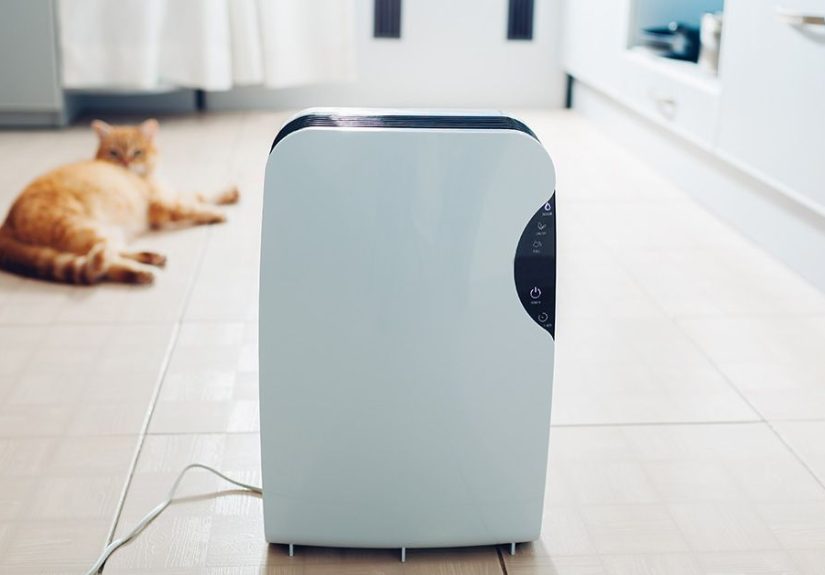
Put the unit where airflow is not blocked. Bedrooms and main living areas are usually the best targets. Avoid stuffing it into corners, behind curtains, or under furniture. Air has to move through the purifier for the purifier to do purifier things.
Replace filters on schedule
Dirty or overloaded filters reduce performance. Follow the manufacturer’s replacement schedule, and be prepared to replace filters sooner if you are dealing with wildfire smoke, heavy pet dander, or lots of indoor pollution.
Use it with source control and ventilation
Reduce pollutants at the source whenever possible. Cook with an exhaust fan, avoid smoking indoors, keep humidity under control, clean regularly, and ventilate when outdoor air quality allows. Air purifiers are best when they are not forced to do all the work alone.
Common Mistakes People Make
- Buying based on hype instead of HEPA, CADR, and room size
- Using one small purifier for an entire large open floor plan
- Ignoring filter replacement costs
- Assuming “air purifier” automatically means safe and effective
- Using ozone-generating devices in occupied rooms
- Expecting a purifier to solve mold, smoke, or dust problems without fixing the source
So, Are Air Purifiers Worth It?
For many households, yes. If your main concern is airborne particles such as pollen, smoke, pet dander, or dust, a properly sized HEPA air purifier can absolutely be worth it. The benefits tend to be strongest when your air is actually being challenged, such as during allergy season, in traffic-heavy neighborhoods, in pet-filled homes, or during smoke events.
That does not mean everyone needs one. If your indoor air is already well managed, your HVAC system is solid, your filters are high quality, and your symptoms are minimal, the improvement may feel modest. But for people with asthma, allergies, respiratory conditions, or frequent exposure to smoke and particles, the difference can be meaningful.
The smartest way to think about an air purifier is this: it is not a miracle machine, but it is also not nonsense. It is a practical tool. And like most practical tools, it works best when you use the right one in the right way for the right problem.
Experiences People Commonly Report With Air Purifiers
Real-world experiences with air purifiers are often less dramatic than advertisements and more useful than hype. Many people do not turn one on and suddenly hear angels singing through a cloud of purified oxygen. What they usually notice first is smaller, more practical stuff. A bedroom may feel less stuffy in the morning. The nightly sneezing routine may calm down. The room with the litter box, dog bed, or street-facing window may simply feel easier to breathe in.
People with seasonal allergies often describe the biggest improvement at night. That makes sense because bedrooms are enclosed spaces, and running a purifier continuously while sleeping gives the machine plenty of time to reduce airborne pollen, dust, and pet dander. Instead of waking up with itchy eyes and a nose that feels personally betrayed, some users say mornings become more manageable. Not perfect, just better. And sometimes “better” is exactly what tired allergy sufferers are willing to pay for.
Pet owners also tend to notice benefits, though not always in the way they expected. An air purifier can reduce dander floating in the air, but it does not stop fur from collecting under the couch like it is building a tiny secret civilization. So many users find that the best experience comes when purifier use is paired with vacuuming, washing pet bedding, and keeping the device running in the room where the animal spends the most time.
During wildfire smoke events or days with poor outdoor air quality, experiences tend to be more obvious. People often report that one closed-off room with a HEPA purifier feels noticeably more comfortable than the rest of the house. The air may smell less smoky, the throat may feel less irritated, and the room becomes the unofficial family headquarters for the day. In those cases, the purifier is not subtle. It becomes the MVP.
Some users, though, come away unimpressed, and their experiences are useful too. Often the issue is not that air purifiers do not work. It is that the machine was too small, too noisy to run on a high setting, hidden in a bad location, or expected to fix a problem caused by mold, smoke, or poor cleaning habits. A purifier can help with airborne particles, but it cannot negotiate with a damp basement or overpower a daily indoor candle festival.
Another common experience is learning that maintenance matters. People are sometimes shocked by how dirty filters get, especially in homes with pets, smoke exposure, or heavy dust. That can be annoying for the wallet, but it is also oddly reassuring. The grime caught in the filter is grime that is not staying in the air you breathe.
Overall, the most satisfied users usually have realistic expectations. They do not expect perfection. They expect cleaner air in one room, fewer airborne irritants, and a helpful boost during allergy or smoke season. When those are the goals, air purifiers often earn their keep.
Final Takeaway
Air purifiers do work, especially for removing airborne particles such as dust, pollen, smoke, and pet dander. Research supports their value as a supplemental tool for improving indoor air quality, and in some cases for easing respiratory symptoms or reducing exposure to harmful fine particles. The best results come from choosing a HEPA unit with the right CADR, matching it to your room size, running it consistently, and combining it with smart source control and ventilation.
In other words, buy the right machine, use it like you mean it, and do not expect it to defeat every indoor air villain by itself. That is the honest answer. Less magic wand, more reliable sidekick. And honestly, that is still pretty good.