Table of Contents >> Show >> Hide
- First, a reality check: what medical school is designed to do
- Leadership vs. management in medicine: not the same job, not the same toolbox
- Where medical school DOES train leadership (even if it doesn’t call it that)
- Where medical school DOESN’T fully train management (and why that matters)
- The “hidden curriculum”: how hierarchy teaches leadership (for better or worse)
- So where DO students get leadership and management training?
- What “physician leadership” looks like in real life (and why med school starts it)
- How medical students can intentionally build leadership and management skills
- FAQ: quick answers people actually want
- Conclusion: medical school makes leaders-in-training, but not automatic managers
- Experiences from the trenches: what leadership and management feel like in medical school (500-word add-on)
- SEO tags (JSON)
You know that feeling when you’re handed a white coat and suddenly your family thinks you can run a hospital, negotiate an insurance contract, and lead a multidisciplinary teamby next Tuesday? Medical school is excellent at turning motivated humans into safe, competent clinicians. But whether it reliably trains students to become managers or leaders is a different questionone that lives somewhere between “sort of” and “depends on where you go (and what you chase).”
Let’s unpack the difference, what’s actually taught, what’s mostly learned the hard way, and how students end up building leadership and management skillssometimes in the curriculum, sometimes in the wild.
First, a reality check: what medical school is designed to do
In the U.S., the core mission of undergraduate medical education (medical school) is to prepare graduates for residency and safe patient care. That means mastering biomedical knowledge, clinical reasoning, communication, professionalism, teamwork, and increasingly: patient safety, quality improvement, and health systems awareness.
So does medical school train managers? Not in the “budget, HR, operations, and strategic planning” sense most people mean.
Does it train leaders? More oftenespecially in the form of teamwork, communication, ethical decision-making, and guiding care in uncertain situations. But it’s frequently implicit rather than explicit, uneven across schools, and sometimes overshadowed by the fact that everyone is… busy trying to remember the coagulation cascade.
Leadership vs. management in medicine: not the same job, not the same toolbox
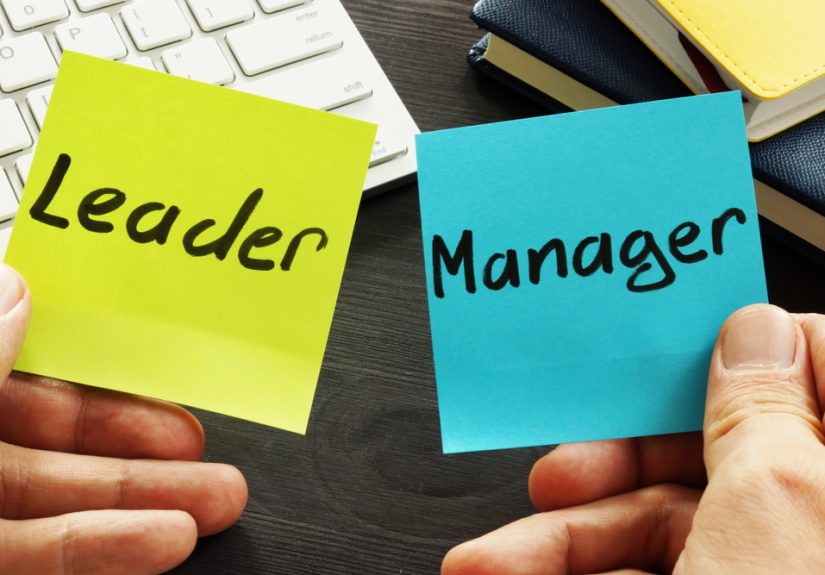
In everyday conversation, people mix up “leader” and “manager” like they mix up “anatomy” and “physiology” on exam day (it happens). But the skill sets overlap without being identical.
Leadership (the “direction and influence” skills)
- Setting a vision for better care (or at least a better workflow)
- Aligning people around priorities
- Building trust, psychological safety, and accountability
- Driving changeespecially when change is uncomfortable
Management (the “execution and systems” skills)
- Planning, scheduling, and coordinating people and resources
- Creating repeatable processes (checklists, protocols, handoffs)
- Measuring performance and improving operations
- Balancing constraints: time, staffing, budgets, regulations
In healthcare, you need both. A physician who can inspire a team but can’t organize a handoff is basically a motivational poster with a pager. Meanwhile, a physician who can run a tight schedule but can’t influence culture may keep the machine runninguntil burnout and turnover break it.
Where medical school DOES train leadership (even if it doesn’t call it that)
Most U.S. medical schools include experiences that build leadership behaviorsparticularly around teamwork, communication, interprofessional collaboration, and patient safety. Students practice these skills in ways that look a lot like leadership, even if the syllabus avoids the word.
1) Team-based clinical care and interprofessional collaboration
Clinical rotations are a crash course in leading from the middle: students learn how to communicate with nurses, pharmacists, therapists, social workers, case managers, and residentsoften while figuring out where the bathroom is on a new ward.
Many curricula intentionally include interprofessional education so students can function on care teams and coordinate services. These experiences teach the practical leadership basics: respectful communication, role clarity, conflict navigation, and shared decision-making.
2) Communication training (aka “leadership in a stethoscope”)
Leadership in healthcare is largely verbal: aligning a team around a plan, explaining risk, defusing conflict, and speaking up when something’s off. Medical schools increasingly teach structured communicationpatient handoffs, consult calls, informed consent, and difficult conversations.
Even small thingshow to present a patient clearly, how to escalate concerns, how to summarize a planare leadership behaviors. They shape whether a team trusts you, follows your reasoning, and catches errors before they land on a patient.
3) Patient safety, quality improvement, and systems thinking
Leadership in modern medicine isn’t only “be inspiring.” It’s also “make care safer and more reliable.” Many schools expose students to:
- Root-cause analysis and safety event review (how things go wrong in systems)
- Quality improvement projects (PDSA cycles, measurement, feedback loops)
- Standardized teamwork tools (briefs, huddles, debriefs, check-backs)
These topics teach change leadership: defining a problem, getting stakeholders on board, testing solutions, and measuring improvementoften with limited authority. That is the physician leadership reality for much of your career.
4) Professional identity formation and ethics
Clinical leadership also includes professional conduct: transparency, accountability, patient advocacy, and managing uncertainty without pretending you’re never wrong. Medical education puts real weight on professionalism and ethical reasoning because clinicians influence culturesometimes by what they do, and sometimes by what they allow.
Where medical school DOESN’T fully train management (and why that matters)
Here’s the gap students often feel: medical school teaches you to manage patients (differentials, plans, clinical priorities), but less often teaches you to manage organizations.
Common management skills students may NOT get deeply in standard curricula
- Operations: staffing models, throughput, bed management, clinic scheduling, capacity planning
- Finance: budgeting, reimbursement, RVUs, value-based payment, cost accounting
- People management: hiring, coaching, performance reviews, team development
- Strategy: service line planning, competitive landscape, market shifts
- Regulatory and legal: contracting, compliance frameworks, enterprise risk
Those skills matter because many physicians eventually lead teams, clinics, departments, research groups, or health systems initiatives. Without foundational management training, doctors often learn through trial and errorsometimes on live patients, which is not the ideal “sandbox environment.”
Some schools offer electives or pathways in health systems science, leadership, or management. Others rely on dual degrees (like MD/MBA) or extracurricular programs. The result is a patchwork: plenty of leadership potential, inconsistent management education.
The “hidden curriculum”: how hierarchy teaches leadership (for better or worse)
Medical training is steeped in hierarchy: attending, fellow, resident, intern, student. Like gravity, it’s always there, whether you respect it or resent it.
This hierarchy shapes leadership development in two ways:
- Role modeling: students watch how seniors handle conflict, uncertainty, and mistakesand copy what seems to work.
- Psychological safety: students learn whether it’s safe to speak up. In environments where questions are welcomed, students learn healthy leadership. Where humiliation is common, they learn silenceor aggression.
Teamwork research and patient safety training repeatedly emphasize that teams perform better when members feel comfortable speaking up, cross-checking, and debriefing. When medical culture supports those behaviors, students learn leadership fasterand safer.
So where DO students get leadership and management training?
In the U.S., students often build leadership and management skills through a mix of formal programs, elective curricula, and “learning by doing.” Here are the most common routes:
1) Formal leadership development programs
National organizations and medical education groups offer leadership-focused programs and competency models. These tend to emphasize self-awareness, communication, teamwork, and leading changeskills that translate to clinical environments quickly.
2) Quality improvement and patient safety courses
Programs like IHI Open School courses or structured safety curricula teach practical leadership behaviors: defining system problems, running improvement cycles, measuring results, and presenting work to stakeholders. That’s leadership with a clipboardin a good way.
3) Student organizations and student government
Want real management training? Try coordinating 30 people, a budget, three faculty approvals, and an event venueall while on surgery rotation. Student leadership roles teach logistics, negotiation, and stakeholder management fast.
4) Student-run clinics and community health projects
Student-run clinics are leadership laboratories: students coordinate volunteers, manage patient flow, navigate resource constraints, and collaborate across professions. It’s operations + mission + real patientsoften the closest thing to “management” many students see before residency.
5) Dual degrees and special tracks (MD/MBA, MD/MPH, leadership pathways)
Dual-degree and distinction tracks explicitly teach management topics: finance, operations, policy, and organizational leadership. They’re not required for everyonebut they can fill gaps for students who want formal preparation for administrative leadership roles.
What “physician leadership” looks like in real life (and why med school starts it)
Many students imagine leadership as a title: “Chief,” “Director,” “Chair.” In practice, physician leadership starts much earlier and often without authority:
- Clarifying goals during a chaotic shift
- Helping a stressed teammate prioritize tasks
- Speaking up about a near miss
- Aligning a care plan between teams
- Explaining tradeoffs to a family with compassion and clarity
Medical school trains students to do these things unevenly, but meaningfullyespecially through teamwork, communication, and safety culture. It does not consistently teach the “running a department” version of management unless students seek it out.
How medical students can intentionally build leadership and management skills
If you’re a student (or advising one), here’s a practical, non-cringey approach. Pick one skill per month and practice it like you’d practice suturing:
Leadership micro-skills (high-yield, low-ego)
- Closed-loop communication: confirm what you heard, confirm what you’ll do, confirm completion.
- Briefs and debriefs: “What’s the plan?” and “What did we learn?”
- Constructive speaking up: name the concern, propose an alternative, ask for confirmation.
- Conflict repair: address misunderstandings early, privately, and respectfully.
Management starter skills (useful even if you never get an MBA)
- Time and task triage: urgent vs. important, patient safety first.
- Process mapping: draw the steps, find the bottleneck, test one change.
- Measurement basics: define a metric, track it, interpret trends.
- Stakeholder mapping: who cares, who decides, who blocks, who helps?
These skills aren’t “extra.” They’re how you reduce errors, reduce burnout, and make care work for humans.
FAQ: quick answers people actually want
Do medical schools teach leadership explicitly?
Some dothrough leadership programs, interprofessional education, patient safety training, and structured curricula. Many rely on clinical experiences and extracurriculars, which means the quality can vary widely.
Do medical schools teach management?
They teach clinical management (prioritizing care, coordinating tasks) more than organizational management (budgets, operations, HR). Students who want deeper management training often pursue electives, certificates, dual degrees, or leadership tracks.
Is leadership training more common in residency than in medical school?
Often, yes. Residency competencies emphasize systems-based practice, quality improvement, and team leadership in a more direct, role-driven way. Medical school is usually the warm-upresidency is where you run onto the field.
Conclusion: medical school makes leaders-in-training, but not automatic managers
Medical school absolutely shapes leadership behaviors: communication under pressure, ethical judgment, teamwork, and the early habits of patient safety and quality improvement. In that sense, it trains students to leadespecially in the everyday, clinically grounded way that protects patients and supports teams.
But if you mean management as in budgets, operations, staffing, and organizational strategy, medical school typically offers only a light introductionunless students pursue targeted programs. The good news is you don’t have to wait for a title to lead. You can build leadership and management skills deliberately, starting now, one rotation (and one group chat) at a time.
Experiences from the trenches: what leadership and management feel like in medical school (500-word add-on)
Ask a room full of med students whether they’re being trained to lead, and you’ll get a familiar look: half curiosity, half “I’m just trying to survive cardio block.” But leadership shows up in small, real momentsoften when no one is handing you a leadership badge.
On the wards, leadership starts as “helpful clarity.” A student who can give a clean, organized presentation becomes a quiet stabilizer for the team. It’s not flashy; it’s functional. When you summarize the overnight events, identify what’s changed, and propose a next step, you’re practicing a leadership behavior: turning noise into signal. The resident may still make the final call, but the student’s structure shapes the team’s thinking.
Then comes the first “speak-up” moment. Maybe the medication dose looks odd, or a patient seems more confused than yesterday, or the plan doesn’t match what the family understood. Early on, students learn a hard truth: it takes courage to question the flow of a team, even politely. When schools and clinical sites foster psychological safety, students practice speaking up as a normal part of teamwork. When they don’t, students learn silencewhich is the opposite of patient-safe leadership. Many students remember the first time they were thanked for catching a mistake; it’s a leadership milestone that feels bigger than any grade.
Student organizations are where management sneaks in wearing a hoodie. Planning a health fair, running a tutoring program, or coordinating a student-run clinic forces students into real management tasks: scheduling volunteers, handling budgets, aligning stakeholders, and troubleshooting. It’s the kind of education you don’t get in a lecture hallbecause a lecture hall doesn’t cancel on you two hours before the event. Students learn contingency planning, delegation, and the art of the polite follow-up email (a skill that deserves its own board exam).
Quality improvement projects feel like leadership without authority. Students often describe QI as simultaneously empowering and humbling. You can identify a system problemsay, delayed follow-up for abnormal labsand propose a fix, but you can’t “just change the system.” You have to persuade nurses, residents, administrators, and faculty that the change is worth it. You learn to use data, build relationships, and pilot small improvements. That’s leadership in healthcare: influence, not command.
And yes, some days it’s messy. Leadership growth is rarely linear. Students can feel confident in one setting and invisible in another. The key experience, over time, is learning that leadership isn’t a personality traitit’s a set of behaviors you practice: listening, clarifying, coordinating, and improving. Medical school doesn’t always label these lessons as “leadership training,” but students who pay attention can graduate with a surprisingly sturdy foundationready to learn the heavier management skills when their roles expand.