Table of Contents >> Show >> Hide
- First, what exactly is “eating scabs”?
- Why do I eat scabs? The most common reasons
- Is scab eating a disorder?
- What are the risks of eating scabs?
- How to stop eating scabs (without relying on pure willpower)
- Step 1: Spot your pattern (AKA: become a detective, not a judge)
- Step 2: Use a “competing response” (hands and mouth need a substitute job)
- Step 3: Make scabs harder to access (stimulus control that actually works)
- Step 4: Replace “scab hunting” with skin care that supports healing
- Step 5: Address the stress underneath (because urges love chaos)
- Step 6: Consider professional support if it’s persistent
- When should I talk to a doctor or therapist?
- FAQ: Quick answers (because your brain wants closure)
- Real-world experiences: what scab-eating can look like (and what helps)
- Experience #1: “I only do it when I’m stressedand I don’t notice until it’s over.”
- Experience #2: “It starts as ‘fixing’I can’t stand the texture.”
- Experience #3: “I do it when I’m bored. My hands need entertainment.”
- Experience #4: “I hide it. I’m embarrassed. That makes it worse.”
- Experience #5: “Once I started treating anxiety, the urges got quieter.”
- Conclusion
Let’s talk about a habit that lives in the “I’m not proud of it, but also… my brain insists” category:
picking a scab and then eating it. If you just made a face, congratulationsyou’re human. If you’re here
because you do it (or your kid does it, or your partner does it and you’re trying not to scream), you’re
also not alone.
Scab-eating can feel confusing, gross, weirdly satisfying, anddepending on how often it happenspretty
distressing. The good news: there are real psychological reasons behind it, and there are practical ways
to reduce it or stop it without relying on willpower and shame (the two least reliable tools in the human
toolbox).
First, what exactly is “eating scabs”?
Typically, it’s a two-step move: you pick at a healing wound until the scab comes off,
then you chew or swallow the scab. For some people it’s occasional and impulsivelike
biting a hangnail. For others, it becomes repetitive, hard to control, and linked to stress, anxiety, or
a “trance-y” automatic state (hello, late-night scrolling).
In the mental-health world, scab picking can overlap with body-focused repetitive behaviors
(BFRBs), a group that includes skin picking, hair pulling, nail biting, and skin biting. Scab eating can
be part of the same loop: urge → action → brief relief → regret → repeat.
Why do I eat scabs? The most common reasons
1) Your brain loves “instant rewards” (even gross ones)
Picking and chewing can deliver a quick hit of relief or satisfaction. It’s not a moral failureit’s
your nervous system discovering a shortcut to “less tension, right now.” The texture, the tiny crunch,
the sense of completion (“I got it off!”) can all reinforce the behavior.
2) Stress, anxiety, and the “self-soothing” effect
Many people notice scab eating spikes during stress, anxiety, or emotional overload. The behavior can act
like a pressure valve. You’re not “trying to be self-destructive”; you’re trying to regulate feelings
with whatever tool your brain has available at the moment.
3) Boredom and “autopilot hands”
Some skin picking is focused (“I need to fix this scab right now”), but a lot is automatic:
you’re watching TV, driving, studying, or lying in bed and your hands just… go exploring. If your fingers
can find it, your brain may treat it like a free snack sample at Costcono questions asked.
4) Sensory seeking: texture, pressure, and stimulation
For some people, the behavior is partly sensory. The mouth and hands are powerful sensory zones, and
chewing provides stimulation. This can be especially noticeable for people who also bite nails, chew
cheeks, or pick cuticles.
5) Perfectionism and “fixing” the skin
Skin picking can be driven by the feeling that something is “not right” and must be corrected. A scab
can feel like a bump, a flaw, or unfinished business. The problem is: the more you “fix,” the longer
the wound stays open… which creates more scab… which creates more to fix. It’s a tiny business model
your skin did not ask for.
Is scab eating a disorder?
Not always. Plenty of people pick a scab once in a while. The line gets blurrier when it becomes
repetitive, causes skin damage, and feels hard to stop.
When it may be part of excoriation (skin-picking) disorder
Excoriation (skin-picking) disorder is recognized in diagnostic manuals and generally involves:
recurrent picking that causes lesions, repeated attempts to stop, and significant distress or impairment.
If scab eating follows frequent picking, it may be riding along in the same pattern.
When it overlaps with dermatophagia (skin biting)
Dermatophagia literally means “skin eating.” It’s often described as compulsively biting or chewing skin.
If you find yourself chewing scabs, cuticles, or the skin around nails, you may relate to this description.
When it might signal something else
Sometimes repetitive picking/chewing shows up alongside anxiety disorders, OCD-related patterns, depression,
trauma-related stress, or ADHD (especially the “I need stimulation” side of ADHD). This doesn’t mean you
have all of the aboveit means the habit can be a messenger, not just a nuisance.
What are the risks of eating scabs?
The biggest risks usually aren’t from swallowing the scab itselfyour stomach acid is not exactly a gentle
spa day for microbes. The bigger issue is what happens to your skin when you pick.
1) Delayed healing and “never-ending scabs”
Removing a scab early can reopen the wound and restart the healing process. More picking can turn a small
injury into a chronic sore that keeps forming scabs… which keeps tempting you.
2) Scarring and discoloration
Repeated picking increases the chance of scarring and post-inflammatory marks, especially if the wound
gets deeper over time.
3) Infection risk (including cellulitis)
Any break in the skin can allow bacteria in. Picking can introduce germs from your fingers and can worsen
irritation, increasing infection risk. If an area becomes increasingly red, warm, swollen, painful, or
starts oozingthose are signs to take seriously.
4) Emotional fallout: shame, hiding, and avoidance
Many people start avoiding pools, short sleeves, or anything that shows the picked areas. That isolation
can feed stresswhich then feeds the habit. It’s an annoying loop, but it’s also a workable one.
How to stop eating scabs (without relying on pure willpower)
The goal isn’t “never have an urge again.” The goal is to interrupt the loop and reduce damage. The most
evidence-supported approaches for BFRBs often combine awareness, competing actions, and environment tweaks.
Step 1: Spot your pattern (AKA: become a detective, not a judge)
- When does it happen? (TV, bed, car, bathroom mirror, work meetings?)
- Where do your hands go first? (Arms, scalp, face, legs?)
- What do you feel right before? (Tension, boredom, “I’ll just fix this one spot”?)
Even noticing “it’s always after I shower” or “only when I’m anxious and alone” gives you leverage.
Step 2: Use a “competing response” (hands and mouth need a substitute job)
A classic approach is habit reversal training, which teaches awareness and then builds a
competing action that makes picking/chewing harder to do. Examples:
- Squeeze a stress ball or putty for 60–90 seconds when the urge hits.
- Keep hands under a blanket, sit on your hands, or clasp them gently.
- Chew sugar-free gum or use a safe chew alternative if mouth-sensory needs are strong.
- Hold something textured (fidget, smooth stone, worry coin) during trigger times.
Step 3: Make scabs harder to access (stimulus control that actually works)
“Stimulus control” is a fancy phrase for “reduce temptation by changing the setup.” Try:
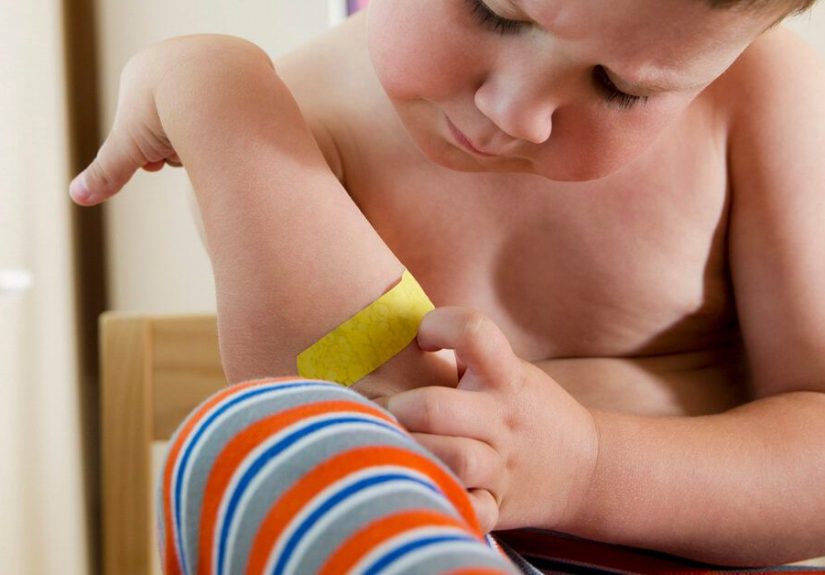
- Cover it: hydrocolloid bandages or a simple adhesive bandage can block access and support healing.
- Keep nails short: less nail edge = less ability to lift scabs.
- Barrier moments: wear gloves or long sleeves during your top trigger window (like evening TV).
- Out of sight helps: if the mirror is a trigger, shorten mirror time or adjust lighting for skincare routines.
Step 4: Replace “scab hunting” with skin care that supports healing
If your skin is dry or irritated, it creates more textureand texture invites picking. Gentle moisturizers,
treating underlying acne/eczema with a clinician, and keeping wounds clean and covered can reduce the “targets.”
Step 5: Address the stress underneath (because urges love chaos)
If stress is the gas pedal, habits are the car. You don’t have to become a zen monk, but building
quick regulation skills helps:
- Two minutes of paced breathing (slow exhale).
- A short walk or stretch break during trigger times.
- Journaling the urge (“urge level 7/10, I can surf it for 90 seconds”).
- Replacing self-criticism with a script: “This is an urge, not an emergency.”
Step 6: Consider professional support if it’s persistent
Cognitive behavioral therapy (CBT) approachesincluding habit reversal training and related modelsare
commonly recommended for skin picking/BFRBs. Some people also benefit from medication, depending on what’s
driving the behavior (for example, anxiety or OCD-related symptoms). In some studies, N-acetylcysteine (NAC)
has shown potential benefit for skin-picking symptoms, though it’s not a DIY fix and should be discussed
with a clinicianespecially if you have medical conditions or take other medications.
When should I talk to a doctor or therapist?
Consider getting help if any of these are true:
- You’re getting frequent wounds, scars, or infections.
- You’ve tried to stop repeatedly but can’t.
- You feel significant shame, distress, or you avoid social activities because of your skin.
- You spend a lot of time picking/chewing, or it interferes with school/work/relationships.
- Any wound shows signs of infection (increasing redness, warmth, swelling, pain, pus/oozing, fever).
If you’re not sure where to start, a primary care clinician or dermatologist can help rule out skin conditions,
and a mental health professional familiar with BFRBs can help with behavioral treatment.
FAQ: Quick answers (because your brain wants closure)
Is eating scabs “pica”?
Pica involves eating non-food substances persistently. Scab eating can look similar, but many cases are more
accurately explained by BFRB-related skin picking/biting patterns. If you’re eating other non-food items too,
or cravings feel intense and frequent, that’s worth discussing with a clinician.
Is it dangerous to swallow scabs?
Most of the concern is the picking and reopening wounds, which raises risks for infection and scarring.
Still, if you’re repeatedly putting wound material in your mouth, it’s a good reason to work on the habit and
keep wounds covered.
Why does it feel satisfying?
Because your brain is a reward machine. Relief and sensory stimulation are powerful reinforcers, even when the
behavior doesn’t match your values. The solution is not shameit’s smarter replacement behaviors and better setup.
Real-world experiences: what scab-eating can look like (and what helps)
Below are common, anonymized “pattern stories” that many people recognize. If one sounds like you, that’s not
a diagnosisit’s just a mirror. (A gentle one. Not the bathroom mirror that starts the picking. A nicer mirror.)
Experience #1: “I only do it when I’m stressedand I don’t notice until it’s over.”
This is the classic autopilot loop. Someone describes a stressful day, finally sits down at night, and their
hands immediately start scanning for rough spots. By the time they realize they’ve picked a scab off, it’s
already in their mouth. They feel disgusted and promise themselves it won’t happen again… then it happens again
the next stressful night.
What helps here is building a trigger-time routine. People often do best when they decide
ahead of time: “When I sit on the couch, I grab my fidget and gum.” A basket on the coffee table with a fidget,
bandages, hand cream, and a stress ball can turn your environment into a teammate. The goal is to give your hands
and mouth a job before they invent one.
Experience #2: “It starts as ‘fixing’I can’t stand the texture.”
Many people describe a scab as feeling “wrong” or “uneven,” like a tiny pebble in your shoe. They tell themselves
they’ll just smooth the edge, but smoothing turns into peeling, which turns into bleeding, which turns into a new
scab that feels even more noticeable. And then the chewing happens almost as a reflex: “Well, it’s already off.”
The most useful shift is replacing “fixing” with covering. A good bandage (often a hydrocolloid
patch) removes the texture cue and protects healing skin. People are often surprised how quickly urges drop when
the “target” is simply not available. It’s not about disciplineit’s about design.
Experience #3: “I do it when I’m bored. My hands need entertainment.”
Boredom can be a trigger all by itself. Some people pick during long meetings, homework, gaming, or driving.
They describe it as “something to do,” especially if they already have habits like nail biting or cheek chewing.
What helps is choosing hands-busy alternatives that match the moment: a quiet fidget for meetings,
putty for study sessions, a steering-wheel-friendly squeeze tool for driving. Pair it with a tiny rule like,
“If my hand goes to my skin, it goes to the fidget instead.” Over time, your brain learns a new default behavior.
Experience #4: “I hide it. I’m embarrassed. That makes it worse.”
Shame is rocket fuel for repetitive habits. People often describe a cycle: picking leads to visible marks, marks
lead to hiding, hiding leads to stress, stress leads to more picking. The habit becomes secretive, which makes it
feel bigger and scarier than it is.
The most important “hack” here is compassion with structure. You can be kind to yourself and take action:
cover wounds, set up competing responses, track triggers, and seek support. Many people find relief simply by
naming it as a BFRB-style pattern and getting tools that fitbecause “I’m gross” is not a treatment plan.
Experience #5: “Once I started treating anxiety, the urges got quieter.”
When scab eating is strongly linked to anxiety or OCD-like urges, addressing the underlying mental load can make
the habit easier to shift. People report that therapy skills (like urge surfing, CBT strategies, or habit reversal
techniques) lower the intensity and frequency of urges. Some also benefit from medication management when clinically
appropriateespecially when anxiety, depression, or obsessive thoughts are driving the behavior.
The takeaway: you don’t have to fight your brain barehanded. Get tools. Get support. And yeskeep bandages in more
places than feels reasonable. (Nightstand bandages are a sign of maturity, actually.)