Table of Contents >> Show >> Hide
- Emergency medicine in one plain-English definition
- How a modern ED actually works
- Who practices emergency medicine today?
- Emergency medicine vs urgent care vs primary care
- The legal backbone still matters: EMTALA
- What changed in “emergency medicine today”
- 1) Crowding and boarding are now central clinical problems
- 2) Behavioral health and substance-use emergencies are core ED work
- 3) Telehealth is now an emergency-care tool, not just a convenience app
- 4) Rural emergency care models are evolving
- 5) ED data now contributes directly to public-health situational awareness
- 6) More precision at the bedside, faster
- Time-sensitive care: where emergency medicine earns its reputation
- Training and accountability in the current era
- The patient perspective: how to use emergency care wisely
- Where emergency medicine is heading next
- Conclusion
- Experiences from the front line: what emergency medicine feels like today
If you think emergency medicine is just “people sprinting through hallways while monitors beep dramatically,” you’re not wrong… but that’s only the trailer, not the full movie.
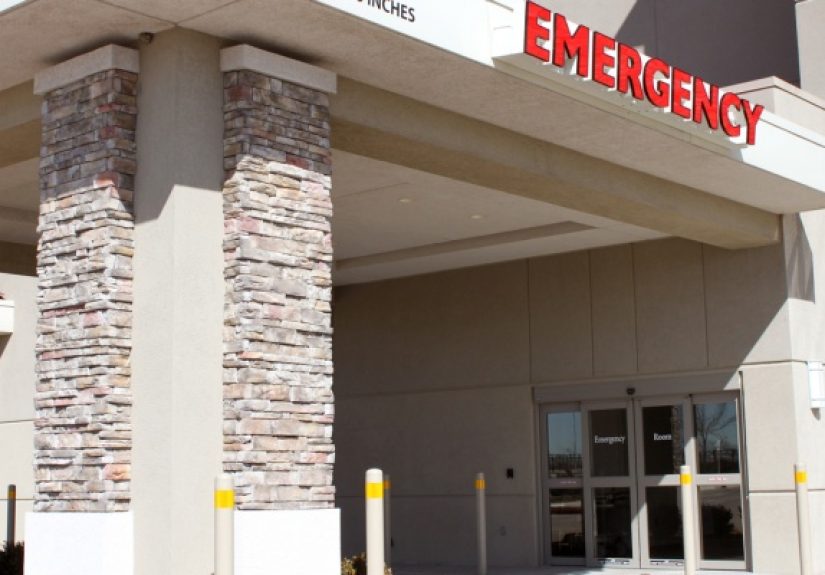
Today, emergency medicine is a high-speed, high-judgment specialty that sits at the intersection of clinical care, public health, crisis logistics, behavioral health, and social safety nets. Emergency departments (EDs) are open 24/7, absorb uncertainty for the whole health system, and care for anyone who walks inno appointment, no perfect paperwork, no “come back next Tuesday.”
In the U.S., emergency care is massive in scale and increasingly complex in mission. It still treats heart attacks, strokes, trauma, and sepsis. But now it also manages opioid crises, mental health emergencies, disaster surges, overcrowding, transfer bottlenecks, telehealth consults, and even near-real-time public health surveillance.
So, what is emergency medicine exactly today? It’s not just a place. It’s a system functionAmerica’s always-on clinical shock absorber.
Emergency medicine in one plain-English definition
Emergency medicine is the specialty of evaluating, stabilizing, and treating undifferentiated acute illness and injury across all ages, then deciding the safest next stepdischarge, observation, admission, transfer, or immediate intervention.
The keyword here is undifferentiated. Patients rarely arrive with tidy labels like “appendicitis, please.” They arrive with chest pain, shortness of breath, confusion, fever, bleeding, or “I just feel wrong.” The emergency team has to identify what is dangerous, what is time-sensitive, and what can safely wait.
How a modern ED actually works
1) Triage: sorting risk, not assigning worth
Triage is the first critical filter. It prioritizes urgency based on acuity and resource needs, not “who got here first.” A stable ankle sprain and a silent heart attack can both look calm at check-in. Triage exists to catch that difference fast.
2) Rapid diagnostic strategy
Emergency clinicians use focused history, exam, bedside ultrasound, labs, ECGs, and imaging to rapidly narrow the dangerous possibilities. In emergency medicine, perfection is less important than safe, timely decision-making under uncertainty.
3) Stabilization before final diagnosis (when needed)
If someone is crashing, treatment starts immediatelyeven before every detail is known. Airway, breathing, circulation, hemorrhage control, and neurologic protection come first. You can’t debate subtleties if oxygen and blood pressure are both trying to leave the chat.
4) Disposition: the most underrated decision
Good emergency care includes making the right “what next” call. That may mean home with clear return precautions, short-stay observation, inpatient admission, transfer for higher-level care, or immediate procedure. Disposition errors can be as dangerous as diagnostic errors.
Who practices emergency medicine today?
Modern emergency care is profoundly team-based:
- Emergency physicians (specialty-trained in acute, unscheduled care)
- Nurses and triage nurses (acuity recognition, treatment, monitoring)
- Advanced practice providers in many ED workflows
- Respiratory therapists, pharmacists, radiology, lab teams
- EMS professionals (prehospital care and handoff)
- Case managers, social workers, and behavioral health teams
- Consultants and transfer centers for specialty escalation
That interdisciplinary model matters because emergencies are rarely “just medical.” They are medical plus social, legal, logistical, and sometimes public-health events happening in real time.
Emergency medicine vs urgent care vs primary care
Primary care
Designed for prevention, chronic disease management, continuity, and long-term relationships.
Urgent care
Great for lower-acuity problems that need same-day attention (minor infections, sprains, simple lacerations, etc.).
Emergency medicine
Built for potentially life-threatening, rapidly evolving, or diagnostically unclear conditions at any hour. It can initiate resuscitation, advanced imaging, procedural intervention, emergency surgery pathways, and critical transfers.
Think of it this way: urgent care manages common problems efficiently. Emergency medicine manages uncertainty when the downside risk is high.
The legal backbone still matters: EMTALA
A defining feature of U.S. emergency care is EMTALA. In practical terms, hospital EDs must provide an appropriate medical screening exam, stabilize emergency medical conditions within their capabilities, and arrange appropriate transfer when needed. This legal framework reinforces emergency medicine’s role as a safety net: care first, billing conversation second.
That legal obligation is one reason EDs continue to function as healthcare’s front door for people with and without insurance, with straightforward issues and with highly complex crises.
What changed in “emergency medicine today”
1) Crowding and boarding are now central clinical problems
EDs are seeing very high volume, and admitted patients may wait in ED beds when inpatient capacity is tight (“boarding”). This is no longer an operations footnoteit affects safety, staffing, transfer acceptance, and patient experience.
In plain language: the ED is increasingly asked to be both emergency gateway and temporary inpatient unit, often at the same time.
2) Behavioral health and substance-use emergencies are core ED work
Mental health crises and substance-use presentations are now a routine part of emergency care. ED teams coordinate crisis assessment, medical stabilization, safety planning, and linkage to ongoing services. In opioid care, ED-initiated treatment pathways (including buprenorphine in appropriate patients) have become a major evidence-based strategy to reduce harm and improve treatment engagement.
3) Telehealth is now an emergency-care tool, not just a convenience app
Telehealth in emergency settings supports specialist input, rural access, and faster decision support. In some systems, tele-consults can improve triage, speed transfer decisions, and reduce unnecessary movement for patients who can be treated locally.
4) Rural emergency care models are evolving
The Rural Emergency Hospital (REH) model reflects a major policy shift: preserving emergency and outpatient access in communities where full inpatient models may be financially unsustainable. That means emergency medicine today includes redesigning accessnot just delivering bedside care.
5) ED data now contributes directly to public-health situational awareness
Emergency departments don’t just treat patients; they also generate near-real-time signals for outbreaks, overdoses, and injury patterns. Syndromic surveillance systems can detect unusual trends quickly, making EDs a frontline node for population-level response.
6) More precision at the bedside, faster
Point-of-care ultrasound and streamlined protocols have made early diagnosis and risk stratification faster. For time-sensitive conditions (like acute stroke), teams are organized around “minutes matter” pathways, not leisurely diagnostic marathons.
Time-sensitive care: where emergency medicine earns its reputation
Emergency medicine is where delay has a price tag measured in neurons, myocardium, kidneys, and lives. Modern EDs are built around speed-to-treatment for conditions such as:
- Acute ischemic stroke
- STEMI and other acute coronary syndromes
- Sepsis and septic shock
- Major trauma and hemorrhage
- Status asthmaticus and respiratory failure
- Obstetric emergencies
Quality efforts focus on reducing avoidable delay: rapid triage, parallel workflows, prehospital notification, early consultant activation, and clear escalation protocols.
Training and accountability in the current era
Emergency medicine training has become increasingly structured around competency, judgment under pressure, communication, and systems-based practice. Residency requirements emphasize broad procedural capability and clinical maturity across age groups and acuity levels.
Board certification pathways and continuous professional standards remain central to maintaining quality in a field where decisions are both high-stakes and high-velocity.
The patient perspective: how to use emergency care wisely
Emergency medicine is for “could this be dangerous?” moments, not just “this is uncomfortable.” If you suspect serious symptomschest pain, severe breathing trouble, stroke signs, major trauma, heavy bleeding, altered mental status, severe allergic reactionuse emergency services immediately.
Practical tips for better ED care experience:
- Bring medication list, allergies, and key history if possible
- Share symptom timeline clearly (“started 2 hours ago, getting worse”)
- Mention recent procedures, new drugs, pregnancy possibility, or substance exposure
- Ask for return precautions before discharge (“What should make me come back right away?”)
- If mental health or substance-use crisis is involved, ask about crisis lines and follow-up pathways before leaving
Where emergency medicine is heading next
Over the next few years, emergency medicine will likely be shaped by five forces:
- Capacity redesign to reduce boarding and improve flow
- Integrated crisis care for mental health and substance use
- Rural access innovation through hybrid models and tele-support
- Data-enabled operations with better real-time acuity forecasting
- Workforce sustainability focused on team models and retention
The biggest shift is conceptual: emergency medicine is no longer just “the place you go when something bad happens.” It is now a central operating system for acute care across communities, hospitals, and public health infrastructure.
Conclusion
So, what is emergency medicine exactly today? It is rapid decision-making under uncertainty, delivered by multidisciplinary teams, supported by law and policy, stretched by capacity pressures, and expanded by technology and public-health integration.
It still saves lives one patient at a time. But it also does something bigger: it keeps the entire healthcare ecosystem from breaking when demand spikes, diagnosis is unclear, and time is short.
In other words, emergency medicine today is both the front door and the pressure valve of modern healthcareand yes, it still runs on coffee, checklists, and calm voices in chaotic rooms.
Experiences from the front line: what emergency medicine feels like today
Experience 1: The chest pain that didn’t read the textbook
A man in his 40s walked in saying, “It’s probably heartburn; I almost didn’t come.” His pain was mild, he was joking, and his vital signs were not dramatic. In many settings, that can look low risk. In emergency medicine, the team treated the complaint as a potential high-risk signal until proven otherwise. ECG first. Labs early. Serial reassessment. Within an hour, subtle changes and biomarkers told a different story: evolving cardiac ischemia. He got expedited cardiology care, not antacids and a handshake. The lesson wasn’t “every heartburn is a heart attack.” The lesson was that emergency medicine today is built to detect dangerous needles in very ordinary-looking haystacks.
Experience 2: The boarded hallway became a temporary ward
On a winter evening, every monitored room was full, and admitted patients were waiting for inpatient beds. This is boarding in real life: patients physically in the ED, medically “belonging” to hospital units upstairs, while new emergencies keep arriving downstairs. The team split workflowsone stream for incoming emergencies, another for ongoing inpatient-level needs in the ED footprint. Nurses recalibrated assignment patterns by acuity; physicians ran mini-rounds across boarded patients while still managing new resuscitations; case managers hustled to remove discharge barriers. Nobody called it elegant. Everyone called it necessary. This is a defining feature of emergency medicine today: not only doing emergency work, but also holding system pressure safely when capacity is tight.
Experience 3: Behavioral health crisis, medical reality, social complexity
A teen arrived in severe emotional distress after days of insomnia, panic, and escalating conflict at home. The encounter was not a simple “psych consult.” The team had to rule out medical contributors, assess immediate safety, de-escalate without force, communicate with family, and connect to crisis resources that actually had availability. The social worker, nurse, physician, and behavioral team were all essential. No single discipline could solve it alone. This reflects modern emergency medicine’s expanded scope: acute stabilization now includes psychological safety, family communication, and continuity planningnot just “clear medically and discharge.”
Experience 4: Rural tele-support turned distance into minutes
In a smaller hospital, a patient with focal neurologic deficits arrived beyond the comfort zone of local resources. A tele-emergency/tele-stroke consult connected bedside clinicians with specialists quickly. Imaging was reviewed, transfer criteria clarified, and treatment timelines tightened. The patient still needed higher-level care, but the decision path was faster and better coordinated. Years ago, this might have depended on phone tag and delayed interpretation. Today, telehealth often shortens uncertainty windows, especially where specialist access is limited. It doesn’t replace bedside teams; it amplifies them.
Experience 5: Overdose care became a doorway, not a reset button
After naloxone reversal, a patient stabilized physically and expected a routine discharge. Instead, the conversation changed: withdrawal treatment options, buprenorphine pathway, harm-reduction counseling, and warm handoff efforts started right there in the ED. Not every case results in immediate treatment acceptance, but the shift is meaningful. Modern emergency medicine increasingly treats overdose not as an isolated event, but as a recurring risk point where evidence-based intervention can begin nownot “sometime later in clinic.”
Across these experiences, one pattern keeps repeating: emergency medicine today is less about dramatic hero moments and more about consistent, high-reliability decisions under imperfect conditions. The work blends diagnostics, ethics, operations, communication, and systems thinking. Sometimes it is a sprint. Often it is controlled chaos. Always it is about reducing harm when stakes are high and certainty is low.
And if you ever wonder whether the specialty has changed, spend one hour observing a modern ED board: trauma activation in one bay, stroke pathway in another, psychiatric crisis in triage, tele-consult on a tablet, inpatient boarding down the hall, and a public-health signal quietly updating in the background. That is emergency medicine todaysimultaneously individual and systemic, immediate and strategic, exhausted and indispensable.