Table of Contents >> Show >> Hide
- Why This Viral Thread Landed So Hard
- The First Shock: America Is Built to Be Huge
- The Second Shock: Everything Comes With a Social Script
- The Third Shock: America Turns Convenience Into a Lifestyle
- The Fourth Shock: America Is Full of Contradictions
- What Europeans Often Notice Better Than Americans Do
- More Experiences Europeans Keep Bringing Home From America
- Conclusion
There are two Americas. There’s the one exported through movies, sitcoms, TikToks, and election coverage. Then there’s the one travelers actually meet in person, where the soda is the size of a goldfish tank, the air-conditioning feels personally offended by human warmth, and a “quick walk to the store” can turn into a survival documentary with six lanes of traffic and no sidewalk in sight.
That disconnect is exactly why a viral thread about Europeans visiting the United States hit such a nerve. The stories were funny, confused, mildly horrified, and often weirdly affectionate. People weren’t just mocking America. They were reacting to a country that feels globally familiar but becomes delightfully unhinged up close. The same place that gives you free ice water and cheerful small talk will also ask you to calculate tax and tip like you’re taking a surprise math quiz at dinner.
What makes these “WTF” moments so entertaining is that many of them are not rare one-offs. They are recurring features of everyday American life: car dependency, gigantic portions, enthusiastic service, extreme convenience, political theater, patriotic symbolism, and an economy that often prioritizes speed, scale, and choice over elegance. To many Europeans, America can feel like everything is turned up two settings too high. Sometimes that’s exciting. Sometimes it’s exhausting. Usually, it’s both.
Why This Viral Thread Landed So Hard
The thread worked because it captured something travelers know well: culture shock is rarely about the giant landmarks. Nobody flies across the Atlantic and gasps, “My word, the Grand Canyon is large.” The real shock happens in pharmacies, chain restaurants, suburban intersections, hotel breakfast rooms, and public restrooms. In other words, the places where a country stops performing for tourists and starts behaving like itself.
That’s why so many of the comments clustered around ordinary American rituals. Europeans were baffled by prescription-drug commercials that look cheerful while listing terrifying side effects, bathroom stall doors with privacy gaps that inspire instant existential crisis, and giant stores where you can buy breakfast cereal, patio furniture, and apparently half your future in one trip. A lot of travelers also noticed how American friendliness can feel both sincere and startling. Strangers chat in elevators. Servers introduce themselves like they’re guest-starring in your meal. Somebody thanks a uniformed person for service. Somebody else calls you “hon” before you’ve even ordered fries.
That combination of warmth and excess is a huge part of the American experience. The country often feels generous, open, and eager to please. It also feels like it was designed by a committee that kept shouting, “Make it bigger, colder, faster, and with three more options.”
The First Shock: America Is Built to Be Huge
Roads, Cars, and the Art of Not Walking Anywhere
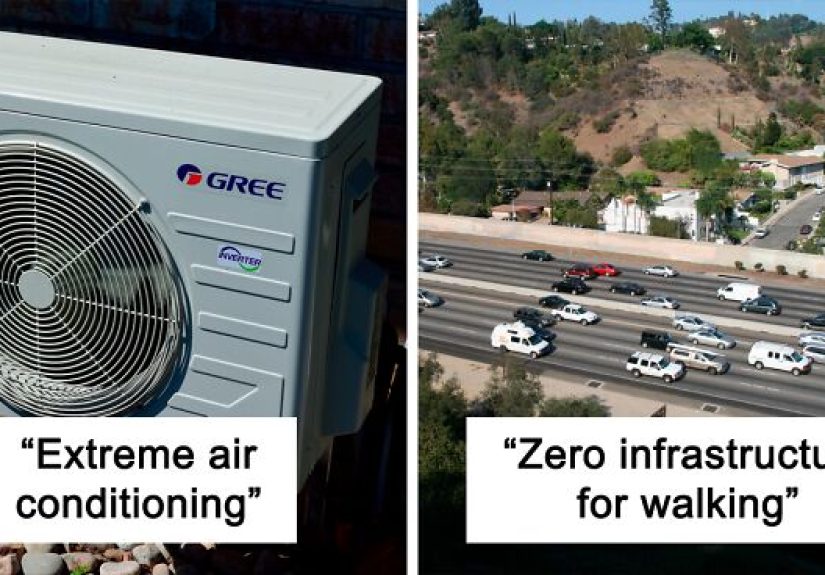
One of the loudest themes in the thread was simple: America is enormous, and it behaves like it knows it. For many European visitors, the first truly surreal moment isn’t Times Square or Las Vegas. It’s realizing that walking to a nearby store may be technically possible but spiritually discouraged. The roads are broad, the intersections are long, the parking lots are endless, and the infrastructure often assumes you have a car, always had a car, and probably have cup holders too.
To travelers from more walkable cities, this can feel absurd. A shop may be visible from your hotel window yet still require a complicated route involving highway edges, aggressive sun, and the vague sense that the built environment is asking, “Why are you outside without a vehicle?” In much of America, distance is not measured in meters. It is measured in whether you need to drive there.
Portion Sizes, Cup Sizes, and Other Feats of Engineering
The second giant shock is, well, giant everything. Europeans in the thread kept coming back to the scale of meals, roads, drinks, grocery packs, vehicles, and homes. A medium soft drink can look like sporting equipment. Free refills make the first giant drink feel less like a beverage and more like a warning shot. Restaurant entrées arrive as if the chef has mistaken one diner for a family reunion.
This is where America’s logic becomes clear. The country doesn’t just sell food; it sells abundance. A meal is not merely dinner. It is value, convenience, leftovers, spectacle, and a tiny challenge to your personal dignity. That same logic shows up in warehouse stores, hotel breakfasts, giant pickup trucks, and suburban houses with enough square footage to make a European apartment blush.
To Americans, this often reads as generosity. To Europeans, it can look like the nation lost a bet with moderation and decided to never mention it again.
The Second Shock: Everything Comes With a Social Script
Service Smiles, Small Talk, and the Tip Equation
American service culture is one of the most fascinating culture-shock generators in the thread. Many Europeans found restaurant staff unusually cheerful, chatty, attentive, and professionally upbeat. Some loved it. Some found it theatrical. A few seemed unsure whether the server genuinely cared about their day or was simply performing customer service at Broadway level.
The answer, of course, is often both. American hospitality places a premium on friendliness, speed, and responsiveness. But the real twist comes when the check arrives. Suddenly, dinner becomes an etiquette puzzle. The price on the menu wasn’t quite the final price. Tax appears. Then tip appears. Then your brain appears to leave the building.
For travelers used to service being included or tips being modest and optional, the American system can feel less like custom and more like a pop quiz with financial consequences. That confusion has only gotten stronger as tip prompts now appear in coffee shops, takeout counters, and tablet checkout screens. Even Americans argue about it constantly, which is honestly one of the most American details of all.
Friendliness That Feels Suspicious Until It Doesn’t
Another recurring “WTF” moment was how friendly many Americans seemed. Strangers start conversations. Cashiers crack jokes. Neighbors wave. Random people ask where you’re from and then tell you about a cousin who once visited Prague for four days and still talks about the dumplings.
For some Europeans, that level of openness reads as fake at first. Then, after a few days, it often starts to read as normal. Not universal, not constant, but normal. America can be deeply transactional in some ways, yet unusually casual in others. People may not know your name, but they will still tell you to have a blessed day while handing you a gallon of orange juice.
The Third Shock: America Turns Convenience Into a Lifestyle
Air-Conditioning, Ice Machines, and Free Water for the Republic
Many travelers in the thread sounded personally betrayed by indoor American temperatures. Offices, stores, hotels, and restaurants can be chilled to the point where a summer outfit becomes an optimistic mistake. In Europe, air-conditioning still carries some sense of necessity or luxury depending on the country. In America, it often feels closer to a constitutional right.
Then come the supporting characters: giant cups filled with ice, hotel ice machines on every floor, free tap water at restaurants, and those bottomless refills that make restraint seem unpatriotic. This is convenience culture in its purest form. America likes comfort to be immediate, obvious, and impossible to miss.
One Stop, Many Mysteries
Big-box retail also features heavily in European travel stories because American stores can feel like miniature city-states. You pop in for toothpaste and emerge an hour later emotionally altered, carrying cereal, a beach chair, painkillers, and a family-size snack tub you never meant to buy. The scale is impressive, but the deeper surprise is the philosophy underneath it: why go to three places when one giant fluorescent kingdom can do everything?
That convenience often thrills visitors as much as it confuses them. America’s talent is making the absurd feel efficient. No one asked for twelve kinds of pancake syrup at 11 p.m., but now that they’re here, it would seem rude to refuse.
The Fourth Shock: America Is Full of Contradictions
Freedom, Rules, and a Few Bizarre Loopholes
Some of the strongest reactions in the thread were not about size but about contradiction. Visitors were stunned by how a country so associated with freedom could also have so many oddly specific rules, social expectations, and moral fault lines. You can drive long distances, buy giant drinks, and encounter huge patriotic displays, yet the legal drinking age remains 21. Alcohol can feel both widely available and socially policed depending on the setting. A lunchtime drink may seem harmless to a Brit and mildly suspicious to someone else.
Healthcare also came up repeatedly, because it is one of the fastest ways for visitors to realize that America’s image abroad and its daily systems are not the same thing. Add in prescription-drug ads, wildly negative political commercials, and stories about seeing older people still working retail jobs, and the broader picture emerges: America can feel dazzling, modern, and wealthy on the surface while also exposing a harsher economic edge up close.
That duality is probably why the thread resonated beyond simple mockery. Many comments carried a mix of delight and concern. People were not just saying, “This is weird.” They were saying, “This is weird, memorable, sometimes wonderful, and occasionally kind of alarming.”
What Europeans Often Notice Better Than Americans Do
Visitors are excellent at spotting what locals edit out. Americans may stop noticing the flag outside the supermarket, the TV ad for medication, the checkout total jumping after tax, or the fact that every errand seems to require a vehicle. Europeans notice because these things are not invisible to them yet. They haven’t developed the local habit of mentally smoothing over the strange parts.
And to be fair, some of the thread’s most memorable moments were less criticism than amazement. Many travelers loved the friendliness, the refill culture, the openness, the confidence, and the sheer drama of everyday life. America may confuse people, but it rarely bores them. Even when it is ridiculous, it is usually vividly ridiculous.
More Experiences Europeans Keep Bringing Home From America
There’s also a second layer to these stories, the part people remember after the obvious shocks wear off. Europeans often talk about how intensely American everyday life seems curated around ease, visibility, and personal choice. There are options for everything, and then there are extra options in case your original options felt underappreciated. Cereal aisles look like they were designed by people who believe breakfast should require strategic planning. Pharmacies can feel like mini department stores. Diners refill your coffee before you’ve decided whether you wanted more. The country often behaves like inconvenience is a personal insult that must be eliminated immediately.
Another memorable theme is how public American identity can be. In Europe, many forms of belonging stay relatively understated. In the United States, identity is often announced. There are flags on porches, college logos on sweatshirts, bumper stickers declaring political loyalties, church signs offering life advice, and neighborhood lawns doubling as campaign billboards every election season. To a visitor, this can feel like walking through a nation where everyone has a microphone and no one is shy about using it.
Then there’s the emotional pace of America. Europeans often describe the country as unusually expressive in ordinary situations. People praise things enthusiastically. Staff members ask how everything tastes as if they are waiting for Michelin-level feedback on mozzarella sticks. Sports coverage sounds apocalyptic. Local news can make weather feel like a boss battle. Even minor convenience gets marketed with cinematic intensity. If Europe often specializes in understatement, America tends to stroll in wearing jazz hands.
Travelers also remember the strange coexistence of polish and roughness. One block can look immaculate, modern, and expensive, while the next reveals homelessness, visible poverty, or obvious social strain. That contrast sticks with people. So does the way labor is worn more openly. Visitors notice older adults working service jobs, notice how hard many staff members hustle, and notice how much the economy seems to rely on constant motion. America can feel rich and precarious in the same frame, and that tension leaves an impression deeper than any novelty-sized soda ever could.
And yes, the bathrooms deserve one final mention, because no culture-shock recap is complete without them. European visitors repeatedly bring up the stall gaps, the amount of water in toilet bowls, the industrial-strength flushes, and the overall sense that American restrooms are both overengineered and underprivate. It is one of those details that sounds trivial until you are actually there, making accidental eye contact through a door gap and reconsidering your travel choices.
In the end, the viral thread worked because it showed America the way outsiders often experience it: not as a single stereotype, but as a chain of tiny, surreal encounters. A giant drink here. A medication commercial there. A stranger chatting in an elevator. A seven-lane road to buy milk. A hotel corridor with an ice machine like it’s the most normal thing in the world. Each moment alone is just odd. Together, they form a portrait of a country that is expansive, contradictory, welcoming, excessive, and permanently convinced that more is more. Europeans leave with stories because America practically hands them out at the door, usually with free refills.
Conclusion
The funniest part of the viral thread is not that Europeans found America weird. It’s that they found it weird in such consistent ways. The same patterns kept appearing because the same national habits keep announcing themselves: bigger roads, bigger meals, bigger stores, louder politics, colder rooms, friendlier strangers, and more invisible rules hidden inside everyday transactions. America feels familiar from far away, but in person it turns into a fascinating remix of hospitality, spectacle, contradiction, and convenience.
That is why these “WTF” moments travel so well online. They are specific enough to be funny, but recognizable enough to feel true. And maybe that’s the best summary of the United States from a European traveler’s perspective: bewildering, entertaining, occasionally stressful, frequently generous, and never, ever committed to doing anything halfway.