Table of Contents >> Show >> Hide
- First: What Makes MS Fatigue So Different?
- Safety & Setup: How to Exercise Without Triggering a Crash
- The Best Exercises for MS Fatigue (and Why They Work)
- 1) Low-impact cardio: “More engine, less effort”
- 2) Strength training: “Less work to do the same work”
- 3) Flexibility & mobility: “Reduce the drag”
- 4) Balance & coordination: “Stop spending energy on staying upright”
- 5) Mind-body training (yoga, Pilates, tai chi): “Move, breathe, recover”
- 6) Aquatic exercise: “Cooling + support = fatigue’s worst enemy”
- The Secret Weapon: Interval Pacing (So You Don’t “Borrow” Tomorrow’s Energy)
- A 4-Week Starter Plan for MS Fatigue (Adjustable for Real Life)
- When You’re Too Tired to Work Out (But You Still Want to Do Something)
- Practical Tricks That Make Exercise Easier With MS Fatigue
- Work With a Pro (So You Don’t Have to Guess)
- Experiences: What “Actually Works” in Real Life (500+ Words)
- Experience #1: The “I Thought Exercise Would Make Me More Tired” Phase
- Experience #2: Cooling Changes Everything (Yes, Even a Fan)
- Experience #3: Strength Training Makes Daily Life “Cheaper”
- Experience #4: “Minimum Viable Movement” Beats All-or-Nothing
- Experience #5: The Best Program Is the One You’ll Repeat
- Conclusion
MS fatigue has a special talent: it can show up uninvited, eat your plans, and then leave you holding the bag (and the laundry basket).
The twist is that the thing that feels like it should make fatigue worseexerciseoften helps many people with multiple sclerosis feel more
energetic, steadier, and more “in their body” over time when it’s done the right way.
This guide breaks down the best exercise types to target MS fatigue, how to dose them without crashing,
and what to do on “battery at 12%” days. You’ll also get beginner-friendly examples, smart modifications, and a realistic 4-week starter plan.
(Spoiler: no one is making you run a 5K. Unless you want to. In which case… we’ll still start with walking.)
First: What Makes MS Fatigue So Different?
MS fatigue isn’t just “I stayed up too late” tired. It can be sudden, disproportionate to your activity,
and worsened by heat, stress, infections, poor sleep, pain, or depression. Deconditioning can add another layer:
when muscles and cardiovascular fitness dip, everyday tasks cost more energyso fatigue feeds on itself.
The goal of exercise is to reverse that spiral without triggering symptom flare-ups.
Two helpful concepts
- “Effort budget” thinking: You’re not lazyyou’re budgeting. Exercise can increase your total daily “energy income”
over time, but you’ll still need a smart spending plan. - “Dose beats drama”: Small, repeatable sessions usually outperform heroic workouts followed by three days on the couch.
Safety & Setup: How to Exercise Without Triggering a Crash
Before changing your routine, check in with your clinician, especially if you’ve had recent relapses, falls,
new symptoms, heart/lung issues, or you’re starting after a long break. A physical therapist (PT) familiar with MS
can tailor exercises for weakness, balance problems, spasticity, and fatigue.
Use the “Talk Test” + a simple effort scale
- Easy: You can talk in full sentences while moving (warm-up, recovery, many fatigue days).
- Moderate: You can talk, but you’d rather not give a TED Talk (often the sweet spot).
- Hard: You can say a few words only (save for short intervals if approved and tolerated).
Heat is not your personal trainer
Many people with MS notice symptoms worsen with heat or exertion-related temperature increases. That doesn’t mean you can’t exercise
it means you want cooling strategies: fans, breathable clothing, cool drinks, shaded routes, cooler pools, and pacing. If symptoms spike,
they often ease as you cool down and rest.
Quick stop signs
- Chest pain, fainting, or severe shortness of breath (stop and seek urgent care).
- New neurological symptoms that don’t improve with rest/cooling.
- Fatigue that takes you more than 24–48 hours to recover from after a session (your dose is too high).
The Best Exercises for MS Fatigue (and Why They Work)
1) Low-impact cardio: “More engine, less effort”
Aerobic exercise helps your heart and lungs work more efficiently, which can make daily activities cost less energy.
Think of it as upgrading your body’s fuel economy.
Great options: walking, stationary cycling, elliptical (if balance allows), water aerobics, swimming, rowing machine (if safe), or dancing in your living room.
Beginner dosing examples
- Level 1 (very low energy): 5 minutes easy + 2 minutes rest, repeated 2–3 times.
- Level 2: 10–15 minutes continuous at an easy-to-moderate pace.
- Level 3: 20–30 minutes moderate, 2–3 days/week, building toward weekly guidelines as tolerated.
Modifications for mobility limitations
- Seated cardio: arm bike/ergometer, seated marching, seated “punch & reach,” or resistance-band rowing.
- Support helps: treadmill handrails, walking poles, a rollator, or a recumbent bike can reduce energy cost and improve safety.
2) Strength training: “Less work to do the same work”
Weakness makes everything harderstanding up, stairs, carrying groceries, even posture. Strength training improves force production so the same task
takes less effort, which can translate into less fatigue.
Focus areas: legs (sit-to-stand), hips (stability), core (posture), back (walking efficiency), and arms (daily tasks).
Simple starter circuit (2 days/week)
- Sit-to-stand from a chair (or mini-squats holding a counter): 1–3 sets of 6–10 reps
- Wall push-ups (or countertop push-ups): 1–3 sets of 6–12 reps
- Resistance-band row (seated or standing): 1–3 sets of 8–12 reps
- Step-ups (low step) or seated knee extensions: 1–3 sets of 6–10 reps/side
- Glute bridge (or glute squeeze if bridges are tough): 1–3 sets of 6–10 reps
Rule of thumb: you should finish a set feeling like you could do 2–3 more reps with good form.
If your form turns into interpretive dance, lighten the load or reduce reps.
3) Flexibility & mobility: “Reduce the drag”
Tight muscles and spasticity can increase the effort of movement. Gentle stretching and range-of-motion work may help you move with less resistance,
and can be especially useful if you deal with stiffness.
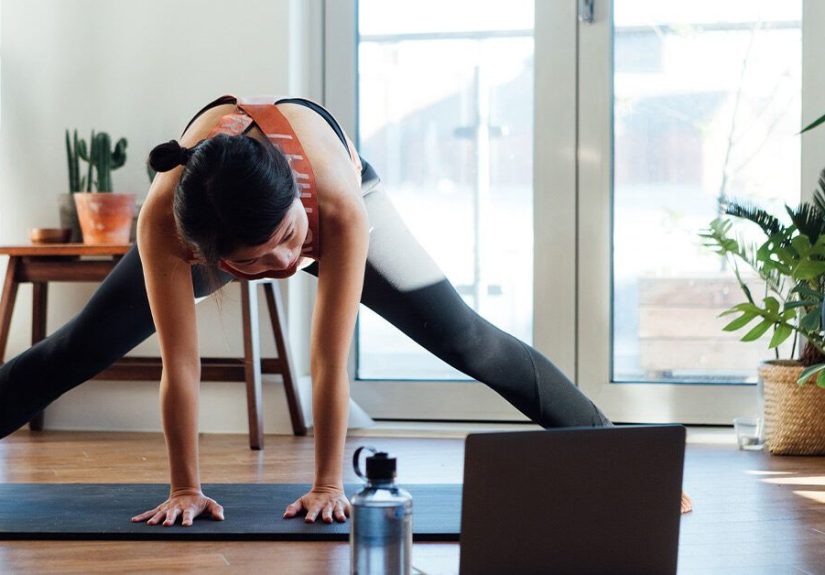
10–12 minute daily mobility snack
- Calf stretch (wall or towel): 30 seconds/side
- Hamstring stretch (seated, towel behind thigh): 30 seconds/side
- Hip flexor stretch (supported lunge or standing): 20–30 seconds/side
- Thoracic opener (open book or gentle rotations): 6 reps/side
- Ankle circles + shoulder rolls: 30 seconds each
Tip: Many people do best stretching after a warm shower or after a short warm-up, when tissues are less stubborn.
4) Balance & coordination: “Stop spending energy on staying upright”
If balance is shaky, your brain and muscles spend more energy keeping you stable. Balance training can improve confidence and reduce the “I’m tense all day”
drain.
Safe, supported balance drills (3–5 minutes)
- Weight shifts side-to-side holding a counter: 10–20 shifts
- Heel-to-toe stance (tandem) with support: 10–30 seconds
- Single-leg stand holding support: 5–15 seconds/side
- Marching in place with support: 20–40 steps
Safety note: Always do balance work near a stable surface. Falling is not a “core workout.”
5) Mind-body training (yoga, Pilates, tai chi): “Move, breathe, recover”
Mind-body exercises blend gentle strength, mobility, and nervous-system downshifting. For many people with MS,
they’re a fatigue-friendly way to train without overheating or overloading.
Try this 8-minute “reset” flow:
- Seated breathing (box breathing or slow nasal breaths): 1 minute
- Seated cat-cow: 6–8 cycles
- Chair-supported forward fold (gentle): 20–30 seconds
- Supported standing side bend: 20 seconds/side
- Chair pose “hover” (mini squat hold) or wall sit: 10–20 seconds
- Legs-up-the-wall (or reclined rest) with slow breathing: 2 minutes
6) Aquatic exercise: “Cooling + support = fatigue’s worst enemy”
Water workouts can be ideal if heat sensitivity, joint pain, spasticity, or balance issues make land exercise tough.
The water supports your body and can help you stay cool while still training strength and endurance.
Beginner pool routine (15–20 minutes)
- Water walking: 5 minutes
- Side steps + gentle knee lifts: 3 minutes
- Wall-supported leg kicks: 2 minutes
- Arm sweeps/push-pulls: 3 minutes
- Easy float or slow walking cool-down: 3–5 minutes
The Secret Weapon: Interval Pacing (So You Don’t “Borrow” Tomorrow’s Energy)
Intervals aren’t just for athletes. They’re a fatigue-management strategy: short bouts of effort with planned recovery.
This approach can reduce overheating and keep your nervous system from hitting the panic button.
The 1:1 starter interval
Example: 1 minute easy-moderate movement + 1 minute slow recovery, repeated 8–12 rounds.
- Cardio option: stationary bike, walking loop, or water walking
- Strength option: 30–45 seconds work + 30–45 seconds rest (rotate 3–4 exercises)
The “24-hour check”
After a new session, check how you feel later that day and the next morning. If you’re significantly more wiped out,
more unsteady, or you can’t recover within 24–48 hours, scale the dose down (less time, less intensity, more cooling, more rest).
A 4-Week Starter Plan for MS Fatigue (Adjustable for Real Life)
This plan assumes you’re cleared for light-to-moderate exercise. If you’re starting from zero, that’s fineWeek 1 is intentionally gentle.
Choose a cool time of day. Keep water nearby. Give yourself permission to modify.
Week 1: Build the habit (not a highlight reel)
- Day A: 10–15 min easy cardio (intervals okay) + 5 min stretching
- Day B: Strength circuit (1 set each) + 5 min breathing/mobility
- Day C: 10 min cardio + 3–5 min balance
- Optional: 1 short yoga/tai chi session (8–15 min)
Week 2: Add a little time
- Increase cardio by 2–5 minutes per session (or add 2 interval rounds).
- Strength: move to 2 sets for 2–3 exercises (keep the rest at 1 set).
Week 3: Add a little consistency
- Cardio 3 days/week (15–25 minutes total including intervals).
- Strength 2 days/week (2 sets per exercise, 6–12 reps).
- Daily mobility “snack” (5–10 minutes) most days.
Week 4: Personalize your “fatigue fighters”
- Pick 1–2 modalities you enjoy (pool, bike, yoga, walking, bands).
- Increase only one variable at a time (time or intensity or frequency).
- Consider aiming toward broader weekly activity recommendations over time, if tolerated.
When You’re Too Tired to Work Out (But You Still Want to Do Something)
On rough days, the goal is circulation, joint motion, and nervous-system calmnot “fitness.” Think of it as maintaining your baseline so you bounce back faster.
The 6-minute “minimum viable movement”
- 1 minute: slow breathing, shoulders relaxed
- 1 minute: seated marching or ankle pumps
- 1 minute: gentle seated reach + row (band optional)
- 1 minute: sit-to-stand practice (even 2–4 reps counts) or assisted mini-squats
- 1 minute: supported standing weight shifts
- 1 minute: calf/hamstring stretch
If you do this and feel better, greatyou can add a few minutes. If you do this and your body says “thanks, that’s enough,”
you still won the day.
Practical Tricks That Make Exercise Easier With MS Fatigue
Make the environment do the work
- Cool it down: fan, AC, cooling towel/vest, shaded routes, or pool workouts.
- Reduce friction: set out clothes the night before; keep bands by the couch; use a recumbent bike for stability.
- Short sessions count: three 10-minute bouts can be as useful as one 30-minute bout for building capacity.
Track only what helps
If tracking makes you obsessive, skip it. If it helps, keep it simple: (1) minutes moved, (2) effort level, (3) next-day recovery.
Patterns will show uplike “midday heat is my villain” or “strength days make stairs easier.”
Work With a Pro (So You Don’t Have to Guess)
A PT can help you choose safe exercises for weakness, foot drop, spasticity, balance concerns, and fatigue.
Occupational therapy can help with energy conservation and task modification, so your exercise gains actually translate into daily life.
Experiences: What “Actually Works” in Real Life (500+ Words)
The internet loves a dramatic transformation story. MS fatigue tends to prefer quieter victories:
“I cooked dinner and didn’t need a nap on the kitchen floor.” Below are composite experiencespatterns commonly reported by people living with MS
to show how exercise becomes doable (and helpful) when it’s treated like a skill, not a punishment.
Experience #1: The “I Thought Exercise Would Make Me More Tired” Phase
Many people start out suspicious: fatigue is already the main problem, so why add effort? A common turning point is realizing the difference between
good tired (muscles worked, mind calmer, sleep improves) and bad tired (overheated, shaky, wiped out for two days).
People often report that when they swapped one long workout for short intervalslike 60 seconds of walking followed by 60 seconds of easy strolling
they could move without triggering the dreaded post-exertion crash. The first win is usually not “more energy,” but “more predictability.”
Knowing you can exercise and still function later is a huge confidence boost.
Experience #2: Cooling Changes Everything (Yes, Even a Fan)
People with heat sensitivity often describe an “invisible wall” that shows up during activity. The wall is real, but it isn’t always permanent.
A simple fan aimed at a stationary bike, a cooling towel around the neck, or choosing mornings instead of afternoons can make exercise feel
30% easier overnight. Aquatic therapy stories are especially consistent: the pool supports the body, reduces fear of falling,
and keeps temperature manageableso people can work harder without feeling punished. One repeated theme: when the environment is cooler,
motivation magically increases. (It’s not magic. It’s physiology. But it feels like magic.)
Experience #3: Strength Training Makes Daily Life “Cheaper”
A lot of people report that strength workespecially legs, hips, and coredoesn’t just improve gym numbers. It reduces the energy cost of normal life.
Standing up from a chair becomes smoother. Stairs stop feeling like a personal betrayal. Carrying groceries stops requiring a strategic nap schedule.
The trick that shows up again and again is conservative progression: starting with bodyweight sit-to-stands, wall push-ups, and resistance bands,
and increasing only when next-day fatigue stays stable. People also mention that splitting strength into mini sessions helps:
one set in the morning, one set later, instead of trying to do everything at once.
Experience #4: “Minimum Viable Movement” Beats All-or-Nothing
Many people with MS fatigue describe an all-or-nothing mindset: either they do a “real workout” or they do nothing. Real life usually wins that battle.
A common breakthrough is adopting a tiny default routine5 to 8 minutesso movement happens even on tough days.
Once the routine becomes automatic, people report feeling less stiff, sleeping slightly better, and having an easier time restarting after a bad week.
That tiny routine also reduces guilt, which matters more than it sounds: stress and self-criticism can intensify fatigue.
Experience #5: The Best Program Is the One You’ll Repeat
People often say the most effective exercise is the one that fits their identity and schedule. Some love water workouts.
Others prefer chair yoga because it calms spasticity and doesn’t spike heat. Some like cycling because balance feels safer.
The shared theme is permission to customize: shorter sessions, assistive devices, more rest, and flexible plans that adapt to symptom fluctuations.
The “win” isn’t perfectionit’s building a relationship with movement that supports energy instead of stealing it.
Conclusion
MS fatigue is complex, but exercise can be a powerful tool when it’s paced, cooled, and personalized.
Start small, use intervals, prioritize strength and low-impact cardio, and treat mobility and balance as daily maintenance.
If you track anything, track recoverybecause the right program should help you feel more capable, not constantly drained.