Table of Contents >> Show >> Hide
- Why the conversation matters (and why a list is never “just a list”)
- The main lanes to influence in the GOP
- Notable profiles: Black Republican women who shaped modern American politics
- Condoleezza Rice: National security heavyweight and barrier-breaker
- Mia Love: A historic congressional “first” with a local-government foundation
- Winsome Earle-Sears: Statewide leadership and a new model of GOP visibility
- Kay Coles James: The “how government works” expertinside agencies and institutions
- Jennifer Carroll: Florida’s former lieutenant governor and a statewide milestone
- Janice Rogers Brown: A jurist whose influence lives in legal reasoning
- Lynne Patton: Federal administration, public visibility, and the politics of appointments
- Star Parker: Advocacy, policy messaging, and movement-building
- Kimberly Klacik: Campaign politics, national attention, and the reality of tough districts
- Diamond and Silk: A social-media era version of Republican fame
- Stacey Dash: Pop culture crossover into Republican politics
- What these stories reveal about Black women in the GOP
- Conclusion and real-world experiences
If you’ve ever heard someone claim, “There aren’t any Black women in the Republican Party,” you’ve discovered one of America’s favorite hobbies:
saying confident things that are very easy to fact-check. Black women have built careers in the GOP as elected officials, Cabinet leaders, judges,
strategists, activists, and high-profile media figures. Some are policy wonks. Some are culture warriors. Some are bothbecause politics is nothing
if not a choose-your-own-adventure book with a microphone.
This article isn’t here to tell you what to think. It’s here to show you who these women are, what they’ve done, and why
their stories matterespecially in a political landscape where “representation” is often treated like a checkbox instead of a complicated human reality.
Why the conversation matters (and why a list is never “just a list”)
When people talk about “famous Black Republican women,” they’re usually trying to answer bigger questions: Who has power in the party? Who gets
promoted as a symbol? Who gets criticized as a traitor? Who’s allowed to be complicated?
The truth is that Black women in Republican politics often face a double spotlight: one beam from the outside (“Explain your party to me!”) and another
from the inside (“Explain your identity to me!”). That pressure can shape everything from messaging to policy priorities to how they’re treated online.
And because fame is its own weird ecosystem, some women become “famous” through elections or appointments, while others become household names through
activism, punditry, or viral moments.
The main lanes to influence in the GOP
Not every political career looks like “run for Congress, win, repeat.” Black Republican women have often built influence through several pathways:
- Elected office: city councils, mayoral roles, state legislatures, statewide offices, and Congress.
- Appointments: senior roles in federal or state government where policy and administration happen.
- Law and the judiciary: shaping the legal landscape through high-level courts and legal scholarship.
- Think tanks and advocacy: building agendas, training leaders, and influencing policy debates.
- Media and movement politics: translating ideology into messages that travel fast (sometimes a little too fast).
Notable profiles: Black Republican women who shaped modern American politics
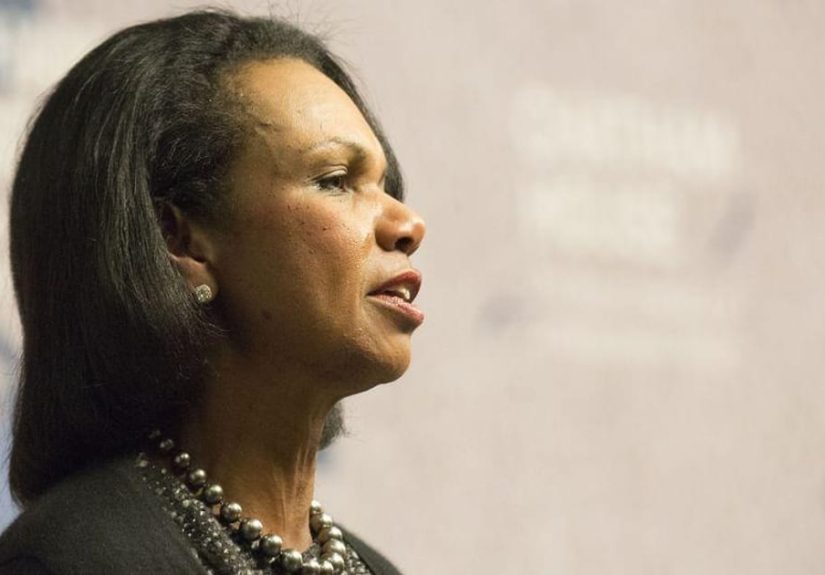
Condoleezza Rice: National security heavyweight and barrier-breaker
Condoleezza Rice is one of the most recognizable Black Republican women of the modern era, in part because her influence landed at the very top of U.S.
foreign policy. She served in senior national security roles in the George W. Bush administration and later became the first African American woman to
serve as U.S. Secretary of State. Her career is often discussed through the lens of global diplomacy, national security strategy, and the difficult reality
that public service at the Cabinet level comes with nonstop scrutinyand zero “quiet days at the office.”
Rice’s prominence also matters symbolically: for many Americans, she was a visible reminder that “Republican leadership” has never been a single demographic
story. Whether people agreed with her politics or not, her résumé was undeniable, and her rise was historically significant.
Mia Love: A historic congressional “first” with a local-government foundation
Mia Love made history as the first Black Republican woman elected to Congress, representing Utah’s 4th congressional district. Before Washington, she built
her political career closer to homeserving on the Saratoga Springs City Council and then becoming mayor. That local-to-federal arc matters, because it’s
often how real political skill gets built: zoning meetings, budget fights, and listening to constituents who want fewer speeches and more potholes fixed.
Love’s story also complicated neat political stereotypes. She was the daughter of Haitian immigrants, a figure connected to both party politics and broader
national conversations about identity, opportunity, and representation. After leaving Congress, she moved into political commentary and public-facing work,
staying active in national debate even outside elected office.
Winsome Earle-Sears: Statewide leadership and a new model of GOP visibility
Winsome Earle-Sears became lieutenant governor of Virginia, giving the GOP a high-profile Black woman in statewide executive leadership. Her biography is
frequently noted for its “many chapters” quality: immigrant background, military service, and a political rise in a state where statewide elections are
fiercely competitive. In an era when visibility can be as important as formal power, statewide roles like hers often function as a platformpart governing
job, part megaphone, part political audition.
Her career also illustrates a core reality about American politics: the state level is not “minor leagues.” It’s where policy is tested, coalitions are built,
and national reputations are made (or unmade) on real-world governance.
Kay Coles James: The “how government works” expertinside agencies and institutions
Kay Coles James is a major figure for understanding how Republican influence is built through administration and institutions, not just elections. She served
as director of the U.S. Office of Personnel Management (essentially a central hub for federal workforce policy) and later led a major conservative think tank
as president of The Heritage Foundation. She has also held senior roles in Virginia state government.
James’s career is a reminder that a lot of political power is quiet power: staffing, governance, policy design, leadership pipelines, and the unglamorous work
of making big systems actually function. If politics were a movie, these roles would be the editing roomwhere the final cut is decided, even if the audience
never sees the process.
Jennifer Carroll: Florida’s former lieutenant governor and a statewide milestone
Jennifer Carroll served as Florida’s lieutenant governor, adding to the small but meaningful list of Black Republican women who have won statewide executive
office. Her background includes military service and state legislative experience, reflecting a pattern seen in several prominent Black Republican women:
careers that blend public service, institutional experience, and coalition politics.
Statewide leadership can be uniquely challenging because it requires assembling broad coalitions across cities, suburbs, and rural areasoften with voters
who disagree loudly, frequently, and sometimes on purpose. (Democracy is… spirited.)
Janice Rogers Brown: A jurist whose influence lives in legal reasoning
Politics doesn’t end at the ballot box; it continues in court opinions, administrative law, and constitutional interpretation. Janice Rogers Brown served on
the U.S. Court of Appeals for the D.C. Circuitone of the most influential federal appellate courts in the country. She also served on the California Supreme
Court before her federal appointment.
For many Americans, judges are “background characters.” In reality, they’re often among the most consequential decision-makers in public life. Brown’s career
highlights how Republican influence can be expressed through legal philosophy and institutional authority, not only campaign platforms.
Lynne Patton: Federal administration, public visibility, and the politics of appointments
Lynne Patton gained national attention through federal service during the Trump era, including leadership in the U.S. Department of Housing and Urban Development
(HUD) as a regional administrator responsible for programs in New York and New Jersey. Roles like this sit at the intersection of policy, public messaging,
and administrative powerespecially in housing, where federal decisions can shape everyday life in very direct ways.
Her career underscores how appointments can elevate political figures quicklyand how those figures often face intense attention, because administrative roles
are where campaign promises meet reality (and reality is not always impressed).
Star Parker: Advocacy, policy messaging, and movement-building
Star Parker is best known as a conservative activist and policy advocate who founded the Center for Urban Renewal and Education (CURE). She has also run for
office as a Republican. Parker’s influence is closely tied to ideas and messagingbuilding an argument about poverty, opportunity, and policy from a
conservative perspective and bringing that argument into public debate.
Whether someone agrees with her worldview or not, her career shows how “political leadership” can come from outside formal office. Some people write bills.
Others write arguments that shape which bills become possible.
Kimberly Klacik: Campaign politics, national attention, and the reality of tough districts
Kimberly Klacik became nationally visible through her Republican campaigns in Maryland. Her runs spotlight a practical truth about American elections:
some districts are structurally difficult for one party, and candidates there often operate in a strange mix of grassroots politics and national spotlight.
Klacik’s prominence also illustrates how modern fame can outpace electoral outcomes. A candidate can lose an election and still remain a significant media
presencebecause politics today isn’t only about who holds office, but also about who holds attention.
Diamond and Silk: A social-media era version of Republican fame
Diamond and Silk (Lynette Hardaway and Rochelle Richardson) became famous as outspoken pro-Trump commentators who drew huge online audiences. Their influence
came less from policy-making and more from movement communication: rally appearances, viral clips, and media commentary that positioned them as prominent Black
women in a conservative political world.
Their story is also a case study in how the internet can turn political messaging into celebrityand how quickly political celebrity can become polarizing.
In the social-media era, “famous” can mean “known by millions,” even if the person has never held office.
Stacey Dash: Pop culture crossover into Republican politics
Stacey Dash is widely known as an actress who later became politically outspoken and at one point entered electoral politics by filing to run for Congress as
a Republican. Her visibility reflects another modern pattern: the blending of entertainment and politics. Sometimes that crossover creates a serious campaign.
Sometimes it creates a headline. Sometimes it’s both.
What these stories reveal about Black women in the GOP
Put these profiles side-by-side and a few themes emerge:
- There’s no single “Black Republican woman” template. Careers range from foreign policy and law to state leadership and media activism.
-
Visibility and influence aren’t always the same thing. Judges and administrators may shape policy deeply with less public attention,
while commentators may shape narratives loudly with less direct institutional power. -
Representation is complicated. Being “the first” or “one of the few” can open doorsand also pile on expectations that would never be
placed on someone from a majority group. -
Coalition politics is the job. These women often operate at the intersection of multiple communities and political expectations, which
can be both an advantage (wider reach) and a burden (wider scrutiny).
Conclusion and real-world experiences
The phrase “famous Black Republican women” sounds like it should produce a simple list. But the deeper story is about roles, trade-offs, and the many ways
influence is built in American politics. From Cabinet leadership and appellate courts to statewide executive offices and national media platforms, Black women
have left real fingerprints on Republican politicsand on the broader civic conversation about identity, power, and belonging.
Experiences often described by Black Republican women (about )
If you listen to interviews, speeches, and long-form profiles of Black women in Republican spaces, a consistent theme comes through: they’re frequently asked
to “represent” more than one thing at once. In many rooms, they’re not just expected to be knowledgeable about policy; they’re expected to be a walking
explanation for how race, gender, and party identity can fit together. That’s a big asklike being hired as a chef and then discovering the job also requires
you to teach a cooking class, mediate a family argument, and explain the history of salt. While juggling plates. On roller skates.
Another common experience is the “translation tax.” Black Republican women can find themselves translating conservative ideas to audiences that assume the GOP
is automatically hostile to Black communities, while also translating Black community concerns to party networks that may not instinctively prioritize them.
That translation can be powerfulbecause it builds bridgesbut it can also be exhausting, because it’s invisible labor. When it works, people say, “Great
messaging!” When it doesn’t, they say, “Why didn’t you fix all of America by Tuesday?”
Public scrutiny tends to come in stereo. Critics outside the party may treat a Black Republican woman as evidence of “tokenism” or accuse her of betraying
community interests. Critics inside the party may pressure her to avoid “identity politics,” even when her lived reality is part of how voters perceive her.
The result is a narrow tightrope: speak about race and you’re accused of making it “all about race”; don’t speak about race and you’re told you’re ignoring
reality. In practice, many navigate this by choosing specific policy areaseducation, entrepreneurship, public safety, foreign policy, constitutional lawand
building credibility through expertise rather than symbolism.
There’s also the experience of being remembered for a headline instead of a résumé. Elected officials may be reduced to a single “first” or a single vote.
Judges may be reduced to a sound bite about judicial philosophy. Media figures may be reduced to a viral clip. Many Black Republican women have had to work
intentionally to keep the conversation anchored in substance: “Here’s what I actually did, not just what people assumed.”
Finally, there’s the experience of resilience in a space where representation can be thin. Being “one of the few” can create isolationbut it can also
create a strong sense of mission. Some lean into mentorship, helping younger conservatives find community and learn the mechanics of campaigning, governance,
and public speaking. Others focus on coalition-building across ideological lines, emphasizing shared goals even amid disagreements. Whatever the approach,
the throughline is clear: these women are not political trivia. They are participants in powersometimes celebrated, sometimes criticized, often complicated,
and always part of the real American story.