Table of Contents >> Show >> Hide
- Why Free Printable Storage Labels Work So Well
- Before You Download: Set Yourself Up for Label Success
- Room-by-Room: Label Ideas for the Whole House
- How to Print and Apply Labels Like a Pro
- Mistakes That Make Labels Useless (and How to Avoid Them)
- Conclusion: The Label System You’ll Actually Stick With
- Real-World Labeling Experiences (An Extra )
Labels are the tiny, unassuming superheroes of home organization. They don’t wear capes. They don’t fly.
They just quietly prevent your kitchen from turning into a reality show called “Where Did the Rice Go?”
If you’ve ever bought a “miscellaneous” bin (we all have) and then immediately lost something inside it (also yes),
this guide is for you. We’re covering how to use free downloadable storage labels to create a home
where everyone can find thingsand, shockingly, put them back.
Why Free Printable Storage Labels Work So Well
A good label system does three things: it reduces decisions, standardizes where items live, and makes your storage
look intentional (even if you still have a “random cords” box that could qualify as modern art).
Labels also help families and roommates stay consistent, because the label becomes the “rule,” not your patience.
And going the free printable labels route is perfect if you want the tidy look without spending
money on custom stickersespecially while you’re testing what categories actually make sense for your household.
Before You Download: Set Yourself Up for Label Success
1) Start with categories, not containers
It’s tempting to buy matching bins first. Resist. Instead, group items into broad categories:
“Baking,” “Snacks,” “First Aid,” “Winter Gear,” “Dog Stuff,” “Office Supplies,” etc.
Once categories feel right, your labels practically write themselves.
2) Choose a label style that matches how you live
- Text-only labels: Clean, grown-up, great for pantries and offices.
- Icon + text labels: Ideal for kids, guests, and quick scanning.
- Picture labels: Perfect for toddlers and pre-readers (also helpful for adults before coffee).
3) Pick the right “downloadable” format
Free label downloads typically come in a few flavors:
- PDF printables (quickest): Print, cut, stick.
- Editable templates (most flexible): Customize text, fonts, and sizes before printing.
- Label-sheet templates: Designed to match common label paper sizes.
- Cut files: Great if you use an electronic cutting machine for vinyl labels.
4) Use the right materials for each room
Labels don’t live the same life everywhere. A bathroom label deals with humidity; a garage label battles dust.
Match your materials to your environment:
- Pantry/kitchen: Sticker paper or clear helpfully “disappears” on jars.
- Bathroom: Consider water-resistant options or laminate your printables.
- Garage/basement: Thicker labels, strong adhesive, bold font.
- Kids’ areas: Matte labels (less glare) plus icons or pictures.
Room-by-Room: Label Ideas for the Whole House
Below you’ll find practical, specific ways to use downloadable storage labels in every space.
Mix and matchyour home is not a museum exhibit, and your label system shouldn’t require a docent.
Kitchen & Pantry Labels
The pantry is label heaven: repetitive items, clear categories, and a constant stream of “Who opened this?”
Start with broad bins and shelf zones, then get more detailed if needed.
- Bins: Snacks, Breakfast, Pasta, Baking, Canned Goods, Spices, Tea/Coffee
- Jars: Flour, Sugar, Rice, Oats, Lentils, Nuts, Granola
- Zones: Weeknight Meals, Lunchbox Station, Backstock, Treats
Pro tip: leave a little breathing room on shelves. A packed-to-the-edge pantry looks impressive until you
can’t set down one new box of crackers without triggering a crunchy avalanche.
Fridge & Freezer Labels
Labels shine in cold storage because they reduce rummaging timemeaning less warm air, fewer forgotten leftovers,
and fewer “mystery containers” that look like science fair projects.
- Fridge bins: Yogurts, Cheese, Grab-and-Go, Produce, Condiments
- Freezer bins: Veggies, Fruit, Proteins, Breakfast, Smoothies, Bread
- Date labels: Great for meal prep and leftovers (use removable ones so you can update).
Bathroom Storage Labels
Bathrooms are small, busy, and humidaka the perfect environment for a label to peel dramatically like a soap-opera
character. If you’re using free printables here, consider laminating or placing labels on the outside of bins
instead of directly on damp-prone containers.
- Under-sink bins: Hair, Skincare, Dental, First Aid, Extra Soap, Cleaning
- Linen shelf: Towels, Washcloths, Guest Supplies, Travel Toiletries
- Kids’ bathroom: Bath Toys, Nighttime Routine, Refills
Laundry Room Labels
A labeled laundry zone can cut down the “Where do I put this?” question by about 97%.
It also makes it easier to restock supplies before you run out mid-loadbecause the universe loves
a detergent emergency.
- Supplies: Detergent, Stain Remover, Dryer Sheets, Delicates, Lint Tools
- Sorting: Lights, Darks, Towels, Bedding
- Seasonal: Beach Towels, Winter Gear Care, Sports Uniforms
Bedroom & Closet Labels
Closets become calmer when storage has “addresses.” Labels help you keep categories separate and make
seasonal rotation painless.
- Closet bins: Accessories, Belts, Hats, Workout Gear, Swimsuits
- Top shelf: Formalwear, Off-season, Extra Bedding
- Drawers: Socks, Undergarments, Sleepwear (labels can go inside drawers, too).
If you share a closet, labels also prevent the classic scenario where one person’s “neatly stacked sweaters”
slowly becomes the other person’s “mountain of textiles.”
Living Room & Family Space Labels
Living rooms often hide the most chaotic collections: remotes, batteries, games, chargers, candles, throw blankets,
and at least one object nobody can explain. Labels help you keep it tidy without making the room look like an office.
- Media: Remotes, Cables, Controllers, Headphones
- Entertainment: Board Games, Cards, Puzzles
- Comfort: Blankets, Candles, Matches, Coasters
Home Office Labels
Office labels are the difference between “I’m productive” and “I’m surrounded by paper, send help.”
Go big and obvious herethis is not the space for faint gray cursive.
- Files: Taxes, Medical, Home, Auto, School
- Supplies: Pens, Post-its, Printer Ink, Shipping, Tech
- Reference: Manuals, Receipts, Warranty Info
Kids’ Rooms & Playroom Labels
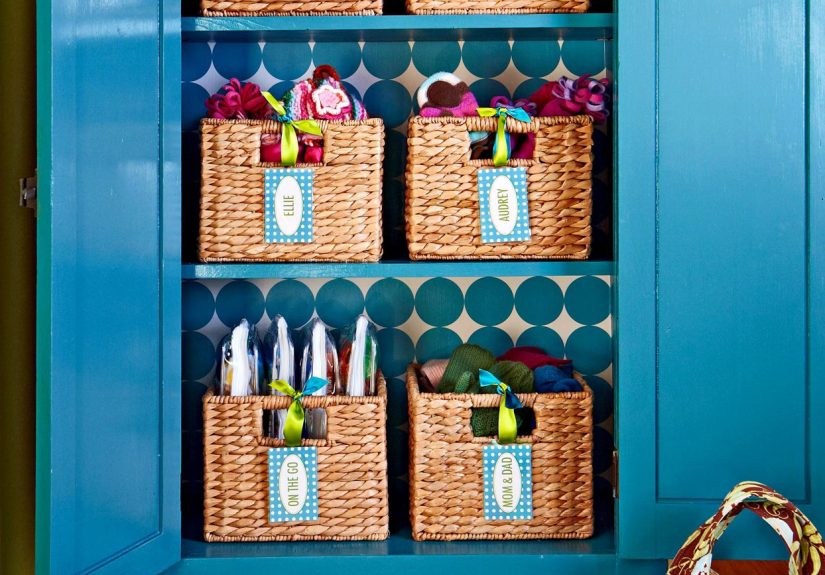
Labels help kids clean up independentlyif the labels are easy to understand. Use icons, pictures, and big text.
Put the most-used categories within reach. And remember: fewer categories usually equals more success.
- Toy bins: Blocks, Dolls, Cars, Art, Books, Dress-Up
- School zone: Homework, Supplies, Projects, Permission Slips
- “Catch-all” bin: If you must, label it “Random Stuff” and embrace reality.
Entryway & Mudroom Labels
This is where the outside world dumps its pockets. Labels keep daily essentials from migrating across the house.
If you want fast wins, label this area first.
- Hooks/cubbies: Jackets, Backpacks, Hats, Scarves
- Bins: Shoes, Dog Walk, Sunscreen, Umbrellas
- Seasonal: Gloves, Pool Gear, Rain Gear
Garage, Basement & Utility Storage Labels
Big storage areas need bold labels. Use large fonts, high contrast, and broad categories.
Think “Camping” instead of “Camping Stove Fuel Canister Accessories.”
- Tools: Hand Tools, Power Tools, Hardware, Paint
- House: Light Bulbs, Filters, Cords, Batteries
- Seasonal: Holiday Decor, Summer, Winter, Sports
How to Print and Apply Labels Like a Pro
Printing tips
- Test print on plain paper before using label sheets.
- Measure your bins and choose a label size that looks proportional.
- Keep the font readable from arm’s lengthespecially in pantries and garages.
- Use consistent naming: pick “Snacks” or “Treats,” not both.
Attachment options (depending on commitment level)
- Temporary: painter’s tape + marker (quick, surprisingly satisfying).
- Semi-permanent: printable labels on sticker paper.
- High-durability: laminated labels or vinyl labels for humidity and heavy handling.
Mistakes That Make Labels Useless (and How to Avoid Them)
- Too specific, too soon: Start broad, then refine. If you label a bin “Quinoa (Tri-Color Only),”
you’re one grocery trip away from chaos. - Hidden labels: If you can’t see the label, it can’t save you.
Place labels where they face the natural approach angle. - Inconsistent language: “Medicine,” “First Aid,” and “Health Stuff” become three bins that somehow
all contain bandages. - Overstuffed shelves: If everything is packed tight, the system breaks the first time you buy extras.
Leave breathing room.
Conclusion: The Label System You’ll Actually Stick With
The best organizing labels aren’t the fanciestthey’re the most obvious. A label should answer “Where does this go?”
in half a second. When you use free downloadable storage labels room by room, you get a flexible system
that can evolve with your life (and your questionable bulk-buying decisions).
Start with one spacepantry, laundry, or entrywaythen build momentum. Small wins compound fast. And if nothing else,
labels are a gentle reminder that you are, in fact, the capable ruler of your domain… even if the domain includes a bin
labeled “Random Cords of Mystery.”
Real-World Labeling Experiences (An Extra )
If you’ve ever tried labeling your home and felt personally attacked by your own stuff, you’re not alone. The most common
“experience” people run into is the surprise realization that organization is less about products and more about habits.
Labels don’t magically make someone tidy; they make tidiness easier to repeat. That’s a big differenceand it’s why the
first few days after labeling can feel like a productivity montage in a movie.
One pattern that shows up again and again: the label honeymoon. You print beautiful pantry labels, apply them
carefully, step back, and briefly consider opening your home as a boutique grocery store. Then real life happens. Someone
shoves an open bag of pretzels into the “Baking” bin. A rogue potato moves into “Snacks.” This is not failure; it’s data.
When categories get “misused,” it usually means your labels don’t match how people naturally think. The fix is often simple:
rename a bin, swap a bin’s location, or broaden a category. A bin labeled “Quick Snacks” on a low shelf can outperform a
perfectly designed “Healthy Options” bin that requires a treasure map to find.
Another extremely normal experience: you discover your home has multiple “hot spots,” places where clutter gathers like it’s
paying rent. Entryways, kitchen counters, and the spot near the couch where chargers go to multiply are classic examples.
Labels work best when they target those hot spots directly. A small labeled tray for “Keys / Wallet” can feel almost too
simpleuntil you realize it prevents daily scavenger hunts. In other words, labels are less about aesthetics and more about
reducing friction. Your future self will thank you.
People also tend to underestimate how much visibility matters. If you label a lid or the inside of a cabinet,
you’ve basically created a secret organization system that only you can use. Labels should face outward, at eye level when
possible, and be readable without moving three other things first. This is especially true in the garage and pantry, where
your hands are often full. Big text wins. High contrast wins. Overly fancy fonts lose. (Cursive looks lovely until you’re
holding a squirming toddler and trying to figure out whether that label says “Batteries” or “Baguettes.”)
Finally, there’s the experience of realizing that “permanent” labels are emotionally risky. You label a bin “Baby Clothes”
and then suddenly you have a teenager who wears hoodies exclusively. Free downloadable labels shine here because they lower
the stakes. Print new ones. Swap them out. Treat your label system like a living document, not a tattoo.
When you keep labels flexible, you’ll actually maintain the systembecause it can keep up with your life instead of
demanding that your life keep up with it.