Table of Contents >> Show >> Hide
- Who Is Juan, and Why Was Everyone Obsessed With Him?
- What Changed: Complaints, “Aggression,” and a Municipal Removal
- The Internet Reacts: #FreeJuan, Petitions, and the Rise of a Duck Defense Team
- Yes, Juan Got a Lawyer (And No, That’s Not Just a Joke)
- The Resolution: Juan Didn’t Go Back Downtown
- Why This Story Hit So Hard (Even for People Who Don’t Know Mendoza)
- What the U.S. Can Learn From Juan’s Story
- A Practical Framework for “Local Celebrity Animals”
- Conclusion: Juan’s Legacy Is Bigger Than One Corner Downtown
- Experiences Related to the “Free Juan” Moment (Real-Life Lessons People Share)
There are viral stories that feel like pure internet nonsense. And then there are viral stories that are so strangely specific, so deeply local, and so
emotionally loud that you can practically hear the group chat notifications from three zip codes away.
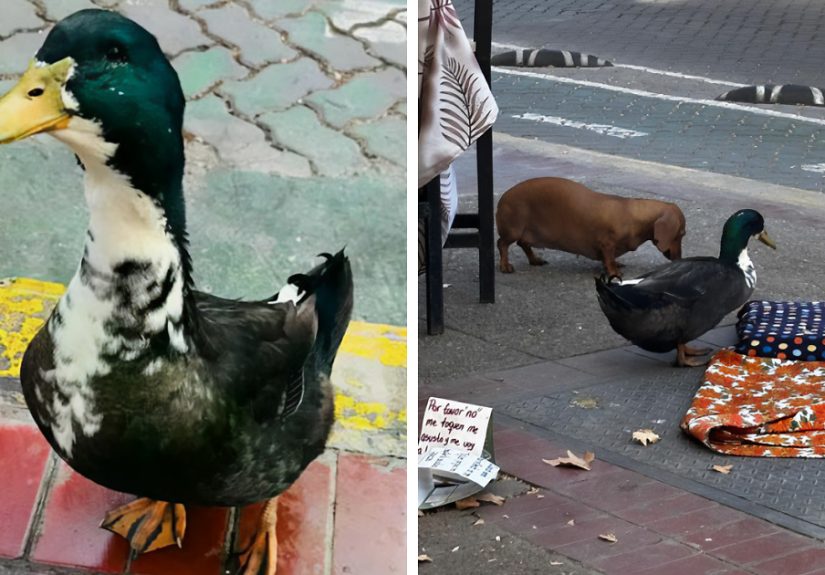
Enter Juan: a domestic duck in Mendoza, Argentina, who became a downtown regular, a tourist attraction, a neighborhood mascot, and (somehow) the main
character in a real-life debate about public space, animal welfare, and what it means when a community decides, collectively, that a duck is family.
Juan didn’t just get removed from his usual spot. He got a movement. He got hashtags. He got petitions. He got memes. And then, in the plot twist that
launched a thousand headlines, Juan got a lawyer.
Who Is Juan, and Why Was Everyone Obsessed With Him?
Juan wasn’t famous because he did tricks or wore little hats (though the internet would absolutely support that). He was famous because he was present.
Day after day, he showed up near a flower stand in downtown Mendoza—specifically around the corner of San Martín and Garibaldi, a central
spot locals recognize instantly. For months, he became part of the city’s daily rhythm: commuters passed him, tourists took photos, and neighbors left
small offerings like food and water. In a world where people barely make eye contact at crosswalks, Juan somehow became everyone’s favorite familiar face.
According to local reporting, Juan belonged to a florist named Margarita Flores, and he wasn’t a random wild duck wandering in from the nearest pond.
He was a domestic duck with a home, a caretaker, and a routine—one that just happened to include hanging out in a very public place.
In other words: Juan wasn’t merely “a duck.” Juan was the duck. Mendoza had its own tiny civic legend, and he quacked his way into the role.
What Changed: Complaints, “Aggression,” and a Municipal Removal
Every folk hero story eventually runs into a bureaucratic speed bump. For Juan, it started with complaints that he was pecking at dogs. Some dog owners
reportedly filed concerns with local authorities, and the situation escalated quickly from “that duck has an attitude” to “this is now an official matter.”
Inspectors from the Municipality of Mendoza stepped in and ordered Juan removed from the downtown area. One key detail in the reporting: officials
reportedly treated Juan as an “ave de corral”—essentially a farmyard bird—which shaped how the situation was handled and what rules were applied.
The end result was not a slap on the wrist. Juan was taken away from his usual public spot and sent back to Flores’ property in Maipú, outside the downtown center.
For the people who had adopted Juan as a shared local mascot, this didn’t feel like “animal control.” It felt like exile.
The Internet Reacts: #FreeJuan, Petitions, and the Rise of a Duck Defense Team
When you remove a beloved animal from a public place, people don’t just feel sad—they feel personally inconvenienced, emotionally betrayed, and spiritually obligated
to comment. That’s not cynicism. That’s just how modern community works.
The backlash included a petition calling for Juan’s return and a surge of online support. Local coverage described thousands of people signing, and the duck even
inspired humor accounts and memes. One anonymous account mentioned in reporting—@PatoJuanCuak—helped keep the story circulating with jokes and commentary.
This is basically the modern version of a town crier, except the town crier is a duck meme page.
The heart of the outrage was simple: Juan wasn’t bothering anyone (in supporters’ eyes), Juan was loved, and Juan had become part of downtown Mendoza’s identity.
If a city can embrace public art, street performers, and human beings loudly eating empanadas on benches, why not one duck with a strong personality?
Yes, Juan Got a Lawyer (And No, That’s Not Just a Joke)
Here’s where the story crosses from quirky to genuinely fascinating: a lawyer named Oscar Alfredo Mellado became involved and filed a request to reconsider
the municipality’s decision. In reporting, the argument wasn’t “this duck is above the law.” It was closer to: “This animal is a sentient being, part of a family,
and the solution should balance public space concerns with welfare and the community’s interests.”
That framing matters because it reflects a bigger global shift in how people talk about animals—not just as property or “livestock,” but as beings with welfare
needs and emotional bonds. Juan’s legal representation became symbolic: even if the case wasn’t literally about granting a duck human rights, it was about treating
the duck’s life as socially meaningful.
And let’s be honest: the phrase “the duck’s lawyer” is also the kind of headline fuel that editors dream of. It’s serious, and it’s meme-able. That’s the sweet spot.
What the “lawyer moment” really signaled
- Juan had become more than a pet. He was a shared community symbol.
- The issue wasn’t only safety. It was identity, belonging, and public space.
- People wanted process. Not just a sudden removal, but a solution that felt fair and humane.
The Resolution: Juan Didn’t Go Back Downtown
If you’re hoping for a triumphant “Juan returns to the flower stand” ending, the real-world update is more grounded. After meetings with municipal officials,
the reported agreement was that Juan would remain in Maipú rather than returning to the central downtown corner that made him famous.
The compromise focused on Juan’s welfare: reporting described plans for a new enclosure (a larger corral), a water feature so he could bathe, and veterinary
supervision to ensure he’s healthy and properly cared for. The mayor, Ulpiano Suarez, reportedly shared that Flores said Juan was doing well at home.
In other words: Juan’s fans didn’t get the public comeback they wanted, but Juan did get upgraded living conditions and a more controlled environment.
That’s not the ending the hashtag asked for, but it is the kind of ending that a risk manager, a veterinarian, and a stressed-out city official can all sleep with.
Why This Story Hit So Hard (Even for People Who Don’t Know Mendoza)
Juan’s saga traveled because it’s relatable in a weirdly universal way. Strip away the duck details and you get a familiar conflict:
Who gets to belong in public spaces, and who gets to decide?
1) Juan represents community in an era of disconnection
Most cities are starved for harmless shared joy. A friendly (or at least familiar) animal becomes a low-stakes way to feel connected:
“We all know Juan.” That small sentence can do a lot of emotional work in a crowded downtown.
2) Social media turns local issues into identity battles
Once a story becomes a hashtag, the conflict isn’t just about one duck. It becomes a proxy fight: compassion vs. bureaucracy,
neighborhood charm vs. regulation, “let people live” vs. “rules exist for a reason.”
3) People increasingly see pets as family
This is a major cultural trend in the U.S., too. The language of “pet parent,” “fur baby,” and “family member” isn’t just cute—it shapes expectations.
If Juan is family, then removing Juan feels like removing a person from the neighborhood, not relocating an animal.
What the U.S. Can Learn From Juan’s Story
Even though Juan’s story happened in Argentina, the themes are extremely relevant in the United States, where cities constantly negotiate rules about animals,
public health, and neighborhood life.
Urban animal rules often treat ducks like “livestock,” not “pets”
In many U.S. cities, backyard chickens and ducks are legal only with permits, enclosure requirements, and distance rules from neighboring homes.
That’s because ducks sit in a regulatory gray area: they can be beloved pets, but they’re also traditionally farm animals.
The Juan debate shows what happens when the community sees “pet” but the city sees “poultry.” Those aren’t just labels—they trigger totally different
enforcement pathways.
Public feeding and congregating animals can create real problems
Another U.S.-relevant issue is how humans influence animal behavior. In the U.S., public health agencies and conservation groups regularly discourage feeding
ducks and geese in shared public spaces because it attracts animals, changes behavior, and can create sanitation concerns. In Juan’s case, people leaving
food and water was part of why he became famous—but it also made the duck’s presence feel semi-permanent and “owned” by the public.
“Safety concerns” and “welfare concerns” don’t have to be enemies
The most useful takeaway is that communities do best when they stop acting like compassion and responsibility are opposites.
You can care about a duck and care about dog owners feeling safe walking by.
The real question is: what solutions protect everyone involved? That might mean time-of-day boundaries, secured enclosures, clear signage,
a designated animal-friendly space, or simply a decision that the animal’s best life isn’t in the busiest intersection in town.
A Practical Framework for “Local Celebrity Animals”
If your town ever ends up with a Juan—maybe a cat that “runs” the library, a dog that lives at a hardware store, or a parrot that heckles tourists
(honestly, iconic)—here’s what responsible communities can do before things explode into a legal saga.
Step 1: Confirm ownership and care standards
- Who is the caretaker?
- Is the animal domestic or wild?
- Is there shelter, clean water, and veterinary oversight?
Step 2: Set boundaries in public spaces
- Leash or enclosure expectations near other pets
- Rules about feeding (and what food is appropriate)
- Clear “do not approach” guidance if the animal is stressed
Step 3: Create a humane off-ramp
The hardest part of a mascot animal is planning for “what if this stops working?” A humane off-ramp means there’s a safe alternative plan that doesn’t
require emergency removals or public drama.
Conclusion: Juan’s Legacy Is Bigger Than One Corner Downtown
Juan didn’t just become famous because he was cute. He became famous because he gave people something to rally around: a shared story,
a shared place, and a shared feeling that small local joys matter.
The resolution—keeping Juan in Maipú with improved care—might not satisfy everyone who wanted him back downtown. But it highlights a reality that
applies anywhere: public spaces are complicated, animal welfare is serious, and communities have to balance affection with responsibility.
Still, the most important truth remains: Juan got people to care. Not just about a duck, but about how we treat the living beings who end up woven into our daily lives.
And if a duck can do that? Imagine what a little more community empathy could accomplish for everyone else.
Experiences Related to the “Free Juan” Moment (Real-Life Lessons People Share)
You don’t need to live in Mendoza to recognize the emotional logic behind “Free Juan.” Communities all over the world—including across the United States—
have their own versions of this story: a local animal becomes a symbol, routines form around it, and the moment someone disrupts that routine, people react like
the town’s identity is being repossessed.
One common experience comes from small business owners who keep “shop pets.” Maybe it’s a bodega cat that naps on the register, a bookstore dog that greets kids,
or a café parrot that whistles at anyone ordering oat milk. Customers don’t just tolerate these animals; they build them into their reason for coming back.
People post them on social media. They bring treats. They introduce visiting relatives like it’s a tourist stop: “This is the dog. He works here.”
When that animal is suddenly gone—because of a complaint, an inspection, or a change in management—people feel an unexpectedly real sense of loss.
Not because they “owned” the animal, but because the animal anchored a comforting ritual in their week.
Another experience shows up in neighborhoods where residents feed ducks or geese at ponds. A lot of people start with good intentions: kids want to help,
grandparents want an easy outdoor activity, and nobody wants to be the villain telling a toddler to stop sharing crackers with a duck.
But then the pattern escalates. The birds return more often. They gather in larger numbers. They start approaching people. Occasionally, they snap or peck
(especially during breeding season or when defending space). The vibe shifts from “cute” to “we can’t walk past the pond without getting surrounded.”
That’s often when animal control gets involved, and the community splits into teams: the “they’re hungry!” camp and the “this is getting unsafe” camp.
Both groups feel morally right, and both groups usually have at least one blurry phone video to “prove it.”
People who keep ducks as pets often share a third experience: ducks are lovable, funny, and surprisingly opinionated. They can also be messy, loud (yes, even
when they’re not “loud” like roosters), and territorial in ways first-time owners don’t expect. A duck that’s calm at home might act very differently in a busy public
environment full of dogs, scooters, loud traffic, and strangers trying to take selfies. Owners who’ve raised ducks will tell you the same thing dog trainers say:
behavior is context. If Juan pecked dogs downtown, it may not mean Juan was “bad.” It may mean Juan was overstimulated, stressed, guarding “his” corner, or reacting
to animals passing too close.
There’s also the “bureaucracy whiplash” experience: sometimes a city doesn’t act for months, and then suddenly it acts all at once. People see that as unfair,
even if the rules technically existed the whole time. In U.S. cities, residents describe similar situations with backyard chickens and ducks. A family keeps them for a
year with no problem, neighbors enjoy the novelty, and then a single complaint triggers an inspection and a pile of requirements: enclosure specs, setback distances,
permits, or deadlines. What feels like a friendly neighborhood hobby gets reframed as a compliance issue overnight.
When that happens, people do what Mendoza did: they rally, they petition, they call local officials, and they search for someone who can “argue the case” in the language
municipalities listen to—policy and liability.
The most helpful lesson people share after living through “local animal drama” is this: affection alone isn’t a plan. If a community truly loves a mascot animal,
the love has to show up as structure—safe housing, clear boundaries, reduced risk to others, and a realistic understanding of what environment is best for that animal.
Juan’s story is emotional because it’s sweet, funny, and slightly absurd. It’s also emotional because it’s real: when people care, they want the ending to feel humane.
The best communities learn how to make “humane” include both compassion and responsibility, so nobody has to choose between the duck and the neighborhood.