Table of Contents >> Show >> Hide
- What Is a Funny Car Drag Racer?
- Why Is It Called a Funny Car?
- The Anatomy of a Modern Funny Car
- What a Funny Car Drag Racer Actually Does on Race Day
- Funny Car Racing Is More Technical Than It Looks
- The Legends Who Gave Funny Cars Their Mythology
- Why Fans Love Funny Cars So Much
- Safety, Risk, and the Respect This Class Demands
- The Funny Car Experience: 500 Extra Words from the Stands, the Pits, and the Starting Line
- Final Thoughts
A Funny Car drag racer is what happens when engineers, tuners, and fearless drivers get together and decide that normal acceleration is for people who enjoy calm hobbies like knitting. In the world of NHRA nitro competition, Funny Cars are among the quickest and loudest machines on Earth. They look a little like production cars, which is adorable, because under that carbon-fiber shell lives a purpose-built monster with a supercharged 500-cubic-inch Hemi V-8, a mountain of nitromethane, and enough violence to turn a four-second race into a full-body experience.
That is exactly why Funny Cars matter. They are not just drag racers with flashy paint and big rear tires. They are rolling proof that motorsports can be technical, theatrical, and a little bit unhinged all at once. A modern Funny Car drag racer launches down a 1,000-foot strip in roughly 3.8 seconds and can top 330 mph, which is a polite way of saying it vanishes before your brain has finished processing the launch. If Formula 1 is a scalpel and endurance racing is a chess match, Funny Car racing is a flamethrower wearing sponsor decals.
This article breaks down what a Funny Car drag racer really is, how the class evolved, why fans love it, what makes these machines work, and what the experience feels like when you are close enough to smell the nitro and question your life choices. Buckle up. Metaphorically, of course. Literally, leave that to the professionals.
What Is a Funny Car Drag Racer?
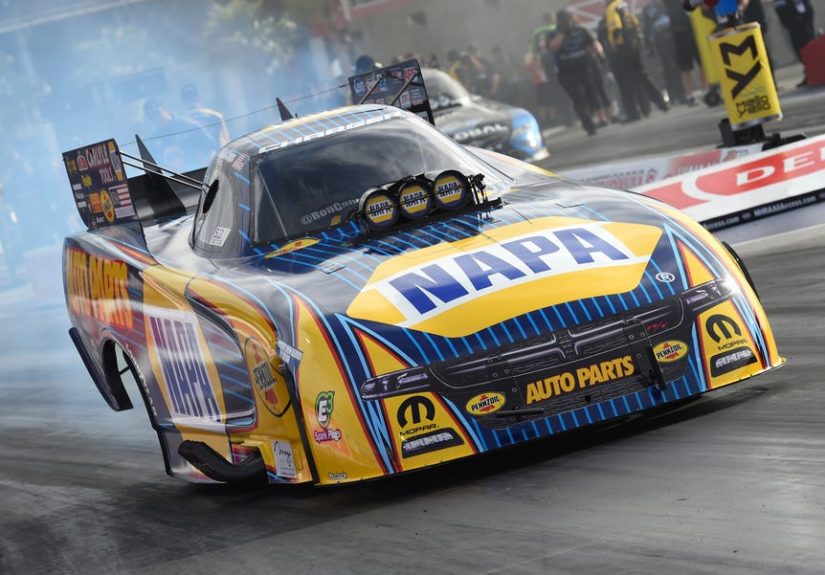
A Funny Car drag racer is a driver who competes in one of drag racing’s premier nitro classes. In modern NHRA competition, Funny Cars share much of their mechanical DNA with Top Fuel dragsters. They use similar supercharged, fuel-injected 500-cubic-inch engines, run on nitromethane blends, and reach absurd speeds in a matter of seconds. The major difference is layout and appearance. A Funny Car wears a one-piece body that loosely resembles a production automobile, while a Top Fuel dragster is a long, open-wheel missile built with all the subtlety of a lightning strike.
That body shape is part of the magic. A Funny Car still carries the silhouette of something you might see on a street poster, but only if that poster had caught fire and learned advanced aerodynamics. Underneath is a chromoly tube chassis designed for one purpose: surviving explosive power while delivering it to giant rear slicks. There is no ordinary transmission in the usual sense. Instead, power is managed through a multistage clutch system, because at this level, regular car parts would resign immediately and go work in accounting.
The Funny Car drag racer, then, is not simply a driver who points a car straight and stomps on the throttle. The driver is one part pilot, one part athlete, one part communicator, and one part professional chaos manager. In under four seconds, the racer must react to the tree, keep the car in the groove, read movement, respond to traction changes, and shut the machine down safely at the far end. It is an incredibly short performance that demands a ridiculous amount of preparation.
Why Is It Called a Funny Car?
The name came from the class’s early days in the 1960s, when altered-wheelbase factory experimentals started showing up looking, well, funny. Their proportions were off, their stance looked strange, and they did not resemble ordinary street cars in the way people were used to seeing them. The nickname stuck, and motorsports history gained one of its greatest examples of a label that sounds like a joke until it roars to life and shakes your molars.
From those early altered-wheelbase machines, the class evolved into full-bodied “floppers” with one-piece fiberglass, and later carbon-fiber, bodies that could tilt up for access. The cars grew faster, wilder, and more specialized. By the early 1970s, Funny Cars were not just a class; they were a traveling spectacle. They packed grandstands with noise, fire, showmanship, and personalities big enough to deserve their own zip codes.
And that is the charm of the name. “Funny Car” sounds playful, but the class is deeply serious. The irony is part of the brand. Nothing about a nitro-fueled machine cracking off a 330-plus-mph pass is actually funny, unless your idea of comedy is a controlled explosion wrapped in a Camaro-shaped body. In that case, yes, it is hilarious.
The Anatomy of a Modern Funny Car
The Engine: Big Hemi Energy, Bigger Consequences
The heart of a modern Funny Car is a supercharged, fuel-injected 500-cubic-inch Hemi V-8 that makes more than 11,000 horsepower. Read that again slowly. Eleven thousand horsepower. That is not a typo, a sales pitch, or a number borrowed from a comic book. It is one of the reasons Funny Car racing occupies its own weird and glorious corner of motorsports reality.
The engine runs on a fuel mix dominated by nitromethane, usually around 90 percent nitro with alcohol mixed in. Nitro is prized because it carries oxygen within the fuel, allowing an engine to burn far richer than gasoline can. Translation: the engine can ingest a ridiculous amount of fuel and make monstrous power. A Funny Car can consume around 20 gallons in a single run, which makes your daily driver’s fuel economy look like an adorable school project.
There is no radiator and no time for comfort. The engine lives a brutal life. It idles angrily, launches violently, and is asked to deliver maximum output immediately. Funny Car engines are engineering marvels built for spectacularly short, punishing careers between rebuilds. Reliability here does not mean “drive it for 200,000 miles.” It means “please hold together long enough to get to the finish line without turning the headers into a fireworks display.”
The Body and Chassis: Production Look, Race-Only Soul
One of the most iconic parts of any Funny Car is the body. It resembles a production model just enough to trigger recognition, but the resemblance ends quickly. These are lightweight, aerodynamic shells designed to create downforce and stability at insane speed. The entire body lifts off or tilts up, exposing the chassis and engine beneath like the world’s angriest clamshell.
Under that shell is a dedicated tube chassis made from chromoly steel. The driver sits far back in the car, surrounded by safety structure and systems designed to handle unimaginable stress. Funny Cars have a shorter wheelbase than Top Fuel dragsters, which contributes to their distinct visual stance and their reputation for looking more dramatic and, at times, more twitchy. A Top Fuel dragster feels like a spear. A Funny Car feels like a fist.
The Clutch, Tires, and Traction Ballet
Modern Funny Cars do not use a conventional multi-gear transmission. Instead, they channel power through a multistage clutch system that is timed and tuned to bring in power progressively. This matters because if all that torque hit the rear tires at once, the car would likely attempt something theatrical and expensive.
The rear slicks are massive for a reason. They wrinkle, bite, and distort under load in ways that look almost cartoonish, except the physics are very real. Getting traction is not just about raw force. It is about timing, track prep, weather, rubber laid down by previous runs, and the tuning choices of the crew chief. In Funny Car racing, the difference between a perfect pass and a tire-smoking disaster can be measured in fractions of a second and one very disappointed crew member staring into the middle distance.
What a Funny Car Drag Racer Actually Does on Race Day
To people unfamiliar with drag racing, it can seem like the driver only needs to go straight. That assumption usually disappears the first time they see a Funny Car move around under power like it is wrestling with invisible tornadoes. A Funny Car drag racer has to do much more than mash the throttle and hope destiny is in a good mood.
The race begins before the launch. The driver works through the burnout, backs up carefully, stages the car under intense focus, and waits on the Christmas Tree. Reaction time matters. Then the real work begins. As the car launches, the driver must feel whether the car is hooking, drifting, or shaking the tires. If something goes wrong, the correction window is microscopic. At 300-plus mph, tiny steering inputs matter. Tiny mistakes also matter. A lot.
After the finish line, the job is not over. The driver must get the car settled, deploy parachutes, manage shutdown, and report feedback to the crew. That feedback is gold. It tells the team what the car was doing, how the surface felt, whether the run matched the tune-up, and what needs to change next. In other words, the Funny Car drag racer is both operator and sensor package, only with more courage and a helmet.
Funny Car Racing Is More Technical Than It Looks
One of the best things about Funny Car racing is how often it fools casual viewers. On the surface, the format looks simple: two cars, one straight strip, first one there wins. But under that simplicity is a brutally technical game. Crew chiefs constantly juggle track temperature, humidity, lane conditions, clutch application, ignition timing, fuel delivery, and downforce balance. The car is tuned to the edge because anything less than the edge gets beaten.
Qualifying adds another layer. Teams are not just trying to make clean runs. They are trying to secure better positions on the ladder, collect bonus points, and build momentum. Later in the season, the championship fight gets even tighter under NHRA’s Countdown format, where points separation becomes a major factor. At that stage, every round matters, every lane choice matters, and every tiny mechanical decision suddenly feels like a plot twist.
That is why elite Funny Car teams are so fascinating. They combine old-school racer instincts with modern data and disciplined setup work. From the grandstands, a 3.8-second pass looks like a burst of noise and motion. In the pits, it is the product of engineering, repetition, teamwork, and probably at least one crew member who has not sat down in six hours.
The Legends Who Gave Funny Cars Their Mythology
Funny Car history is packed with personalities who turned the class into a cultural event. “Jungle Jim” Liberman became famous not just for speed, but for swagger, showmanship, burnouts, and an unforgettable connection with fans. He was proof that in Funny Car racing, style mattered almost as much as elapsed time. Don Prudhomme, “the Snake,” helped define excellence in the class and became one of the sport’s great champions. These were not just racers. They were characters in a high-octane American drama.
Then there is John Force, whose name is almost impossible to separate from Funny Car history. His success, longevity, and personality turned him into the class’s modern giant. He built a career and brand that reached far beyond drag racing’s core audience. For many fans, he became the face of the class because he understood something essential: Funny Cars are not just about numbers. They are about emotion, momentum, and spectacle.
The current era keeps that legacy alive. Drivers like Matt Hagan, Ron Capps, Alexis DeJoria, and Austin Prock show that the class still blends skill, aggression, and identity in a way few forms of racing can match. Funny Car fans do not just root for machinery. They root for liveries, rivalries, crew chiefs, family dynasties, comeback stories, and those moments when a driver climbs out after a huge run looking like they just stepped off a rocket and would like a water bottle immediately.
Why Fans Love Funny Cars So Much
Because they are spectacular, obviously. But the deeper answer is that Funny Cars hit several motorsports pleasures at the same time. They are fast enough to feel unreal, loud enough to make your chest vibrate, and recognizable enough in shape to create instant attachment. The body style matters. A Funny Car still suggests a familiar automotive identity, even though underneath it is basically a highly trained explosion wearing a costume.
Fans also love the class because it feels personal. Funny Car culture has always leaned into nicknames, hero cars, dramatic paint schemes, and larger-than-life legends. The machines are visual. The launches are violent. The runs are short enough that every round feels urgent. You are never waiting around for strategy to maybe become exciting in forty laps. Funny Car racing starts at eleven and stays there.
It is also one of the most sensory forms of motorsport. You do not just watch a Funny Car. You hear it in your ribs, smell it in the air, and feel the shock wave in your jaw. Some sports ask for your attention. Funny Cars take it personally if you do not pay attention.
Safety, Risk, and the Respect This Class Demands
For all the humor built into the class name, Funny Car racing is serious business. The speeds are extreme, the forces are enormous, and the potential consequences of failure are real. That is why safety is not a side topic in this class. It is the foundation underneath every run. The chassis, containment systems, fire gear, body design, shutdown procedures, and track safety support all reflect decades of hard-earned lessons.
The sport never asks you to forget the danger. In fact, part of the respect Funny Cars command comes from the honesty of that risk. When a run goes right, it looks magical. When something breaks, everyone is reminded that these are highly stressed machines operating at a level where even tiny issues can escalate fast. Teams obsess over preparation because they know the margin for error is brutally small.
That seriousness is part of why Funny Car drag racers earn such admiration. It takes nerve to drive one, but it also takes discipline, professionalism, and trust in the crew around you. Nobody wanders into this class by accident. A Funny Car drag racer is the visible tip of a much larger operation built on mechanical skill and collective focus.
The Funny Car Experience: 500 Extra Words from the Stands, the Pits, and the Starting Line
If you have never stood near the starting line for a Funny Car run, let me save you from the common mistake of thinking you are prepared. You are not. Television gives you speed and visuals. It does not give you the physical event. A nitro Funny Car does not merely pass by. It detonates through your senses. The headers crack, the body twists against the chassis, the slicks wrinkle, and the whole thing launches with such disrespect for normal acceleration that your first response is not analysis. It is laughter. Nervous, delighted, slightly confused laughter.
Then the smell hits. Nitro has its own signature, and once you know it, you never confuse it with anything else. It is sharp, chemical, dramatic, and weirdly unforgettable. Spend enough time around Funny Cars and you begin to understand why longtime fans talk about race days the way music lovers talk about legendary concerts. They remember the sound, the atmosphere, the names on the body, the night sessions, the burnout smoke under the lights, and the feeling that something gloriously excessive is about to happen.
Walk through the pits and the experience changes. On the line, Funny Cars are thunder. In the pits, they are labor. You see crews tearing down engines, checking clutch parts, reading spark plugs, cleaning, adjusting, and preparing for another run that will only last a few seconds. It is one of the great realities of drag racing: the race is short, but the work is endless. You start to appreciate that a Funny Car drag racer is never alone. The driver may get the headline, but the car reaches the finish line because an entire crew turned chaos into a plan.
There is also something deeply American about the whole thing. Funny Cars grew from a hot-rodding culture that loved experimentation, factory rivalry, mechanical creativity, and a little show business. You can still feel that heritage at the track. People talk history. They compare body styles. They remember heroes from different eras. One fan swears nothing beat the old floppers. Another says the modern cars are the ultimate form of the breed. Both are right, which is annoying but true.
And then there is the human side. Watch a driver after a strong pass. Sometimes the reaction is calm professionalism. Sometimes it is pure adrenaline leaking through a practiced smile. Either way, you can tell these runs mean something. A Funny Car is too demanding, too expensive, and too difficult to drive for anybody to fake commitment. That authenticity is part of the appeal. Fans know they are watching people do something real, risky, and intensely skillful.
By the end of a race day, you understand why Funny Car racing holds such a grip on its audience. It is not just the speed, though the speed is ridiculous. It is not just the history, though the history is rich. It is the total package: the violence of the launch, the craft in the pits, the personalities, the legends, the body shapes, the sensory overload, and the stubborn refusal of the class to become boring. A Funny Car drag racer lives at the center of all that. And from the first burnout to the final parachute bloom, it is impossible not to be impressed.
Final Thoughts
The Funny Car drag racer occupies a rare place in motorsports. This role combines old-school courage with modern technical precision. It lives at the intersection of engineering and entertainment. It honors hot-rodding history while continuing to push the limits of what a front-engine, production-looking race car can do over 1,000 feet. That combination is why the class still feels fresh, even after decades of legends, innovations, and enough tire smoke to confuse local weather systems.
If you want a clean definition, a Funny Car drag racer is a professional who straps into one of the fastest closed-body race cars in the world and pilots it through a controlled nitro storm. If you want the emotional definition, it is the person who turns absurd horsepower into a performance that lasts only seconds but stays in your memory much longer. Either way, the appeal is obvious. Funny Cars are loud, fast, technical, theatrical, and impossible to ignore. In a noisy world, that is a pretty good trick.