Table of Contents >> Show >> Hide
- What Is Good Housekeeping All Access, Exactly?
- What You Actually Get With Good Housekeeping All Access
- Why the Good Housekeeping Name Still Carries Weight
- How It Fits Into Today’s Media Landscape
- Who Gets the Most Value From Good Housekeeping All Access?
- Where Good Housekeeping All Access Can Fall Short
- So, Is Good Housekeeping All Access Worth It?
- Experiences Related to Good Housekeeping All Access
- SEO Tags
If the modern internet had a personality, it would probably be an overcaffeinated friend yelling, “I found 47 air fryers, 93 mattress reviews, and one deeply suspicious cleaning hack involving ketchup!” That is exactly why a membership like Good Housekeeping All Access still makes sense. In a world where advice is cheap but trust is expensive, readers are increasingly willing to pay for information that has actually been tested, edited, and made useful before it lands on their screens.
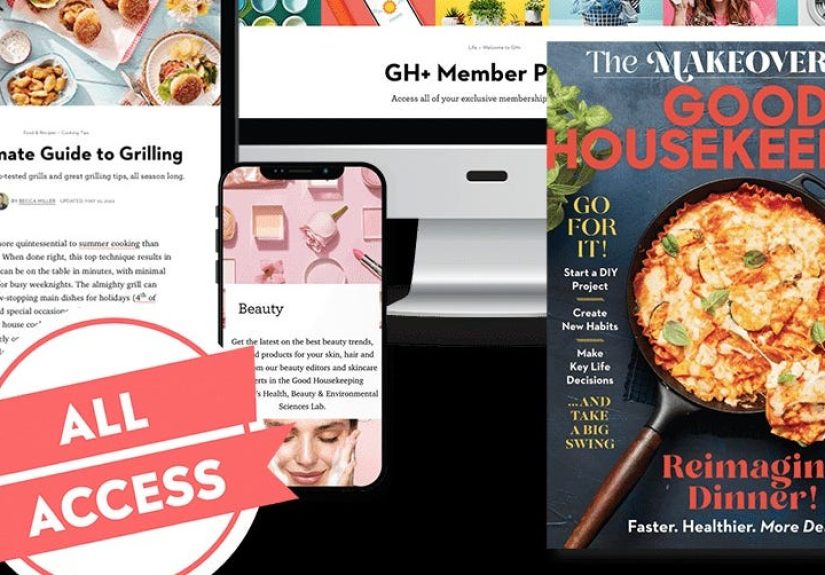
Good Housekeeping All Access, often tied to the brand’s GH+ membership offering, is more than a digital paywall wearing a pretty cardigan. It is positioned as a bundled lifestyle subscription built around what Good Housekeeping has long done best: product reviews, recipe development, home guidance, cleaning advice, wellness content, and consumer-friendly service journalism. In plain English, it is for people who want fewer internet rabbit holes and more “Here’s the thing that works, here’s why, and here’s how to use it without losing your Saturday.”
This matters because Good Housekeeping is not operating in a vacuum. Across American lifestyle and consumer brands, the winning formula is remarkably consistent: readers want trusted testing, expert-backed instruction, and content that helps them shop smarter, cook better, clean faster, and avoid spending money on junk that will be living in a donation bin by next Tuesday. Good Housekeeping All Access sits right in the middle of that sweet spot.
What Is Good Housekeeping All Access, Exactly?
At its core, Good Housekeeping All Access is the brand’s premium membership experience. It expands beyond casual browsing by packaging together digital access, magazine benefits, exclusive guides, recipe content, discounts, and even opportunities connected to product testing. Rather than functioning like a one-note subscription, it tries to be a full-service lifestyle pass for readers who already use Good Housekeeping for practical advice.
That distinction matters. A lot of subscriptions promise “exclusive content” and then deliver three articles, a pop-up, and a vague sense of disappointment. Good Housekeeping’s pitch is broader. It leans on a legacy brand identity that mixes editorial advice with institutional testing. That means the value is not just in reading more articles, but in accessing a system of expertise: the Institute, the Test Kitchen, the editorial staff, the shopping coverage, the wellness guidance, and the extra member perks layered on top.
In other words, All Access is not just trying to sell content. It is selling confidence. Confidence that the recipe has been tested. Confidence that the vacuum was not declared “life-changing” after surviving exactly one Cheerio. Confidence that the organizing tip was designed for real homes, not for a minimalist loft occupied only by a fern and a ceramic bowl.
What You Actually Get With Good Housekeeping All Access
1. Unlimited Digital Content
This is the foundational perk. A membership unlocks broader access to GoodHousekeeping.com, including premium articles and members-only pieces. For readers who visit the site regularly for recipes, home improvement advice, shopping guides, beauty recommendations, and health explainers, this is the practical center of the subscription.
And yes, the internet already contains approximately nine billion lifestyle articles. The difference here is curation. Good Housekeeping’s strength has always been utility-driven content: product roundups, tested recommendations, seasonal cleaning plans, approachable wellness coverage, and highly usable how-tos. The site is designed to answer familiar household questions with less chaos and fewer gimmicks.
2. Print Magazine Plus Digital Reading
Good Housekeeping All Access also appeals to readers who still enjoy the print magazine experience. That may sound almost quaint in the streaming age, but print remains one of the brand’s secret weapons. A magazine issue has a different rhythm than a website. It invites slower reading, better browsing, and the radical act of looking at one page at a time without also checking a package-tracking email.
The print-plus-digital bundle works especially well for readers who like the brand in both modes: fast digital lookup when you need to compare air purifiers, and relaxed print reading when you want design ideas, recipes, or seasonal inspiration without the internet trying to sell you seventeen matching baskets.
3. Access to a Large Recipe Library
One of the more compelling parts of the membership is recipe access. Good Housekeeping has built a deep recipe archive through its Test Kitchen, and that archive is part of the value proposition. For home cooks, that means a membership is not just about reading articles; it can become a working kitchen tool.
This is where the brand’s identity gets stronger. American food brands like EatingWell and Food Network have taught readers to expect tested recipes, dependable instructions, and meal-planning support. Good Housekeeping competes well in that world because it blends practical family cooking with broader home-and-life coverage. It is especially useful for readers who want recipes, yes, but also want organization tips, appliance guidance, and nutrition-minded content in the same ecosystem.
4. Exclusive Guides and Challenges
Good Housekeeping All Access is not just article access wrapped in shiny paper. The membership also includes exclusive guides, bonus issues, and challenge-style content designed to help readers improve daily life in a focused way. These extras matter more than they may seem at first glance.
Why? Because readers do not only want information; they want structure. A one-off article about decluttering is helpful. A guided program that walks you through organizing your home room by room is more actionable. A recipe is useful. A multi-day meal guide is better when your week is already doing acrobatics. This kind of format turns editorial content into something closer to a toolkit.
5. Deals, Discounts, and Shop Perks
Membership also includes access to certain discounts and shopping perks. That can sound a little salesy, but it makes sense within the broader lifestyle media model. Modern readers expect editorial brands to help them discover products and save money, not just admire expensive objects from afar like they are artifacts in a very organized museum.
The key question is whether those deals feel additive or annoying. In Good Housekeeping’s case, they make more sense because the brand already centers product recommendations and tested picks. If you are already using the site to decide what to buy for your kitchen, laundry room, bedroom, or medicine cabinet, discounts can feel like a natural extension instead of a random coupon cannon.
6. A Chance to Become a Product Tester
This is one of the most distinctive features of Good Housekeeping All Access. Members may be eligible for product testing opportunities tied to the Good Housekeeping Institute. That does not mean every member receives a glorious parade of free gadgets. It means members can join the pool of consumers considered for at-home testing when opportunities arise.
That benefit is especially smart because it turns passive readership into participation. You are not just reading that the brand tested bedding, blenders, or beauty products. You may get a chance to contribute to the testing process itself. For people who love product reviews, that is catnip. For everyone else, it is at least a much cooler perk than another generic “exclusive newsletter.”
7. Connection to Experts and Members-Only Content
Another selling point is access to members-only content and closer contact with the expertise behind the brand. Good Housekeeping’s editorial model leans heavily on analysts, scientists, writers, dietitians, and specialists. That gives the membership a more substantial feel than a typical influencer-style subscription built on vibes, ring lights, and the phrase “I’m obsessed.”
The brand’s members-only material is useful because it follows the way people actually live: one week you need sleep advice, the next week you need grilling help, and the week after that you are researching bathroom storage like it is a graduate thesis. All Access is designed to serve that mix.
Why the Good Housekeeping Name Still Carries Weight
A huge reason Good Housekeeping All Access works as a concept is that the brand has a long trust runway. Good Housekeeping dates back to the nineteenth century, and its institutional identity has been shaped by the Good Housekeeping Institute, product testing, editorial standards, and the famous Seal. That history is not just decorative wallpaper. It is the reason the membership can plausibly promise tested, trusted advice without sounding like it invented expertise last Thursday.
The Seal, in particular, still matters symbolically. It represents a consumer-protection mindset that separates Good Housekeeping from brands built mainly around trend-chasing. The message is simple: this brand wants to be associated with reliability, not just reach. That is a useful distinction in the age of affiliate-heavy shopping media, where readers increasingly want to know whether a product was genuinely evaluated or merely introduced to a ring light and declared a masterpiece.
To Good Housekeeping’s credit, the brand also publicly emphasizes editorial standards, fact-checking, and affiliate disclosures. That does not eliminate every question a savvy reader should ask, but it does suggest a more mature and transparent editorial operation than the average lifestyle site built from recycled internet enthusiasm.
How It Fits Into Today’s Media Landscape
Good Housekeeping All Access makes more sense when you look at what other successful American content brands are doing. Consumer Reports built trust around rigorous testing and consumer-first ratings. Better Homes & Gardens succeeds by translating aspiration into realistic home and garden guidance. Real Simple thrives on making ordinary life feel less like an administrative prank. Martha Stewart remains powerful because she turns domestic competence into an art form. EatingWell wins with rigorously tested recipes and nutrition-forward food content. Prevention earns attention by making health and wellness practical rather than preachy.
Good Housekeeping sits at the intersection of all of these instincts. It is not as narrowly technical as Consumer Reports, not as exclusively design-focused as some décor brands, and not as food-specific as a recipe-first publication. Instead, it offers a broader, family-and-home-centered utility package. That breadth is exactly why All Access can work. A single subscription touches shopping, recipes, cleaning, health, beauty, organization, and seasonal living.
From a business standpoint, this also aligns with the larger shift toward membership and subscription models in digital media. The logic is simple: readers are more willing to pay when they get repeated practical value, not just occasional entertainment. Good Housekeeping All Access is strongest when it feels like a recurring household resource rather than a stack of premium articles floating in the cloud.
Who Gets the Most Value From Good Housekeeping All Access?
Home cooks are a natural fit. If you regularly search for dinner ideas, holiday recipes, healthy swaps, meal plans, or dependable baking instructions, the recipe library alone can justify the membership.
Home organizers and cleaning enthusiasts will also get mileage from it. This is for the person who genuinely enjoys a smart laundry-room hack, a seasonal cleaning checklist, or a “finally, a storage idea that does not require a custom renovation” moment.
Product researchers are another strong audience. If you spend too much time comparing vacuums, mattresses, blenders, skincare tools, and random home gadgets before buying anything, Good Housekeeping’s tested-review framework is useful.
Readers who like one brand to do several jobs may be the best fit of all. Instead of bouncing between one site for recipes, another for health, another for home advice, and a fourth for shopping guides, All Access brings that content under one umbrella.
On the other hand, if you only visit Good Housekeeping once in a blue moon, or you only care about one narrow content category, the membership may feel like buying a full pantry because you needed cinnamon. Helpful, maybe. Efficient, not exactly.
Where Good Housekeeping All Access Can Fall Short
No honest review should pretend every perk is equally valuable to every reader. Product testing opportunities sound exciting, but they are opportunities, not guarantees. The discount offerings may matter a lot to avid shoppers and not at all to someone who breaks into hives at the thought of “limited-time savings.” Some readers may prefer specialized subscriptions for recipes, design, or wellness instead of one broader lifestyle bundle.
There is also the reality that some Good Housekeeping content remains available outside the paywall, so the value depends on how often you want the premium material and extra benefits. And as with most subscriptions today, readers should pay attention to renewal terms. Nobody wants to discover an auto-renewal charge while ordering takeout and pretending they are “meal planning.”
So, Is Good Housekeeping All Access Worth It?
For the right reader, yes. Good Housekeeping All Access is worth it when you use it as a practical lifestyle membership, not just as a ticket to read a few extra articles. Its real value comes from the combination of tested product guidance, deep recipe access, exclusive digital extras, home-and-wellness content, and the possibility of participating in product testing.
It is especially compelling if you already trust the Good Housekeeping brand and like the idea of one subscription serving multiple areas of daily life. If you want evidence-backed recommendations without the clinical tone of a lab report, and lifestyle inspiration without the empty sparkle of trend-only content, All Access occupies a very workable middle ground.
In short, this membership makes the most sense for readers who treat practical advice as a quality-of-life upgrade. Not glamorous, perhaps. But then again, neither is finally finding a sheet set, slow cooker, cleaning routine, and chicken recipe that all actually work. And yet somehow, that is the good stuff.
Experiences Related to Good Housekeeping All Access
The experience of using Good Housekeeping All Access is best understood not as one big “Aha!” moment, but as a series of smaller household wins that start stacking up. One day, you use it to compare air fryers because yours now makes a sound like a lawn mower eating gravel. The next day, you pull up a weeknight pasta recipe that is actually realistic for a Tuesday. Then, somewhere in the middle of a chaotic Saturday, you find yourself reading an organizing guide that convinces you to stop storing three generations of reusable water bottle lids in a drawer of mystery.
For many readers, the value is in that accumulation. The membership becomes a kind of domestic utility belt. You may not wake up every morning whispering, “At last, my premium lifestyle content has arrived,” but you notice the difference when you need trustworthy help quickly. Instead of hopping from forum threads to social videos to vaguely alarming product reviews written by someone named BargainDad247, you stay inside one editorial system that feels more structured and less random.
There is also something satisfying about the blend of immediacy and tradition. Digital access gives you the fast answer when you need it, but the print side gives the brand a slower, more rooted feeling. That combination can change how the content is used. On a phone, Good Housekeeping is problem-solving. In print, it becomes browsing, inspiration, and the occasional “I only meant to glance at one page and now I have opinions about curtain fabric.” The membership works because it supports both moods.
For home cooks, the experience can be especially practical. A large recipe archive is not just nice to have; it can reduce decision fatigue. Readers who cook often know that the hardest part is not always the chopping or the dishes. Sometimes it is the endless deciding. Having a tested library of recipes inside the same membership as your broader home content can make meal planning feel less like a second job. It is easier to trust a recipe when the brand behind it also values repeatability, household practicality, and real-world use.
Then there is the product-testing angle, which gives the membership a little sparkle. Even if a reader is never selected, the possibility adds a sense of participation. It says the brand is not just publishing from a distance; it is building a community of readers whose habits and feedback matter. And if you are the kind of person who already reads product reviews for fun, that perk lands somewhere between “useful” and “we regret to inform you this is now your personality.”
Perhaps the most relatable experience, though, is the feeling that Good Housekeeping All Access is trying to help you run your life a bit better without turning that effort into a performance. It is not demanding a flawless pantry, a magazine-cover living room, or a wellness routine that begins at 4:30 a.m. with lemon water and moral superiority. It works best when it meets readers where they actually are: busy, curious, budget-aware, slightly overwhelmed, and still hopeful that the right guide, recipe, or review might make the week go more smoothly.