Table of Contents >> Show >> Hide
- From Indie Bookstore to Stationery Destination
- A Study Styled Like a Design Story
- Inside Goods for the Study: What You’ll Find
- Why New Yorkers Are Obsessed With This Shop
- How to Shop Goods for the Study Like a Pro
- Who Is This Store For?
- Planning Your Visit
- Conclusion: A Haven for Study Lovers and Design Nerds
- Experiences and Impressions: What a Visit Feels Like
If you’re the kind of person who gets irrationally excited about a really good notebook, welcome home. Goods for the Study, the stationery arm of beloved New York indie bookseller McNally Jackson, feels less like a store and more like the physical manifestation of every cozy study you’ve ever pinned on Pinterest. Think: perfectly lit desks, stacks of stitched notebooks, tapered steel scissors, and fountain pens that practically whisper, “You’re about to write something brilliant.”
Originally spotlighted by Remodelista for its beautifully staged desks and reading lamps, this shop has become a pilgrimage site for readers, writers, students, and design lovers who believe that the things you use every day should be both useful and beautiful. Tucked into Manhattan neighborhoods like Nolita and Greenwich Village, Goods for the Study turns the humble act of buying paper and pens into a full sensory experiencepart bookstore-adjacent, part gallery, part serious stationery lab.
In this guide, we’ll explore how McNally Jackson evolved into a mini stationery empire, what makes Goods for the Study different from your average office-supply aisle, and how to shop the store like a prowhether you’re outfitting a home office, a dorm room, or just your favorite corner of the sofa.
From Indie Bookstore to Stationery Destination
McNally Jackson opened in 2004 as an independent bookstore in downtown Manhattan. Over time, it grew into a small but mighty New York chain, with multiple locations across the city and a reputation for smart curation and fiercely loyal readers. As the book side flourished, one thing became clear: people didn’t just want stories on paperthey wanted beautiful tools for reading, writing, and thinking, too.
That impulse led to Goods for the Study, a standalone stationery concept around the corner from the original store. The idea was simple but brilliant: imagine the dream study space, then stock every object you’d need to build it at home. Today, McNally Jackson operates several Goods for the Study locations, each a compact universe of paper, pens, and study-friendly objects that reflect the same thoughtful taste found in the bookstore’s shelves.
A Study Styled Like a Design Story
Why Remodelista Fell in Love
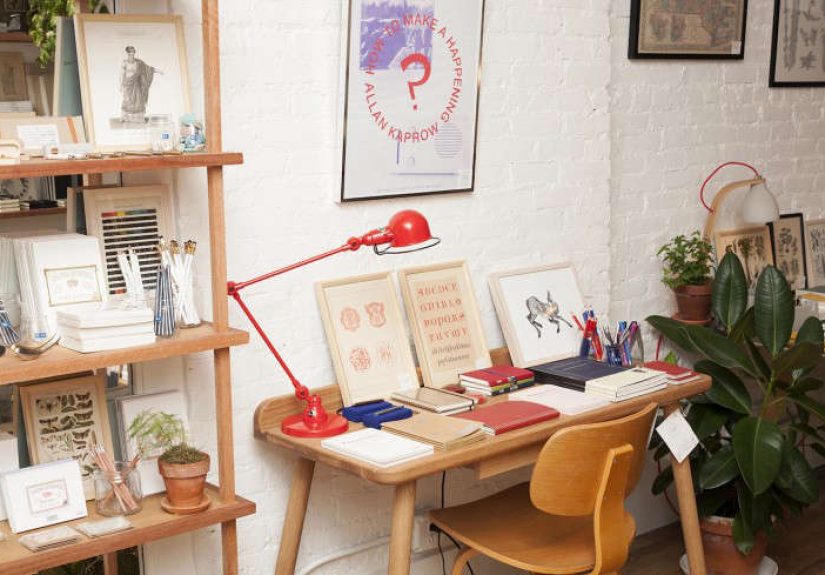
Remodelista, known for its editorial eye on well-designed everyday spaces, zeroed in on Goods for the Study for good reason. Instead of displaying stationery in boring rows, the store stages fully accessorized desks and vignettes. You’ll see reading lamps glowing over inky green blotters, botanical prints leaning against white brick walls, brass rulers resting beside lined notebooks, and enamel mugs perched on coasters next to fountain pens and ink bottles.
The result is immersive: you’re not just looking at a lamp; you’re looking at the lamp you could put on your writing desk. You’re not just buying scissors; you’re choosing a tool that might live on your desk for the next decade. This styling-first approach makes the shop feel like a photo shoot you can walk throughand then carry home in a tote bag.
Form and Function in Balance
Goods for the Study leans heavily into timeless materialswood, metal, cloth, thick paperrather than disposable plastic. Many of the objects come from small European and Japanese makers, along with American brands known for quality and craft. The aesthetic is warm but not fussy: lots of natural tones, clean lines, and little details (like stitched spines and embossed covers) that signal care without shouting.
Crucially, the beauty never comes at the expense of usability. Pens are meant to feel good in your hand; notebooks lie flat; scissors actually cut. The store’s mission is to sell things you’ll reach for every single day, not just admire on Instagram.
Inside Goods for the Study: What You’ll Find
Notebooks and Paper That Make You Want to Write
If you’ve ever procrastinated by researching paper weights and ruling styles, you’ll be dangerously happy here. Walls and tables are lined with notebooks from around the world: slim Japanese pads with impossibly smooth pages, French and Scandinavian notebooks in soft muted covers, sturdy sketchbooks with toothy paper for drawing, and pocket-sized jotters that slip into any bag or coat.
You’ll find options for every kind of “study”: bullet journaling, daily planning, sketching, research notes, or longhand drafts of your next big project. Many notebooks are stitch-bound so they open flat, making writing and drawing more comfortable. Others feature dot grids, numbered pages, or undated planner layouts for people who want structure without being bossed around by pre-printed dates.
Pens, Pencils, and Tools for Everyday Genius
One of the most beloved features of Goods for the Study is the pen selection. Instead of forcing you to commit to a 10-pack of something you might hate, the store often displays individual pens in jars or trays so you can choose exactly what you like and test them on sample pads.
The lineup usually includes everything from inexpensive gel pens and rollerballs to Japanese multi-pens, precision fineliners, and refillable fountain pens. Erasable pens, mechanical pencils, and specialty highlighters round out the mix, plus brass and wooden rulers, metal paperclips, pencil cases, and sharpeners that don’t look like they came from the clearance bin.
Lighting, Desks, and Study Objects
Because the concept sprang from a bookstore obsessed with the reading experience, lighting and furniture play a star role. You’ll spot classic desk lampslike dome-shaped metal designspaired with compact writing tables and chairs that feel equally at home in a Brooklyn apartment or a country house study.
Alongside the big pieces, the store sprinkles in objects that bring a study to life: framed prints, postcards, bookstands, pen cups, storage boxes, and even small plants or vases. Everything is chosen with the same “goods for the mind” spirit: these are objects that make it easierand more pleasantto focus.
Why New Yorkers Are Obsessed With This Shop
New York is full of stationery options, from large chains to tiny specialty shops, so why does Goods for the Study get so much love?
- It’s curated, not cluttered. Instead of overwhelming you with choices, the selection is edited. You can browse without feeling like you’ve wandered into an office-supply warehouse.
- It rewards attention to detail. If you care about paper texture or ink flow, you’ll feel seen. Visitors often describe the store as an “oasis” for stationery lovers.
- It’s a gift goldmine. Between greeting cards, notebooks, art prints, and pens, you can easily build a thoughtful gift for a writer, student, or coworker in one quick stop.
- It extends the bookstore experience. You might pop into McNally Jackson for a novel, then wander into Goods for the Study to pick up the notebook where you’ll collect your favorite quotes.
In a city where space is precious, the store also offers inspiration for small homes. The way Goods for the Study uses narrow shelves, compact desks, and good lighting shows how even a tiny nook can become a fully functional study corner.
How to Shop Goods for the Study Like a Pro
1. Start with Your Study Personality
Before you fall in love with every brass object in sight, take a second to think about how you actually work or study. Are you a meticulous planner who loves to color-code? A messy creative who needs blank space and big sketchbooks? A student who needs lightweight notebooks that can survive a commute?
Use that self-knowledge to guide your choices. Minimalist planners may be perfect if you crave structure; thick sketchbooks might be better if you process ideas visually. Goods for the Study is full of temptations, but a quick “Who am I as a studier?” moment keeps your tote bag (sort of) under control.
2. Test, Touch, and Compare
One of the best parts of an in-person stationery store is the ability to try things. Use the test pads to scribble with different pens and see how they feel. Flip through notebooks to check whether the paper shows ghosting or bleed-through when you write with a bold pen. Hold scissors and rulers to see if the weight feels right in your hand.
If you’re sensitive to paper texture, compare a few brands side by side. Some people love ultra-smooth paper for fountain pens; others prefer a little tooth for pencil sketching. The staff is used to people happily hovering over the pen areait’s part of the experience.
3. Build a Cohesive Study Setup
Instead of grabbing random items, think in terms of a “study kit.” For example:
- A dot-grid notebook + a few fine-tip pens + a brass ruler for bullet journaling.
- An undated planner + sticky notes + a simple desk lamp to create a homework station.
- A sketchbook + soft pencils + a good eraser for design or art students.
Choosing items that work together will make your home study space feel intentional, not chaotic. And yes, matching colors totally counts as a valid productivity strategy.
Who Is This Store For?
You don’t have to be a grad student or a full-time writer to enjoy Goods for the Study. The shop is a great fit if you:
- Love analog toolspens, paper, and physical plannersalongside your digital apps.
- Get motivated by a tidy, beautiful workspace.
- Enjoy giving (or receiving) thoughtful, design-forward gifts.
- Are visiting New York and want a souvenir that you’ll actually use.
Even if you’re mostly digital, a small analog toolkita pocket notebook, a single great pen, a few cards for handwritten notescan add warmth and personality to your daily routine.
Planning Your Visit
Goods for the Study locations are typically found in neighborhoods that are already good for wandering: Nolita, Greenwich Village, and other walkable pockets where bookstores, cafés, and boutiques sit within a few blocks of each other. Pair a visit to the stationery shop with a trip to one of McNally Jackson’s bookstores, then refuel at a nearby coffee spot while you break in your new notebook.
If you can’t make it in person, McNally Jackson’s online store carries a rotating selection of stationery, though the in-store experienceseeing full desk setups and testing pens in real timeis still the most charming way to shop.
Conclusion: A Haven for Study Lovers and Design Nerds
Goods for the Study is more than a stationery shop; it’s a love letter to the act of sitting down to think. By combining McNally Jackson’s literary DNA with Remodelista-worthy design, the store shows how the right tools and surroundings can make reading, writing, and studying feel less like chores and more like rituals.
In an age where so much of life happens on screens, this New York spot offers a tactile reset. You pick up a pen you truly enjoy, open a notebook that lies flat and feels right, and suddenly, studying doesn’t seem so daunting. It feels, dare we say, a little luxurious.
Experiences and Impressions: What a Visit Feels Like
So what does it actually feel like to step into Goods for the Study? Picture this: you push open the door and are immediately greeted by that soft mix of paper, ink, and woodthe unofficial perfume of every great stationery shop. The city noise drops a few decibels. Instead of honking and sirens, you hear low conversation, the rustle of pages, and the occasional delighted “Oh wow, look at this notebook.”
Near the front, a long table is laid out like an idealized workspace: a dark writing surface, a lamp casting a warm pool of light, a few books stacked with casual precision, a brass ruler, and a small plant. It’s not trying too hard; it simply looks like the desk of someone whose to-do list is under control. Visitors often linger there, mentally rearranging their own home setups: “If I moved that chair… added a lamp like this… maybe I’d finally read before bed instead of scrolling.”
Along one wall, shelves of notebooks are organized in neat, color-coordinated rows. You watch people do the stationery shuffle: pick up a notebook, flip through the pages, check the ruling, imagine their handwriting on it, put it back, then pick it up again five minutes later because they can’t stop thinking about the cover. Students debate which size will fit best between textbooks; designers compare sketchbooks; a traveler chooses a small notebook for a New York trip journal.
The pen section feels almost like a tasting bar. Glass jars or trays hold individual pens, each labeled with its brand and style. People test them on sheets of paper: fast loops, their own name, quick notes. Some are hunting for something specifican erasable pen for class notes, a fine-tip for intricate planners, a fountain pen for daily journaling. Others are just waiting for that “this is the one” moment when a pen glides across the page and they instantly imagine writing every list and letter with it.
Elsewhere, you notice little design moments: postcards and art prints leaned casually against the wall, desk organizers lined up like tiny architectural models, and scissors so perfectly shaped they might qualify as sculpture. The staff moves quietly through the space, answering questions about paper weight, recommending notebooks that work well with fountain pen ink, or helping someone build a gift bundle for a college-bound niece who “likes art, but also needs to actually pass chemistry.”
What stands out most is how calm people look. In a city famous for rushing, customers here slow down. They browse, test, imagine. Some sit with a stack of options on a nearby surface, trying to choose between three almost-identical planners. Others stand back and simply take in the styled desks, mentally screenshotting ideas for their own workspaces.
When you finally head to the register, your haul might be smalla single pen and notebook, a new desk lamp, a handful of cardsor it might be a carefully edited stack of future projects waiting to happen. Either way, walking out onto the street, tote bag a little heavier, you feel oddly energized. Not because you bought “stuff,” but because those goods for the study represent time you’re about to reclaim for yourself: to read, to plan, to sketch, to write.
That’s the quiet magic of Goods for the Study. It doesn’t just sell you tools; it nudges you toward the version of yourself who actually uses them. And in a city that never stops moving, that’s a pretty powerful souvenir to take home.