Table of Contents >> Show >> Hide
- Quick Snapshot: What You’re Actually Getting
- Reason #1: The 5% Categories Hit the “Unsexy but Necessary” Business Bills
- Reason #2: Office Supply Stores Can Cover More Than Paper Clips
- Reason #3: 2% Back on Gas Stations and Restaurants Fits the “Out in the World” Business
- Reason #4: The Welcome Bonus Can Fund a Real Business Upgrade
- Reason #5: A 0% Intro APR Window Can Be a Cash-Flow Lifesaver (If Used Like a Tool)
- Reason #6: Free Employee Cards + Spending Limits = Less Chaos, More Control
- Reason #7: Purchase Protection and Extended Warranty Are Quietly Valuable
- Reason #8: Business Travel Coverage for the Occasional “Work Trip That Turns Into a Spreadsheet”
- Reason #9: The Rewards Are FlexibleAnd They Can Plug Into a Bigger Chase Ecosystem
- Reason #10: Extra Perks Can Be Surprisingly Useful (Lyft and Beyond)
- Reason #11: It Helps You Separate Business and Personal Spending (Without Becoming a Spreadsheet Monk)
- Who This No-Annual-Fee Business Card Is Best For (And Who Should Pass)
- A Simple “Max Value” Playbook (Without Any Weird Credit Card Gymnastics)
- of Real-World Experiences With the Ink Business Cash
- Conclusion
Running a small business is basically an extreme sport where the obstacles are receipts, subscriptions, and the
mysterious monthly charge labeled “WEB SERVICES” that nobody will admit to buying. The good news: some credit cards
actually make those everyday expenses feel less like a slow leak in your wallet and more like a… mildly satisfying
drip coffee that pays you back.
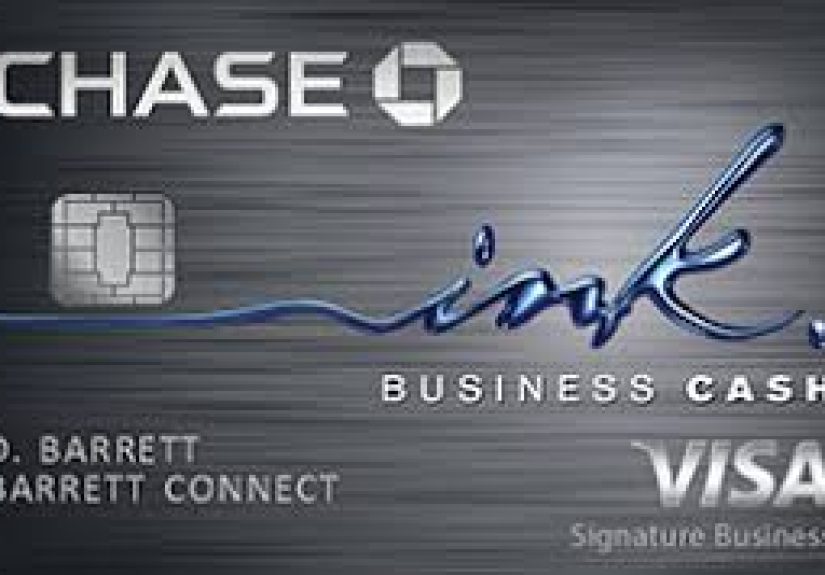
The Chase Ink Business Cash® Credit Card is one of those rare “useful on purpose” cards: it has
no annual fee, strong bonus categories that match real business spending, and a welcome offer that
can feel like a tiny grant for your next business move (or at least your next printer ink refillthe unofficial
currency of entrepreneurship).
Below are the best reasons this no-annual-fee business credit card is so popularplus practical examples, a few
“watch-outs,” and a 500-word experience section at the end to make the topic feel real (because it is).
Quick Snapshot: What You’re Actually Getting
- $0 annual fee (so you’re not paying rent to your own credit card).
-
Welcome offer: often advertised as $750 bonus cash back after meeting a spending
requirement in the first few months. -
5% cash back in select categories (think office supply stores and key business bills like
internet/cable/phone) on up to an annual cap. - 2% cash back on gas stations and restaurants on up to an annual cap.
- 1% cash back on everything else, with no limit on total rewards earned.
-
0% intro APR on purchases for a limited time (helpful if you’re making planned, budgeted
purchases). - Employee cards at no additional cost, with tools to set limits and track spending.
-
Important “fine print” reality: a foreign transaction fee may applyso this is
not automatically your “buy stuff overseas” hero card.
Reason #1: The 5% Categories Hit the “Unsexy but Necessary” Business Bills
The Ink Business Cash shines because it rewards expenses that most businesses can’t avoid:
internet, cable, and phone services, plus office supply stores. These are the kinds
of charges that show up month after monthquietly, consistently, like a raccoon returning to the same trash can.
How the math can work in real life
Imagine a small agency paying for internet, phone service, and a couple of software-related phone linesplus regular
office supply runs (paper, shipping labels, ink, basic tech accessories). If those purchases land in the 5% category,
your “boring bills” become one of the most rewarding parts of your budget.
One key detail: the 5% rate applies up to a yearly spending cap in those categories, and then it drops to 1%.
Translation: it’s optimized for the typical small business, not a giant corporation buying enough toner to print the
entire internet.
Reason #2: Office Supply Stores Can Cover More Than Paper Clips
“Office supply store” sounds like a place where dreams go to die under fluorescent lighting. But for many businesses,
these stores are where you buy essentials that directly support operations: shipping supplies, printer ink, basic
electronics, notebooks, folders, and sometimes even services.
The bigger takeaway: if your business naturally spends in these places anyway, earning 5% back can be a meaningful
boost over timewithout changing your behavior or inventing a weird new personality trait like “coupon philosopher.”
Reason #3: 2% Back on Gas Stations and Restaurants Fits the “Out in the World” Business
Some businesses are built at a desk. Others are built in a vehicle with coffee in one hand and a schedule in the
other. If you’re in real estate, contracting, delivery, consulting, photography, events, or any fieldwork-heavy line
of work, gas and meals on the go add up fast.
The Ink Business Cash offers 2% back on gas stations and restaurants up to an annual cap (then 1%). If your weekly
routine includes client lunches, team meals, or long drives between sites, that bonus category can feel tailored to
your actual lifenot an imaginary version of your business where you only buy “office supplies” and “responsible
choices.”
Reason #4: The Welcome Bonus Can Fund a Real Business Upgrade
A strong welcome offer is often the fastest way to get tangible value early. The Ink Business Cash frequently
advertises a bonus like $750 cash back after you spend a certain amount in the first few months.
For many small businesses, $750 isn’t just “nice.” It can be:
- a year of basic bookkeeping software,
- a starter budget for ads or promotional printing,
- a chunk of a laptop upgrade,
- or a cushion that keeps cash in your checking account during a tight month.
The practical mindset: don’t chase the bonus by overspending. Instead, time the application around normal expenses
you were already going to payinventory restocks, annual subscriptions, or a scheduled equipment purchase.
Reason #5: A 0% Intro APR Window Can Be a Cash-Flow Lifesaver (If Used Like a Tool)
Some versions of this card include a 0% intro APR on purchases for a set period. That can be helpful
if you’re making planned investments and want to spread payments without paying interest immediately.
The key phrase is planned. A 0% intro APR is best for purchases you can already afford, but would rather
pay over time while your cash stays available for payroll, shipping, or unexpected surprises (like your website
deciding it’s “down for maintenance” during your busiest week).
A simple way to use intro APR responsibly
- Use the intro period for a specific purchase (equipment, software, inventory).
- Divide the balance by the number of intro months.
- Set autopay to pay that amount monthly so you’re done before the intro period ends.
Reason #6: Free Employee Cards + Spending Limits = Less Chaos, More Control
If you have employees who buy supplies, pay for gas, pick up client meals, or manage errands, employee cards can be a
major convenience. The Ink Business Cash commonly offers employee cards at no additional cost, and
you can set individual spending limits so you’re not refreshing your banking app like it’s a suspense novel.
Benefits of this setup:
- Centralized tracking (one account, clearer records).
- Fewer reimbursements (less back-and-forth, fewer lost receipts).
- Cleaner bookkeeping (business spending stays business spending).
- Faster rewards (employee purchases can contribute to cash back totals).
Reason #7: Purchase Protection and Extended Warranty Are Quietly Valuable
Rewards are fun. Protection benefits are what you appreciate after something goes wronglike when a brand-new device
takes a tragic fall off a desk because your cat is “helping with productivity.”
Depending on the benefit terms, the card may include:
-
Purchase protection for eligible new purchases for a limited time period against damage or theft
(coverage limits apply). -
Extended warranty protection that can extend eligible manufacturer warranties (again, limits and
eligibility rules apply).
The practical angle: if you buy tools, electronics, or equipment for your business, these benefits can save real
money in the “something happened” moments that don’t show up on your original budget spreadsheet.
Reason #8: Business Travel Coverage for the Occasional “Work Trip That Turns Into a Spreadsheet”
Even if your business doesn’t live on planes, travel protections can still matter. Some versions of the Ink Business
Cash benefits list include features such as auto rental coverage for business rentals (terms apply) and travel and
emergency assistance services. If you rent cars for work, that can be a meaningful perk.
This is one of those “you don’t need it… until you really need it” benefits. If it never comes up, great. If it does,
you’ll be glad it was there.
Reason #9: The Rewards Are FlexibleAnd They Can Plug Into a Bigger Chase Ecosystem
The Ink Business Cash is frequently described as a “cash back” card, but in practice the rewards are often tracked
as points within the Chase rewards ecosystem. That matters because flexibility is where value lives.
Common redemption options
- Statement credit (reduce your balance).
- Deposit to bank account (put cash back into the business).
- Travel bookings through Chase’s travel portal.
- Gift cards and other options depending on what’s available.
And if you also hold certain Chase cards that unlock more advanced redemptions, you may be able to
combine rewards across eligible cards. Some people use this to turn “cash back” into points that can
become more valuable for travelif that fits their goals.
One friendly warning: “Shop with points” options (like using points at checkout) can sometimes yield a lower value
than redeeming for straight cash back. If your priority is maximizing value, compare redemption rates before you
click “confirm.”
Reason #10: Extra Perks Can Be Surprisingly Useful (Lyft and Beyond)
Credit card perks can be either genuinely helpful or the financial equivalent of a free sticker. The Ink Business
Cash has featured perks like elevated cash back on Lyft rides for a limited promotional period, which can be useful
if your business spending includes local transportation.
The point isn’t to build your entire strategy around temporary perks. It’s to appreciate them as “nice-to-have”
value on top of a strong core rewards structure.
Reason #11: It Helps You Separate Business and Personal Spending (Without Becoming a Spreadsheet Monk)
One of the most underrated “reasons to get a business credit card” is record-keeping. Keeping business expenses on a
dedicated card can make:
- tax time less painful,
- expense categorization clearer,
- reimbursements and client billing easier,
- and your overall cash-flow picture more honest.
If you’ve ever tried to explain to yourself why a personal card has charges for shipping labels, printer ink, and a
suspicious number of “client coffees,” you already understand the value here.
Who This No-Annual-Fee Business Card Is Best For (And Who Should Pass)
Great fit if you:
- regularly pay internet/phone bills and buy from office supply stores,
- spend on gas and meals as part of business operations,
- want a no annual fee business credit card with strong category bonuses,
- prefer straightforward cash back but like having flexible redemption options.
Maybe skip it if you:
- make frequent international purchases or travel often (foreign transaction fees can eat into rewards),
- rarely spend in the bonus categories (a flat-rate cash back business card might outperform it),
- tend to carry balances long-term (interest charges can overwhelm the value of rewards).
A Simple “Max Value” Playbook (Without Any Weird Credit Card Gymnastics)
-
Map your spending for one month: internet/phone, office supplies, gas, restaurants. If the match is
strong, the card’s categories are doing their job. - Track the annual caps on 5% and 2% categories so you know when returns drop to 1%.
- Redeem smartly: cash back to statement credit or deposit is often the cleanest value.
- Use employee cards intentionally: set limits and alerts so business spending stays predictable.
- Use intro APR like a tool, not a permission slip. Pay it down before the promo ends.
Quick note: Credit card offers and terms can change. Always check the current offer details and pricing
before applying. And if you’re new to credit, keep it simple: pay on time, pay in full when possible, and treat the
card as a payment toolnot a loan.
of Real-World Experiences With the Ink Business Cash
The best way to understand why people love the Ink Business Cash is to look at how it fits into everyday business
lifewhere most “financial strategy” is really just trying to keep everything running while you answer emails that
multiply like gremlins.
Experience #1: The freelancer who finally separated expenses. A graphic designer started using the
card for internet and phone service, plus the occasional office supply run (printer ink, shipping labels for client
proofs, and the emergency HDMI cable that disappears every three months). The biggest win wasn’t even the cash back.
It was opening the statement and seeing clean business charges in one place. When tax time arrived, there was less
detective work and fewer “Wait… was this lunch business or just me being hungry?” debates.
Experience #2: The contractor whose truck practically runs on receipts. A small remodeling business
used the card mostly for gas and jobsite meals. It wasn’t glamorous, but it was consistent. The owner didn’t have to
learn a new rewards language or memorize rotating categories. The card quietly returned value on the same purchases
that already happened every week. Over time, those rewards helped offset small-but-constant costslike bits, blades,
and the never-ending parade of “we need one more thing from the store.”
Experience #3: The two-person online shop with one perfectly controlled employee card. A small
e-commerce seller added an employee card for a helper who handled shipping supply runs and occasional local
deliveries. Instead of messy reimbursements and missing receipts, the owner set a spending limit and turned on
purchase alerts. That one step reduced friction fast. The employee could do their job without fronting money, and
the business owner could see exactly what was spent and wherewithout sending awkward “Hey, what was this charge?”
texts at 9:47 p.m.
Experience #4: The planned purchase that used intro APR responsibly. A marketing consultant needed
a reliable laptop for travel and client presentations. They timed the purchase during a period when the card offered
a 0% intro APR on purchases, then created a simple payoff schedule. Instead of carrying a balance indefinitely,
they divided the laptop cost across the promo months and set autopay. The result felt like breathing roomnot debt.
And because the purchase was planned, the rewards were a bonus rather than the motivation.
Across these experiences, the pattern is the same: the Ink Business Cash works best when it matches what your
business already spends money on. When it does, the card stops being a “credit card” and becomes a back-office tool:
cleaner tracking, better control, and cash back that’s easy to use. Not flashy. Just effectivethe business version
of a dependable pair of work boots.
Conclusion
If you want a no annual fee business credit card that rewards the expenses most businesses actually
havelike internet/phone bills, office supply runs, gas, and mealsthe Chase Ink Business Cash is a
strong contender. Add in a potentially valuable welcome bonus, an intro APR window for planned purchases, free
employee cards with controls, and practical protections, and you’ve got a card that earns its place in your wallet
without demanding an annual tribute.
The smartest move is simple: match the card to your real spending, pay on time, and redeem rewards in a way that
supports your business goals. Do that, and the Ink Business Cash can turn everyday expenses into everyday wins.