Table of Contents >> Show >> Hide
- What “Hearing Loss” Really Means (It’s Not Just Volume)
- Types of Hearing Loss
- Common Causes of Hearing Loss (And What They Look Like in Real Life)
- 1) Age-Related Hearing Loss (Presbycusis)
- 2) Noise-Induced Hearing Loss (Work, Play, and “Just One Loud Night”)
- 3) Earwax (Cerumen) Buildup and Blockage
- 4) Ear Infections, Fluid, and Eardrum Issues
- 5) Ototoxic Medications (Medication-Related Ear Damage)
- 6) Health Conditions, Genetics, and Injuries
- 7) Sudden Sensorineural Hearing Loss (An Emergency, Not an Errand)
- Symptoms of Hearing Loss: The Obvious, the Sneaky, and the “Wait, That’s a Symptom?”
- How Hearing Loss Is Diagnosed (What to Expect)
- Prevention: Protect Your Hearing Without Living in a Bubble
- If You Already Have Hearing Loss: What Helps
- Real-World Experiences: What Hearing Loss Feels Like (And What People Wish They’d Done Sooner)
- Conclusion
If you’ve ever said, “Huh?” and immediately blamed everyone else for “mumbling,” congratulations:
you’ve joined one of America’s most exclusive clubspeople with perfectly normal human ears that are
occasionally confused by modern life. (Open-office acoustics, anyone?)
But hearing loss isn’t just an awkward party trick or a running joke about the TV volume creeping upward.
It can sneak up gradually, hit suddenly, or show up only when you’re in noisy placeslike restaurants,
family gatherings, or any room with a blender that sounds like it’s training for a jet engine.
This guide breaks down what hearing loss is, what causes it, common symptoms people miss, and practical,
realistic ways to prevent it. You’ll also learn when hearing changes are urgent (spoiler: “suddenly can’t hear
out of one ear” is not a “wait-and-see” moment), plus what to do next if you suspect your hearing isn’t what
it used to be.
What “Hearing Loss” Really Means (It’s Not Just Volume)
Hearing is more than your ears picking up sound. It’s a relay race: sound waves travel through the ear canal,
vibrate the eardrum, move tiny middle-ear bones, and trigger the inner ear (cochlea) to convert vibration into
nerve signals. Your brain then interprets those signals as meaningful soundlike speech, music, or the microwave
beeping at you for the 47th time.
Hearing loss can happen when any part of that pathway is disrupted. Sometimes the issue is “sound can’t get in”
(like a blockage). Other times, it’s “sound gets in, but the signal is fuzzy” (like inner-ear damage). And often,
the hardest part isn’t hearing soundit’s understanding speech, especially in noise.
Types of Hearing Loss
Knowing the type of hearing loss matters because it shapes treatment and prevention. The big three categories are:
Conductive Hearing Loss
Conductive hearing loss happens when something in the outer or middle ear blocks sound from traveling efficiently
to the inner ear. Think: “the sound isn’t getting through the doorway.”
- Common culprits include earwax buildup, fluid behind the eardrum, infections, or eardrum problems.
- This type is often treatablesometimes quicklydepending on the cause.
Sensorineural Hearing Loss
Sensorineural hearing loss is the “inner ear / nerve pathway” category. It occurs when the cochlea’s delicate
hair cells (or the auditory nerve) are damaged. Unfortunately, these hair cells don’t reliably regenerate, so
sensorineural loss is often permanent.
- Common causes include aging (age-related hearing loss), noise exposure, certain medications, infections, and genetics.
- It can be gradual or, in some cases, sudden.
Mixed Hearing Loss
Mixed hearing loss is exactly what it sounds like: a combination of conductive and sensorineural issueslike
having both a clogged doorway and a glitchy signal once the sound gets inside.
Common Causes of Hearing Loss (And What They Look Like in Real Life)
1) Age-Related Hearing Loss (Presbycusis)
Age-related hearing loss usually develops gradually over time and often affects both ears. Many people first
notice that higher-pitched sounds get harder to hearor that speech is audible but unclear, especially when
there’s background noise.
A classic example: You can hear someone talking, but certain consonants (“s,” “f,” “th,” “sh”) seem to vanish,
turning sentences into a frustrating word puzzle. You’re not imagining it. Those speech sounds live in higher
frequencies, which are commonly affected in age-related hearing changes.
2) Noise-Induced Hearing Loss (Work, Play, and “Just One Loud Night”)
Noise-induced hearing loss can come from repeated exposure over time (power tools, machinery, loud music) or a
single very loud event (explosions, gunfire). The risk depends on how loud the sound is and how long you’re
exposed.
A simple rule of thumb: if you have to raise your voice or shout to be heard, the sound level is likely risky.
And while ringing ears after a concert can fade, it’s still a sign your ears were stressedlike a sunburn that
“goes away” but still counts as damage.
3) Earwax (Cerumen) Buildup and Blockage
Earwax is not your enemy. It’s a natural protective substance that traps dust and debris and helps keep the ear
canal healthy. But sometimes wax builds up and becomes impacted, causing muffled hearing, fullness, itching, or
even tinnitus.
The tricky part is how people try to fix it. Cotton swabs and “ear cleaning tools” often push wax deeper, making
the blockage worse. The ear canal is not a cast-iron skilletyou don’t need to “season” it with repeated scrubbing.
4) Ear Infections, Fluid, and Eardrum Issues
Middle-ear infections or fluid can cause temporary conductive hearing loss. Adults may notice a sudden feeling
of pressure, reduced hearing, or popping sensations. Kids may show signs like tugging at the ear, irritability,
or delayed speech development. Treating the underlying issue often restores hearingthough repeated infections
can contribute to longer-term problems.
5) Ototoxic Medications (Medication-Related Ear Damage)
Some medications can damage the inner ear, affecting hearing and sometimes balance. This is called ototoxicity.
Not everyone who takes these medications experiences hearing loss, and many of these drugs are prescribed
because they’re lifesaving or medically necessary.
The practical takeaway isn’t “panic when you see a pill.” It’s this: if you’re starting a medication known for
ototoxic risk (some antibiotics, certain chemotherapy drugs, and others), ask your clinician what symptoms to
watch for and whether hearing monitoring makes senseespecially if you already have hearing concerns or have
significant noise exposure.
6) Health Conditions, Genetics, and Injuries
Hearing loss can also be linked to viral or bacterial infections, head injuries, inherited factors, circulation
issues, tumors, autoimmune conditions, or disorders affecting the inner ear. In some cases, hearing loss is part
of a larger health storyso evaluating it isn’t just about your ears, it’s about your overall well-being.
7) Sudden Sensorineural Hearing Loss (An Emergency, Not an Errand)
Sudden hearing lossespecially in one earcan happen rapidly (all at once or over a few days). It may be
accompanied by ear fullness, tinnitus, or vertigo. This is not the time for “maybe it’ll clear up after coffee.”
Treat sudden hearing changes as urgent. Prompt medical evaluation can improve the chance of recovery, depending
on the cause and timing.
Symptoms of Hearing Loss: The Obvious, the Sneaky, and the “Wait, That’s a Symptom?”
Hearing loss symptoms don’t always feel like “I can’t hear.” Often, they show up as communication fatigue,
misunderstandings, or a growing dislike of noisy places.
Common signs
- You frequently ask people to repeat themselves, especially in groups.
- Speech sounds muffled, like everyone is talking through a scarf.
- You struggle more in restaurants than in quiet rooms.
- You turn up the TV volume higher than others prefer (and they let you know).
- You miss doorbells, alarms, or beepsespecially high-pitched ones.
- You feel tired after conversations because you’re working harder to “decode” speech.
- You notice tinnitus (ringing, buzzing, hissing), with or without hearing changes.
Symptoms that deserve faster attention
- Sudden hearing loss in one or both ears.
- New hearing loss with severe dizziness/vertigo.
- Hearing loss after head trauma or loud blast exposure.
- Ear pain, drainage, fever, or significant pressure that doesn’t improve.
How Hearing Loss Is Diagnosed (What to Expect)
Diagnosis usually starts with your primary care clinician or an ear, nose, and throat specialist (ENT), and often
involves an audiologist. The goal is to figure out the type, degree, and likely cause.
- History and symptom review: noise exposure, infections, medications, timing (gradual vs sudden).
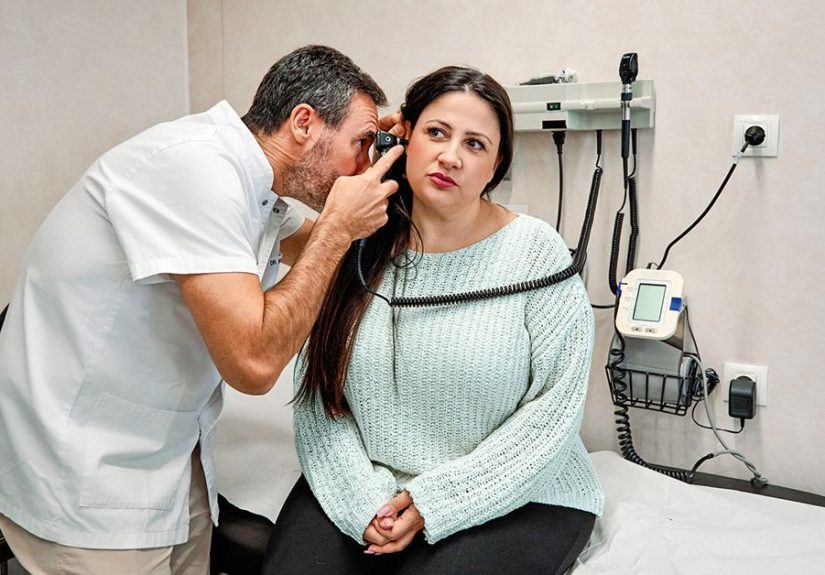
- Ear exam: checking for wax, infection, eardrum problems, or fluid.
- Hearing tests (audiometry): measures what you hear at different pitches/volumes.
- Speech testing: helps evaluate clarity, not just loudness.
- Middle-ear testing (like tympanometry): checks how the eardrum and middle ear are functioning.
- Imaging or labs: sometimes used when symptoms suggest an underlying condition.
A helpful mindset: the appointment isn’t a “pass/fail test.” It’s a mapso you can stop guessing and start making
targeted improvements.
Prevention: Protect Your Hearing Without Living in a Bubble
You don’t need to avoid every loud sound forever. Prevention is about reducing risky exposure, building smart
habits, and acting early when something changes.
1) Make noise protection your default (especially in loud places)
- Carry earplugs for concerts, clubs, sporting events, fireworks, and power tools.
- Move away from the speakersdistance matters more than your pride.
- Take breaks from noise. Give your ears recovery time during long exposures.
- Use noise-canceling headphones when appropriate so you don’t crank the volume to compete with background noise.
2) Follow safe-listening habits with headphones
Headphones aren’t automatically harmfulvolume and time are the issue. If someone standing next to you can
hear your music clearly through your headphones, your ears are probably filing a complaint.
- Turn the volume down and take listening breaks.
- Prefer over-ear or noise-canceling options in loud environments.
- Watch for ringing or muffled hearing after listeningthose are warning signs, not “cool concert souvenirs.”
3) Protect hearing at work (and know your rights)
Many jobs involve hazardous noise exposure. If you’re regularly around loud machinery, tools, engines, or
industrial noise, hearing conservation programs and protective equipment matter.
- Wear appropriate hearing protection consistentlynot just “when it feels loud.”
- Ask about workplace noise monitoring and hearing tests if you’re routinely in loud areas.
- Remember that “getting used to it” is not the same as “it’s safe.”
4) Be gentle with your ears (wax and cleaning)
Avoid inserting cotton swabs or objects into the ear canal. If you suspect wax impaction, ask a clinician about
safe options (like certain softening drops or professional removal). Your ear canal is self-cleaning more often
than your kitchen, and it usually does not need “help.”
5) Be medication-smart (not medication-scared)
If you take medications that can affect hearing, don’t stop them on your own. Instead:
- Ask what symptoms should prompt a call (new tinnitus, muffled hearing, balance changes).
- Ask whether baseline and follow-up hearing tests are recommended.
- Tell your clinician about noise exposure or existing hearing loss.
6) Support ear health through overall health
Hearing is connected to the rest of your body. Managing chronic conditions, avoiding tobacco exposure, and staying
on top of preventive care won’t “guarantee perfect hearing,” but it supports the systems that keep your inner ear
functioning well.
If You Already Have Hearing Loss: What Helps
Hearing loss management has improved dramatically. Many people wait years before seeking helpoften because they
assume hearing aids are bulky, ineffective, or only for “other people.” Today’s options include:
Hearing aids (prescription and over-the-counter options)
Hearing aids amplify and shape sound based on your hearing profile. For adults with perceived mild to moderate
hearing loss, over-the-counter (OTC) hearing aids can be an accessible starting point. Prescription devices and
professional fitting may be better for more complex or severe lossor when you want maximum customization.
Cochlear implants and other devices
For certain severe hearing losses that don’t benefit enough from hearing aids, cochlear implants or other
implantable devices may be considered. Assistive listening devices, captioning, and smartphone features can also
help immediatelyoften with less friction than people expect.
Communication strategies that make life easier today
- Face the speaker and improve lighting so you can use visual cues.
- Reduce background noise when possible (mute the TV during conversation).
- Ask for rephrasing instead of repetition (“Can you say that a different way?” often works better).
- Choose quieter seating in restaurants (away from the kitchen, bar, or speakers).
Real-World Experiences: What Hearing Loss Feels Like (And What People Wish They’d Done Sooner)
The most common “experience” people share isn’t dramatic silence. It’s confusionlittle misunderstandings that
add up. Many describe feeling like everyone else got a script and they didn’t. A friend laughs, the room reacts,
and you smile half a second late, hoping it was a joke and not a fire drill.
One frequent story comes from people in their 20s and 30s who love concerts or fitness classes with
stadium-level sound. They’ll say, “My ears rang after shows, but it always went away.” Then one day, the ringing
sticks around longer. Or speech in restaurants becomes strangely exhausting. The lesson they share: earplugs
aren’t “uncool”they’re the difference between enjoying music for decades and spending the next decade asking
your friends to repeat the punchline. People who switch to high-fidelity earplugs often report they can still
enjoy the music, just without the audio version of sunburn.
Another common experience comes from office workers and parents: they don’t notice hearing changes until they’re
surrounded by competing sound. In a quiet room, they feel fine. In a group dinner, they miss chunks of
conversation and leave feeling drained. Many describe a weird emotional shiftless social, more irritablebecause
“trying to hear” becomes mental labor. Once they get tested, they’re often relieved to learn it’s not
“inattention” or “brain fog.” It’s a real, measurable hearing change with real solutions.
Older adults frequently describe a slow fade rather than a sudden drop. They’ll say the TV captions became
“nice to have,” then “necessary.” They notice they hear voices but can’t always understand wordsespecially from
grandchildren or people with softer voices. A lot of people report they waited because they didn’t want to seem
“old,” and then they wish they hadn’t. When they finally try hearing aids, they often describe an unexpected
moment: hearing birds again, the turn signal clicking, or realizing the refrigerator has been humming loudly
for years like it pays rent.
The most urgent experience story is sudden hearing loss. People describe waking up with one ear feeling blocked,
like water is trapped inside, sometimes with loud ringing or dizziness. A common mistake is assuming it’s wax or
congestion and waiting it out. The people who do best often share the same takeaway: treat sudden hearing loss
as urgent and get evaluated quickly. Even if it turns out to be something simple, you’ll have protected yourself
from the worst-case scenario.
Across all these experiences, the pattern is clear: prevention is easier than treatment, early action beats late
regret, and hearing support isn’t a defeatit’s a quality-of-life upgrade. If hearing loss is affecting your
relationships, work, confidence, or energy, that’s reason enough to get help. You deserve conversations that
don’t feel like advanced calculus.
Conclusion
Hearing loss can be caused by aging, noise exposure, earwax blockage, infections, medications, and medical
conditionsand the symptoms often show up as “speech confusion” more than “silence.” The most powerful prevention
tools are simple: reduce loud noise exposure, use hearing protection, practice safe listening, avoid aggressive
ear cleaning, and take sudden hearing changes seriously.
If you suspect hearing loss, don’t guesstest. A hearing evaluation can clarify what’s going on and open the door
to solutions that make everyday life easier, safer, and a lot more connected.