Table of Contents >> Show >> Hide
- The “Best” Choice Depends on Your Symptoms (Not Your Zodiac Sign)
- Why Heat Helps Arthritis (And When It Can Backfire)
- Why Cold Helps Arthritis (And Why It Feels Rude at First)
- A Simple Decision Guide You Can Use Today
- Specific Examples: Matching Heat/Cold to Common Arthritis Situations
- Safety Rules: How to Use Heat and Cold Without Making Things Worse
- Can You Alternate Heat and Cold? YesJust Don’t Speed-Run It
- The Bottom Line: Which Is Best?
- Experiences: What Heat and Cold “Actually Feel Like” in Real Life (500+ Words)
Arthritis pain has a way of showing up like an uninvited houseguestearly, loud, and extremely confident it can stay as long as it wants. The good news: two of the simplest tools for calming achy joints are probably already in your home. The slightly annoying news: one is hot, one is cold, and your joints may have opinions.
So… should you reach for a heating pad or an ice pack? The most honest (and helpful) answer is: it depends on what your joint is doing right now. Heat is usually best for stiffness and tight, achy muscles. Cold is usually best for swelling, heat (the symptom), and angry flare-ups. And yessometimes the best move is using both, at different times, like a pain-relief duet.
Quick note: This article is for general education, not a diagnosis. If you have severe pain, major swelling, new numbness, fever, a recent injury, or circulation/nerve issues, check in with a clinician before DIY-ing your way through it.
The “Best” Choice Depends on Your Symptoms (Not Your Zodiac Sign)
Arthritis isn’t one single condition. Osteoarthritis (OA) is often more “wear-and-tear,” while rheumatoid arthritis (RA) and other inflammatory types can involve immune-driven inflammation. But across many kinds of arthritis, the heat-vs-cold decision usually comes down to one question:
Is your joint mostly stiff… or mostly swollen?
- Choose heat when your main issue is stiffness, tightness, dull aching, or limited motionespecially in the morning or after sitting still.
- Choose cold when your joint feels hot, puffy, swollen, tender, or inflamedespecially after activity or during a flare.
- Consider alternating if you have both stiffness and swelling, or if one method helps but doesn’t quite finish the job.
Think of it like this: heat helps things loosen. cold helps things calm down. Your goal is to match the tool to the moment.
Why Heat Helps Arthritis (And When It Can Backfire)
Heat therapy (also called thermotherapy) works mainly by increasing blood flow and relaxing surrounding muscles. More circulation can make tissues feel less “stuck,” which can translate to easier movement and less pain. Heat can also help reduce muscle guardingwhen your muscles tighten up to protect a sore joint, even if that tightness makes everything worse.
Heat is usually best for:
- Morning stiffness (classic arthritis energy: “I woke up and my hands are grumpy.”)
- Chronic, ongoing aches without visible swelling
- Muscle tightness around painful joints (neck, shoulders, hips, knees)
- Pre-movement warm-ups before stretching or gentle exercise
Common heat options (from easiest to spa-like):
- Warm shower or bath: Great for whole-body stiffness. Bonus: you can pretend it’s “hydrotherapy.”
- Heating pad or microwavable heat pack: Convenient and targeted.
- Warm moist towel/compress: Moist heat often feels more soothing for some people.
- Paraffin wax bath: Popular for hands and feet stiffnessmessy, but satisfying.
How long should you use heat?
A practical sweet spot is often 10–20 minutes at a time. Longer isn’t always betterespecially with heating pads. Always use a protective layer (like a towel), keep heat at a comfortable setting, and don’t fall asleep on an electric heating pad. Your joint wants relief, not a plot twist.
When to avoid heat
Skip heat when a joint is actively inflamed: noticeably swollen, red, or warm to the touch. Heat can increase circulation and may worsen that “hot and angry” feeling. Also be cautious if you have reduced sensation (neuropathy), circulation problems, or conditions where burns are more likelyask a clinician for personalized guidance.
Why Cold Helps Arthritis (And Why It Feels Rude at First)
Cold therapy (cryotherapy) works by narrowing blood vessels and numbing nerve endings near the surface. That can reduce pain signals and help manage swelling or inflammation. It can be especially helpful during flare-ups or after activity when joints feel puffy or tender.
Cold is usually best for:
- Swelling and inflammation (puffiness, warmth, redness)
- Post-activity soreness (after walking, gardening, workouts, long errands)
- Acute pain spikes that feel sharp or throbbing
- Hands/knees that feel “hot” during a flare
Common cold options:
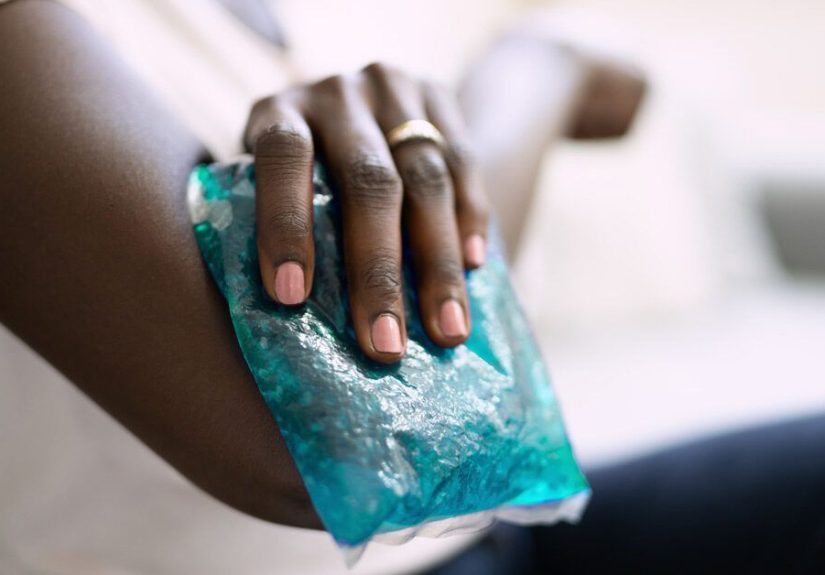
- Ice pack or gel pack: Wrap it in a thin towel; don’t put it directly on skin.
- Bag of frozen peas: The unofficial MVP of home care. (They conform to knees like they trained for it.)
- Cold compress: Useful when you want “cool” without “arctic expedition.”
- Ice massage: A small ice cube (wrapped or in a paper cup) rubbed gently over a small area for short bursts.
How long should you use cold?
Aim for 10–20 minutes at a time, then give your skin a break. This helps reduce the risk of skin irritation or cold injury. If your skin turns very pale, feels numb for too long, or becomes painful, stop and let the area return to normal temperature.
When to avoid cold
If you have circulation issues or conditions that make cold risky (for example, some people with Raynaud-like symptoms), talk to a clinician first. And if cold makes your joint stiffen up more, you may do better with a brief cold session followed by gentle movementor switch to heat when swelling is not the main problem.
A Simple Decision Guide You Can Use Today
If your joint is stiff (especially in the morning)
Try heat first. Example: You wake up and your fingers feel like they’re wearing tiny concrete gloves. A warm shower, warm compress, or paraffin wax (hands) can make it easier to bend and use your joints. Follow with gentle range-of-motion movements.
If your joint is swollen or feels hot after activity
Try cold first. Example: You do a “quick” trip to the store that somehow becomes a 9,000-step adventure. Later your knee is puffy and tender. Cold can help calm swelling and reduce pain signals.
If you have both stiffness and swelling
Use a two-step approach:
- Cold for 10–15 minutes to settle swelling (especially if the joint feels warm).
- Later (or the next morning), heat for 10–20 minutes to loosen stiffness and make movement easier.
If you’re about to exercise or do physical therapy
Heat can be useful before movement if stiffness is limiting you. Cold can be useful after movement if the joint tends to swell or throb later.
Specific Examples: Matching Heat/Cold to Common Arthritis Situations
Hands (OA or RA): “My fingers won’t cooperate.”
Many people find warmth helpful for hand stiffnesswarm water soaks, paraffin wax, or a warm compress before using your hands for tasks (typing, cooking, opening jars that were clearly sealed by a superhero).
If finger joints are visibly swollen or tender during a flare, cold for short periods may help reduce that inflamed feeling. A gel pack wrapped in a towel works well for small joints.
Knees (OA): “Stairs have become my rival.”
Knee OA often comes with stiffness after rest and soreness after activity. Heat can help you loosen up before walking. Cold can help after a long day if swelling or throbbing shows up later. If you use a brace or compression sleeve, cold afterward can feel especially soothing.
Hips (OA): “Deep joint, deep attitude.”
Hip joints sit deeper under muscle, so you may need longer, comfortable heat sessions (like a warm shower/bath or a large heat pack) to feel an effect. Cold can still help after activity, but it may feel less “direct” than it does on a knee or hand.
Neck/shoulders (arthritis + muscle tension combo)
When arthritis and muscle tension team up, heat is often the crowd favorite. A warm shower or heating pad can relax surrounding muscles, which may reduce strain on the joint. If there’s a recent flare with noticeable swelling (less common in the neck, but possible around irritated areas), short cold sessions may help.
Safety Rules: How to Use Heat and Cold Without Making Things Worse
Heat safety checklist
- Use a towel barrier between skin and the heat source.
- Keep it “comfortably warm,” not “surface-of-the-sun.”
- Limit sessions to about 10–20 minutes.
- Do not sleep with an electric heating pad on.
- If you have reduced sensation, diabetes-related neuropathy, or circulation problems, get medical guidance first.
Cold safety checklist
- Never apply ice directly to skinuse a thin towel.
- Limit sessions to about 10–20 minutes.
- Stop if skin becomes very pale, intensely painful, or numb for too long.
- Be cautious if you have circulation issues or cold sensitivity conditions.
When to call a clinician instead of choosing “Team Heat” or “Team Ice”
Get medical advice if you have sudden severe swelling, inability to bear weight, a new injury, signs of infection (fever, spreading redness), unexplained warmth in one joint, chest pain/shortness of breath, or new numbness/weakness. Heat and cold are helpful toolsbut they’re not a substitute for evaluation when something is truly off.
Can You Alternate Heat and Cold? YesJust Don’t Speed-Run It
Alternating heat and cold (sometimes called contrast therapy) can help some people manage both stiffness and swelling. The idea is simple: cold calms the flare, heat loosens the tightness. If you want to try alternating on the same day, keep sessions short, use skin protection, and allow time between them so your skin returns to normal temperature.
A realistic approach might look like:
- Cold after activity if swelling shows up
- Heat later for stiffness (or the next morning)
If alternating makes you feel worse, stop. Your body is allowed to have feedback. (In fact, it loves giving feedback.)
The Bottom Line: Which Is Best?
For arthritis, the “best” choice depends on the problem you’re solving:
- Heat is usually best for stiffness, chronic aches, and tight musclesespecially in the morning or before movement.
- Cold is usually best for swelling, inflammation, and pain spikesespecially after activity or during a flare.
- Alternating can help if you deal with both stiffness and swelling, as long as you do it safely.
The real win is building a simple routine you’ll actually usebecause the best therapy is the one that fits your life, your symptoms, and your “I just want to open a jar without negotiating” goals.
Experiences: What Heat and Cold “Actually Feel Like” in Real Life (500+ Words)
If you ask a group of people with arthritis whether heat or cold is better, you’ll usually get the same answer you’d get if you asked, “What’s the best pizza topping?” Everyone has a strong opinion, and at least one person says, “It depends on the day.”
One common experience people describe is the morning stiffness loop. You wake up, reach for your phone, and your fingers move like they’re buffering. In those moments, heat often feels like the fast-pass ticket back to normal function. People talk about running warm water over their hands, soaking them in a bowl during the winter, or using a heated mitt/wax treatment while they scroll the news (and regret it). The sensation is usually described as “melting” stiffnessless like instant pain relief and more like getting range of motion back so the joints stop complaining.
Cold, on the other hand, often gets described as effective but emotionally unsupportive. For a swollen knee after a long walk, many people report that an ice pack gives the quickest “quieting” effectthrobbing softens, tenderness decreases, and the joint feels less hot. But the first minute can feel like your body is asking, “Are we sure about this?” That initial shock is why some folks prefer a gel pack (less intense than hard ice) or a thin towel layer that turns “freezing” into “cool and tolerable.”
Another pattern people mention is using heat and cold as bookends around activity. For example, someone with knee osteoarthritis might use a warm shower or heating pad before leaving the houseespecially on cold morningsbecause it helps the knee bend more easily and reduces that “rusty hinge” feeling. Then, if the knee swells later, cold becomes the recovery tool: a wrapped gel pack while sitting down, followed by gentle ankle pumps or easy range-of-motion movements. The experience here isn’t that heat or cold “fixes” arthritis, but that it helps people stay active with less payback afterward.
Hands and wrists bring their own stories. People with inflammatory arthritis sometimes describe flares where joints feel warm, puffy, and extra sensitive. In that scenario, cold can feel surprisingly helpfulshort sessions that reduce the “burning” sensation and make it easier to grip a mug or hold utensils. But many also report that too much cold makes their hands feel stiff again, so they keep cold sessions brief and follow with gentle finger movements to maintain mobility.
Then there’s the “I tried the wrong one” experiencewhich is honestly useful data. Some people apply heat to a joint that is actively inflamed and notice swelling seems to worsen, or the joint feels more “alive” in a bad way. Others ice a stiff joint and feel like it locks up, making movement harder. Over time, many learn a simple personal rule: heat to loosen, cold to settle. They also learn that the best routine is usually boring: short sessions, consistent use, and pairing temperature therapy with the basicsmovement, strengthening, rest when needed, and the treatment plan their clinician recommends.
If you’re experimenting, a practical approach is to test one method for a few days in a specific scenario (like morning stiffness or post-walk swelling), pay attention to how you feel during and after, and adjust. Your goal isn’t to become a professional heating pad operator. It’s to make daily life easierone less-creaky step, one more comfortable morning, and maybe one jar opened without resorting to asking the nearest teenager for help.