Table of Contents >> Show >> Hide
- What Makes Great Beef Tamales (And Why People Make a Whole Weekend of Them)
- Ingredient Shopping List
- Equipment You’ll Want (So the Day Doesn’t Turn Into a Sitcom)
- Step 1: Soak the Corn Husks
- Step 2: Cook the Beef Until It Shreds Like a Dream
- Step 3: Make the Red Chile Sauce (The “Oh Wow” Part)
- Step 4: Make Fluffy Masa (Without Guessing)
- Step 5: Assemble the Tamales (Your New Favorite Assembly Line)
- Step 6: Steam the Tamales (Where Patience Pays Rent)
- Timing Game Plan (So You Don’t Start at 8 PM by Accident)
- Serving Ideas (Beyond “Eat Over the Sink”)
- Storage, Freezing, and Reheating (Tamales Are Meal Prep Champions)
- Beef Tamales FAQ
- Conclusion: Your First Homemade Beef Tamales, Locked In
- Real-Life Tamale Experiences: The Stuff No One Mentions (But Everyone Learns)
If comfort food wore a tuxedo, it would still show up to the party wrapped in a corn husk. Beef tamales are
cozy, celebratory, andlet’s be honestjust dramatic enough to make dinner feel like an event.
This step-by-step guide walks you through tender shredded beef, a bold red chile sauce, and fluffy masa that steams up
soft and fragrant. No shortcuts that taste like shortcuts. Just real-deal homemade tamales you’ll be proud to unwrap.
Main keyword: homemade beef tamales recipe
Related keywords (LSI): beef tamales, tamale masa dough, red chile sauce for tamales, corn husks, how to steam tamales, shredded beef filling, tamale assembly
What Makes Great Beef Tamales (And Why People Make a Whole Weekend of Them)
Tamales aren’t hardthey’re just a “many small steps” kind of cooking project. Think of it like building a delicious pillow fort:
you prep the filling, whip the masa, assemble little bundles, then let steam do the magic.
The payoff is big: savory beef tucked into seasoned corn dough, all wrapped up like a present you actually want.
The secret to tamales that taste like they came from someone’s abuela (even if your abuela is a YouTube tutorial)
is balance:
moist filling, well-seasoned masa, and steady steaming.
Nail those, and you’re in tamale territory.
Ingredient Shopping List
For the corn husks
- 40–50 dried corn husks (plan extra in case a few tear)
- Hot water (for soaking)
For the beef filling
- 3 to 3.5 pounds beef chuck roast (or beef shoulder), cut into large chunks
- 1 large onion, sliced
- 4–6 garlic cloves
- 2 bay leaves
- 2 teaspoons kosher salt (plus more to taste)
- 1 teaspoon ground cumin
- 6 cups water or low-sodium beef broth (you’ll reserve some for the masa)
For the red chile sauce (classic, not-too-sweet, very tamale-friendly)
- 6 dried guajillo chiles
- 3 dried ancho chiles
- 1–2 dried chiles de árbol (optional, for extra heat)
- 1 small onion (or 1/2 large), roughly chopped
- 3 garlic cloves
- 1 teaspoon Mexican oregano (or regular oregano)
- 1/2 teaspoon ground cumin
- 1/2 teaspoon black pepper
- 1 tablespoon apple cider vinegar or lime juice (optional but brightens the sauce)
- Salt to taste
For the masa (tamale dough)
- 4 cups masa harina for tamales
- 2 teaspoons baking powder
- 2 teaspoons kosher salt
- 1 teaspoon ground cumin (optional but tasty)
- 1 1/3 cups lard (or beef tallow; vegetable shortening works if needed)
- 3 to 4 cups warm reserved beef broth (from cooking the beef)
- 1/2 to 1 cup red chile sauce (to season the masaoptional but highly recommended)
Tip: The ingredient list looks long because tamales are a whole production. The flavor payoff is also a whole production.
Equipment You’ll Want (So the Day Doesn’t Turn Into a Sitcom)
- Large pot or Dutch oven (for the beef)
- Blender (for the chile sauce)
- Fine mesh strainer (for silky sauce)
- Stand mixer or hand mixer (masa is easier when you let a machine do the workout)
- Tamale steamer pot, or a large pot with a steamer basket/rack
- Kitchen twine or thin strips of corn husk (optional, for tying)
Step 1: Soak the Corn Husks
- Place husks in a large bowl or stockpot.
- Cover with very hot water and weigh them down with a plate so they stay submerged.
- Soak 20–30 minutes, until pliable. Drain and pat dry.
Why this matters: Dry husks crack and tear. Soft husks fold like they’re supposed toand your tamales won’t look like they lost a fight.
Step 2: Cook the Beef Until It Shreds Like a Dream
- In a large pot or Dutch oven, add beef, onion, garlic, bay leaves, salt, cumin, and water/broth.
- Bring to a boil, then reduce to a gentle simmer. Cover and cook 2.5–3 hours, until fork-tender.
- Remove beef and let it cool slightly, then shred with two forks.
- Reserve the broth! Strain it and set aside at least 3–4 cups for the masa.
Flavor note: Chuck roast has enough fat and collagen to stay juicy after shredding, which matters because tamales steam for a while.
Lean beef can dry out faster than your group chat when you stop replying.
Shortcut options (still legit)
- Slow cooker: 8 hours on LOW or 4–5 on HIGH, then shred.
- Pressure cooker/Instant Pot: 60–75 minutes at pressure, natural release, then shred.
Step 3: Make the Red Chile Sauce (The “Oh Wow” Part)
- Remove stems from dried chiles. Shake out most seeds (keep some if you want more heat).
- Toast chiles lightly in a dry skillet for 10–20 seconds per side (don’t burn themburnt chile tastes bitter).
- Cover chiles with hot water and soak 15 minutes until soft. Drain.
- Blend chiles with onion, garlic, oregano, cumin, pepper, and 1 to 1.5 cups reserved beef broth.
- Strain the sauce through a fine mesh strainer. Season with salt. Add vinegar/lime if desired.
Consistency target: like a pourable salsanot watery, not paste.
If it’s too thick, blend in a splash of broth. If it’s thin, simmer it 5–10 minutes to reduce.
Turn sauce into filling
- Heat 1–2 cups sauce in a skillet.
- Add shredded beef and stir until coated and juicy.
- Taste and adjust salt. Let cool to room temp before assembling (hot filling can melt the masa).
Step 4: Make Fluffy Masa (Without Guessing)
Great tamale masa is spreadable, seasoned, and airykind of like frosting, but for dinner.
The easiest way to get that texture is to whip the fat until it’s light, then beat in masa and warm broth.
Mix the dry ingredients
- In a bowl, whisk masa harina, baking powder, salt, and (optional) cumin.
Whip the fat
- In a stand mixer, beat lard/tallow 3–5 minutes until fluffy and lighter in color.
Build the dough
- Add the dry masa mixture in batches while mixing on medium-low.
- Slowly pour in warm reserved broth until the masa is smooth and spreadable.
- If using, mix in 1/2 to 1 cup red chile sauce for extra flavor and color.
- Beat 5–10 minutes until the dough looks slightly glossy and holds soft peaks.
The “float test” (optional, but confidence-boosting)
Drop a small piece of masa into a cup of cold water. If it floats, it’s airy enough.
If it sinks, keep beating (more air) or beat in a tablespoon or two more fat if needed.
It’s not magicit’s just physics, and physics tastes great when it’s seasoned.
Troubleshooting masa texture
- Too thick/dry: add warm broth 2 tablespoons at a time.
- Too wet/sloppy: beat in a little masa harina (or let it rest 10 minutes to hydrate).
- Bland: add salt. Masa needs enough salt to taste good on its own.
Step 5: Assemble the Tamales (Your New Favorite Assembly Line)
Set up a station: soaked husks, masa, beef filling, and a sheet pan for finished tamales.
Put on music. Recruit a helper. This is a “tamalada” momentfood tastes better when it’s made with people.
How to spread, fill, and fold
- Lay a husk smooth-side up, wide end toward you.
- Spread about 2–3 tablespoons masa onto the upper 2/3 of the husk (leave the narrow end bare).
- Add 1–2 tablespoons beef filling down the center. Don’t overfilltamales are not burritos.
- Fold one long side over the filling, then the other side, so the masa meets and seals around the filling.
- Fold the narrow end up. Place seam-side down to keep it closed.
- Optional: tie with a strip of husk if you want them extra secure (and extra cute).
How thick should the masa be?
Aim for about 1/4 inch thickthin enough to cook through, thick enough to feel like a proper corn blanket around the filling.
If you go too thick, you’ll get heavy tamales. Too thin, and the filling can break through like a surprise plot twist.
Step 6: Steam the Tamales (Where Patience Pays Rent)
- Add water to your steamer pot (keep it below the rack so water doesn’t touch the tamales).
- Stand tamales upright with the open end facing up. Pack them snugly so they don’t slump open.
- Cover with a tight lid (you want steam, not a steam leak).
- Bring to a gentle boil, then reduce heat to maintain steady steaming.
- Steam 60–90 minutes, checking water level every 20–30 minutes and refilling with hot water if needed.
How do you know they’re done?
- The masa firms up and pulls away from the husk cleanly.
- The center is hot, and the filling is fully heated.
- For food safety, the tamales should reach 165°F internally.
Important: Steaming time varies based on tamale size, how tightly the pot is packed, and how steady your steam is.
If the husk still sticks to the masa, steam longer and keep the water level up.
Timing Game Plan (So You Don’t Start at 8 PM by Accident)
| Task | Active Time | Passive Time |
|---|---|---|
| Soak husks | 5 min | 20–30 min |
| Cook beef | 15 min | 2.5–3 hours |
| Make chile sauce | 20–30 min | 0–10 min (optional simmer) |
| Mix masa | 15–20 min | 10 min (rest, optional) |
| Assemble tamales | 45–90 min | |
| Steam tamales | 5 min | 60–90 min |
Make-ahead move: Cook the beef and make the sauce the day before. Then tamale day becomes assembly + steam,
which is a lot friendlier.
Serving Ideas (Beyond “Eat Over the Sink”)
- Extra red chile sauce on the side (because sauce is happiness)
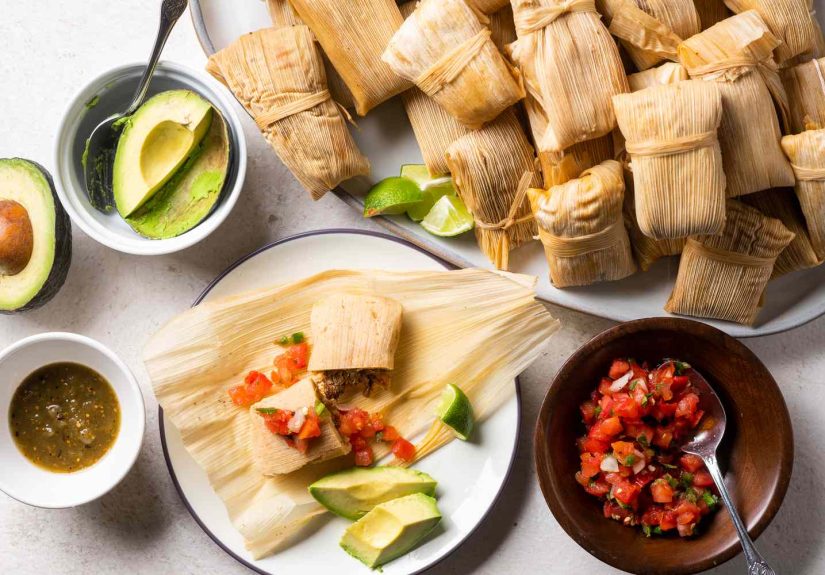
- Pico de gallo or salsa verde for contrast
- Mexican crema or sour cream
- Pickled red onions or jalapeños for a bright, tangy bite
- Beans and rice if you want the full plate experience
Storage, Freezing, and Reheating (Tamales Are Meal Prep Champions)
Cool them safely
Let cooked tamales cool a bit before refrigerating. Store them covered in the fridge.
Refrigerate
- Keep cooked tamales refrigerated and enjoy within about 4–7 days for best quality.
Freeze
- Freeze cooked tamales (they reheat better and are safer than freezing raw assembled tamales).
- Wrap tightly (plastic wrap or foil), then store in a freezer bag to prevent freezer burn.
- Best quality within 3–6 months.
Reheat (best methods)
- Steam: Re-steam until hot throughoutthis keeps the masa tender.
- Microwave: Wrap in a damp paper towel and heat in short bursts (quick, but slightly less perfect).
- Oven: Wrap in foil and warm at 350°F until heated through (good for big batches).
Food safety reminder: Reheat leftovers until the center reaches 165°F.
Beef Tamales FAQ
Why are my tamales dry?
Common causes: filling wasn’t saucy enough, masa didn’t have enough broth/fat, or tamales steamed too long with low moisture.
Keep the filling juicy, and don’t be shy with warm broth in the masa.
Why is the husk sticking to the masa?
Usually they’re undercooked. Steam longer and ensure your pot maintains steady steam (and doesn’t run out of water).
Can I use store-bought enchilada sauce?
You can, but homemade chile sauce gives you better flavor control. If using store-bought, simmer it with garlic and cumin to wake it up.
Do I need lard?
Lard is traditional and gives the fluffiest texture. Beef tallow is also excellent with beef filling.
If you avoid animal fats, vegetable shortening worksjust season the masa well so it doesn’t taste flat.
Conclusion: Your First Homemade Beef Tamales, Locked In
Homemade beef tamales are the kind of recipe that turns a random day into a memory. Yes, they take time.
But the process is simple when broken into steps: tender shredded beef, bold red chile sauce, fluffy masa, steady steam.
Make a batch, freeze extras, and enjoy the smug satisfaction of knowing you have tamales ready whenever life needs rescuing.
And when you unwrap that first tamale and the masa pulls cleanly from the husk? That’s not just dinner.
That’s a victory lap.
500-word experiences section
Real-Life Tamale Experiences: The Stuff No One Mentions (But Everyone Learns)
The first time you make homemade beef tamales, you’ll probably think: “This is going great!”
That thought is adorable. Keep it. Frame it. Because tamales have a way of teaching you lessonsgently, lovingly,
and sometimes with a little smear of masa on your elbow that you won’t notice until you walk past a mirror.
One of the biggest “aha” moments is realizing tamales are less like a single recipe and more like a rhythm.
Once you get your setup righthusks soaking, beef shredded and saucy, masa fluffy and spreadableeverything becomes an assembly line.
Someone spreads masa, someone adds filling, someone folds, someone stacks. If you’re solo, you can still do it,
but you’ll develop a very specific tamale stance: leaning over the counter like an artist, occasionally whispering,
“Please don’t tear, please don’t tear,” to a corn husk like it’s a fragile relationship.
Another universal experience: the “Is the masa thick enough?” debate. You’ll spread it too thick on the first few,
because it feels saferlike extra padding. Then you steam them and realize thick masa can turn heavy,
like your tamale put on winter boots and refused to take them off.
By tamale #10 you’ll be spreading the masa more evenly and confidently, aiming for that perfect middle ground:
enough to cradle the beef, not so much it steals the show.
Then there’s the steamer pot, the true final boss. Tamales don’t just need heatthey need consistent steam.
The most common “I can’t believe I did that” moment is forgetting to check the water level.
You’ll hear the pot get a little too quiet and suddenly remember you own legs and can walk to the kitchen.
The fix is simple: add hot water and keep steaming. But emotionally, you will spend a full minute staring into space
like you just remembered a cringey thing you said in fifth grade.
The good news is that tamales are forgiving in the ways that matter. If the husk sticks, you steam longer.
If the masa feels tight, you add a little warm broth and beat it again. If the beef tastes shy,
you stir in more red chile sauce and let it simmer until it finds its voice.
And every batch teaches you something: maybe you like a touch more cumin in your masa, or you prefer your sauce
heavy on guajillo for fruitiness and lighter on ancho for earthiness.
The best experience, though, is the moment you serve them. People don’t eat tamales casually.
They unwrap them with intentionlike opening a gift. Someone will say, “You made these?”
and you’ll try to act normal while your inner monologue does cartwheels.
That’s the tamale magic: the work disappears, the flavor shows up, and suddenly your kitchen feels like a celebration.