Table of Contents >> Show >> Hide
- Roman & Williams, Explained in Human Terms
- Why Montauk Works on Them (and Not the Other Way Around)
- The Setting: Sea Ranch, Shadmoor, and a Whole Lot of Wild
- Inside the House: “Always Unfinished,” in the Best Possible Way
- The Studios: Where the House Turns Into a Workshop
- Entertaining, Roman & Williams Style: A Dinner Party That Doesn’t Perform for You
- Design Lessons You Can Steal (Legally, Ethically, and With Great Enthusiasm)
- Montauk as Muse: Turning a Landscape Into a Palette
- The Big Point: This House Isn’t a Getaway. It’s a Generator.
- Extra: of Montauk Experience, Roman & Williams Mood Included
There are beach houses that whisper, “Relax.” And then there are beach houses that whisper, “Relax… but also, would you like to prototype a chair, glaze a vase, and debate the global cucumber-yogurt diaspora before dinner?” Welcome to Montauk, where the ocean air is salty, the dunes are dramatic, and the creative couple behind Roman & Williams treat their home like a living sketchbookone that happens to come with a fire pit.
This isn’t a glossy, precious showpiece that panics at the sight of sand. It’s the opposite: a hardworking retreat where nature is a co-designer, the rooms pull double duty, and “perfect” is politely shown the door (with mullions, because they believe in muntins). The result is a house that feels collected, intelligent, and a little bit mischievouslike it knows something you don’t, but it’s willing to share if you help pick the herbs for your cocktail.
Roman & Williams, Explained in Human Terms
Roman & Williams is the New York-based studio led by husband-and-wife team Robin Standefer and Stephen Alesch. Their work spans hospitality, residential interiors, retail, and cultural spaces, with a signature that’s hard to fake: layered materials, historical references, artisan craft, and mood for days. Their spaces don’t just look goodthey feel like a story you can sit down inside.
Before they were reshaping the way New York dines and lounges, they came up through film. That cinematic background still shows up in how they build atmosphere: they’re research-heavy, detail-obsessed, and more interested in “what does this room make you do?” than “what color is trending on social media today?”
Why Montauk Works on Them (and Not the Other Way Around)
Montauk sits at the far eastern end of Long Islandoften nicknamed “The End”and it has a split personality in the best way: surf-town ease with flashes of Hamptons polish. You can find lobster rolls, bonfires, and flip-flops in the same orbit as strong cocktails and strong opinions about where the best sunset is.
For Standefer and Alesch, Montauk isn’t a vacation “escape” so much as a creative engine with the volume turned down. They’ve described the relationship in beautifully practical terms: New York is where the heat gets cranked up and projects get fired; Montauk is where ideas are shaped and formed. Translation: in the city, you execute. In Montauk, you experiment.
The Setting: Sea Ranch, Shadmoor, and a Whole Lot of Wild
Their Montauk homeoften referred to as Sea Ranchbegan as a weathered, ramshackle cottage and evolved into a hybrid home-workshop. It’s positioned near Shadmoor State Park, an oceanfront preserve with bluffs, trails, wetlands, and long stretches of beach that make you understand why artists keep “accidentally” staying an extra day.
Sea Ranch is spread across multiple modest structures, surrounded by mature trees and a kind of plant life that feels both intentional and untamedindigenous flowers, herbs, and the sort of medicinal greenery that makes your average houseplant look like it’s not really trying. This landscape isn’t backdrop; it’s active material inspiration. The home’s design languageearthy, tactile, quietly theatricalreads like a translation of dunes and bluffs into furniture and light.
Inside the House: “Always Unfinished,” in the Best Possible Way
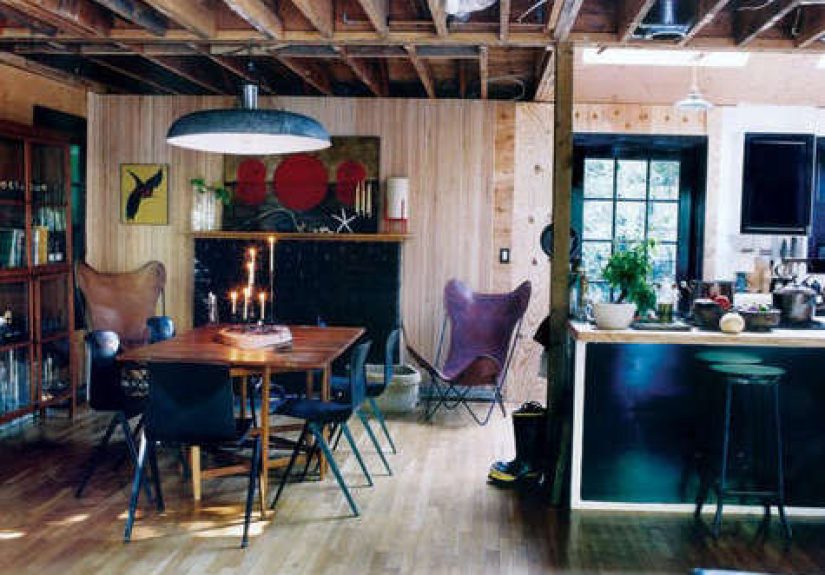
If you’re looking for sterile minimalism, you took a wrong turn at the last lighthouse. The Montauk house leans into texture and evidence of life. Standefer has described their approach as an excavation: pulling off drywall, opening up ceilings, and leaving beams exposed so the house shows its bones. The goal isn’t rustic cosplayit’s honesty.
And honesty has a sense of humor here. Big doors invite in butterflies, the occasional bug, and the reality that “screenless” living means you’ll develop a respectful relationship with nature (and possibly a flyswatter you don’t hate). Windows and doors are treated like the “eyes” of the houselarge, expressive, and carefully framed with traditional pane dividers because, yes, muntins are a hill they’ll gladly surf-die on.
A Case Study in Patina: Floors, Rugs, and the Joy of the Worn-In
Underfoot, the house favors pieces that look like they’ve lived a few interesting livesbecause they probably have. A well-worn Moroccan rug in the kitchen-sitting room isn’t just decoration; it’s an argument for durability, story, and the kind of beauty you don’t have to tiptoe around. These are “use” objects, not “don’t touch” objects.
Their affection for nomadic rugs and outdoor-friendly textiles makes sense in Montauk, where sand is basically a household member. The message is clear: if your home can’t handle real life, it’s not a homeit’s a museum with Wi-Fi.
Tambour, Beams, and the “Test Kitchen” Mentality
One of the most telling details is how often their Montauk house functions as a prototype lab. They’ve tested ideas herelike tambour claddingthen carried those lessons into major projects. That’s the Roman & Williams method in a nutshell: treat craft as a living practice, not a Pinterest board.
Even the lighting can feel like an experiment that stuck the landing. A beloved pendant might hang from an improvised wood block attached to an old beamequal parts refined and delightfully “we made this work because it works.” It’s not shabby; it’s intentional improvisation.
The Studios: Where the House Turns Into a Workshop
Sea Ranch isn’t only a place to restit’s a place to make. Alesch has a woodshop for furniture prototypes. Standefer has a ceramics studio for experimentation and production. There’s also a painting practice woven into the property’s rhythm, with seascapes and found pieces that get revisited and reworked. In other words: this is a home where creativity isn’t a “hobby corner.” It’s infrastructure.
The studios also explain why the house feels so alive: the objects aren’t merely purchased; they’re developed, tested, rejected, remade, and eventually loved. When your dining table might be tomorrow’s product prototype, you stop thinking of “design” as a finish line and start thinking of it as a loop.
Entertaining, Roman & Williams Style: A Dinner Party That Doesn’t Perform for You
If Montauk is where they shape and form, entertaining is where it all gets pressure-testedby friends, firelight, and the occasional breeze trying to rearrange your napkins. Their approach to hosting is famously relaxed: guests are invited into the process instead of arriving to a frozen tableau. People wander the garden. Herbs get snipped for drinks. Lettuces and tomatoes might become part of the evening’s storyline.
It’s hosting that feels like summer camp for grown-ups, minus the forced trust falls. (Unless you count trusting Stephen with the grill, which seems more than reasonable.)
The Cocktail Welcome: Curiosity, Served Over Ice
The first move is simple and charming: pour a drink, then walk guests out to the garden to pick herbs for it. It’s a small ritual that shifts everyone out of “I just fought traffic” mode and into “oh right, I’m a human with senses” mode. It’s also a subtle design flex: hospitality begins before anyone sits down.
The Table: A Meadow You Can Eat Next To
The tabletop is treated as its own landscape. Think wildflowers, Queen Anne’s lace, goldenrod, and culinary bloomsfennel or cilantro gone to seedarranged so the table feels like a little field decided to throw a dinner. The look is abundant but not fussy, like nature did the styling and you simply had the good sense to put it in a vase.
Their dinner table itself is a statement in material love: a long oak slab transformed into a centerpiece that can handle a crowd. Surround it with mix-and-match chairs, handmade ceramics, imperfect glassware, and linens that aren’t afraid of a spilled splash of rosé, and you’ve got the Roman & Williams entertaining thesis: luxury can be languid.
Open Fire Cooking: The Original Mood Lighting
They’re known to grill over an open firefish, meat, vegetables from the gardenbecause of course they do. It’s Montauk. The soundtrack is probably wind and laughter. The lighting is 90% sunset and 10% flames. If a champagne glass wanders into the ceramics studio by morning, that’s not a mess; that’s proof everyone had a good time.
Design Lessons You Can Steal (Legally, Ethically, and With Great Enthusiasm)
You might not have a three-structure compound near protected coastal bluffs (yet), but you can borrow the principles that make this house work. Here are the takeaways that translate to real homes, real budgets, and real life:
- Make peace with imperfection. A room that can’t tolerate surprise is a room that will eventually annoy you.
- Choose materials that age well. Woods, leathers, woolens, unlacquered metalsthings that grow character instead of demanding constant babysitting.
- Let rooms do double duty. Dining table as workspace, studio as idea lab, bedroom as “soft set” for different kinds of creativity.
- Design for rituals, not just photos. Herb snipping, fireside lingering, morning coffee in a chair that doesn’t punish you.
- Layer old and new on purpose. The magic isn’t “vintage” or “modern.” It’s the conversation between them.
- Don’t over-seal your life. Fresh air, big openings, and a little nature indoors can be a feature, not a failure.
Montauk as Muse: Turning a Landscape Into a Palette
Montauk’s beauty is not delicate. It’s wind and salt and sun, with a surf-town heartbeat and a slightly glamorous nightlife streak. The landscape can feel both soft (dunes, grasses, hazy sunsets) and stark (bluffs, open ocean, weathered wood). Roman & Williams translate that duality into interiors that combine plushness with grit.
That’s why the house doesn’t chase “beachy” clichés. You don’t need an anchor motif when you’ve got actual docks nearby and actual fish coming in. Instead, the home reads coastal through materials and mood: sun-faded tones, honest wood, tactile textiles, and objects that look like they’d be equally at home by the sea or in a candlelit bistro in the city.
The Big Point: This House Isn’t a Getaway. It’s a Generator.
The most interesting thing about Roman & Williams in Montauk isn’t a single chair or pendant or perfectly worn rug. It’s the idea that a home can be both refuge and enginesomewhere you recover, yes, but also somewhere you try things, fail gracefully, and make something better the next day.
Sea Ranch proves a quiet truth about good design: it’s not about controlling life. It’s about setting up the conditions where lifemessy, joyful, windy, hungry life looks and feels better while it’s happening.
Extra: of Montauk Experience, Roman & Williams Mood Included
Start your “House Call” weekend the way Montauk likes it: a little earlier than you planned, with sunlight that feels almost suspiciously optimistic. The town is known as “The End,” and it behaves like iteverything seems distilled down to essentials: ocean, sky, wind, coffee, and people dressed for the possibility of sand at any moment. If you want to understand why Roman & Williams treat this place like a creative studio, don’t begin inside. Begin outside.
Take a morning walk along the bluffs and trails near Shadmoor. The views do something helpful to your brain: they stretch it. The landscape is open and rolling, with beach access and shoreline views that feel like a reminder to stop clenching your jaw. Bring a light layer, even when it’s warmMontauk breeze loves a plot twist. As you walk, notice the palette: dune grass, weathered wood, the pewter-blue of distant water, the chalky tones of sand. This is the “color story” that shows up later in a Roman & Williams room, except here it’s not curated. It’s just real.
Next, head back and make a small, slightly ridiculous ritual out of your lunchbecause that’s exactly the point. Gather a few simple things and treat them like they deserve a proper stage: something fresh, something briny, something crunchy, something that tastes like it came from within ten miles. Instead of plating like you’re auditioning for a cooking show, plate like you’re telling a story: mismatched ceramics, a linen napkin that’s allowed to wrinkle, a glass that isn’t trying to be perfect. Roman & Williams aren’t chasing flawlessness; they’re chasing the feeling of handmade intelligence. You can do that, too, even if your “garden” is one pot of herbs that refuses to die.
In the afternoon, do the Montauk version of “shopping,” which is really just collecting. Look for objects with evidence of time: a small wooden bowl with a nick on the rim, an old glass bottle that catches light, a book with salt-stained corners, a vintage chair that’s charming but (be honest) a little uncomfortable. Roman & Williams would call that a prototype in disguise: you learn what you love by living with it. If something doesn’t work, you adjust. That’s the whole methoddesign as an ongoing conversation, not a final exam.
End your day the way their entertaining philosophy suggests: don’t wait until everything is perfect. Light a fire (or a candle if you’re indoors and behaving), invite people into the process, and let the evening be a little unfinished. Put out a drink and add herbs. Make something simple over heat. Eat outside if you can. If a napkin blows away, congratulationsyou are now officially “in conversation with the landscape,” which sounds nicer than “the wind stole my napkin.” Stay out long enough that you notice how the light changes and how your shoulders drop. That’s the Montauk gift: it turns mood into a material. And if you carry that homethrough texture, ritual, and a little imperfectionyou’ve basically made your own mini Sea Ranch, no dunes required.