Table of Contents >> Show >> Hide
- Quick answer: digestion time usually ranges from hours to a few days
- What “digesting food” actually includes
- A realistic digestion timeline (mouth to colon)
- 1) Mouth: seconds to minutes (but it matters)
- 2) Esophagus: about 10 seconds
- 3) Stomach: roughly 2–4 hours for many mixed meals
- 4) Small intestine: about 2–6 hours (where most absorption happens)
- 5) Large intestine (colon): about 10–59 hours (big range, normal variability)
- 6) Whole-gut transit: commonly ~1–3 days, but normal can be wider
- Why digestion time varies so much
- How long do different foods take to digest?
- Common myths (and what’s actually true)
- How to support healthy digestion (without trying to “race” it)
- When digestion timing might be a red flag
- So… how long does it take to digest food?
- Real-life experiences with digestion
- Conclusion
If your stomach had a customer service desk, it would probably say: “Your meal is important to us. Current wait time varies.”
And that’s the honest truthdigestion isn’t a stopwatch sport. It’s more like airport travel: you’ve got multiple checkpoints,
some delays, and one mystery conveyor belt (your colon) that moves at its own pace.
Still, there are useful, science-based averages. The trick is knowing what you mean by “digest.”
Are you asking how long food stays in your stomach? When nutrients get absorbed? Or when you finally “see the results”
in the bathroom? (No judgment. Biology is messy, and so are group chats about it.)
Quick answer: digestion time usually ranges from hours to a few days
For many healthy adults, food moves through the stomach and small intestine in about six hours, and then continues
through the large intestine (colon), where timing varies widely. Total “mouth-to-toilet” transit commonly lands somewhere around
one to three daysbut normal can be broader than you’d think.
What “digesting food” actually includes
Digestion is a team project with multiple steps:
- Mechanical breakdown: chewing, stomach churning, and intestinal mixing.
- Chemical breakdown: acids, enzymes, and bile breaking food into smaller pieces.
- Absorption: nutrients moving through the intestinal wall into your bloodstream.
- Transit and elimination: leftovers (plus water, bacteria, fiber, and other residue) exiting as stool.
Important note: not everything you eat gets “digested” in the strict sense. Some fibers resist digestion and instead get fermented
by gut bacteria, which can be great for colon healtheven if it sometimes produces gas with the confidence of a brass band.
A realistic digestion timeline (mouth to colon)
1) Mouth: seconds to minutes (but it matters)
Digestion starts the moment you chew. Saliva helps break down carbohydrates, and thorough chewing makes later steps easier.
Think of it as pre-chopping your ingredients before cookingyour stomach appreciates the prep work.
2) Esophagus: about 10 seconds
Swallowed food travels down via rhythmic muscle contractions. It’s a smooth slide when everything’s working normally.
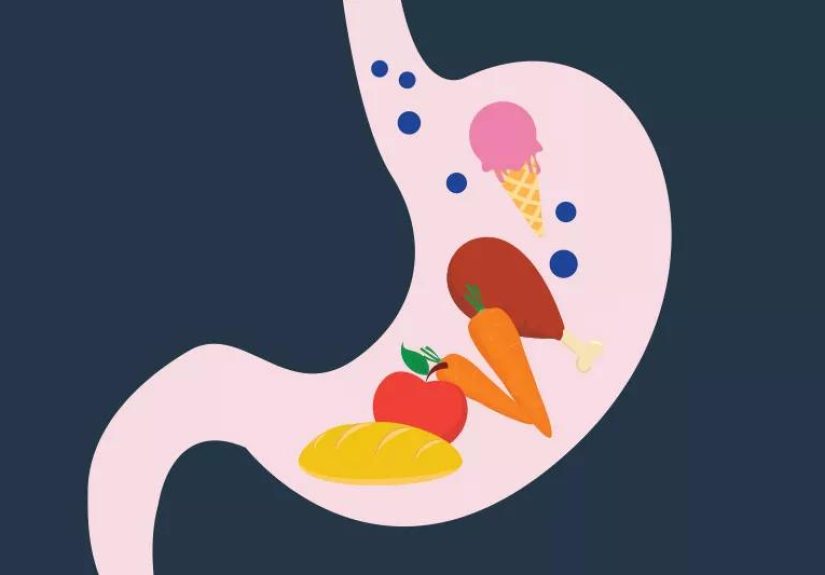
3) Stomach: roughly 2–4 hours for many mixed meals
Your stomach mixes food with acid and enzymes, turning it into a semi-liquid called chyme. A common benchmark used in medical
testing is that after a meal, around four hours is enough time for about 90% of stomach contents to
move onward for many people. Liquids usually exit faster than solids.
4) Small intestine: about 2–6 hours (where most absorption happens)
This is the main nutrient “checkout lane.” Carbs, proteins, and fats are broken down further with help from pancreatic enzymes and bile,
then absorbed. If you’re thinking, “So that’s where the good stuff goes,” yesthis is the VIP section of digestion.
5) Large intestine (colon): about 10–59 hours (big range, normal variability)
The colon absorbs water and processes what’s left. Transit here varies a lot because it’s influenced by hydration, fiber, activity, stress,
sleep, routine, and your personal gut “settings.” For some people, things move briskly; for others, the colon takes a leisurely scenic route.
6) Whole-gut transit: commonly ~1–3 days, but normal can be wider
Research using modern motility tools reports broad normal ranges. Many sources summarize typical whole-gut transit as roughly
24–72 hours for healthy adults, with a median around the high-20-hours range in some datasets. The big takeaway:
variation is normal, and the same person can vary day to day.
Why digestion time varies so much
Two people can eat the same sandwich and have completely different timelines. Here are the biggest reasons:
Meal composition (what you ate)
- Fat slows stomach emptying more than carbs or many proteins. (This is why greasy meals can feel like they “sit” longer.)
- Fiber can slow absorption of sugars and add bulk, but it often supports more regular bowel movements over time.
- Liquid meals usually pass through the stomach faster than solid, high-volume meals.
Portion size and pacing (how you ate)
A huge meal generally takes longer to process than a moderate one. Eating quickly can also increase swallowed air, which may add bloating
and discomfortyour gut’s way of saying, “We were not emotionally prepared for that speed.”
Hydration
Water helps keep stool softer and easier to move. If you’re under-hydrated, your colon may pull more water from waste, making stool harder
and slower to pass.
Activity level
Movement supports overall GI motility for many people. A gentle walk after meals won’t “fast-forward” digestion like a remote control,
but it can help things progress more comfortablyespecially for those prone to sluggishness.
Stress, sleep, and routine
Your gut and brain are in constant conversation (the gut-brain axis). Stress can change motilityspeeding it up for some people and slowing it
for others. Poor sleep and irregular schedules can also throw off bathroom timing.
Age, hormones, and medications
Digestion can change with age. Hormonal shifts (including menstrual cycle changes and pregnancy) can affect motility. Some medications
(like certain pain meds, iron supplements, or antacids) may also slow transit or contribute to constipation.
Health conditions
Conditions such as IBS, diabetes-related nerve changes, thyroid disorders, or motility problems (like gastroparesis) can noticeably alter timing.
If symptoms are persistent or severe, it’s worth discussing with a clinician.
How long do different foods take to digest?
Exact times vary, but patterns are consistent. Here’s a practical guidethink “tendencies,” not guarantees.
| Food / Meal Type | What you might notice | Why |
|---|---|---|
| Clear liquids (water, broth) | Leaves the stomach relatively quickly | Liquids empty faster than solids |
| Simple carbs (white rice, toast, sugary drinks) | Energy hits sooner, hunger may return faster | Faster breakdown and absorption |
| Protein-forward meals (chicken, eggs, Greek yogurt) | Often feels “steady” and satisfying | Protein digestion is more involved than simple carbs |
| High-fat meals (fried foods, heavy cream sauces) | Heavier fullness that can linger | Fat tends to slow stomach emptying |
| High-fiber foods (beans, lentils, veggies, whole grains) | More regularity over time; possible gas at first | Fiber adds bulk; some is fermented by gut bacteria |
| Mixed “restaurant-style” big meals | May feel slow and intense | Often high in fat + large volume + fast eating pace |
One more nuance: “digestion” isn’t just about speed. Faster is not always better. If transit is too fast, you may not absorb fluids well;
too slow, and constipation/discomfort can follow. The goal is comfortable, regular function.
Common myths (and what’s actually true)
Myth: “Food digests in exactly 30 minutes.”
Reality: Some liquids may leave the stomach quickly, but a typical mixed meal often takes hours to clear the stomach and longer to finish the trip.
Your gut isn’t a microwavemore like a slow cooker with good intentions.
Myth: “If you feel hungry, your stomach must be empty.”
Reality: Hunger is influenced by hormones, blood sugar patterns, sleep, stress, and routinenot just stomach fullness. You can feel hungry
even when digestion is still underway.
Myth: “You can ‘hack’ digestion to be dramatically faster.”
Reality: You can support digestion (hydration, fiber, activity, mindful eating), but you can’t safely force your GI tract to sprint on command.
If you’re constantly trying to speed things up because you feel uncomfortable, it’s worth exploring the underlying cause.
How to support healthy digestion (without trying to “race” it)
- Eat at a steady rhythm: consistent meals can help consistent motility.
- Balance your plate: include fiber, protein, and healthy fatsbut don’t go extreme in any one direction.
- Increase fiber gradually: sudden jumps can cause gas and bloating.
- Drink fluids regularly: especially when increasing fiber.
- Move a little each day: even light activity can support regularity.
- Slow down when you eat: chewing and mindful pacing can reduce discomfort.
- Notice patterns: some people react to dairy, high-fat meals, sugar alcohols, or certain high-FODMAP foods.
When digestion timing might be a red flag
Some variation is normal, but certain symptoms deserve medical attentionespecially if they’re new, persistent, or worsening. Consider
checking with a healthcare professional if you have:
- Ongoing constipation or diarrhea that doesn’t improve
- Unexplained weight loss
- Blood in stool or black/tarry stools
- Severe abdominal pain, persistent vomiting, or trouble swallowing
- Frequent heartburn or reflux that disrupts daily life
Bottom line: timing is one clue, but your overall symptom pattern matters more than any single number on a digestion “clock.”
So… how long does it take to digest food?
For many people, stomach + small intestine transit averages around six hours, while total gut transit commonly falls in the
1–3 day range, with normal variation. Your meal’s fat/fiber content, hydration, activity, stress, sleep, medications, and health
conditions can all speed things up or slow them down.
If you remember one thing, make it this: digestion time is less like a strict schedule and more like a weather forecastusually accurate in broad strokes,
occasionally surprising, and always affected by local conditions.
Real-life experiences with digestion
Let’s get practical, because “2–6 hours in the small intestine” sounds tidy until you’re the one sitting in jeans that suddenly feel like a personal attack.
In real life, people often judge digestion by sensationsfullness, energy, bloating, hunger, and bathroom timingrather than by what’s happening
in each organ. And those sensations don’t always match the exact location of the food.
For example, many people notice that a light breakfast (say, yogurt and fruit or toast) feels “gone” pretty quickly. That doesn’t mean it teleported out of
your body; it usually means your stomach emptied without much drama and your blood sugar/energy levels are shifting. On the flip side, a heavy, high-fat
mealthink cheeseburger, fries, and a milkshakecan feel like it’s setting up camp. The common experience is prolonged fullness, sometimes reflux,
and a general “why did I do this to myself?” mood. That lingering feeling lines up with how fat tends to slow stomach emptying for many people.
Another common experience: the “salad paradox.” Some folks eat a big salad and expect to feel light, but instead they feel bloated. Often it’s not that the
salad is “hard to digest” in a dangerous way; it’s that raw veggies and high fiber increase volume, require more chewing, and may ferment more in the gut,
especially if you aren’t used to that much roughage. People who gradually increase fiber often report that the bloating fades over a couple of weeks as their
gut microbiome and routine adjust. In other words, your gut can be trainedkindly, not aggressively.
Bathroom timing is also deeply personal. Some people are “morning meeting” types: they eat breakfast, coffee shows up like a motivational speaker,
and the body says, “All right team, let’s move this along.” That’s a real reflexeating can stimulate colon activityso it’s not weird that breakfast
triggers a bowel movement even though that meal hasn’t finished its journey. Meanwhile, others don’t have a predictable schedule at all. Travel,
stress, and changes in sleep can cause the gut to act like it forgot its password and needs a reset.
Then there’s the experience of “I ate something and immediately had to go.” That can be alarming, but it’s often not yesterday’s burrito sprinting through
your system at superhero speed. More commonly, a meal stimulates the gastrocolic reflex, which moves existing contents of the colon along.
People often connect the timing to the most recent food, but the GI tract is a pipelinewhat you feel now can be influenced by what you ate a day or two ago.
Lastly, there’s the emotional side: digestion feels slower when you’re anxious, rushed, or eating on the go. Many people find that simply sitting down,
chewing longer, and taking a short walk after eating makes them feel bettereven if it doesn’t magically cut hours off transit time. The lived experience
of digestion is often about comfort and rhythm. When your routine supports your gut, digestion doesn’t need to be fast; it just needs to be smooth.
Conclusion
Digestion time depends on what you mean by “digest,” but a helpful rule of thumb is that a typical meal may take a few hours to clear the stomach and small
intestine, and roughly a day or two (sometimes longer) to complete the full journey through the colon. Meal composition, hydration, movement, stress, sleep,
medications, and health conditions all shape the timeline. Aim for consistency and comfortnot speedand talk with a healthcare professional if symptoms
are persistent, severe, or concerning.