Table of Contents >> Show >> Hide
- Carpet installation cost at a glance
- What’s included in “installed carpet” (and what often isn’t)
- The biggest factors that change carpet installation cost
- How to calculate the cost of installing carpet (step-by-step)
- A real example: build a carpet installation estimate
- Room-by-room “ballpark” thinking (without the guesswork)
- How to save money on carpet installation (without buying “regret”)
- What to ask for in a carpet installation quote
- 500+ words of real-world experiences homeowners report (so you can budget smarter)
- The “Why is the square footage higher than my room?” moment
- Stairs: small surface area, big labor
- Furniture moving is either a bargain or a budget ambush
- The pad upgrade that suddenly makes sense
- Subfloor prep: the hidden hero of a smooth install
- Quote comparison becomes easy when you “unbundle” the price
- Conclusion
Carpet has a special talent: it can make a room feel warmer, quieter, and instantly more “homey”…
right up until you get the quote and realize your floor is about to become an investment portfolio.
The good news is carpet pricing isn’t mysterious once you know what you’re paying for and how installers do the math.
This guide breaks down carpet installation cost, the biggest price drivers, and a simple way to calculate your own estimatewithout needing a crystal ball or a contractor’s clipboard.
Carpet installation cost at a glance
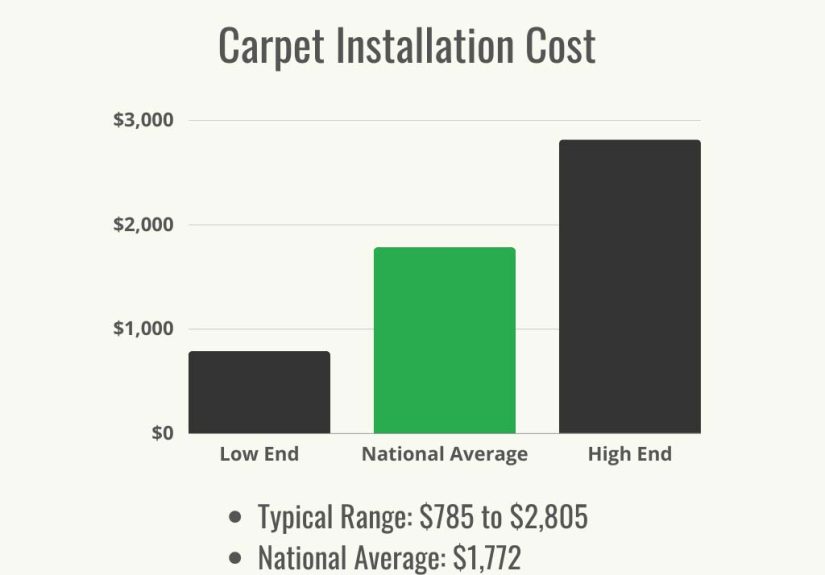
In the U.S., most homeowners land somewhere in a broad middle range, but “installed carpet” can swing widely depending on carpet type,
padding, room layout, stairs, and prep work. Typical cost guides commonly cite installed pricing in the neighborhood of
$3 to $11 per square foot, while some breakdowns estimate around $3.50 to $11 per square foot for installed carpet.
Carpet is also often priced by the square yard (since many carpets are sold that way), and a common reference range is
roughly $30 to $50 per square yard for carpet pricing in that unit.
| Cost item | How it’s commonly priced | What can move it up |
|---|---|---|
| Carpet (material) | $/sq ft or $/sq yd | Wool, premium nylon, heavy face weight, pattern matching, stain/soil tech |
| Padding (cushion) | $/sq ft | Rubber/frothed foam, higher density, thicker pad (within warranty limits) |
| Labor (install) | $/sq ft or project minimum | Stairs, seams, furniture moving, tight closets, odd angles, high-rise carry |
| Removal + disposal | $/sq ft or flat fee | Old carpet + pad, staples/tack strip removal, heavy debris, dump fees |
| Subfloor prep | Hourly or $/sq ft | Squeaky/uneven floors, moisture issues, patching, leveling |
What’s included in “installed carpet” (and what often isn’t)
Many quotes bundle multiple line items into one installed price: carpet material, padding, tack strips, basic installation,
and standard transitions. Retail installation programs may include professional measurement and a basic level of floor prep.
But not everything is automatically includedso it pays to read the fine print like it owes you money.
Commonly included
- Standard carpet installation (stretch-in over tack strips for many residential broadloom carpets)
- Basic padding installation (sometimes you choose the pad upgrade)
- Seaming and trimming for straightforward layouts
- Basic jobsite cleanup
Often extra
- Moving furniture (especially beds, dressers, pianosyes, pianos always cost extra)
- Removing and hauling away old carpet/pad
- Stairs (typically priced per step or as a separate line item)
- Repairs to subfloor (squeaks, soft spots, leveling, moisture barriers)
- Pattern matching (more waste, more labor, more “why is this so expensive?”)
- Special transitions, custom trim, or unusual room shapes that require extra seams
The biggest factors that change carpet installation cost
1) Square footage (and the “not-so-secret” overage)
Bigger rooms cost more because carpet is fundamentally priced by area. But you don’t buy carpet the way you buy paint.
Most carpet comes in wide rolls (commonly 12 feet, with some 15-foot options), so installers plan cuts and seams based on roll width.
That can create unavoidable leftoversespecially in rooms wider than the roll, long hallways, or layouts with lots of nooks and closets.
2) Room shape, seams, and pattern matching
Rectangles are budget-friendly. L-shapes, angled walls, and built-ins are not. More seams mean more labor.
Patterned carpet can also increase waste because pieces must align to look rightbeautiful, but picky.
3) Carpet fiber and style
Nylon is popular for durability, polyester can be budget-friendly, and wool is often premium-priced.
Loop piles (like Berber) and textured styles can hide footprints, while plush cuts look luxe but may show traffic patterns more easily.
You’re not just buying softnessyou’re buying performance, cleaning ease, and how it looks six months after real life happens.
4) Padding quality
Padding is the unsung hero of comfort and longevity. Higher quality cushion can make a mid-range carpet feel better and last longer.
Pricing varies by material and thickness/density; many cost references place installed padding in a broad band that can reach several dollars per square foot,
depending on the type (for example, rebond foam versus rubber).
5) Labor rates and minimum charges
Labor can be priced per square foot, per room, or as a base rate plus add-ons. In some markets, small jobs still trigger a minimum charge.
In higher-cost metro areas, labor often climbs even when carpet material stays similar.
6) Tear-out and disposal
Replacing carpet usually means paying to remove old carpet and padding, pull staples/tack strip, and haul everything away.
If your current flooring has seen a few decades (and maybe a few pets), removal can take longer.
7) Stairs
Stairs are labor-intensive: more cuts, more fastening, more precision. Cost guides commonly quote stair carpeting as a per-step price.
If your staircase is curved or has landings and winders, expect the price to lean upward.
8) Subfloor prep and repairs
Carpet can hide minor imperfections, but it can’t fix a soft subfloor or moisture problem. If installers find squeaks,
uneven areas, damaged subfloor, or moisture concerns, repairs add costbut skipping them can shorten the life of the new carpet.
How to calculate the cost of installing carpet (step-by-step)
You can build a surprisingly accurate estimate with a tape measure, a calculator, and the willingness to do a tiny bit of math.
Here’s the simple framework:
- Measure total floor area (sq ft).
- Add overage (waste allowance).
- Convert to square yards if your carpet is priced that way.
- Price carpet + padding + labor + extras.
Step 1: Measure your rooms in square feet
For each rectangular room: Length × Width = Square Feet. For rooms that aren’t perfect rectangles, split them into smaller rectangles,
calculate each section, then add them together. Don’t forget closets if they’ll be carpeted.
Step 2: Convert square feet to square yards (when needed)
Many carpets are sold by the square yard. The conversion is easy:
Square yards = Square feet ÷ 9.
(Because 1 square yard equals 9 square feet.)
Step 3: Add waste/overage (the part everyone forgets)
Overage covers cutting, seams, and the fact that carpet comes in wide rolls. A common planning range is about 5% to 20%,
depending on room shape, roll width, and whether you’re matching a pattern.
A quick way to estimate:
Adjusted area = Total sq ft × 1.10 (10% overage) for typical rooms
Use 1.15 to 1.20 if you have lots of angles, closets, or a bold repeating pattern.
Step 4: Price your carpet material
Pick a target material price range per square foot (or per square yard) based on the style and fiber you want.
Remember: the “shelf price” and the “installed price” are not the same thing.
Step 5: Add padding cost
Padding can be priced separately. If you’re comparing quotes, confirm whether the padding is included, what type it is,
and whether it meets the carpet manufacturer’s warranty requirements (density and thickness matter).
Step 6: Add labor and common add-ons
Typical add-ons that can change your total:
- Remove old carpet/pad: priced per sq ft or as a flat fee
- Furniture moving: per piece or bundled with install
- Stairs: per step pricing is common
- Transitions: new strips where carpet meets tile/wood
- Subfloor work: patching, leveling, squeak fixes
- Delivery: sometimes included, sometimes not
A real example: build a carpet installation estimate
Let’s say you want to carpet a 12 ft × 15 ft bedroom and a 6 ft × 8 ft closet.
1) Measure
- Bedroom: 12 × 15 = 180 sq ft
- Closet: 6 × 8 = 48 sq ft
- Total: 228 sq ft
2) Add overage
Use 10% for a fairly simple layout:
228 × 1.10 = 250.8 sq ft (round to 251 sq ft)
3) Convert to square yards (optional)
251 ÷ 9 = 27.9 sq yd (round to 28 sq yd)
4) Price the components (sample numbers)
We’ll use a mid-range installed target (you’ll substitute your local quote):
- Carpet material: $2.75/sq ft × 251 = $690
- Padding: $1.00/sq ft × 251 = $251
- Labor: $1.50/sq ft × 251 = $377
- Remove/dispose old carpet: $0.50/sq ft × 251 = $126
- Misc. (transitions, supplies): $75
Estimated total: $690 + $251 + $377 + $126 + $75 = $1,519
That’s an example, not a universal truth. In many real quotes, some of these items are bundled into a single installed price.
The point is you now know what to ask when a quote feels high (or suspiciously low).
Room-by-room “ballpark” thinking (without the guesswork)
If you prefer a faster approach, you can estimate by multiplying your total square footage (including overage)
by an installed price-per-square-foot range you’re comfortable with. Many national references put installed carpet commonly around
$3 to $11 per square foot, while location-based estimators may land in a narrower midrange depending on zip code, site conditions, and options.
- Small bedroom (200–300 sq ft installed): often lands in the “hundreds to low thousands,” depending on materials
- Living room (300–500 sq ft installed): frequently higher due to furniture and visibility (people care more what it looks like)
- Whole-home recarpet (1,000+ sq ft installed): economies of scale can help, but removal and stairs can add up quickly
How to save money on carpet installation (without buying “regret”)
Choose the right fiber for the room
Put your budget where your feet are. A plush showpiece carpet in a low-traffic bedroom can be great,
while a durable nylon in hallways and family rooms tends to age better.
Don’t cheap out on padding
The right pad can improve comfort and reduce wear. If you have to trim costs, consider choosing a slightly less premium carpet
but keeping a solid pad that meets the manufacturer’s specs.
Control the add-ons
- Move small furniture yourself (if your installer allows it).
- Clear closets and remove fragile items ahead of time.
- Ask if you can handle tear-out (only if you’re comfortableand local disposal is realistic).
- Get multiple quotes and compare line items, not just the grand total.
Be strategic with patterns
Patterned carpet can increase waste and labor. If you love a pattern, consider using it in a smaller area
(like a home office) and a coordinating solid elsewhere.
What to ask for in a carpet installation quote
A good quote should feel like a recipe, not a riddle. Ask for:
- Exact carpet style and fiber (and price per sq ft or sq yd)
- Padding type (material, thickness, density)
- How overage is calculated (and whether pattern matching affects it)
- Labor details (seams, stairs, furniture, minimum charges)
- Removal/disposal (included or separate)
- Subfloor assumptions (what’s included vs what triggers extra cost)
- Warranty info (installation warranty and product warranty requirements)
- Timeline and what you need to do before install day
500+ words of real-world experiences homeowners report (so you can budget smarter)
If you read enough homeowner stories (and talk to enough installers), a few themes show up again and againusually right after someone says,
“We thought we measured correctly.” Consider this the “been there, paid that” section: not horror stories, just practical lessons that tend to surface
after the first quote or the first installation day.
The “Why is the square footage higher than my room?” moment
Many homeowners start with clean math: length times width, done. Then the installer’s measured amount is higher, and it feels like someone added
“mystery feet” to the invoice. The most common explanation is overage caused by roll width and seam planning. A 12-foot-wide roll can force extra
length purchases even when the room’s square footage looks modest on paperespecially for wide rooms, long hallways, or spaces with offsets.
Homeowners who budget a waste allowance up front tend to feel surprised less often (and annoyed less loudly).
Stairs: small surface area, big labor
Stairs are where budgets go to do push-ups. People underestimate stair cost because stairs don’t “look” big. But stair installation involves
careful fitting, more fastening, more cuts, and more time. Homeowners often report that splitting stairs into a separate line item helped them compare quotes
fairly. It also made decisions easierlike choosing a tougher, more stain-resistant style for stairs and a softer carpet for bedrooms.
Furniture moving is either a bargain or a budget ambush
Another common experience: the quote seems great… until furniture moving and “heavy items” appear as add-ons. Some installers include basic moving,
others price per piece, and many exclude fragile or oversized items entirely. Homeowners who cleared rooms ahead of time often say it sped up installation day
and reduced stress (and accidental scuffs). The practical takeaway: decide early what you’ll move yourself, what you expect the crew to move,
and what items need special handling.
The pad upgrade that suddenly makes sense
Plenty of people go into the process thinking padding is a throwaway cost. Then they step on two samplessame carpet, different padand the difference
is immediate. Homeowners commonly report that a better pad made a mid-priced carpet feel “premium,” while a cheap pad made an expensive carpet feel flat.
The other surprise: some carpet warranties specify minimum pad density/thickness. When homeowners learned that, many chose a pad that met the spec
even if it cost a bit more, because replacing carpet early is the most expensive “savings plan” imaginable.
Subfloor prep: the hidden hero of a smooth install
One of the most consistent experiences is discovering that subfloor prep matters more than anyone wants to admit.
Squeaks, soft spots, old adhesive, uneven seams, and moisture issues can all show up once the old carpet comes out.
Homeowners who built a small contingency (even 5% to 10%) into their budget said they felt calmer when repairs were recommended.
Homeowners who didn’t… tend to describe the experience with creative vocabulary.
Quote comparison becomes easy when you “unbundle” the price
People often share that the best decision they made was asking every installer to break costs into the same buckets:
carpet, pad, labor, removal, stairs, furniture, and prep. Once the numbers were organized, the “cheap” quote sometimes wasn’t cheap anymoreit just
excluded essentials. And the “expensive” quote sometimes included better pad, removal, and a stronger warranty. The lesson:
don’t compare totals until you compare ingredients.
Bottom line: most carpet projects go smoothly when homeowners do three things earlymeasure carefully, plan for overage and add-ons,
and get quotes that spell out what’s included. Do that, and you’ll spend less time arguing about math and more time enjoying the quiet, cozy payoff.
Conclusion
Carpet installation cost is a mix of straightforward math and real-world detailsroll width, waste, stairs, padding, labor, removal, and the occasional subfloor surprise.
If you measure your space, add a sensible overage, and price carpet + pad + labor + extras separately, you’ll be able to sanity-check quotes and choose where to spend (or save)
without sacrificing comfort. Get multiple bids, compare line items, and remember: the goal isn’t the cheapest carpetit’s the best carpet decision for how your home actually lives.