Table of Contents >> Show >> Hide
- Why boarding up windows matters
- When plywood makes senseand when it does not
- What you need
- Step 1: Measure every opening carefully
- Step 2: Choose the right plywood
- Step 3: Buy hardware that matches your house
- Step 4: Cut, label, and pre-drill before hurricane season
- Step 5: Test-fit every panel once
- Step 6: Install the panels correctly when a storm threatens
- Do not make these common mistakes
- What about upper-story windows?
- Should you board from the inside or outside?
- After the storm passes
- The long-term upgrade worth considering
- Final thoughts
- Experiences and lessons homeowners often share about boarding up windows during a hurricane
Note: This article reflects general U.S. hurricane-prep guidance. Always follow local building codes, evacuation orders, and manufacturer instructions for your specific home and hardware.
When a hurricane is on the map, your windows suddenly become the divas of the house. If they hold, your home has a much better chance of keeping out flying debris, wind-driven rain, and the kind of pressure changes that turn a bad storm into a truly expensive one. If they fail, the storm can move from “annoying weather event” to “why is my couch wet and my ceiling missing?” in a hurry.
That is why learning how to board up windows during a hurricane is one of the most practical pieces of hurricane prep you can have in your back pocket. Done properly, plywood hurricane shutters can provide a solid temporary layer of protection. Done badly, they can become heavy flying mistakes with screws.
The good news is that this job is very doable for many homeowners. The less-good news is that it works best when you do the prep before everyone else in town has cleaned out the hardware store. This guide walks through what to buy, how to measure, how to install the panels safely, and the biggest mistakes to avoid.
Why boarding up windows matters
Boarding up windows is not just about protecting glass. In a hurricane, broken windows can allow strong winds and rain to enter the house. Once that happens, the inside of the home can become pressurized, which may increase damage to the roof, walls, doors, and everything you forgot to move away from the windows. In plain English: one broken opening can invite the whole storm in for dinner.
That is also why experts usually say permanent storm shutters or impact-rated systems are the best long-term solution. But if you do not have those installed, properly prepared plywood is a common and budget-friendlier backup option for hurricane window protection.
When plywood makes senseand when it does not
Plywood is a practical temporary solution, especially if you prepare it before hurricane season. It is widely available, relatively affordable, and reusable if stored correctly. For many households, it is the difference between doing something meaningful and doing nothing except staring nervously at the weather app.
That said, plywood is not magic. It is heavy, awkward on ladders, and only works well when it is measured correctly and fastened into solid framing or masonry. If you wait until conditions are already windy, the project can become dangerous fast. Do not try to wrestle full-size panels onto upper-story windows while the weather is already going sideways. At that point, the smart move may be to protect what you can from the ground, secure the rest of the property, and follow evacuation guidance.
What you need
For most homes, the basic materials for boarding up windows during a hurricane include:
- 5/8-inch exterior-grade or marine plywood
- Tape measure
- Circular saw
- Drill and appropriate drill bits
- Lag screws or expansion bolts, depending on the wall material
- Anchors, washers, nuts, and wrench
- Permanent marker for labeling panels
- Work gloves and eye protection
- Optional paint or sealant for longer-term storage
If your home has larger openings such as sliding glass doors or oversized picture windows, you may also need 2×4 bracing and longer screws. Bigger openings need bigger plans, not just bigger optimism.
Step 1: Measure every opening carefully
Start by counting every glass opening you may need to protect. That includes regular windows, sidelights, French doors, sliding glass doors, skylights, and in some cases gable vents or other openings that could let wind in if damaged.
For a common overlap-mounted plywood method, measure the opening and add extra coverage so the panel overlaps the surrounding area. A widely used rule is to add 4 inches of overlap on each side, which means adding 8 inches to both the height and width of the opening. If the sill projects outward, adjust the measurement so the panel still sits securely where it can be fastened well.
Write each measurement down immediately. Trusting yourself to remember “the second bedroom window but, like, the wider one” is a bold strategy and not a wise one.
Step 2: Choose the right plywood
The most commonly recommended choice is 5/8-inch exterior-grade plywood. Marine plywood is also commonly mentioned, but the key point is thickness and exterior durability. Thinner panels may be cheaper, but this is not the time to let your budget become a weather experiment.
For larger openings, thicker plywood or additional bracing may be necessary. Some guidance also describes a recessed-window method using 5/8-inch or even 3/4-inch plywood fitted inside a window inset and secured with barrel bolts. That approach can be very effective when the window design allows it, but it requires more exact measuring and preparation.
Step 3: Buy hardware that matches your house
This part matters more than people think. The plywood is only as good as the way it is attached. Fasteners vary based on whether your house is wood-frame or masonry.
For wood-frame homes
Fasteners should go into the reinforced framing around the window, not into trim, siding, or decorative material that looks sturdy until a storm proves otherwise. Smaller openings may use lighter lag screws and permanent anchors, while larger windows typically require heavier lag screws with deeper penetration into the framing.
For masonry homes
Expansion bolts and permanent expansion anchors are commonly recommended. Again, larger openings require heavier hardware. The goal is not to “sort of attach the panel”; the goal is to create a system that can resist impact and wind pressure.
If you are unsure what your wall construction is or where the structural framing actually is, pause and verify before drilling. Guessing is not a fastening method.
Step 4: Cut, label, and pre-drill before hurricane season
This is where smart prep saves you stress later. Cut each plywood panel to its assigned opening and label it clearly. Write where it goes, which side faces out, and which edge is the top. “Guest room north window” is useful. “Window-ish panel #4?” is not.
Pre-drill the plywood in advance. Many practical guides recommend placing holes a couple of inches in from the edges and spacing them regularly around the panel perimeter. Exact spacing varies by method, panel size, and local requirements, but the big idea is the same: do the layout and drilling now, not when a warning is issued and the driveway feels like a panic-themed obstacle course.
Some homeowners also install permanent anchors ahead of time so the plywood can be mounted much faster when a storm approaches. That is one of the best ways to turn plywood from a last-minute scramble into a real hurricane preparedness system.
Step 5: Test-fit every panel once
Do not skip the practice run. Hold each panel in place, mark the mounting locations, drill the wall or framing as needed, and make sure the hardware fits. This is the moment to discover a measurement errornot six hours before landfall while your neighbor is also trying to borrow your drill.
A test-fit also helps you spot problems like uneven trim, non-square openings, loose masonry, or a panel that blocks an important exit path. Fixing those issues early makes storm-day installation much faster and safer.
Step 6: Install the panels correctly when a storm threatens
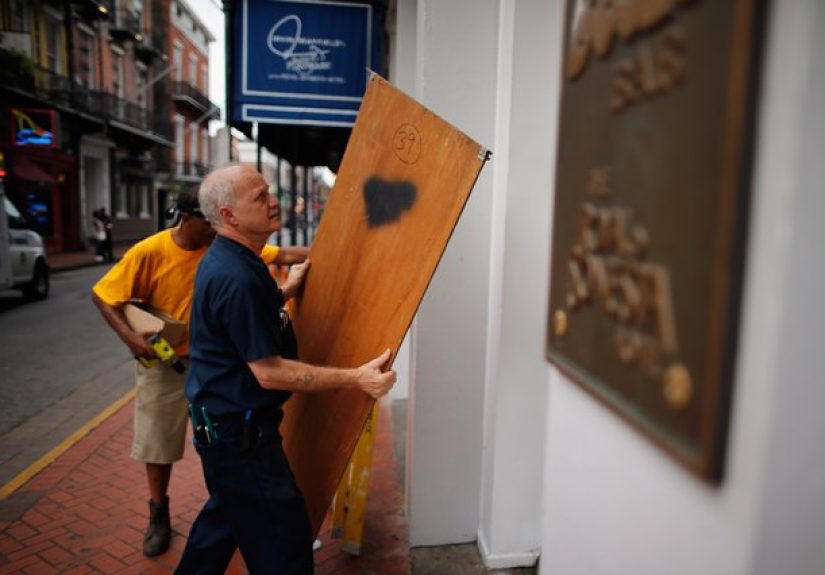
Once a hurricane watch or local warning puts your area on alert, install the pre-cut panels before conditions deteriorate. Lift the panel into place, align it carefully, and secure it with the matching hardware. Tighten everything firmly, but do not overtighten to the point of damaging the wood or stripping anchors.
If the panel overlaps the wall surface, make sure it is secured on the sides intended for your opening style. If the panel is part of a recessed-window system, make sure it seats properly inside the inset and the bolts engage cleanly.
For large windows or doors wider than a sheet of plywood, join panels with full seam bracing, typically using 2x4s and exterior screws. Large openings need reinforcement because a giant floppy panel is not protection; it is a future story you tell your insurance adjuster.
Do not make these common mistakes
1. Taping the windows
This is the classic hurricane myth that refuses to retire. Tape does not protect windows from flying debris, and it does not make weak glass strong. It mostly wastes time that would be better spent installing real protection.
2. Nailing plywood into trim or siding
Your trim is not a structural superhero. Fasteners need to go into framing or masonry that can actually resist load.
3. Waiting too long
Once winds begin increasing, ladder work becomes dangerous. Plywood installation should happen early enough that you can work carefully and safely.
4. Forgetting doors and large glass openings
French doors, sliders, garage door windows, and other glazed openings matter too. Protecting only the front windows is like wearing one oven mitt and calling yourself a chef.
5. Blocking every way out
Once your windows and doors are boarded or shuttered, emergency escape can become harder. Make sure everyone in the house knows the available exits and that at least one safe route remains usable from inside.
What about upper-story windows?
Second-story and higher windows are where hurricane prep turns from weekend project to serious safety decision. If you are not experienced on ladders, do not have the right equipment, or cannot install panels long before winds arrive, do not force it. Consider professional help or invest in permanent storm shutters for those openings.
There is no trophy for “most determined person on a ladder during a storm watch.” There is, however, a very real risk of injury.
Should you board from the inside or outside?
In general, exterior protection is preferred because it is meant to stop or reduce the impact before the glass fails inward. Interior boarding is far less common as a primary method and may not provide the same protection against debris and water intrusion. When people ask this question, what they usually mean is, “Can I do the easier thing?” Unfortunately, hurricanes are not famous for rewarding shortcuts.
After the storm passes
Do not rush outside the second the wind drops. Wait for local officials to say conditions are safe. Storms can shift, feeder bands can return, and downed lines or damaged structures can create hazards after the eye passes or the main wind subsides.
When it is safe, inspect the panels before removing them. If a panel cracked, split, or pulled at the fasteners, replace or repair it before storing it. Store reusable plywood in a cool, dry area, keep the matching hardware together, and touch up any sealant or paint if needed. Future-you will be deeply grateful when the next storm season rolls around.
The long-term upgrade worth considering
If you live in a hurricane-prone area and find yourself doing the plywood dance every season, permanent protection may be worth the investment. Impact-rated windows, roll-down shutters, accordion shutters, and code-approved storm panels are usually better long-term solutions. Look for recognized impact standards rather than vague marketing phrases like “storm tough” or “hurricane ready-ish.”
Plywood works, but it is still the temporary understudy. Permanent protection is the lead actor.
Final thoughts
Learning how to board up windows during a hurricane is really about doing three things well: choosing the right materials, fastening them correctly, and preparing before the pressure is on. The smartest version of this job happens long before the forecast cone starts living rent-free in your brain.
Measure early, pre-cut your panels, label everything, use proper hardware, and do not rely on tape, wishful thinking, or your cousin who says he can “probably eyeball it.” When storms threaten, calm preparation beats last-minute chaos every single time.
Experiences and lessons homeowners often share about boarding up windows during a hurricane
Ask people who have been through multiple hurricane seasons, and you will hear the same story in different accents: the first year is chaos, the second year is a system. Many homeowners say their biggest mistake was assuming they would “handle it when the storm gets closer.” Then the forecast shifted, the hardware store ran low on supplies, and suddenly a simple prep task became a race against time. The people who had the easiest experience were rarely the luckiest. They were the ones who had already measured each opening, labeled every panel, and stored all their bolts in one place instead of five mysterious coffee cans.
Another common lesson is how heavy plywood feels when you are tired, sweaty, and trying to hold it steady on a ladder. Homeowners often say they underestimated the physical side of the job. A panel that seemed manageable in the garage felt completely different outside in humid air with a storm clock ticking in the background. That is why many experienced residents recommend doing a full dry run on a calm day. It shows you which windows need two people, which ladder height feels safe, and whether your “simple plan” is actually simple or just optimistic.
People also talk about the emotional side of window boarding. There is something unsettling about turning your home into a plywood fortress. Rooms get darker. The house sounds different. Every drill noise seems extra dramatic. But many say that once the panels are up, they feel calmer, not more anxious. The work creates a sense of control. Even when you cannot control the storm, you can still control whether your supplies are ready, your windows are covered, and your family knows the plan.
One especially common experience is discovering that labeling matters more than you think. Homeowners who skipped labels often describe the same scene: panels stacked in the garage, rain bands moving in, everyone arguing over which one fits the dining room window. The households with the smoothest setup tend to have each panel clearly marked, stacked in order, and matched with the correct hardware. It sounds boring until the wind picks up. Then boring becomes beautiful.
Finally, many longtime coastal residents say hurricane prep taught them a broader lesson about home resilience. Once they started with window protection, they began noticing other weak points too: loose outdoor furniture, an aging garage door, overhanging limbs, clogged gutters, or missing supplies. Boarding up windows became the gateway project that made the whole home-prep plan better. In that way, the experience is not just about plywood. It is about building habits that make storm season less frantic and far more manageable.