Table of Contents >> Show >> Hide
- Table of Contents
- What Head Lice Are (and Aren’t)
- What You Need Before You Start
- What You’re Looking For: Lice vs. Nits vs. “Random Hair Confetti”
- Option A: Quick Dry-Hair Check (Fast and Decent)
- Option B: Wet Combing Check (Most Accurate at Home)
- How to Interpret What You Find
- What to Do Next If You’re Positive
- When to Call a Clinician (or School Nurse)
- Prevention & Smart Re-Checking
- FAQ
- Experiences & Practical Tips from Real Life (About )
- Conclusion
Let’s talk about head licethe tiny freeloaders that show up uninvited, act like they pay rent, and somehow convince everyone they’re a moral failing. (They’re not.) If your scalp is itchy or your school/work sent home a “heads up” notice, you can check yourself accurately without spiraling into a full-home hazmat operation.
This guide walks you through what to look for, how to do a quick check, how to do a thorough “wet combing” check (the most reliable at-home method), and what to do with the results. You’ll also get some real-world tips so the process is more “five-star routine” and less “low-budget horror movie.”
Table of Contents
- What head lice are (and aren’t)
- What you need before you start
- What you’re looking for: lice vs. nits vs. dandruff
- Option A: Quick dry-hair check (fast and decent)
- Option B: Wet combing check (most accurate at home)
- How to interpret what you find
- What to do next if you’re positive
- When to call a clinician (or school nurse)
- Prevention & smart re-checking
- FAQ
- Experiences & practical tips from real life
What Head Lice Are (and Aren’t)
Head lice are tiny insects that live on the scalp and feed on small amounts of blood. They spread mostly through direct head-to-head contact. They crawl; they don’t hop or fly. So no, you don’t need to blame a passing breeze or imagine lice parachuting onto your part line.
Also important: having head lice is not a sign of poor hygiene. Lice don’t care how fancy your shampoo is. They care about access to a warm scalp and hair to hang onto.
What head lice usually do not do: spread disease. What they can do: cause itching and lead to skin irritation if you scratch a lot. That’s why checking early (and accurately) matters.
Quick note: This article is for general education and at-home checking. If you’re unsure what you’re seeingor you’re checking a baby, someone with infected sores, or eyelashes/browsget medical guidance.
What You Need Before You Start
You can do a basic check with your eyes and a mirror, but the right setup makes the difference between “I’m pretty sure?” and “I know.”
Grab these (most are cheap and easy)
- Bright light: bathroom lighting is often not enough; use a lamp or phone flashlight.
- Two mirrors (or a mirror + phone camera) to see the back of your head.
- Fine-toothed lice comb (metal if possible): this is your MVP.
- Regular comb to detangle first.
- White conditioner (for wet combing): makes hair slippery and helps you spot what comes out.
- Paper towels/tissues (white): to wipe the comb and inspect what you catch.
- Clips or hair ties to section hair (especially for thick/curly/long hair).
- Optional: magnifying glass (helpful), disposable gloves (nice-to-have if checking someone else).
Set the scene (seriously, it helps)
- Pick a spot where you can clean up easily (bathroom or kitchen sink area).
- Wear a light-colored shirt or drape a white towel around your shoulders for contrast.
- If your hair is very long or thick, budget time. Rushing leads to missed evidence.
What You’re Looking For: Lice vs. Nits vs. “Random Hair Confetti”
1) Live lice
Live head lice are small (about the size of a sesame seed or poppy seed) and move quickly. They’re often tan to light brown, but can look darker depending on lighting and hair color. They avoid light and can scoot away like they know they’re guilty.
2) Nits (eggs)
Nits are tiny egg-shaped specks cemented to a hair shaft. They can look yellow, tan, or brown; empty casings are often lighter/clear. The key detail: they are glued on. Dandruff slides. Hair spray flakes slide. Nits cling like they have a contract.
Location matters. Nits found very close to the scalp (especially around the ears and nape of the neck) are more likely to be viable. Nits farther away from the scalp (often beyond about 1/4 inch / ~6 mm) are more likely to be old, empty, or dead.
3) Dandruff, lint, product buildup, and other imposters
If it flicks off easily, it’s probably not a nit. Nits are stubborn. If you’re repeatedly thinking “is this a nit or a crumb from my everything bagel,” welcome to the clubwet combing usually settles the debate.
Option A: Quick Dry-Hair Check (Fast and Decent)
This is a good first pass if you don’t have time to do the full wet combing method. It’s less sensitive when lice counts are low, but it can catch obvious infestations.
Step-by-step (5–10 minutes)
- Use bright light and get two mirrors (or a mirror + phone camera).
- Start at the “hot zones”: behind both ears and the nape of the neck.
- Make small parts in the hair so you can see scalp and the first inch of hair clearly.
- Look for movement on the scalp and hair close to the scalp.
- Scan the crown and bangs (especially if you wear hats/helmets or have hair that falls forward).
- Check for nits by focusing on the first 1/4–1/2 inch of hair from scalp in those hot zones.
If you find a moving bug, that’s a strong sign. If you find “maybe nits” but you’re not sure, do wet combing next.
Option B: Wet Combing Check (Most Accurate at Home)
Wet combing works well because wet, conditioned hair is easier to section, and lice tend to move more slowly. It also gives you a way to capture evidenceso you’re not trying to memorize a tiny speck that vanished into your hair like it teleported.
Step-by-step wet combing (15–45 minutes, depending on hair)
- Detangle first. Brush/comb out knots with a regular comb.
- Wet your hair thoroughly. Towel-blot so it’s not dripping everywhere.
- Apply conditioner generously from scalp to ends (white conditioner helps visibility). Don’t rinse.
- Section your hair into manageable parts (4–8 sections). Clip them.
- Start behind one ear. Work systematically so you don’t miss areas.
- Place the lice comb at the scalp and pull slowly to the ends in one smooth stroke. (Go scalp-to-ends each timehalf strokes miss stuff.)
- After each stroke, wipe the comb onto a white tissue/paper towel and inspect.
- Repeat combing that section multiple times before moving to the next section.
- Hit the hot zones again (behind ears, nape) once you finish the whole head.
- Rinse out conditioner when done and clean your tools with hot water.
Pro-level accuracy tips
- Go slow. Fast combing is like speed-reading a legal contractconfident, but wrong.
- Use a white backdrop. Wiping onto white tissue makes small lice/nits easier to see.
- Use your phone camera. Zoom in on what you wiped off. It can be surprisingly helpful.
- If you have very curly or coily hair: work in smaller sections and use extra conditioner. Consider finger-detangling first, then comb.
How to Interpret What You Find
If you find live lice (moving bugs)
That’s an active infestation. You’ll want to treat and also check close contacts (household members, anyone with head-to-head contact). Early action helps prevent the “we treated once and it came back” loop.
If you find nits but no live lice
This is the gray zone that causes most panic. Nits can remain stuck to hair even after an infestation is gone, and many things mimic nits. The closer the nit is to the scalp, the more it suggests recent activity. If you only see specks that are far down the hair shaft and look clear/empty, that may be old evidence.
What to do: do a careful wet combing check (if you haven’t already), then re-check in a few days. If you’re still unsure, a clinician or school nurse can help confirm.
If you find nothingbut symptoms are loud
Itching can come from many causes (dry scalp, dandruff, eczema, product irritation). Lice itching can also take time to develop after exposure. If you suspect exposure, re-check with wet combing and good light.
What to Do Next If You’re Positive
You have two main jobs: (1) treat the scalp/hair appropriately, and (2) reduce reinfestation by checking others and handling high-risk items. You do not need to disinfect your entire life.
1) Treat smart
- Follow the directions on any over-the-counter or prescription product exactly. More is not better; it’s just more.
- After treatment, many public-health and medical sources recommend continued checking and combing on a schedule (often every 2–3 days for a couple of weeks) to catch stragglers and confirm you’re clear.
- If lice seem as active as before after proper use, talk to a healthcare professionalresistance and product mismatch can happen.
2) Check close contacts
Lice spread mainly through close hair-to-hair contact, so inspect household members and anyone with frequent head contact. Treat those who are infested; avoid “everyone treats just in case” unless your clinician recommends it.
3) Handle the high-yield environment items (skip the low-yield drama)
- Focus on items used in the last 48 hours: pillowcases, hats, hair ties, brushes, helmets.
- Wash and dry clothing and bedding on hot settings if possible.
- Soak combs/brushes in hot water for several minutes.
- Vacuum couch cushions and car seats if there was head contact.
- Skip insecticide sprays for the home. They aren’t necessary for head lice control and add risk without much benefit.
When to Call a Clinician (or School Nurse)
- You can’t confirm what you’re seeing and repeated wet combing checks are inconclusive.
- The person is very young (especially infants/toddlers) and you’re unsure about treatment choices.
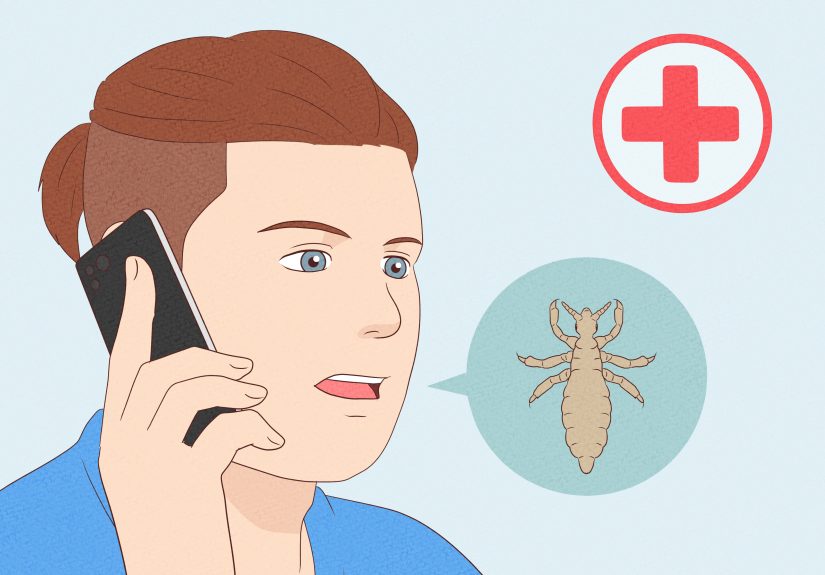
- There are signs of infection: increasing redness, warmth, pus, fever, or painful sores.
- Symptoms persist after correct treatment and careful follow-up combing.
- You suspect lice on eyelashes/eyebrows (this needs professional evaluation).
Prevention & Smart Re-Checking
Prevention isn’t about living in a bubble; it’s about reducing the highest-risk behavior: head-to-head contact. In households and classrooms, that’s commonso think “risk reduction,” not “perfect avoidance.”
Simple prevention habits
- Avoid head-to-head contact during outbreaks (sleepovers, selfies with heads touching, etc.).
- Don’t share hats, hairbrushes, helmets, or earbuds that sit in hair.
- Tie long hair back for school/sports when lice are going around.
- If there’s known exposure, do a wet combing check and then re-check again in a few days.
A calm re-check schedule that actually works
If you’re in an exposure situation (like a classroom notice), consider checking with wet combing and then repeating every few days for a couple of weeks, or per your clinician’s advice, especially if someone in the home is being treated. Consistency beats panic-cleaning every time.
FAQ
Do head lice jump or fly?
No. Head lice move by crawling. They spread mainly through direct head-to-head contact.
Can I have lice without itching?
Yes. Some people itch a lot; others barely notice. Itching can also be delayed after exposure or caused by something else. That’s why finding live lice (or clear evidence through combing) matters more than symptoms alone.
Do I need to shave my head?
Almost never. It’s usually unnecessary and stressful. Accurate checking, appropriate treatment, and follow-up combing are typically enough.
Are nits far from the scalp “active”?
Nits close to the scalp are more likely to be viable. Nits farther down the hair shaft are often older and may be empty. If you only see far-down specks and no live lice after careful wet combing, you may be looking at leftover casings or look-alikes.
Can pets carry head lice?
Human head lice spread from person to person. Pets are not the usual source for human head lice.
Experiences & Practical Tips from Real Life (About )
People rarely talk about checking for lice until they’re suddenly doing it at 10:47 p.m. under the bathroom spotlight, holding a comb like it’s a scientific instrument. Based on common reports from families, schools, and clinics, here are the most relatable “been there” momentsplus what tends to help.
1) The first check is emotionally loud. A lot of people describe the first self-check as equal parts “I should be calm” and “why does my scalp feel itchy just because I read the word lice?” That reaction is normal. Anxiety can make every sensation feel suspicious. A practical fix: commit to a method (wet combing), set a timer, and follow the steps. Having a process turns vague worry into a clear answer.
2) Lighting is the difference between guessing and knowing. Many people start with standard bathroom lighting and end up unsure. Then they switch on a brighter lamp or use a phone flashlight and immediately see the difference especially for nits near the ears and at the nape. Some even record slow video on their phone and review it, because zoom + pause is a cheat code for tiny objects.
3) Wet combing feels tediousuntil you make it a routine. Families often say the best “hack” is pairing combing with something distracting: a show, a podcast, a favorite song playlist, or a kids’ movie. It’s not just about comfort; it helps you slow down and stay systematic, which makes the check more accurate. For long or thick hair, people report that dividing into many small sections (even if it feels extra) prevents missed areas.
4) Curly, coily, and textured hair needs a different pacenot different accuracy. People with textured hair often say the first attempt was frustrating because the comb snagged or the sections were too big. What helps: more conditioner, smaller sections, and detangling carefully before the lice comb comes out. Some find it easiest to work in a predictable pattern (left side → back left → back right → right side → crown), wiping the comb after every pass.
5) The “nit vs. dandruff” debate is universal. Lots of people report staring at a speck and negotiating with it: “Are you a nit or are you just… Tuesday?” The most consistent real-world rule: if it flicks off easily, it’s probably not a nit. If it’s glued to one hair and won’t budge, treat it seriously and confirm with wet combing or a professional check.
6) People tend to over-clean and under-check. A common pattern is doing five loads of laundry, vacuuming like a competitive sport, and then forgetting to do follow-up scalp checks. Most successful stories emphasize the opposite: reasonable cleaning of high-risk items, plus repeated checks/comb-outs on a schedule. The boring, consistent routine is what usually ends the cycle.
Bottom line: a good check is part method, part mindset. If you keep the process structured and repeatable, you’ll get an answer you can trustand you’ll spend less time spiraling at every harmless scalp itch.
Conclusion
Checking yourself for lice doesn’t require panicjust good light, a solid comb, and a systematic approach. Start with the hot zones (behind the ears and the nape of the neck), and use wet combing when you want the most reliable at-home result. If you find live lice, treat promptly and check close contacts. If you’re unsure, get confirmation from a clinician or school nurse. Either way, you’re handling it like a proand the lice are, frankly, not.