Table of Contents >> Show >> Hide
- Sweet Potato 101: Picking, Storing, and Prepping (So They Don’t Betray You)
- Method 1: Oven-Baked Whole Sweet Potatoes (Fluffy Classic)
- Method 2: Oven-Roasted Sweet Potato Cubes or Wedges (Caramelized Edges)
- Method 3: Microwave Sweet Potato (Fastest Weeknight Fix)
- Method 4: Boiled Sweet Potatoes (Best for Mash, Baking, and Mixing)
- Method 5: Steamed Sweet Potatoes (Moist, Fluffy, “Pudding-Like”)
- Method 6: Air Fryer Sweet Potatoes (Crisp Outside, Tender Inside)
- Flavor Combinations You’ll Actually Want to Repeat
- Meal Prep, Storage, and Reheating (So Your Future Self Eats Well)
- Troubleshooting: Common Sweet Potato Problems (and Fixes)
- Kitchen Experiences: What You Learn After Cooking Sweet Potatoes Every Which Way (About )
- Final Thoughts
Sweet potatoes are the overachievers of the produce drawer: naturally sweet, hearty enough to count as dinner,
and basically begging to be topped with everything from butter and cinnamon to hot sauce and shredded chicken.
The only real problem? People cook them one way (usually “until I forget they’re in the oven”) and call it a day.
Let’s fix that. Below are six reliable methodseach with the best use cases, exact steps, and a few
“don’t do this” tipsso you can get fluffy insides, caramelized edges, or quick weeknight speed whenever you want.
Consider this your sweet potato choose-your-own-adventure… but all the endings are delicious.
Sweet Potato 101: Picking, Storing, and Prepping (So They Don’t Betray You)
How to choose the right ones
- Firm and smooth is the goal. Avoid deep wrinkles, mushy spots, or oozing areas.
-
Same-size potatoes cook at the same speed. If you’re baking a batch, pick similar shapes so you’re not
pulling out one potato while another is still doing warm yoga in the middle.
Storage rules (the surprisingly important part)
-
Store raw sweet potatoes in a cool, dark, dry place (think pantry, not fridge). Refrigeration can mess with
flavor and texture over time. - Keep them unwashed until you’re ready to cook. Moisture + time = the fast track to spoilage.
- If you see sprouts: don’t panic. Sweet potatoes sprout sometimes. Trim sprouts and any soft spots and cook soon.
Prep basics that work for every method
- Scrub well under running water. (They grow in dirt. They are not shy about it.)
-
For whole sweet potatoes, pierce the skin a few times with a fork or tip of a knife so steam can escape.
This prevents dramatic potato blowouts that look like a root vegetable crime scene. - If you’re cutting them: aim for even pieces so everything finishes together (no crunchy cubes mixed with mushy ones).
Method 1: Oven-Baked Whole Sweet Potatoes (Fluffy Classic)
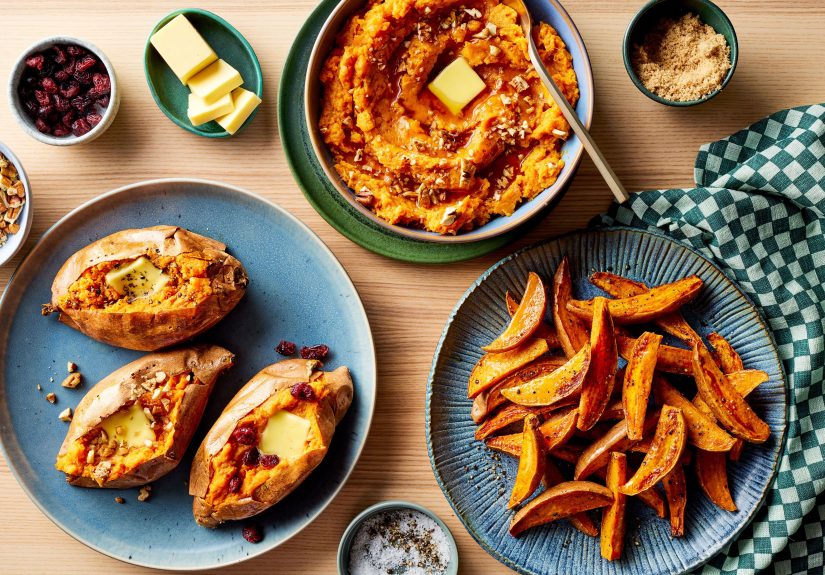
This is the “put it in, forget it, come back to greatness” method. Perfect for stuffed sweet potatoes,
meal prep, or anyone who wants maximum comfort with minimum effort.
Best for
- Classic “baked potato” vibe (but sweeter)
- Stuffed sweet potatoes (tacos, chili, Greek-ish bowls, breakfast)
- Meal prep for salads, grain bowls, and quick sides
How to bake whole sweet potatoes
- Heat oven to 425°F.
- Scrub and dry the potatoes. Pierce each potato 4–8 times with a fork.
-
Optional but recommended: rub with a little oil and sprinkle with salt for a more flavorful skin.
(Yes, you can eat the skin. It’s not just a wrapper.) -
Place on a baking sheet (lined for easy cleanup). Bake until a knife slides in easily and the potato
gives slightly when squeezed with an oven mitt, 40–60 minutes depending on size. - Rest 5 minutes, split open, and fluff the inside with a fork.
Quick upgrade ideas
- Sweet: butter + cinnamon + pinch of salt + chopped pecans
- Savory: olive oil + black pepper + scallions + feta
- Spicy-sweet: butter + chipotle powder + squeeze of lime
Method 2: Oven-Roasted Sweet Potato Cubes or Wedges (Caramelized Edges)
Roasting is for people who want texture: browned corners, tender centers, and that irresistible “just one more piece”
situation that ends with you hovering near the pan like a raccoon.
Best for
- Wedges and “fries”
- Breakfast hash
- Salads and grain bowls
- Holiday sides that aren’t cloyingly sweet
Basic roasting method (fast and reliable)
- Heat oven to 425°F (or 400°F if your oven runs hot).
- Cut into 1-inch cubes or 1-inch wedges. Try to keep sizes consistent.
-
Toss with 1–2 tablespoons oil per pound of sweet potatoes, plus salt and pepper.
Add spices if you want (see below). - Spread on a baking sheet in a single layer. Don’t crowdcrowding = steaming = sadness.
- Roast 20 minutes, flip/toss, then roast 15–25 minutes more until browned and tender.
Food-science “extra credit” (optional)
If you want deeper sweetness and better browning, you can do a brief warm-water rest before roasting.
It sounds fussy, but it’s basically letting the sweet potato’s natural enzymes do their thing,
converting more starch into sugar for extra caramelization.
Roasting seasonings that actually taste like something
- Smoky: smoked paprika + garlic powder + cumin
- Warm: cinnamon + chili powder + pinch of brown sugar
- Herby: rosemary or thyme + black pepper + flaky salt
Method 3: Microwave Sweet Potato (Fastest Weeknight Fix)
The microwave gets a bad rap because people remember overcooked frozen dinners. But for a single sweet potato?
It’s a superhero in a beige costume: not glamorous, wildly effective.
Best for
- One-person lunches
- Quick pre-cook before crisping in a skillet
- Stuffed sweet potatoes in under 10 minutes
How to microwave a sweet potato
- Scrub and dry. Pierce all over with a fork.
- Place on a microwave-safe plate (paper towel underneath helps with moisture).
-
Microwave on high for 5 minutes for an average potato, flipping halfway.
If it’s not tender, keep going in 1-minute bursts. - Rest 2 minutes (steam finishes the job), then split and fluff.
Microwave pro tips
- If you’re cooking more than one potato, add time and rotate positions for even cooking.
-
Want crisp edges after microwaving? Split it, scoop chunks into a skillet with a little oil, and brown for 3–5 minutes.
It’s like sweet potato “croutons.”
Method 4: Boiled Sweet Potatoes (Best for Mash, Baking, and Mixing)
Boiling is the quickest path to “mash-ready” sweet potatoes. It’s not the most flavor-maximizing method
(water is not famous for adding taste), but it is dependableespecially for casseroles, soups, and baking.
Best for
- Mashed sweet potatoes
- Casseroles and fillings
- Purees for soups, muffins, and quick breads
How to boil sweet potatoes
- Peel (optional) and cut into even 1–2 inch chunks.
- Place in a pot and cover with cold water by a couple inches. Salt the water.
- Bring to a boil, then reduce to a steady simmer.
- Cook until very tender, 15–20 minutes for chunks.
-
Drain well, then return to the hot pot for 1–2 minutes to steam off excess water
(this avoids watery mash).
Make boiled sweet potatoes taste great
- For savory mash: butter + Greek yogurt or sour cream + garlic + salt
- For holiday-style: butter + maple syrup + orange zest + pinch of nutmeg
- For a little heat: chipotle in adobo (start small) + butter
Method 5: Steamed Sweet Potatoes (Moist, Fluffy, “Pudding-Like”)
Steaming is underrated: it cooks evenly, keeps sweet potatoes moist, and gives you a plush texture that’s perfect
for topping with sauces. If you’ve ever had a steamed sweet potato that felt almost custardy, you get it.
Best for
- Soft, fluffy texture (great for bowls and sauces)
- Less hands-on cooking (no stirring, no babysitting)
- Whole sweet potatoes when oven space is taken
How to steam sweet potatoes
- Fill a pot with a few inches of water and bring to a simmer.
- Place sweet potatoes in a steamer basket above the water. Cover with a lid.
-
Steam until completely tender:
- Whole: about 40–50 minutes (size matters)
- Cubes: about 15–30 minutes
- Test with a fork or knife; it should slide in easily.
Easy “wow” topping
Try a quick tahini-butter style sauce: stir tahini with melted butter (or olive oil), salt, a squeeze of lemon,
and a little warm water until silky. Finish with sesame seeds. Fancy restaurant energy, sweatpants effort.
Method 6: Air Fryer Sweet Potatoes (Crisp Outside, Tender Inside)
Air fryers are basically small convection ovens with confidence. They brown sweet potatoes quickly and give you crispness
without heating up the whole kitchenideal when you want roasted vibes on a faster timeline.
Best for
- “Baked” sweet potatoes with great skin texture
- Fast wedges and cubes
- Small-batch cooking (no need to fire up the oven)
Air fryer whole sweet potatoes
- Preheat air fryer to 400°F.
- Scrub, dry, and pierce the potato. Rub lightly with oil and salt (optional but tasty).
- Air fry 15 minutes, flip, then air fry 15–20 minutes more until tender.
- Rest 2–3 minutes, split, and fluff.
Air fryer cubes or wedges
- Cut evenly, toss with oil + salt + spices.
- Cook at 400°F, shaking every 5–7 minutes, until browned and tender (often 12–20 minutes depending on size).
Flavor Combinations You’ll Actually Want to Repeat
Sweet potatoes play well with sweet, savory, spicy, and tangy. Here are some crowd-pleasing combos that work across methods:
- BBQ Bowl: roasted cubes + black beans + corn + shredded chicken + BBQ sauce
- Mediterranean: baked whole + hummus + cucumber + feta + lemon
- Breakfast Hash: roasted cubes + onions + peppers + fried egg + hot sauce
- Sweet & Salty: steamed sweet potato + butter + flaky salt + toasted nuts
- Spicy-Lime: air-fried wedges + chili powder + lime zest + cilantro
Meal Prep, Storage, and Reheating (So Your Future Self Eats Well)
How long cooked sweet potatoes last
- Refrigerate cooked sweet potatoes in an airtight container and use within 3–4 days.
- For longer storage, freeze (mashed or cubed tends to reheat best). Quality is best within a few months.
Food safety basics
- Cool leftovers quickly and refrigerate within about 2 hours (sooner if it’s very hot out).
- Use shallow containers so food chills fast and evenly.
- Reheat until steaming hot; add a splash of water to mashed sweet potatoes to restore creaminess.
Troubleshooting: Common Sweet Potato Problems (and Fixes)
-
“It’s cooked but still firm in the center.”
It needs more time. Big sweet potatoes are marathon runners. Split and keep cooking (microwave or oven) to speed it up. -
“My roasted pieces are soft, not browned.”
Your pan is crowded or your pieces are too wet. Spread out, pat dry, and roast hotter (or longer). -
“My mash is watery.”
Drain well and steam off moisture in the hot pot for a minute. Then mash. (Waterlogged mash is a sadness you can avoid.) -
“My sweet potatoes taste bland.”
Salt earlier. Add acid (lemon/lime/vinegar). Add fat (butter/olive oil). And don’t forget a spice that brings personality.
Kitchen Experiences: What You Learn After Cooking Sweet Potatoes Every Which Way (About )
After you’ve cooked sweet potatoes a bunch of different ways, you start noticing patternslike how they’re basically
the most forgiving starchy vegetable with a secret identity as a dessert ingredient. The first big “aha” moment usually
happens when you microwave one out of desperation. You expect a rubbery compromise. Instead, you cut it open and it’s
fluffy, sweet, and totally usable for lunch. That’s when the microwave earns a tiny badge of respect. Not a parade.
Just a nod. A “you did good today.”
The second lesson shows up when you roast cubes and wonder why your friend’s sweet potatoes look like bronzed little
caramel nuggets while yours look steamed and apologetic. The difference is almost never a secret spice blend; it’s
spacing and patience. Give sweet potatoes room on the pan and they brown. Crowd them and they sweat. And sweet potato
sweat is not the vibe. The easiest fix is also the most annoying: use a bigger sheet pan or two pans. Your taste buds
will forgive you for washing one extra dish.
Then there’s the whole vs. chopped debate. Whole baked sweet potatoes have this cozy, pillow-soft interior that feels
like it was designed for toppings. They’re what you make when you want dinner to look like you tried, even if you
basically just turned a knob and walked away. Roasted pieces, on the other hand, are the “I want texture” option
especially if you’re building bowls or salads where every bite should have a little contrast. If you’ve ever eaten a
grain bowl that felt like one big soft hug (not always a compliment), you already understand why crispy edges matter.
Boiling teaches another kind of humility: it works, it’s fast, and it’s not very exciting unless you finish strong.
Boiled sweet potatoes are like a blank notebookfull of potential, not a lot of plot. But once you mash them with butter,
salt, and something with personality (chipotle, maple, orange zest, garlic, tahini, whatever your heart wants),
they turn into a real side dish. Boiling is also the method that makes you appreciate one tiny step: letting the potatoes
sit in the hot pot after draining. It sounds like nothing, but it can be the difference between creamy mash and
“why is my potato soup pretending to be mashed potatoes?”
Steaming is where you learn that “simple” can still feel special. A steamed sweet potato can be unbelievably plush,
especially when you top it with a sauce that has fat + salt + acid. Suddenly it’s not just “healthy food”; it’s the kind
of thing you’d happily pay for at a café and then try to recreate at home while claiming you invented it. And finally,
the air fryer lesson: sometimes you want speed without compromise. When the kitchen is hot, the oven feels like a personal
attack, and you still want crispness, the air fryer steps in like a tiny convection-powered hero. The real takeaway?
Sweet potatoes aren’t one recipethey’re a whole category. Once you can cook them six ways, you stop asking “How do I cook
sweet potatoes?” and start asking the better question: “What kind of sweet potato mood am I in?”
Final Thoughts
If you remember nothing else, remember this: sweet potatoes reward two thingseven sizing and
proper doneness. Pick a method based on your goal (speed, crispness, mash, meal prep), then cook until
truly tender. From there, toppings do the rest.