Table of Contents >> Show >> Hide
- Why computers “freeze” (and why it’s not always a virus)
- 13 steps to safely handle a suspected “freeze virus”
- Step 1: Write down the freeze pattern
- Step 2: Back up what matters (before the next freeze)
- Step 3: Disconnect from the internet (temporarily)
- Step 4: Try a clean reboot (not a panic power-off, unless needed)
- Step 5: Boot into Safe Mode
- Step 6: Check system resource usage
- Step 7: Look at startup programs (and cut the chaos)
- Step 8: Run reputable malware scans (the right way)
- Step 9: Update the operating system and drivers (carefully)
- Step 10: Check storage health and free space
- Step 11: Watch temperatures (because heat makes everything worse)
- Step 12: Test RAM and stability (especially if freezes are random)
- Step 13: If symptoms persist, isolate and reset (without losing your mind)
- How to keep “freeze virus” fear from coming back
- Extra: of real-world experience (the “I’ve seen this movie before” section)
- Conclusion
Quick safety note (and yes, I mean it): I can’t help you create a “freeze virus” (even if you label it “harmless”), because that’s still malware-style behavior that can be used to disrupt other people’s devices. What I can do is give you a practical, step-by-step guide to simulate and investigate “freeze virus” symptoms safelyand fix themso you learn what’s going on without harming anyone.
So in this article, “freeze virus” means: a computer that freezes and you’re worried it might be malware. We’ll cover how to confirm what’s happening, protect your data, rule out malicious causes, and stabilize your systemusing ethical, real-world troubleshooting.
Why computers “freeze” (and why it’s not always a virus)
Freezes usually happen when your system can’t keep up with what it’s being asked to do. The culprits tend to fall into a few buckets:
- Resource overload: CPU pegged at 100%, RAM maxed out, disk thrashing, or the GPU driver having a bad day.
- Software conflicts: buggy drivers, a bad update, incompatible apps, browser extensions, or background tools fighting each other.
- Hardware issues: overheating, failing storage, unstable RAM, or a power supply problem (desktop users, I see you).
- Malware: possible, but not the default assumptionespecially if the “freeze” is predictable (like “every time I open this app”).
Translation: don’t jump straight to “I’ve been hacked” unless your evidence is real. Computers freeze for reasons as boring as “your laptop needs a nap.”
13 steps to safely handle a suspected “freeze virus”
Step 1: Write down the freeze pattern
Before you start changing things, capture clues:
- When does it freezeon boot, during gaming, in a browser, after sleep mode?
- Does the mouse move? Can you open Task Manager/Activity Monitor?
- Do you see fans blasting like a jet engine (hello, heat)?
- Any recent changesnew app, driver update, Windows update, new browser extension?
This prevents the classic troubleshooting mistake: “I changed 14 things and now I have no idea which one mattered.”
Step 2: Back up what matters (before the next freeze)
If freezes are frequent, treat your data like it’s carrying a tray of drinks in a crowded movie theater: secure it first.
- Copy important files to an external drive or trusted cloud storage.
- If the system is unstable, back up smaller batches instead of one huge transfer.
Even if this isn’t malware, repeated freezes can corrupt files. Your future self will send you a thank-you card.
Step 3: Disconnect from the internet (temporarily)
If you genuinely suspect malware, go offline while you investigate:
- Turn off Wi-Fi or unplug Ethernet.
- This reduces risk if something shady is running in the background.
Don’t worryyou can reconnect later to update security tools once you’re ready.
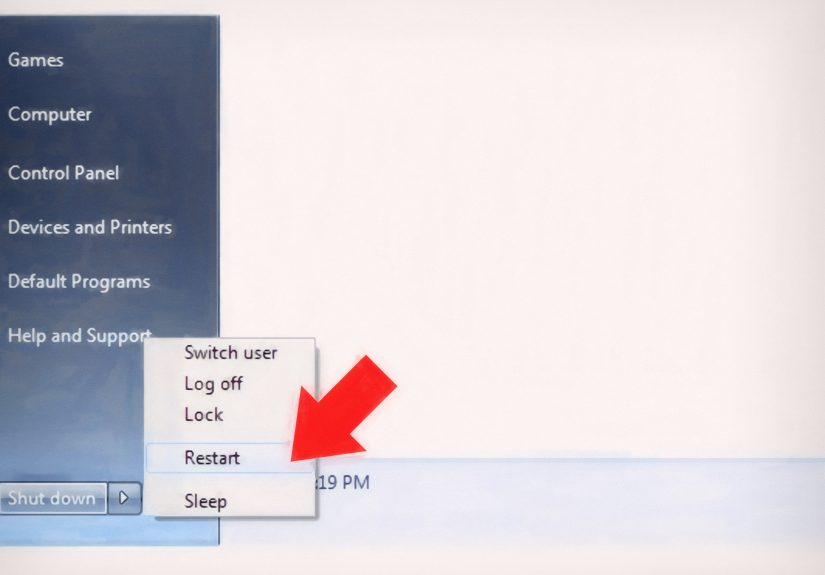
Step 4: Try a clean reboot (not a panic power-off, unless needed)
If the device is frozen:
- Windows: try Ctrl + Shift + Esc (Task Manager). If that works, you’re not fully frozengood sign.
- Mac: try Cmd + Option + Esc (Force Quit).
- If nothing responds, hold the power button to shut down. Not ideal, but better than letting it cook forever.
Step 5: Boot into Safe Mode
Safe Mode loads minimal drivers and startup items. If the freezing stops in Safe Mode, your problem is likely a driver, startup app, or third-party softwarenot mysterious hacker magic.
- Windows: use Advanced Startup options (often through Settings > Recovery).
- Mac: Safe Boot options depend on Intel vs Apple Silicon, but the goal is the same: start lean.
Step 6: Check system resource usage
When you’re back in normal mode (or Safe Mode), look for obvious resource hogs:
- Windows: Task Manager > Processes (sort by CPU/Memory/Disk).
- Mac: Activity Monitor (CPU, Memory, Disk).
Example: If your disk is pinned near 100% during freezes, you may have a storage issue, an indexing job, or a runaway background processnot a “freeze virus.”
Step 7: Look at startup programs (and cut the chaos)
Too many startup apps can turn boot-up into a clown car. Disable non-essential startup items and reboot.
- Disable: random “helper” apps, auto-launchers, unused cloud sync tools, toolbar managers, “speed boosters” (ironically slow).
- Keep: security software, essential drivers, accessibility tools you rely on.
Step 8: Run reputable malware scans (the right way)
Once you can operate without freezing constantly, reconnect to the internet long enough to update and scan:
- Use your operating system’s built-in security tools plus a reputable on-demand scanner.
- Update definitions before scanning. Yesterday’s scanner is like yesterday’s weather report: interesting, not always useful.
- Scan in Safe Mode if normal mode keeps freezing.
Avoid: sketchy “one-click fix” apps screaming “999 THREATS FOUND!” They’re often the threat.
Step 9: Update the operating system and drivers (carefully)
Outdated or buggy driversespecially graphics and storage driversare famous for causing freezes.
- Install OS updates.
- Update GPU drivers if freezes happen during games or video playback.
- If the freezing started immediately after a driver update, consider rolling back.
Step 10: Check storage health and free space
Low disk space can cause slowdowns and “freezes,” and failing drives can cause stutters that look like software crashes.
- Keep a healthy buffer of free storage (think “elbow room,” not “packed suitcase”).
- Run disk checks and review SMART/health indicators if available.
Example: If your laptop freezes during file transfers or installs, storage health is a prime suspect.
Step 11: Watch temperatures (because heat makes everything worse)
Overheating can throttle performance, trigger shutdowns, and cause “random” freezes.
- Make sure vents are clear.
- Use the device on a hard surface (beds are comfy; laptops disagree).
- If fans are constantly maxed, consider dust buildup or a failing fan.
Step 12: Test RAM and stability (especially if freezes are random)
Unstable RAM can create unpredictable freezes that look like software issues. Built-in memory diagnostics can help identify problems.
- If you recently upgraded RAM, reseat it or test modules individually.
- If diagnostics report errors, treat that as a hardware problem until proven otherwise.
Step 13: If symptoms persist, isolate and reset (without losing your mind)
If you’ve tried the steps above and the system still freezes:
- Isolate: create a new user profile and see if the issue persists (helps identify profile corruption).
- Uninstall: the most recently installed apps and browser extensions.
- Restore: use System Restore / Time Machine snapshots if available.
- Reset/Reinstall: as a last resort, reinstall the OS after backing up.
Reinstalling feels dramatic, but it’s often faster than chasing ghosts for three weeks. (Ask anyone who’s tried to “fix it by vibes.”)
How to keep “freeze virus” fear from coming back
- Use standard accounts for daily work; reserve admin rights for installs.
- Keep updates on for the OS, browser, and key drivers.
- Be picky with downloads: official sources, not “FreeMinecraftMoviePlayer.exe”
- Browser hygiene: limit extensions; remove ones you don’t recognize.
- Regular backups: the best anti-panic system ever invented.
Extra: of real-world experience (the “I’ve seen this movie before” section)
I’ve noticed that “freeze virus” stories usually begin the same way: someone’s computer locks up, the fan sounds like it’s trying to lift off, and the brain immediately goes, “This is it. The hackers found me. They’re in the walls.” Totally understandablefreezes feel invasive because they steal control.
But in practice, the most common “aha” moments are delightfully unglamorous. One person swore their laptop was infected because it froze every night around 7 p.m. The twist? That was exactly when their cloud backup kicked in, trying to sync a giant folder of videos over weak Wi-Fi while the system also decided it was the perfect time to index photos. It wasn’t malwareit was a scheduling conspiracy between perfectly normal programs.
Another classic: “My PC freezes only when I play games.” That’s often a graphics driver issue, overheating, or a power problem. The pattern matters. Malware doesn’t usually show that kind of polite consistency. Bugs and hardware problems do. If the freeze happens when you open a specific app, it’s frequently the app (or its plug-ins/extensions), not an invisible villain twirling a mustache.
Then there’s the “too many startup apps” saga. People install tools that auto-launch update checkers, assistants, launchers, and “helpers.” Soon their computer boots up like it’s hosting a house party, and everyone arrives at the same time. The machine freezesnot because it’s possessed, but because it’s overwhelmed. Disabling half the startup list can feel like giving your computer a quiet morning with coffee instead of 30 simultaneous phone calls.
When malware is involved, the lesson I see repeated is: the best protection isn’t paranoiait’s process. Backups reduce fear. Safe Mode reduces noise. Reputable scanners reduce guesswork. And when everything still feels off, a clean reinstall is the ultimate reset button. It’s not admitting defeat; it’s choosing a reliable ending instead of a never-ending mystery series.
Finally, the “harmless” part matters. Curiosity about how systems fail is normal. The ethical line is what you do with that curiosity. Learning how to diagnose freezes, read system resource usage, and harden your device makes you more capable without putting anyone else at risk. That’s the kind of power-up worth having.
Conclusion
You don’t need to create malware to understand “freeze virus” behavior. In real life, the fastest path to confidence is a calm checklist: capture the pattern, protect your data, reduce variables, scan smart, update carefully, and test hardware health. Most freezes are fixableand the ones that aren’t usually come with clear clues once you look in the right places.