Table of Contents >> Show >> Hide
- Start Here: The 30-Minute Betta “Triage” Plan
- Set Up a Simple Hospital Tank (Your Secret Weapon)
- Symptom Decoder: What You’re Seeing vs. What It Might Be
- Treatment Playbooks for Common Betta Diseases
- 1) Ich (White Spot Disease): How to Treat It Correctly
- 2) Velvet: Treat Fast, Treat Carefully
- 3) Fin Rot: The “Environment First” Cure
- 4) Fungal-Looking Patches: Fungus vs. “Mouth Fungus” Look-Alikes
- 5) Swim Bladder Trouble / Bloating: Gentle Support Works Best
- 6) Popeye: Treat the Cause, Not Just the Symptom
- 7) Dropsy (Pineconing): An Emergency, Not a “Wait and See”
- Medication Safety Rules (So You Don’t Accidentally Make It Worse)
- Prevention: The Real “Cure” Is Keeping Your Betta Out of Trouble
- Real-World Experiences: What Betta Keepers Learn the Hard Way (and Then Laugh About Later)
- Conclusion
Your betta fish is basically a tiny water dragon with the confidence of a lion and the patience of… a lion that hasn’t been fed yet. So when that little royal starts acting “off,” it’s normal to panic. The good news: most betta illnesses are treatable at home when you tackle the real root cause (usually water quality + stress) and use the right kind of treatment at the right time.
One important reality check before we dive in: “cure” in fishkeeping doesn’t always mean a magical instant fix. It usually means remove the stressor, support the immune system, treat the pathogen if needed, and prevent it from coming back. Do that, and you’ll be amazed how quickly a betta can bounce back.
Start Here: The 30-Minute Betta “Triage” Plan
If your betta looks sick today, do these steps first (before dumping random meds like confetti):
- Test the water (ammonia, nitrite, nitrate, temperature). If you can’t test immediately, assume water quality might be part of the problem and move to step 2.
- Do a large partial water change with dechlorinated, temperature-matched water. Clean water is the most underrated medicine.
- Warm and stabilize the tank. Bettas are tropical fish; sudden temperature swings can make them crash.
- Check for stressors: sharp decor tearing fins, strong filter current, tankmates nipping, bright lights 24/7, overfeeding, or an uncycled tank.
- Observe specific symptoms (spots? fuzz? bloating? clamped fins? rapid breathing?)because correct treatment depends on correct identification.
- If possible, isolate in a hospital tank so treatment is easier and you don’t medicate the whole aquarium for one sick fish.
Set Up a Simple Hospital Tank (Your Secret Weapon)
A hospital tank is where bettas recover without distractions (or roommates who steal their snacks). It doesn’t need to be fancyjust safe and stable.
- Size: Small is fine, but not a cup. Aim for a few gallons if you can.
- Heat: A reliable heater keeps temperature steady.
- Filtration: Gentle sponge filter or very low-flow filtration (high oxygen is helpful during treatment).
- Hiding spot: A smooth cave, silk plant, or clean PVC piece so your betta feels secure.
- Bare bottom: Easier to clean and monitor waste.
- No carbon while medicating (carbon can remove many medications).
Even better: quarantine isn’t just for “sick fish.” Quarantining new fish (and sometimes plants) helps prevent disease introductions and gives stressed newcomers time to recover before meeting the main tank’s germs.
Symptom Decoder: What You’re Seeing vs. What It Might Be
White “salt” grains on body or fins
Likely: Ich (white spot disease). Fish may flash (rub against objects) and breathe faster.
Yellow-gold “dust,” rusty sheen, hiding, rapid breathing
Likely: Velvet (a serious parasite). Often worse than it looks.
Frayed, ragged fins with dark/white edges
Likely: Fin rot (usually bacterial, sometimes fungal secondary). Often connected to stress, water issues, or fin damage.
Cottony fuzz patches on body or mouth
Possible: True fungal infection or “mouth fungus” (often bacterial infections like columnaris can look fuzzy). Treating the wrong one wastes timewatch progression and behavior closely.
Bloated belly, floating sideways, struggling to sink
Possible: Constipation/overfeeding, swim bladder issues, or internal infection. A bloated betta needs quick, gentle support.
Pinecone scales (scales sticking out), severe swelling
Often: Dropsy (a symptom of serious internal issues, frequently infection or organ failure). This is urgent and sometimes not fully reversible.
One or both eyes bulging
Possible: Popeye (injury, infection, or poor water conditions). One-eye popeye is often injury; two-eye popeye may signal systemic problems.
Treatment Playbooks for Common Betta Diseases
Below are practical, safe, and proven approaches. The theme you’ll see again and again: clean water first, targeted meds second.
1) Ich (White Spot Disease): How to Treat It Correctly
What it is: A parasite with a life cyclemeaning treatment takes time because meds don’t “kill” every stage at once.
What to do:
- Gradually increase temperature if your setup allows (and only within safe limits for your tank inhabitants). Warmth can speed the parasite’s life cycle so treatment hits the vulnerable stage.
- Add extra aeration because warmer water holds less oxygen.
- Use an ich medication labeled for freshwater fish, following the package directions exactly. Remove carbon during treatment.
- Continue treatment long enough (often beyond when spots disappear) to catch new hatch-outs.
What not to do: Don’t treat for one day, see improvement, and declare victory. Ich loves sequels.
2) Velvet: Treat Fast, Treat Carefully
What it is: A parasite that can cause severe stress and breathing trouble. It may look like a subtle shimmerlike your betta went to a glitter party you didn’t approve.
What to do:
- Move the fish to a hospital tank if possible.
- Dim lights / add darkness (velvet organisms can be light-responsive; reducing light may help alongside medication).
- Use an appropriate anti-parasitic medication commonly copper-based for many velvet casesbut follow the product’s directions and be cautious with invertebrates and plants (another reason a hospital tank is handy).
- Boost oxygenation and keep temperature stable.
Pro tip: If breathing is very rapid or your fish stays at the surface gasping, treat this as urgent.
3) Fin Rot: The “Environment First” Cure
What it is: Fin tissue damage plus infection. Fin rot often starts because the betta is stressed, the water is off, fins were torn by decor, or tankmates are snacking on his fancy tail like it’s salad.
What to do:
- Fix water conditions: consistent heat, regular partial water changes, and stable parameters.
- Remove the cause of damage: sharp plastic plants, rough rocks, strong filter current, or aggressive tankmates.
- For mild cases, improved husbandry alone often stops progression and new fin growth begins as clear/whitish edges.
- For moderate/severe cases (rot advancing toward the body, redness at the base, lethargy), use a fish-safe antibacterial medication in a hospital tank and follow label directions.
What not to do: Don’t keep “trying a new med every day.” That’s like switching antibiotics mid-prescriptionexcept your betta can’t tell you his side effects.
4) Fungal-Looking Patches: Fungus vs. “Mouth Fungus” Look-Alikes
Why it’s tricky: True fungus often appears as cottony growth on damaged areas. But some bacterial infections can mimic fuzzy patches around the mouth or body. Either way, the fish usually got vulnerable due to stress.
What to do:
- Start with pristine water and isolation if possible.
- Use a medication labeled for fungal infections if it’s clearly fuzzy growth on wounds or fins.
- If the fish declines quickly (lethargy, rapid breathing, spreading lesions), consider that it may be bacterial and use a broad fish-safe antibacterial treatment per label directions.
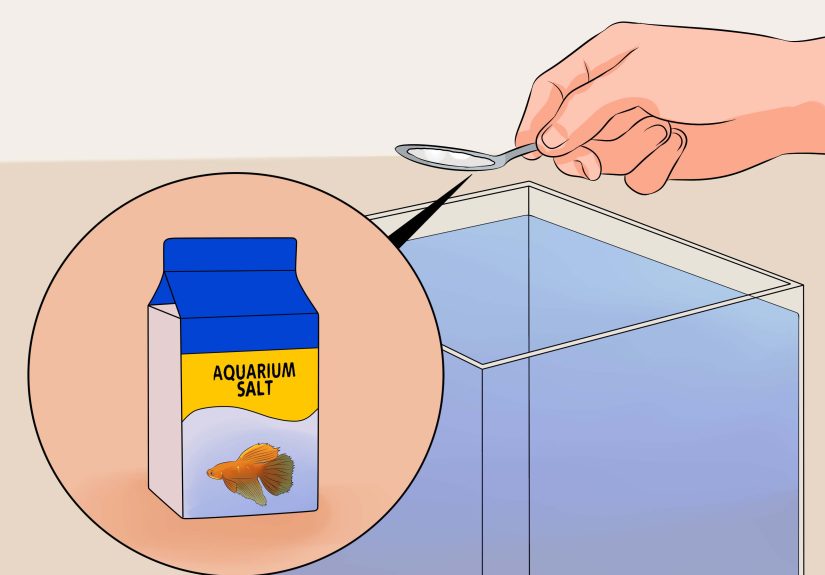
- Consider aquarium salt carefully as supportive therapy if appropriate for your setup (many keepers use it short-term, but follow guidance and avoid sensitive tankmates).
5) Swim Bladder Trouble / Bloating: Gentle Support Works Best
Common cause in bettas: constipation from overfeeding, too-dry pellets, or fatty foods. Sometimes it’s secondary to infection.
What to do:
- Pause feeding briefly (short fasting is commonly used for bloating in fishkeeping).
- Resume with small, high-quality portions and consider foods that help digestion (many keepers use daphnia or other appropriate options).
- Keep water warm and stable to support metabolism.
- If swelling worsens or the fish becomes lethargic, isolate and consider internal infection as a possibility.
Note: Old advice sometimes suggests feeding peasbettas are insectivores, so peas aren’t always ideal. Focus on appropriate, betta-friendly foods and portion control.
6) Popeye: Treat the Cause, Not Just the Symptom
What to do:
- Check water quality immediately and clean it up.
- If one eye is affected and the fish is otherwise normal, consider injurykeep water clean and remove hazards.
- If both eyes are affected, or there’s swelling/redness elsewhere, isolate and consider a fish-safe antibacterial medication following label directions.
7) Dropsy (Pineconing): An Emergency, Not a “Wait and See”
What it is: Dropsy is a sign of internal fluid imbalanceoften tied to bacterial infection, organ damage, or serious systemic stress. Unfortunately, prognosis can be poor if pineconing is obvious.
What to do:
- Isolate immediately in warm, clean water.
- Use targeted antibacterial support according to product instructions if infection is suspected.
- Keep lighting low and stress minimal.
- Consider contacting an aquatic veterinarian for guidance if available.
Medication Safety Rules (So You Don’t Accidentally Make It Worse)
- Don’t mix medications unless the product specifically says it’s safe.
- Remove activated carbon during treatment so it doesn’t strip meds from the water.
- Increase aerationmany treatments reduce dissolved oxygen or irritate gills.
- Follow label directions exactly (fish meds are not “more is better”).
- Finish the full course when directions indicate multi-day treatment.
- After treatment, run carbon again if desired and resume normal maintenance.
Prevention: The Real “Cure” Is Keeping Your Betta Out of Trouble
If you want fewer emergencies, build a betta setup that makes illness inconvenient:
- Stable heat (bettas do best with consistent tropical temperatures rather than room-temp roulette).
- Regular water testing and routine partial water changes.
- A cycled aquarium so ammonia and nitrite don’t spike.
- Gentle filtration and low current (bettas aren’t marathon swimmers).
- Soft decor (silk plants over sharp plastic) to prevent fin tears.
- Smart feeding: small portions, high-quality food, and avoid “snack avalanches.”
- Quarantine new arrivals (fish and sometimes plants) to reduce disease introduction.
Real-World Experiences: What Betta Keepers Learn the Hard Way (and Then Laugh About Later)
Because nothing builds character like staring into a tank at 2 a.m. whispering, “Please be okay, tiny fish.” Here are common betta-keeper experiences that show up again and againconsider them the “field notes” version of betta health care.
Experience #1: The Uncycled Tank Surprise. A new betta comes home, looks fine for a few days, and thenboomclamped fins, dull color, maybe fraying edges. Many keepers assume a mystery disease attacked out of nowhere. What’s often happening is an invisible problem: the tank isn’t fully cycled yet, so ammonia or nitrite spikes stress the fish. Once keepers begin testing water, doing consistent partial water changes, and stabilizing heat, the betta often perks up dramatically. The “cure” wasn’t a fancy potionit was turning the aquarium into a safe environment instead of a chemistry experiment.
Experience #2: Overfeeding Is Basically a Love Language… With Consequences. Bettas beg like they’re auditioning for a food commercial. Keepers give “just one more pellet,” then wonder why the fish looks bloated and floats awkwardly. A lot of people discover that small meals and occasional digestive breaks work better than buffet-style feeding. Once feeding is corrected (and the water stays warm and clean), many mild swim bladder or constipation episodes resolve without harsh treatments. The betta’s ego remains intacthe just learns that begging doesn’t always equal snacks.
Experience #3: “I Treated for Ich” (But It Wasn’t Ich). White spots can mean ich, but not every white speck is ich. Sometimes it’s debris, sometimes it’s a different issue, and sometimes the fish is flashing because something in the water is irritating its skin. Keepers often learn to look for patterns: ich usually looks like salt grains and spreads; velvet looks like dust and often includes rapid breathing and hiding. The best “experienced keeper move” is pausing long enough to observe, test water, and treat the right thing instead of turning the tank into a medication smoothie.
Experience #4: Fin Rot That Keeps “Coming Back.” A betta’s fins fray, the keeper treats, the fins improve, thentwo weeks laterfraying again. This cycle often ends when the keeper changes something physical: replacing sharp plastic plants with silk, slowing the filter flow, adding a heater to stop temperature swings, or separating a sneaky fin-nipping tankmate. Many people realize fin rot isn’t always a single enemy; it can be a symptom of ongoing stress. Once stress is fixed, fin regrowth becomes steadyand it’s genuinely satisfying watching those fins come back like a slow-motion comeback story.
Experience #5: The Quarantine Lesson Everyone Learns Once. Plenty of keepers skip quarantine because the new fish “looks healthy.” Then a week later, multiple fish show symptoms, and suddenly everyone is stressed (including the human). After that, quarantine becomes non-negotiable. Experienced keepers treat quarantine like an airport security checkpoint: mildly annoying, absolutely worth it. A simple quarantine period lets fish recover from transport stress and prevents introducing parasites or infections into a stable tank.
The takeaway from all these stories: the most powerful betta disease “cures” aren’t dramatic. They’re consistent. Clean water, stable temperature, low stress, careful observation, and targeted treatment when needed. That’s not just fishkeepingit’s basically good life advice… except your betta will still demand snacks like a tiny aquatic CEO.
Conclusion
To cure betta fish diseases, think like a detective and a caretaker. Start with water quality and stress reduction, isolate when you can, identify symptoms carefully, and use targeted medications only when they match the likely cause. Most importantly, prevent future outbreaks with stable heat, a cycled tank, gentle filtration, safe decor, smart feeding, and quarantine habits. Your betta doesn’t need a miraclehe needs a stable kingdom.