Table of Contents >> Show >> Hide
- Why Dating Old Ball Mason Jars Matters
- Step 1: Start With the Ball Logo
- Step 2: Read the Embossed Words Under the Logo
- Step 3: Look at the Color and Glass Quality
- Step 4: Check Shape, Seams, and Mold Marks
- Step 5: Inspect the Lid and Closure Style
- Step 6: Compare Your Photos to Charts and Collector Guides
- Are Old Ball Mason Jars Valuable?
- Common Myths About Dating Ball Mason Jars
- Real-World Experiences Dating Ball Mason Jars
- Conclusion: Turn Your Photos Into a Personal Ball Jar Guide
If you’ve ever stood in front of a dusty flea-market shelf wondering whether that
blue Ball jar is a hidden treasure or just a pretty vase, you’re in the right place.
Dating old Ball Mason jars is part history lesson, part scavenger hunt, and a tiny
bit like detective work for people who really love glass and pantry aesthetics.
In this guide, we’ll walk through how to use logos, embossing, colors, and other
detailsplus your own photosto estimate when your jar was made and how special
it might be.
Think of this as the “with pictures” version in text form: at each step we’ll tell
you exactly what you’d photograph and what to look for in those images, so you can
build your own little Ball jar dating gallery at home.
Why Dating Old Ball Mason Jars Matters
Ball started producing home-canning jars in the late 1800s and kept changing
designs, logos, and colors over time. Those changes now help collectors and
curious homeowners answer big questions:
- Is this jar actually vintage or just “vintage style”?
- About what decade was it made?
- Is it common or a harder-to-find variation?
- Is it safe to use for food or better as décor only?
The goal isn’t to turn you into an appraiser overnight. Instead, by the end of this
article you’ll be able to look at your photos, follow a few simple checks, and say
something like, “Okay, this Ball Perfect Mason with script logo and underscore is
probably from the 1920s or early 1930s.” That’s already expert-level compared with
“Grandma had jars; now I have jars.”
Step 1: Start With the Ball Logo
If you only remember one tip, make it this: the logo style is the fastest
way to date a Ball Mason jar. Collectors and historians have compiled
logo charts that show how the Ball logo changed from the 1880s through the late
1900s. These charts form the backbone of most dating guides.

logo and compare it to a chart from a reputable guide or collector site.
How to Photograph the Logo
- Set the jar in front of a plain background (a white sheet or wall works great).
- Use natural light from a window so the embossing is easy to see.
- Take a close-up photo of the logo, straight on, and another from a slight angle so the embossing stands out.
- Zoom in on the word “Ball” and any additional words like “MASON,” “PERFECT,” or “IDEAL.”
Common Ball Logo Styles and Approximate Date Ranges
Exact years vary a bit among sources, but most logo charts agree on these general
ranges:
- Ball Brothers “BBGMC” logo (monogram in a circle) – Very early jars from the mid-1880s.
- BLOCK “BALL” in all capital letters – Late 1880s to mid-1890s.
- First Ball script with “triple-L” look – Around 1900–1910. The word “Ball” looks like it has three “L”s because of the loopy handwriting.
- Script Ball with a “dropped a” – Roughly 1910–1923. The “a” dips below the baseline, like it’s sinking in quicksand.
- Script Ball with an underscore tail – Common from about 1923 into the early 1930s.
- Simplified script Ball, no underscore – Mid-20th century into the 1960s and beyond.
Once you match your logo to a chart, you’ve already narrowed down your jar to a
specific slice of Ball history. Write that estimated date range right on the back
of your printed photo or in a note on your phone.
Step 2: Read the Embossed Words Under the Logo
The logo gives you the decade; the extra words help fine-tune the
time frame. Ball used terms like “MASON,” “PERFECT,” “IDEAL,” and “IMPROVED,” which
are strongly associated with certain periods and jar styles.
What to Capture in Your Photos
- Take a full front shot of the jar so you can see the logo plus any words underneath.
- Zoom in on phrases like:
- MASON’S PATENT 1858
- PERFECT MASON
- IMPROVED or IDEAL
What Those Phrases Usually Mean
- “MASON’S PATENT 1858” – This phrase appears on many early jars, not just Ball.
When combined with an early Ball logo, it generally points to late-19th or very early
20th-century production. - “PERFECT MASON” – Introduced in the early 1900s and produced for decades.
The logo style, glass color, and base markings help you narrow it down further. - “IMPROVED” and “IDEAL” – Often associated with specialty closures and certain
time frames in the first half of the 20th century.
Compare these phrasesplus your logoto a good dating chart or collector guide.
You’ll start to see patterns, like “script Ball with underscore + PERFECT MASON = early 1920s jar.”
Step 3: Look at the Color and Glass Quality
Ball made jars in a range of colors, but the most iconic shade is
“Ball blue”, a soft aqua that came from minerals naturally present in the
sand used for glassmaking. That blue color is strongly associated with jars made
in the early 1900s through the 1930s.
Common Ball Jar Colors and What They Suggest
- Ball blue / aqua – Most often early 1900s–1930s. Very classic, very photogenic.
- Clear – Became the standard later in the 20th century, though some clear jars appear earlier.
- Amber, dark green, cobalt, or milk glass – Usually rarer and more collectible; often special runs or different manufacturers. These can be worth significantly more than common aqua jars.
When you take photos, snap one against a white background and another against a
window so the color glows. You’ll be amazed how much easier it is to distinguish
Ball blue from a more modern turquoise when you see them side by side.
Also look for glass characteristics: older jars may have
bubbles, waviness, or irregular thickness, while later machine-made jars are
smoother and more consistent. Close-up pictures of the side walls and lip will help
you spot those differences later.
Step 4: Check Shape, Seams, and Mold Marks
Once you’ve covered the logo, wording, and color, it’s time to look at the jar
more like a glass collector: by shape and manufacturing details.
How to Photograph the Jar Body
- Place the jar on a flat surface and photograph it straight on from the side.
- Take a second photo focused on the neck and shoulderthe curved area where the body narrows.
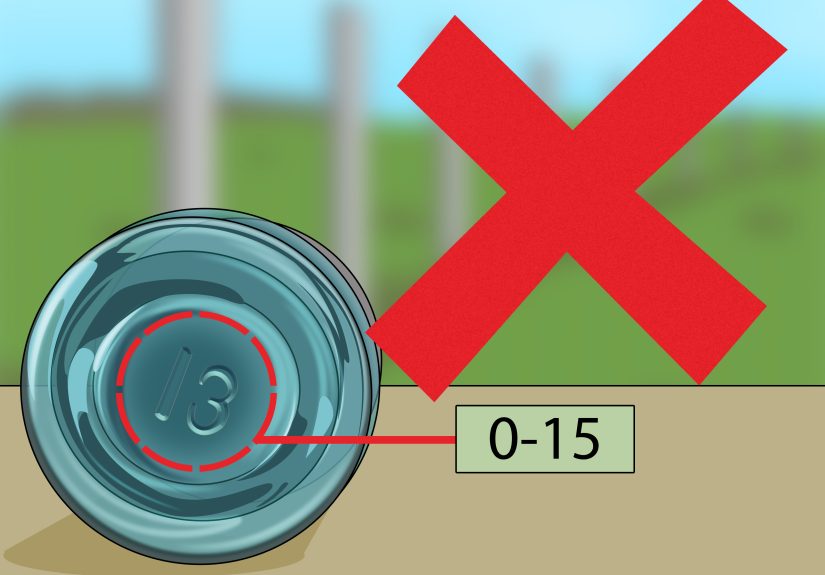
- Take a third photo of the base, showing any numbers, letters, or symbols.
Details That Help Date the Jar
- Shoulder shape: Some older Ball jars have more sloped “shoulders,”
while later jars may be straighter or more standardized. - Mold seams: Early jars made in older machines can show stronger
seams or off-center mold lines. Later fully automated production often looks more uniform. - Base markings: Numbers and letters on the base usually identify
mold and plant rather than exact year, but they can help confirm you’re looking
at a Ball-made jar and not a lookalike. On some Ball Perfect Mason jars, mold
and design changes line up with certain decades.
Don’t stress too much over the mold codemost home collectors use it as a
supporting clue, not the primary dating tool.
Step 5: Inspect the Lid and Closure Style
Many old Ball jars have lost their original lids along the way, but if yours still
has one, congratulations: it’s another clue. Ball used a variety of closures,
including zinc screw caps with milk-glass or porcelain liners, glass lids with
bails, and modern two-piece metal lids.
What to Photograph
- The lid from above, showing any wording or logos.
- The inside of the lid, especially if there’s a porcelain or glass liner.
- The top of the jar without the lid, showing the finish (the part that the lid screws onto or clamps over).
How Lids Help Date Your Jar
- Zinc screw caps with glass or porcelain liners are common on earlier
20th-century jars. They look especially charming but aren’t ideal for modern canning. - Wire-bail glass-lid systems show up on certain “Improved” and “Ideal”
styles and can often be tied to specific decades. - Modern two-piece metal lids are generally replacements, though they
can sometimes sit on older jars if the finish size matches.
Remember: when you’re dating the jar, you’re primarily dating the glass, not
the lidthough an original closure in your photos can confirm that your estimated
time frame makes sense.
Step 6: Compare Your Photos to Charts and Collector Guides
Once you have a little “photo shoot” of your jarlogo, wording, color, shape, base,
and lidyou’re ready to compare those shots to reference charts. Many U.S. collector
sites, canning blogs, and antique guides publish logo timelines, color guides, and
side-by-side examples of different jar styles.
Here’s a simple workflow you can follow:
- Match your logo to a chart and jot down the approximate date range.
- Use the wording (“PERFECT MASON,” “IDEAL,” etc.) to narrow that range.
- Check the color and glass characteristics to make sure they fit the same era.
- Look at body shape, seams, and base markings for extra confirmation.
- Search collector forums or social media groups to see if anyone has the same jar and a well-documented date range.
With practice, you’ll start recognizing certain combinations on sight, like
“script Ball with dropped a, Ball blue glass, PERFECT MASON” as a classic early-1920s look.
Are Old Ball Mason Jars Valuable?
Value depends on age, rarity, color, condition, and demand. A single
rare color or unusual embossing can be worth far more than a shelf of common jars.
That said, most everyday Ball jars are affordablewhich is great news if you’re
decorating on a budget.
Things that tend to boost value include:
- Unusual colors like deep greens, ambers, or true cobalt blues.
- Rare embossings or short-lived logos.
- Excellent conditionno cracks, minimal chips, and a clean surface.
- Original, matching lids in good shape.
For a realistic value range, compare your jar to recent sales on auction and
vintage marketplaces, paying attention to condition and completeness. Dating your
jar first makes those comparisons much easier.
Common Myths About Dating Ball Mason Jars
Myth 1: “If It’s Blue, It Must Be Super Old and Super Valuable.”
Blue Ball jars are older than modern clear jars, but not every blue jar is rare.
Ball produced huge numbers of aqua jars in the early 1900s. They’re gorgeous, but
not necessarily rare or high-dollar by default.
Myth 2: “Any Jar With ‘MASON’S PATENT 1858’ Was Made in 1858.”
That date refers to the patent, not the exact year your jar was made.
Many manufacturers used that embossing for years afterward, so you still need the
logo, wording style, and other clues to narrow down the actual production period.
Myth 3: “The Number on the Bottom Is the Year.”
That base number is usually a mold indication or plant code, not a
date stamp. It can be useful when combined with other evidence, but by itself it
won’t tell you whether your jar is from 1919 or 1939.
Real-World Experiences Dating Ball Mason Jars
Reading charts is helpful, but nothing beats putting this knowledge to work in the
wild. Here are some real-world style “experiences” you can relate to when you’re
staring at a table full of jars and trying to act like you definitely know what
you’re doing.
Experience 1: The Flea-Market Surprise
Imagine walking into a small-town flea market and spotting a dusty row of Ball
jars on a wobbly folding table. At first glance they all just look “old and blue,”
but you pull out your phone, turn on the camera, and start doing your detective
work.
One jar has a bright Ball blue color, script Ball logo with an underscore, and the
words “PERFECT MASON.” You snap a close-up photo of the logo, then the full jar,
then the base. When you compare it to your saved logo chart, you realize you’re
probably looking at an early 1920s jar. The vendor thinks it’s just a cute flower
vase and prices it low. You smile, thank them, and quietly celebrate your new
100-year-old kitchen décor.
Experience 2: The “Almost, But Not Quite” Antique Store Find
Next scenario: an antiques shop with carefully curated shelves and price tags that
have clearly seen a lot of thought. You spot a “vintage” Ball jar labeled as
circa 1900. The price is… ambitious.
You take a photo of the logo and immediately notice it looks like a modern Ball
scriptsimpler, no fancy loops, just like the jars in your pantry at home. The jar
is completely clear, the glass is very smooth, and the base shows modern-style
markings. You flip through the logo images on your phone and realize the logo
matches jars made decades later than the tag claims.
Instead of arguing, you just smile, thank the owner, and move on. Dating your own
jars has a fun side effect: you become much better at spotting optimistic labels
and saving your money for genuinely old pieces.
Experience 3: Sorting Grandma’s Pantry
Finally, picture yourself cleaning out a grandparent’s basement or pantry. You
find a box of jars, all mixed togetherBall, Kerr, store-brand, and jars with no
markings at all. It’s a perfect “with pictures” moment.
You line them up on a table near a window, then photograph each one from several
angles. Back at your laptop, you pull up logo charts and collector guides and
start matching. One jar turns out to be a mid-1910s Ball blue Perfect Mason with
bubbles in the glass and a zinc lid. Another is a mid-century clear jar that’s
still perfectly useful for storage, even if it’s not a collector’s item.
As you work, you label photos with notes like “1920s Ball Perfect Mason, blue,
script with dropped a” or “later clear Ball, decorative use.” Not only are you
creating your own mini reference library, you’re preserving family historyand
probably getting some very aesthetically pleasing pantry storage out of the deal.
After a few rounds of this, dating jars stops feeling mysterious. You’ll still
consult the charts, but you’ll also trust your eye. You’ll recognize the classic
Ball blue glow, the shape of the script logo, and the feel of older glass in your
hand. And that’s when collecting becomes seriously fun.
Conclusion: Turn Your Photos Into a Personal Ball Jar Guide
Dating old Ball Mason jars isn’t about memorizing every tiny variationit’s about
learning a simple checklist and using photos to capture the clues your eyes might
miss in the moment. Logo style points you to a decade, embossed words refine the
time frame, glass color and quality confirm the era, and shape, seams, and lids
fill in the remaining details.
Whether you’re chasing rare colors, decorating a farmhouse-style kitchen, or just
trying to figure out if that attic box is worth more than sentimental value, the
same process applies. Take clear pictures, compare them to reliable charts, and
let the details tell the story. The more jars you date, the more you’ll start to
see Ball’s history shine through every swirl, bubble, and loop in the glass.