Table of Contents >> Show >> Hide
- Why Kitchen Cabinets Get So Greasy in the First Place
- What You Need to Degrease Kitchen Cabinets
- Before You Clean: Know Your Cabinet Surface
- How to Degrease Kitchen Cabinets Step by Step
- How to Remove Grease From Wood Cabinets Safely
- How to Clean Greasy Laminate Cabinets
- Natural Cleaning Options for Greasy Cabinets
- Cleaning Mistakes That Can Ruin Cabinet Finishes
- How Often Should You Degrease Kitchen Cabinets?
- How to Prevent Grease From Building Up Again
- Final Thoughts on Degreasing Kitchen Cabinets
- Real-Life Experiences With Greasy Kitchen Cabinets
If your kitchen cabinets feel sticky, look dull, or seem to be wearing a light sweater made of bacon vapor, you are not imagining things. Kitchen grease has a sneaky way of floating upward, landing on cabinet doors, and mixing with dust into that dreaded gummy film nobody invited. The good news: you do not need a chemistry degree, a hazmat suit, or a drawer full of mystery sprays to fix it.
Learning how to degrease kitchen cabinets the right way is mostly about using the right cleaner, the right amount of moisture, and the right amount of patience. In most kitchens, a mild degreasing dish soap and warm water will handle everyday buildup beautifully. For heavier grime, a diluted vinegar solution, a citrus-based degreaser, or a baking soda paste can help loosen stubborn residue. The real trick is matching the method to the cabinet material and finish, then drying everything thoroughly so you do not trade grease for water damage.
This guide walks you through exactly how to clean greasy kitchen cabinets, how to remove grease from wood cabinets without ruining the finish, what to use on laminate or painted surfaces, and which cleaning mistakes can turn a quick refresh into an expensive regret.
Why Kitchen Cabinets Get So Greasy in the First Place
Cabinets sit in the splash zone of everyday cooking. Steam rises. Oil travels. Sauce splatters. Then dust drifts in and sticks to the oily film. Over time, that light layer becomes a sticky coating, especially on upper cabinets, doors near the stove, cabinet tops, and the handles you touch every day with less-than-perfectly-clean hands.
The result is not always dramatic at first. Often, it starts as cabinets that feel tacky instead of smooth. White cabinets look dingy. Dark cabinets lose their richness. Wood finishes begin to appear cloudy. And the hardware? That is where grease likes to build a tiny kingdom of fingerprints.
If you cook often, fry food regularly, skip the range hood, or have cabinets close to the cooktop, you will usually notice grease buildup faster. The fix is simple, but the sooner you deal with it, the easier the job becomes.
What You Need to Degrease Kitchen Cabinets
Before you start scrubbing like you are auditioning for a home makeover show, gather the right supplies:
- Microfiber cloths
- Warm water
- Mild grease-cutting dish soap
- A soft sponge
- A dry towel
- A soft-bristled toothbrush for grooves and hardware
- A spray bottle
- White vinegar for tougher grease
- Baking soda for stubborn spots
- An optional cabinet-safe citrus degreaser
Skip the steel wool, harsh scrub brushes, powdered cleansers, and anything that sounds like it belongs in an industrial garage. Cabinet finishes are not fans of aggressive cleaning. Neither are seams, edges, and decorative profiles.
Before You Clean: Know Your Cabinet Surface
Wood Cabinets
Wood cabinets are durable, but they do not like being soaked. Too much water can cause warping, swelling, or finish damage. Use a damp cloth, not a dripping one, and always dry the surface after cleaning.
Painted Cabinets
Painted cabinets usually respond well to dish soap and warm water. Go easy on abrasive cleaners and scrub pads, which can dull the paint or leave faint scratches.
Laminate or Thermofoil Cabinets
Laminate cabinets are fairly easy to clean, but they do not love standing moisture around seams and edges. Wipe gently, rinse with a lightly damp cloth, and dry well to help prevent bubbling or edge lifting.
Glass-Front Cabinets
If your cabinets have glass inserts, clean the glass with product applied to the cloth rather than sprayed directly onto the panel. That helps reduce the risk of cleaner seeping behind trim or mullions.
How to Degrease Kitchen Cabinets Step by Step
1. Start With a Dry Wipe
Always begin by removing loose dust, crumbs, and dry debris. This step matters more than people think. If you jump straight to wet cleaning, you can end up smearing grime around like cake frosting. Use a dry microfiber cloth to wipe the doors, cabinet faces, edges, and tops if you can reach them safely.
2. Mix a Gentle Cleaning Solution
For most cabinets, the best cleaner for greasy kitchen cabinets is the simplest one: warm water mixed with a few drops of mild dish soap. That is your everyday hero. It cuts through grease without being unnecessarily harsh.
If you are dealing with heavier buildup, you can make a slightly stronger version by adding a small splash of white vinegar to the soapy water, or use a separate diluted vinegar solution. A citrus-based degreaser can also help on sticky film. Just be sure the product is safe for your cabinet material and finish.
3. Apply Cleaner to the Cloth, Not the Cabinet
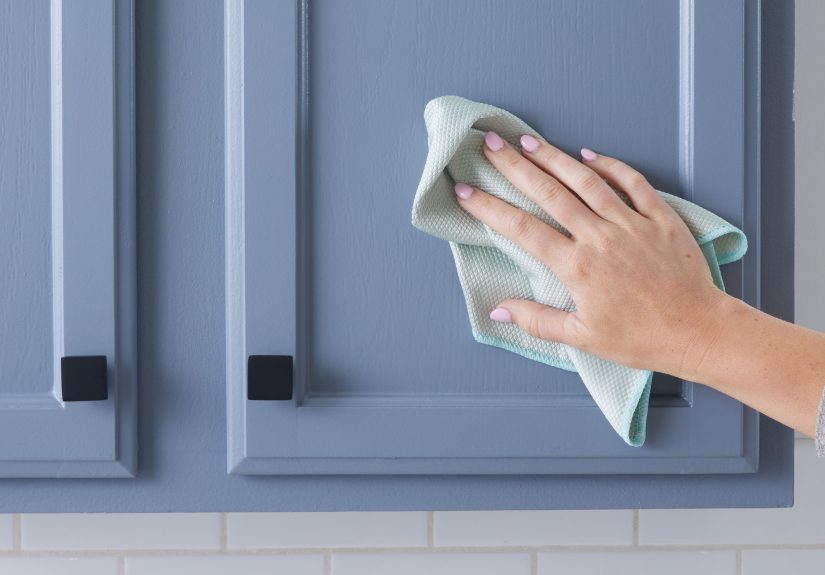
Lightly dampen a microfiber cloth with your cleaning solution. Do not soak the cabinet doors directly unless the product label specifically says that is safe. A cloth-first approach gives you better control and reduces the chance of liquid pooling around edges, joints, or hardware.
4. Wipe From the Top Down
Work from upper cabinets to lower cabinets so drips do not undo your progress. Wipe in the direction of the grain on wood or textured surfaces. Pay extra attention to the cabinets nearest the stove, the cabinet above the microwave, and the doors around the range hood area. Those spots collect the most cooking residue.
5. Let the Cleaner Sit on Tough Spots
If grease is really hanging on for dear life, hold the damp cloth over the area for a minute or two. A little dwell time helps soften the grime so you do not have to scrub like you are sanding a deck. For especially sticky patches, a bit of warmth can help too. Very warm water is often enough to loosen oily residue.
6. Use a Soft Brush for Details and Hardware
Cabinet grooves, trim, and hardware collect grease with Olympic-level commitment. Use a soft toothbrush or detail brush to clean around pulls, knobs, and corners. This is also where old fingerprints like to set up permanent residence.
7. Try Baking Soda for Stubborn Grease
When dish soap alone is not enough, mix baking soda with a little water to create a loose paste. Apply it gently to problem spots with a soft cloth. Let it sit briefly, then wipe away. Think of baking soda as your backup singer, not the star of the show. It can help, but you still want to use a light touch.
8. Rinse Away Residue
Once the grease is gone, wipe the surface again with a separate clean cloth lightly dampened with plain water. This helps remove soap, vinegar, or cleaner residue that could leave cabinets dull, streaky, or tacky.
9. Dry Thoroughly
This step is non-negotiable. Use a dry microfiber cloth or towel to buff the cabinets dry right away. This matters especially for wood cabinets, laminate seams, and painted edges. If you leave moisture sitting on the surface, you may solve one problem and accidentally start another.
How to Remove Grease From Wood Cabinets Safely
If you have wood cabinets, caution beats speed. Wood is beautiful, but it can be sensitive to excessive moisture and rough handling. The safest way to remove grease from wood cabinets is to start with warm water and mild dish soap, using only a damp cloth. Wipe gently, rinse with a second cloth, and dry immediately.
For tougher grease, a diluted vinegar-and-water mixture may help on many sealed wood cabinets, but it should be used carefully and not allowed to sit too long. If the finish is old, damaged, or unknown, test in a hidden area first. A cabinet-safe oil soap or gentle wood cleaner may also be appropriate for finished wood surfaces.
If the cabinet still feels greasy after one pass, repeat the process rather than escalating too quickly to harsh chemicals. Cabinets usually respond better to two gentle cleanings than one aggressive one.
How to Clean Greasy Laminate Cabinets
Laminate cabinets are often easier to degrease than real wood, but they come with one important rule: avoid too much moisture around seams and edges. Start with a dry dusting, then wipe with a microfiber cloth dampened with warm water and a few drops of dish soap. Rinse with a second damp cloth and dry thoroughly.
If the grease is especially stubborn, a lightly applied vinegar-and-water solution can help, but use it sparingly. Do not let the liquid pool around edges, and never leave the surface wet. When cleaning laminate, gentle is still the winning strategy.
Natural Cleaning Options for Greasy Cabinets
If you prefer natural or lower-odor cleaning methods, you have options.
Dish Soap and Warm Water
This is still the gold standard for most cabinet cleaning jobs. It is simple, effective, and widely safe for finished surfaces.
White Vinegar Solution
A diluted vinegar cleaner can cut grease well, especially on sticky cabinet fronts. It is best used with care and moderation, particularly on wood, laminate seams, or delicate finishes.
Baking Soda Paste
Useful for spot treating stubborn areas. Keep the paste soft, apply lightly, and wipe clean completely.
Citrus-Based Degreasers
These can work beautifully on heavier grime because citrus oils help break down grease. Just make sure the label says the product is safe for your cabinet material.
Cleaning Mistakes That Can Ruin Cabinet Finishes
- Using too much water: Cabinets are not houseplants. They do not need soaking.
- Scrubbing too hard: Abrasive pads and aggressive pressure can scratch paint and dull wood finishes.
- Skipping the rinse step: Cleaner residue can leave cabinets cloudy or sticky.
- Skipping the dry step: This is how swelling, warping, and bubbling become part of your week.
- Using harsh solvents without checking compatibility: Not every degreaser is safe for every cabinet.
- Spraying glass or seams directly: Overspray can seep where it should not.
- Waiting too long between cleanings: Fresh grease is easier to remove than fossilized grease.
How Often Should You Degrease Kitchen Cabinets?
For most kitchens, a light wipe-down every week or two keeps grease from building into a sticky film. Cabinets closest to the stove may need more frequent attention. A deeper clean every few months is smart, and cabinet tops should not be ignored just because they are out of your direct line of sight. Grease and dust love a hidden ledge.
If you cook daily, fry often, or are heading into the holiday season when the kitchen becomes the family’s unofficial command center, put cabinet cleaning on the schedule before buildup turns dramatic.
How to Prevent Grease From Building Up Again
Once you have gone through the trouble of making your cabinets look civilized again, it helps to keep them that way.
- Run the range hood or vent fan whenever you cook.
- Cover pans when practical to reduce airborne oil.
- Wipe splatters quickly instead of saving them for Future You.
- Clean handles and pulls regularly, since greasy hands transfer residue fast.
- Dust cabinet tops before grease mixes with it.
- Use a quick damp microfiber wipe on cabinet fronts every week or two.
Final Thoughts on Degreasing Kitchen Cabinets
If you have been wondering how to degrease kitchen cabinets without damaging them, the answer is refreshingly unglamorous: mild cleaner, soft cloth, patience, and a good dry finish. Most greasy cabinets do not need a heavy-duty attack. They need the right method used consistently.
Start with the gentlest effective option, usually dish soap and warm water. Escalate only when needed. Treat wood, painted, laminate, and glass-front cabinets according to their finish. Clean handles, grooves, and cabinet tops instead of pretending not to see them. And always dry well. That one habit can save your cabinets from more trouble than any miracle cleaner ever will.
In other words, you do not need to wage war on your kitchen. You just need to stop letting the grease win.
Real-Life Experiences With Greasy Kitchen Cabinets
One of the most common experiences people have with greasy kitchen cabinets is not realizing how dirty they are until they clean just one door. Suddenly, the “before” cabinet looks tired and yellowish, while the cleaned one looks brighter, smoother, and somehow more expensive. It is the kind of transformation that makes you question your life choices and then immediately start wiping everything in sight.
Another familiar experience happens around the stove area. You may clean the counters, wipe the cooktop, and even tackle the backsplash, but the cabinets above and beside the range quietly collect a film that builds week after week. At first, it just feels slightly tacky. Then one day you touch the cabinet pull and realize the handle is sticky enough to qualify as a personality trait. That is usually the moment people go searching for the best way to clean greasy kitchen cabinets.
Homes with open-concept kitchens often see this happen faster than expected because cooking grease does not politely stay in one tiny zone. It drifts. It settles. It joins forces with dust. In busy family kitchens, cabinet fronts near snack drawers and the trash pull-out can also get especially grimy because they collect fingerprints all day long. Even beautifully painted cabinets can start to look flat or smudged when grease and daily handling build up together.
Many people also notice a difference after holiday cooking, meal prepping, or a season of heavy frying and roasting. Maybe the kitchen looked fine in October, but after weeks of gravy, sautéing, cookies, and guests opening every cabinet in search of snacks, the cabinet doors suddenly tell a different story. The grime is often worst on upper cabinets and cabinet tops, especially where steam rises and settles out of sight.
There is also the experience of trying the wrong cleaner first. Plenty of homeowners have learned the hard way that harsh sprays, rough scrubbers, or too much water can leave cabinets looking worse, not better. Streaks, dull spots, and swollen edges are not exactly the makeover anyone had in mind. That is why the gentle approach usually feels like such a relief. Once you see that warm water, dish soap, and a microfiber cloth can cut through grease effectively, the job becomes less intimidating.
Perhaps the most satisfying experience is the finish line: cabinets that feel smooth instead of sticky, hardware that no longer leaves your fingers greasy, and a kitchen that looks fresher even though nothing major changed. No renovation. No new paint. Just clean surfaces reflecting light the way they were supposed to all along. It is one of those chores that sounds boring, looks dramatic, and delivers a surprisingly big payoff.
And yes, there is always that one cabinet above the stove that acts like it has been storing motor oil since 2009. Give it a second pass. It is not special. It is just gross.